
Our Cinque Terre hiking experience turned out to be one of the highlights of our time on Italy’s Ligurian coast. And that’s saying something, considering how much Lori and I enjoyed exploring the five villages themselves.
Before visiting, Lori and I had read plenty about Cinque Terre’s famous coastal trails. We knew we were in for some pretty darn amazing views and such, but weren’t sure what to expect from the hiking itself.
Would the trails be packed with hikers? Would all the climbing be worth the effort (beyond a good stair workout)? And could we realistically combine hiking with visiting all five villages in a single day?
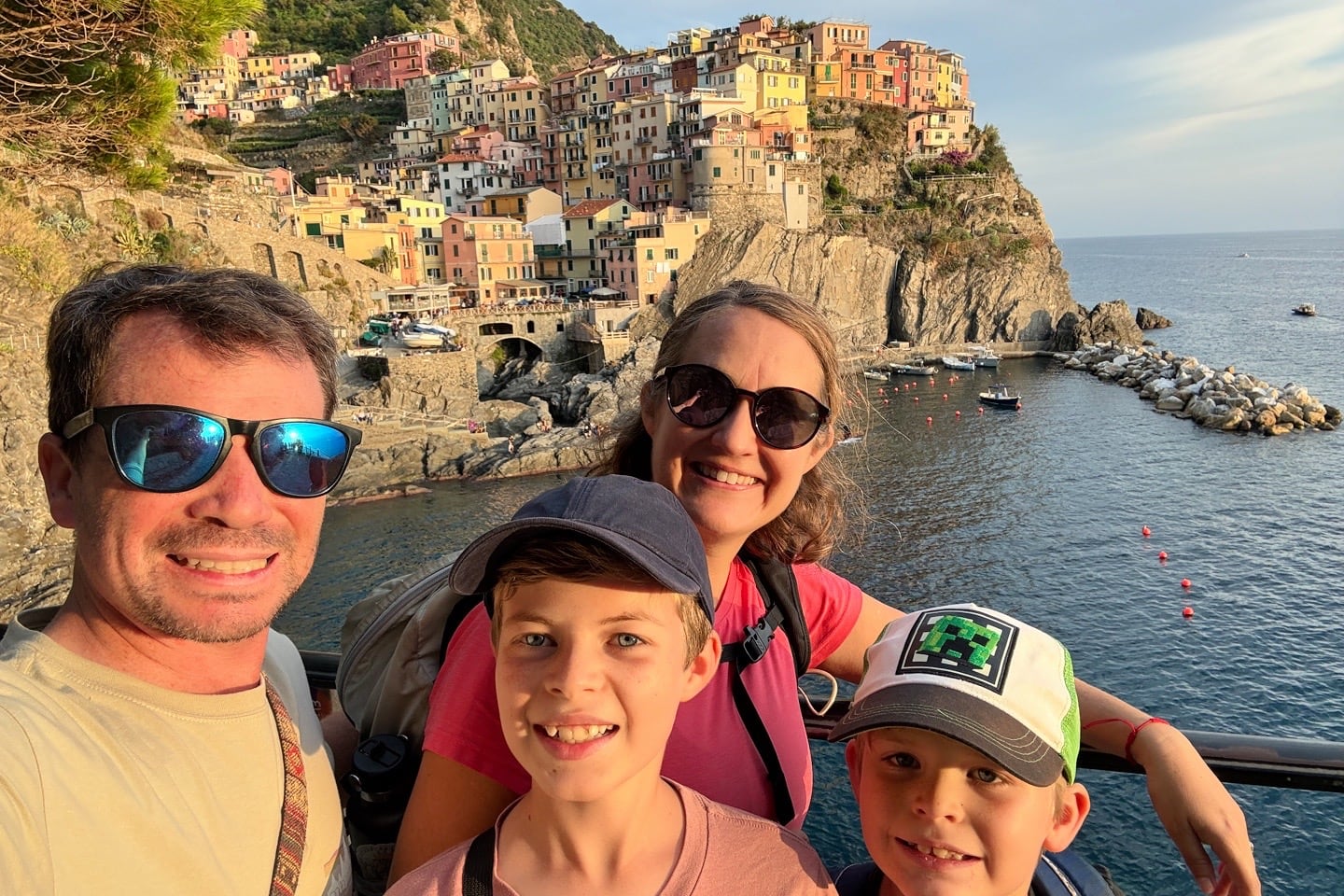
We ended up tackling arguably the two most scenic sections of the Sentiero Azzurro (Blue Trail) with our boys (ages 8 and 10), starting in Monterosso in the north and making our way south through Vernazza to Corniglia.
From there, we skipped the high trail detour and went ahead by train to Riomaggiore. We finished with a leisurely walk along the spectacular Via dell’Amore to Manarola.
We hit the trail around 9:15 a.m. and arrived in Manarola around 5:15 p.m., with plenty of stops for lunch, refreshments, sightseeing, and photographs.
It was a long day. But we’d happily do it again.
Of course, there’s always a few things we might do differently next time.
If you’re thinking about hiking Cinque Terre, this firsthand guide’s made exactly for you! It includes a detailed description of our route, what to expect on the trails, which sections we’d prioritize, and practical advice for planning your own wonderful day trip.
And if you’re still deciding which villages to prioritize or where to base yourself, don’t miss our firsthand guide to the five Cinque Terre villages, including where we’d stay next time.
Planning a visit to Cinque Terre?
This post contains affiliate links. If you click and make a purchase, we might receive a commission (at no added cost to you). Thanks for supporting independent, ad-free blogs!
- Which Cinque Terre Hiking Trails Are Worth Doing?
- Our One-Day Cinque Terre Hiking Itinerary
- How Difficult Is Hiking Cinque Terre?
- Is Hiking Cinque Terre With Kids Worth It?
- Cinque Terre Hiking Tickets: Which Pass Do You Need?
- What About the Free Cinque Terre Hiking Trails?
- Essential Tips for Hiking Cinque Terre
- Is a Guided Cinque Terre Hike Worth It?
- Would We Hike Cinque Terre Again?
Which Cinque Terre Hiking Trails Are Worth Doing?
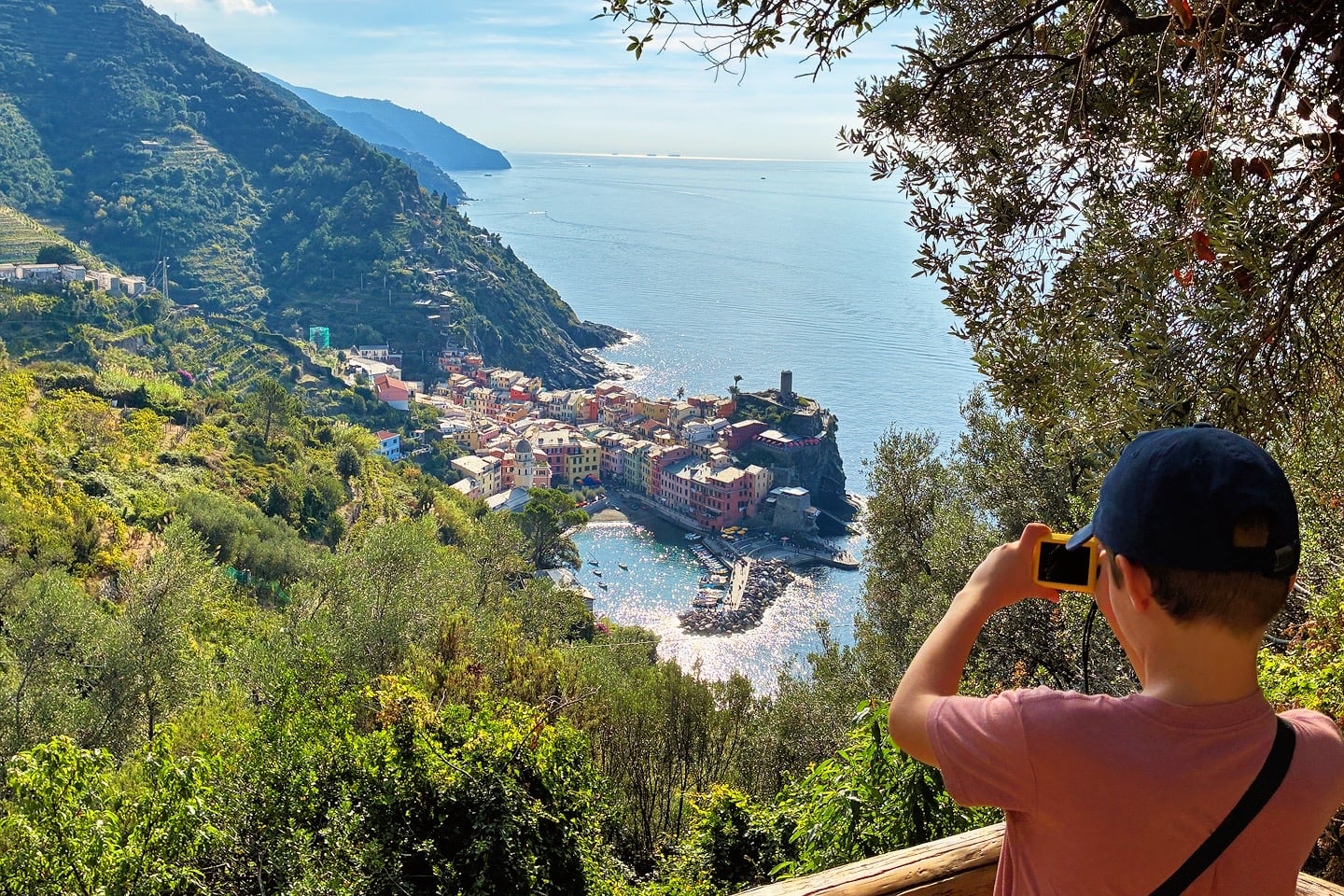
If you’ve studied a trail map, you may have noticed that Cinque Terre has an extensive network of hiking trails connecting the five villages as well as the hills and villages above them.
But the most famous route is the Sentiero Azzurro, sometimes called the Blue Trail or Sentiero Verde Azzurro.
This coastal route connects Monterosso al Mare, Vernazza, Corniglia, Manarola, and Riomaggiore, although not every section is always open.
During our October visit, both northern sections were open, and we hiked them independently with our boys.
The lower trail between Corniglia and Manarola was closed, so we combined hiking with trains to explore all five villages (although there is another hiking option—more on that later).
Here’s how the main sections of the Blue Trail compare:
| Hiking trail | Approximate distance | What to expect |
|---|---|---|
| Monterosso–Vernazza | 3.7 km / 2.3 mi | Steep climbs, stone steps, some shade, exceptional views |
| Vernazza–Corniglia | 4.1 km / 2.6 mi | Beautiful coastal scenery, exposed stretches, terraced hillsides |
| Corniglia–Manarola via Volastra | 5.5 km / 3.4 mi | Higher alternative route, substantial climbing, vineyard scenery |
| Riomaggiore–Manarola (Via dell’Amore) | 0.9 km / 0.6 mi | Easy paved walkway, dramatic sea and cliff views |
Distances are approximate. We personally completed three of the four sections on foot, but not the higher trail through Volastra.
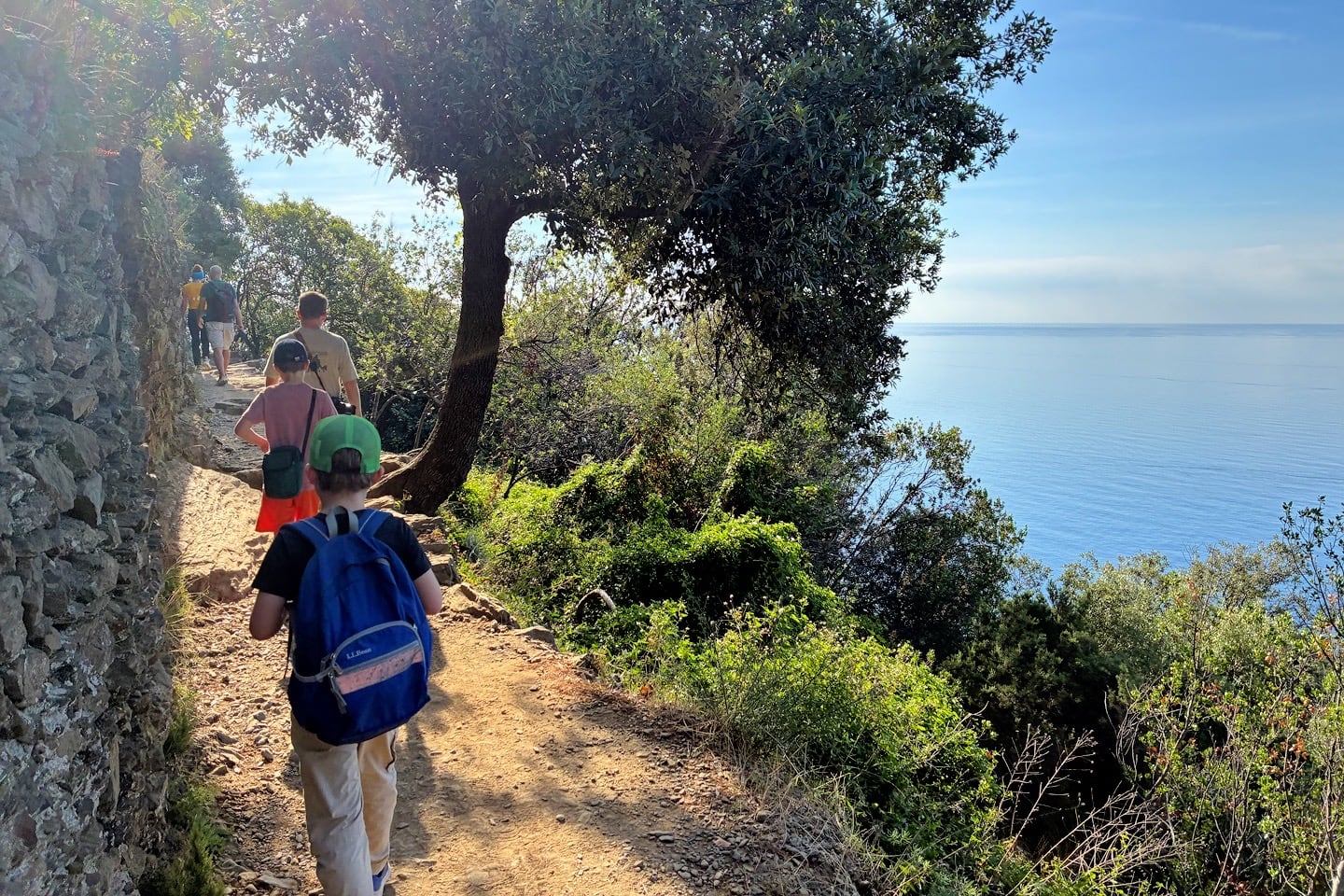
Of the trails we completed, we’d have a hard time choosing our favorite between Monterosso–Vernazza and Vernazza–Corniglia.
The first offered more shade and wonderful elevated views. The second felt more exposed, with a different perspective on the terraced landscape and coastline.
And while the Via dell’Amore is a completely different experience, we thought it was well worth adding to our day (we consider it part of the trail network, as it links the southern two villages).
✪ Our Advice? If you’re reasonably fit and have a full day to devote to the hike, consider hiking both northern Blue Trail sections and using the train to reach Riomaggiore for the Via dell’Amore.
That of course means you won’t walk every inch of Cinque Terre. But you’ll experience some of its most rewarding scenery without turning the day into an endurance test!
Which Villages Should You Spend More Time In?
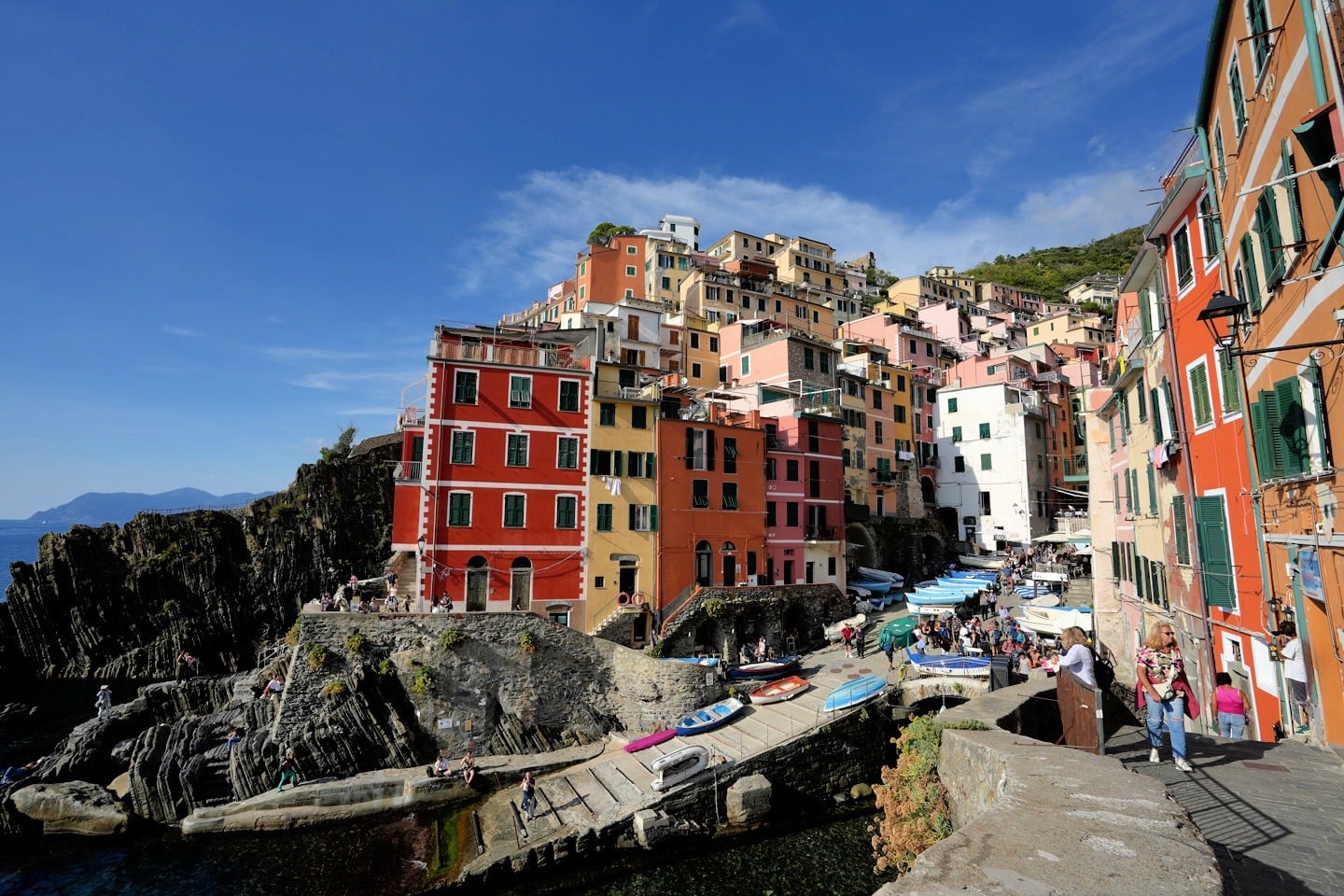
One thing we learned pretty quickly was that the five Cinque Terre villages are surprisingly different.
Some are better suited to swimming, while others have better viewpoints, more appealing dining options, or quieter streets away from the busiest harbors.
If you’re still deciding which villages to prioritize—or where to stay—we’ve compared all five in our companion guide:
▸ Which Cinque Terre Village Is Best for You? (+ Our Honest Experience)
It’s probably worth reading before you settle on your hiking itinerary, particularly if you’re planning to spend more than a single day in the area.
Our One-Day Cinque Terre Hiking Itinerary
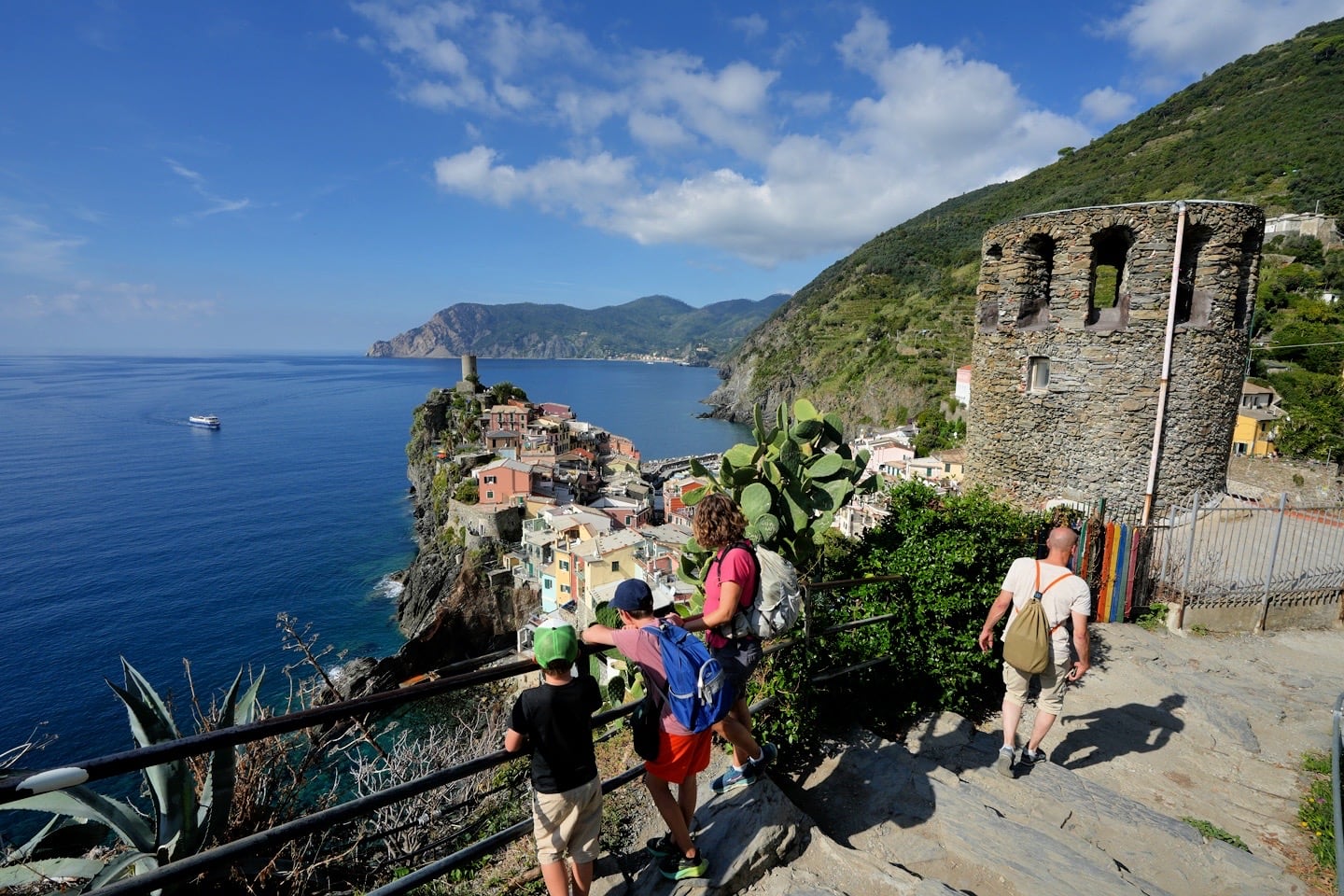
We started our day with coffee in Monterosso and finished in Manarola about eight hours later.
But that doesn’t mean we were hiking for eight hours straight!
We tried our best to take things slow and really soak up the experience as we went along. That meant extended stops in the villages, lunch, sightseeing, a train journey, and plenty of opportunities to take in the views.
Here’s how our day unfolded.
① Monterosso to Vernazza: The Big Climb
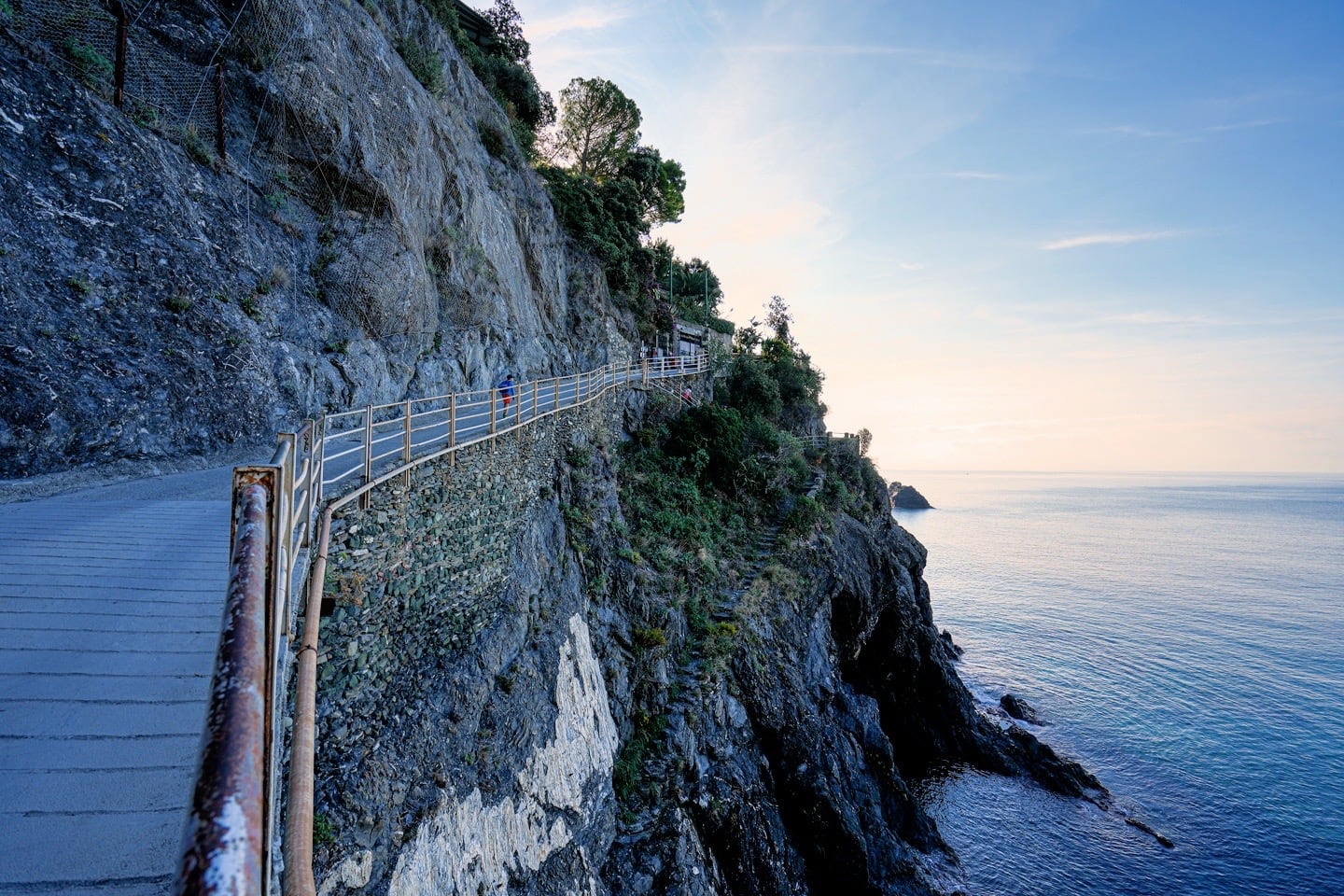
Our Monterosso to Vernazza hiking time: About 1 hour, 30 minutes
We got on the trail from Monterosso around 9:15 a.m., after having coffee and organizing ourselves for the day.
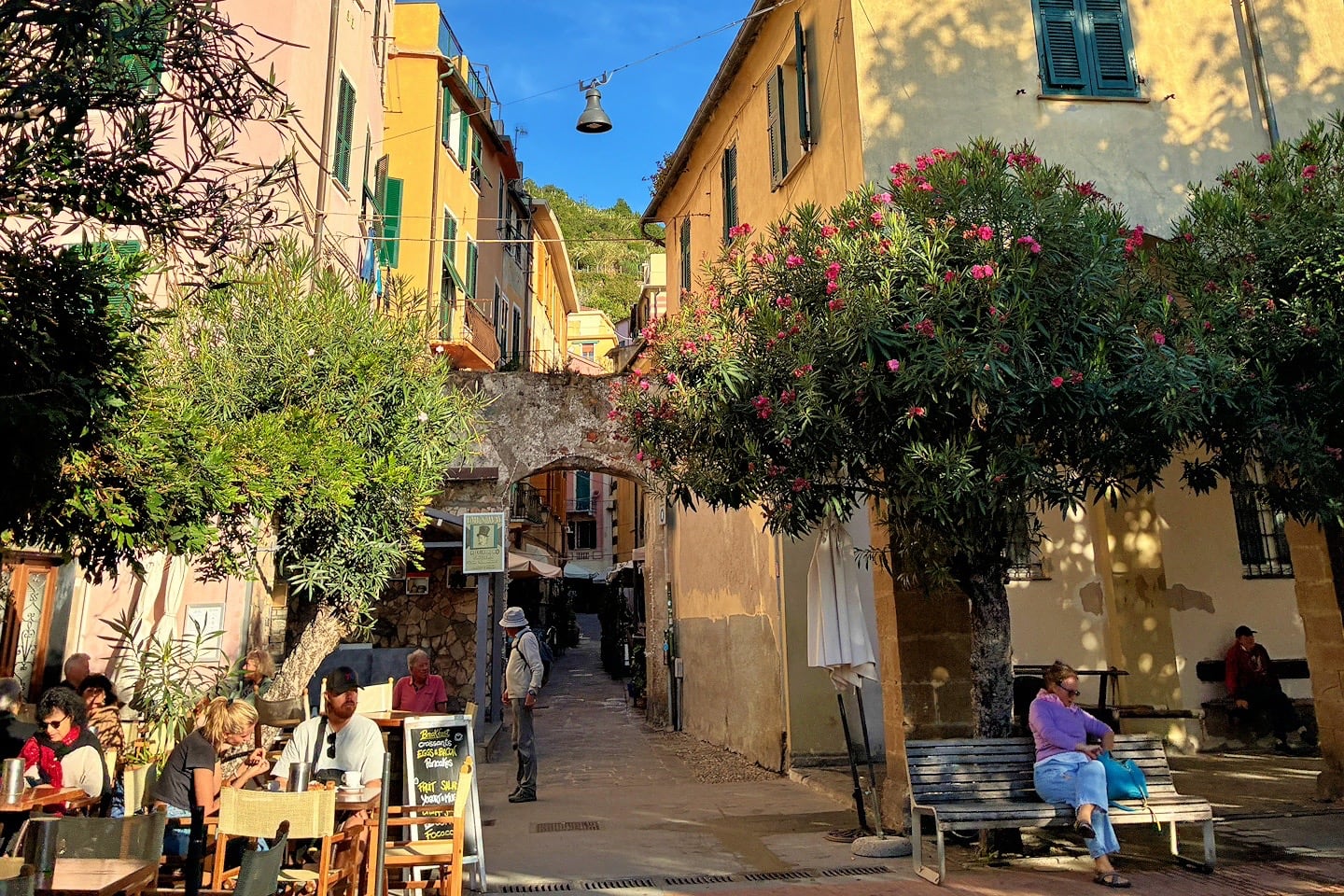
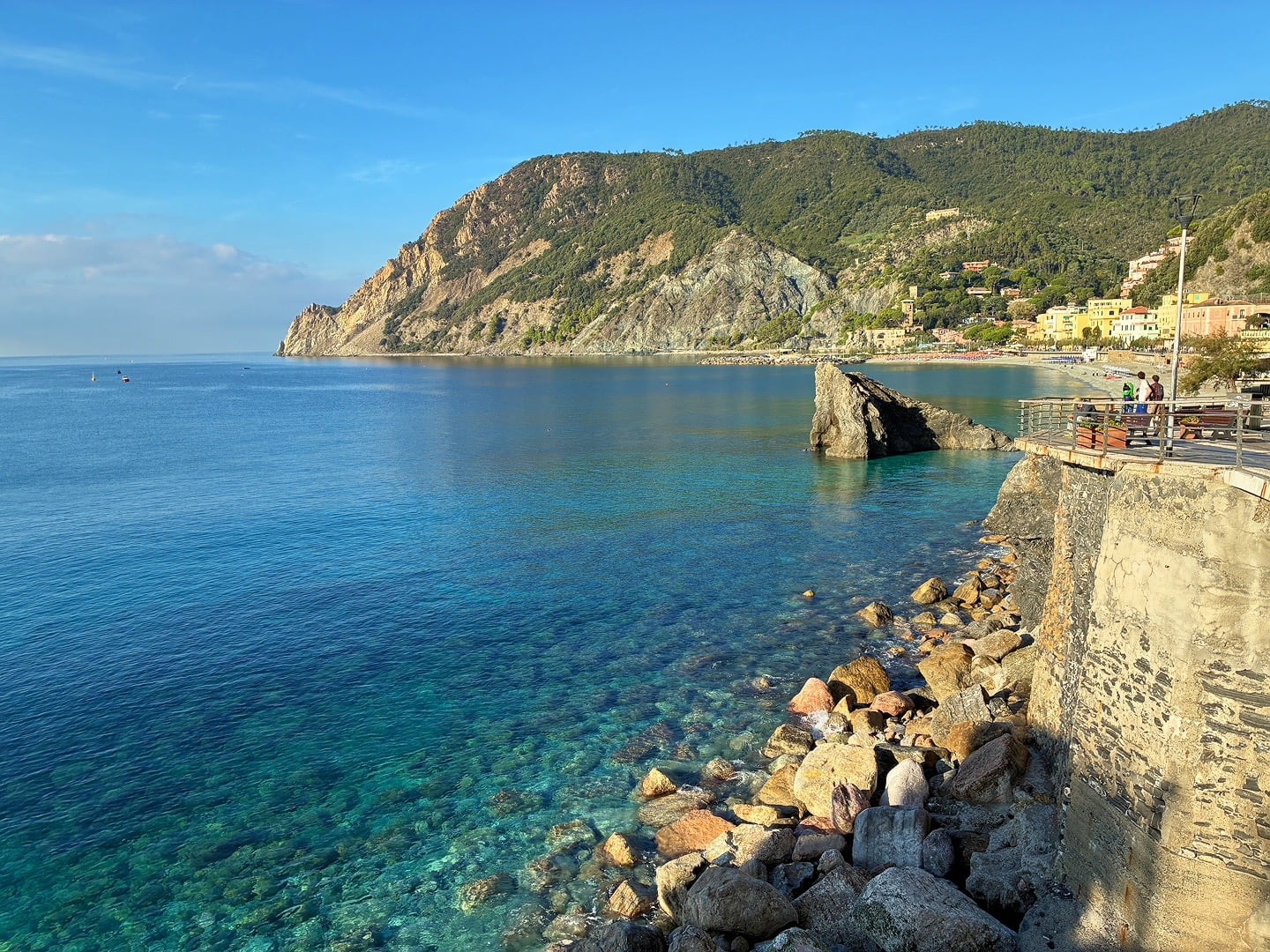
From the get-go, it became obvious that this wasn’t going to be a leisurely waterfront stroll!
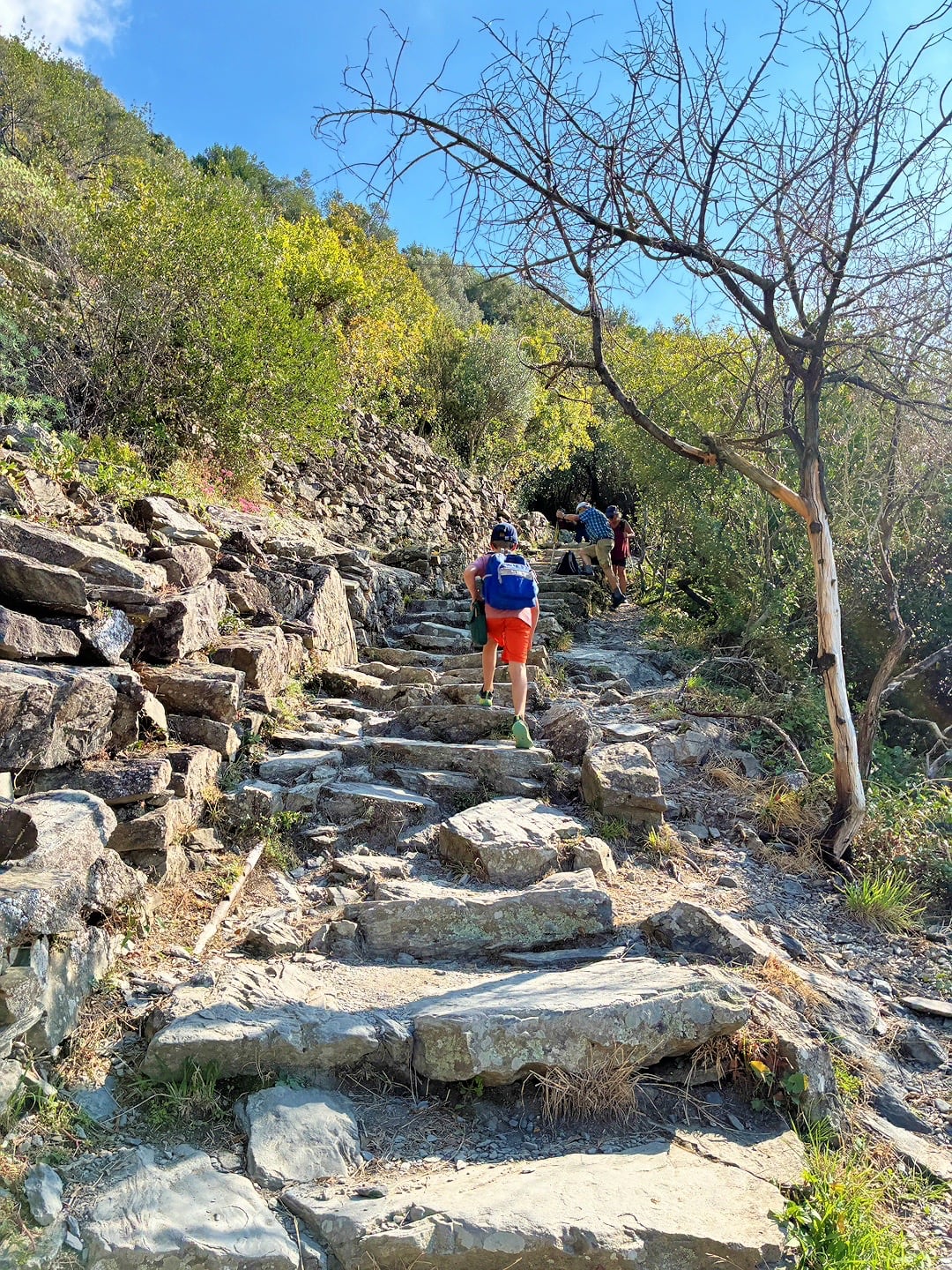
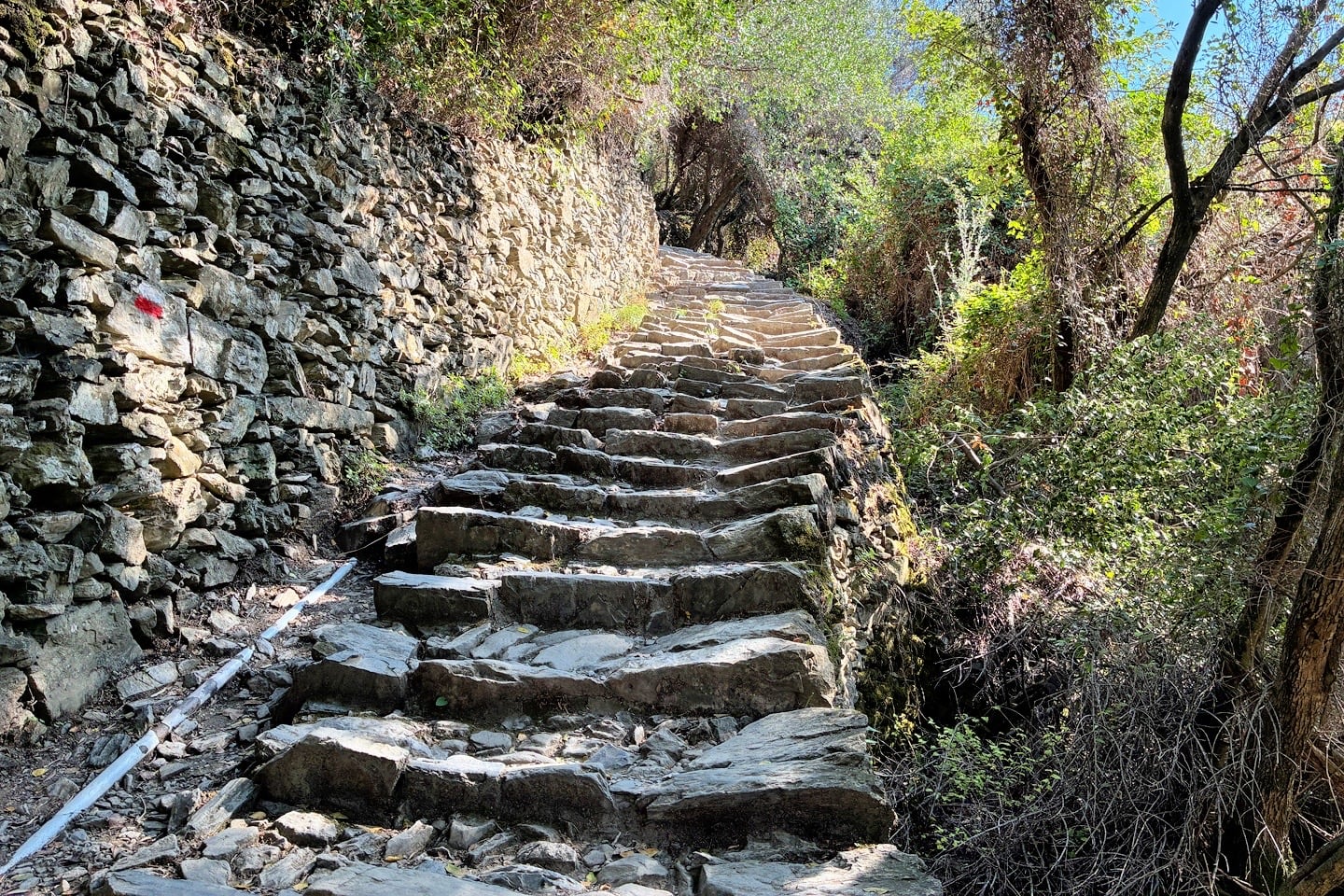
The trail climbs steeply out of Monterosso, with plenty of stone steps and enough elevation gain to get your heart pumping.
In fact, this section felt considerably more demanding than the next stretch between Vernazza and Corniglia (which had it’s moments as well).
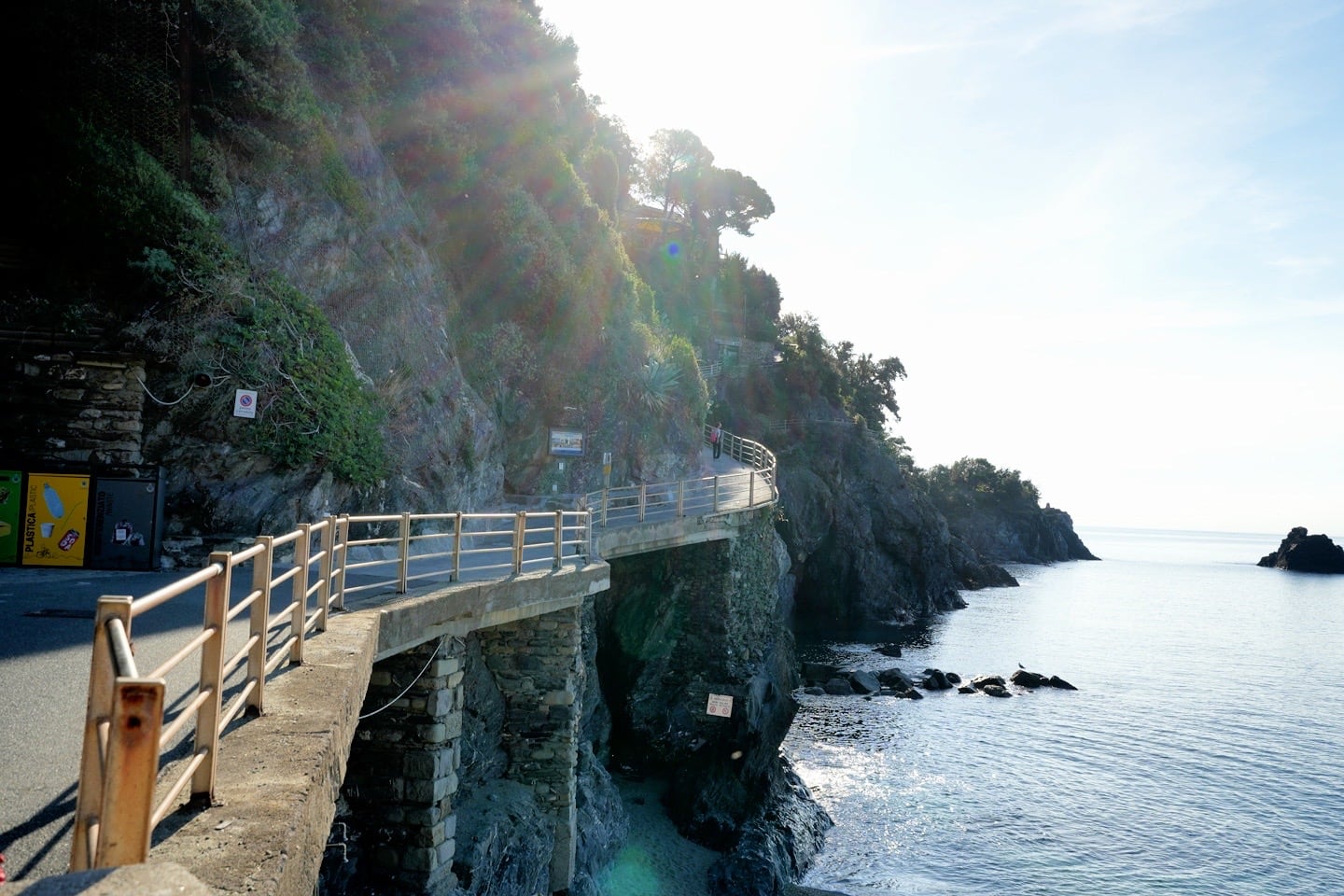
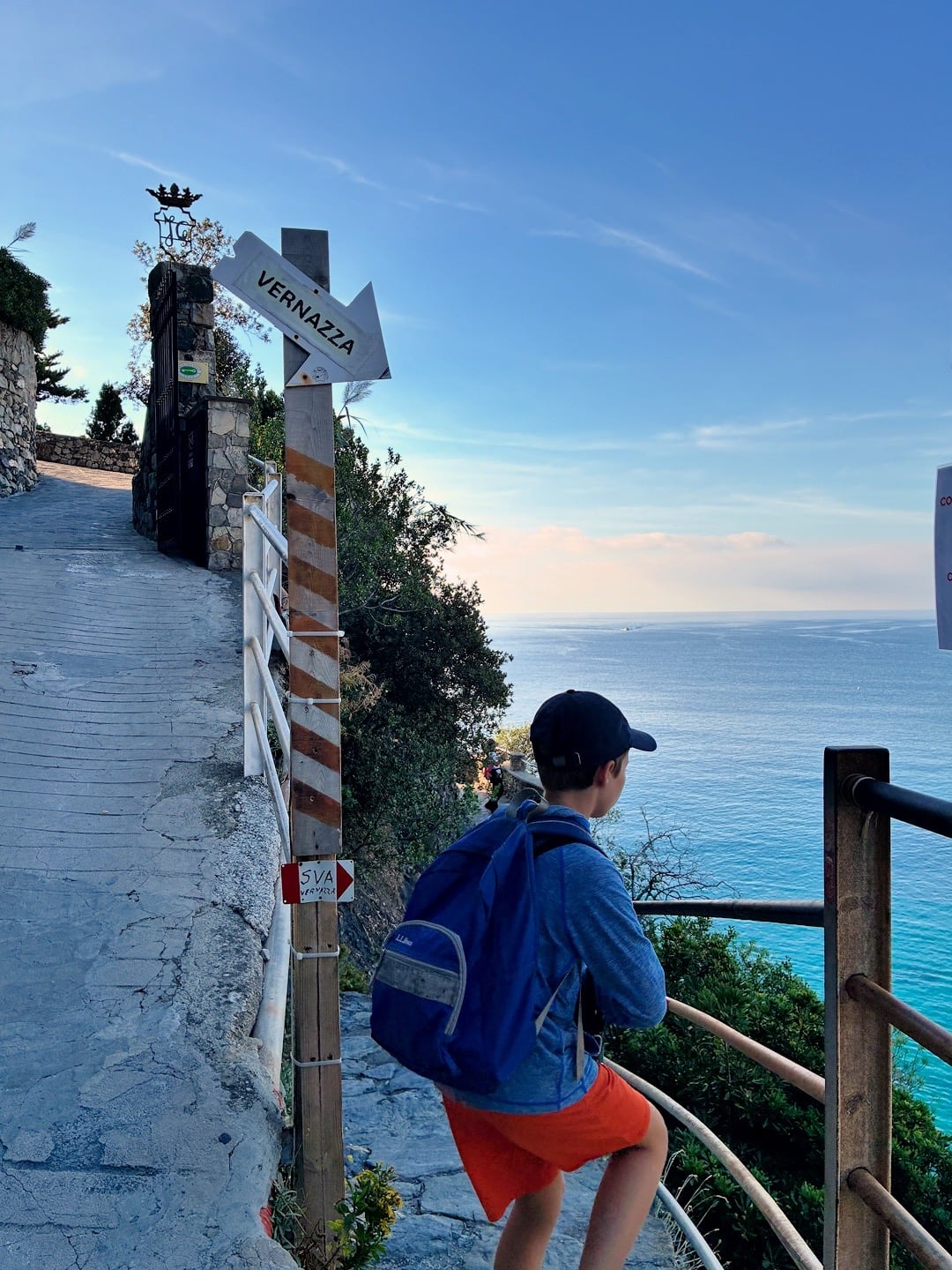
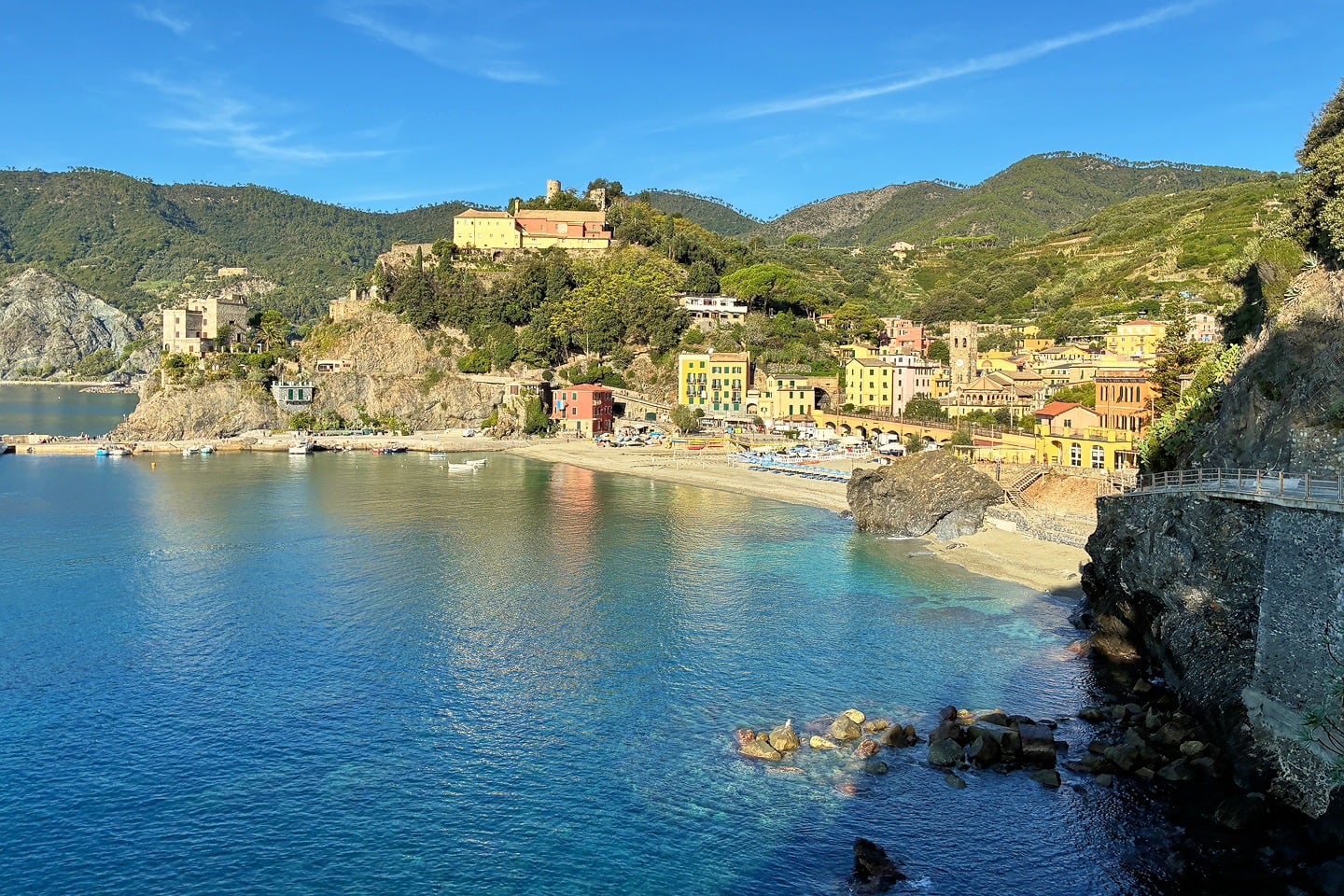
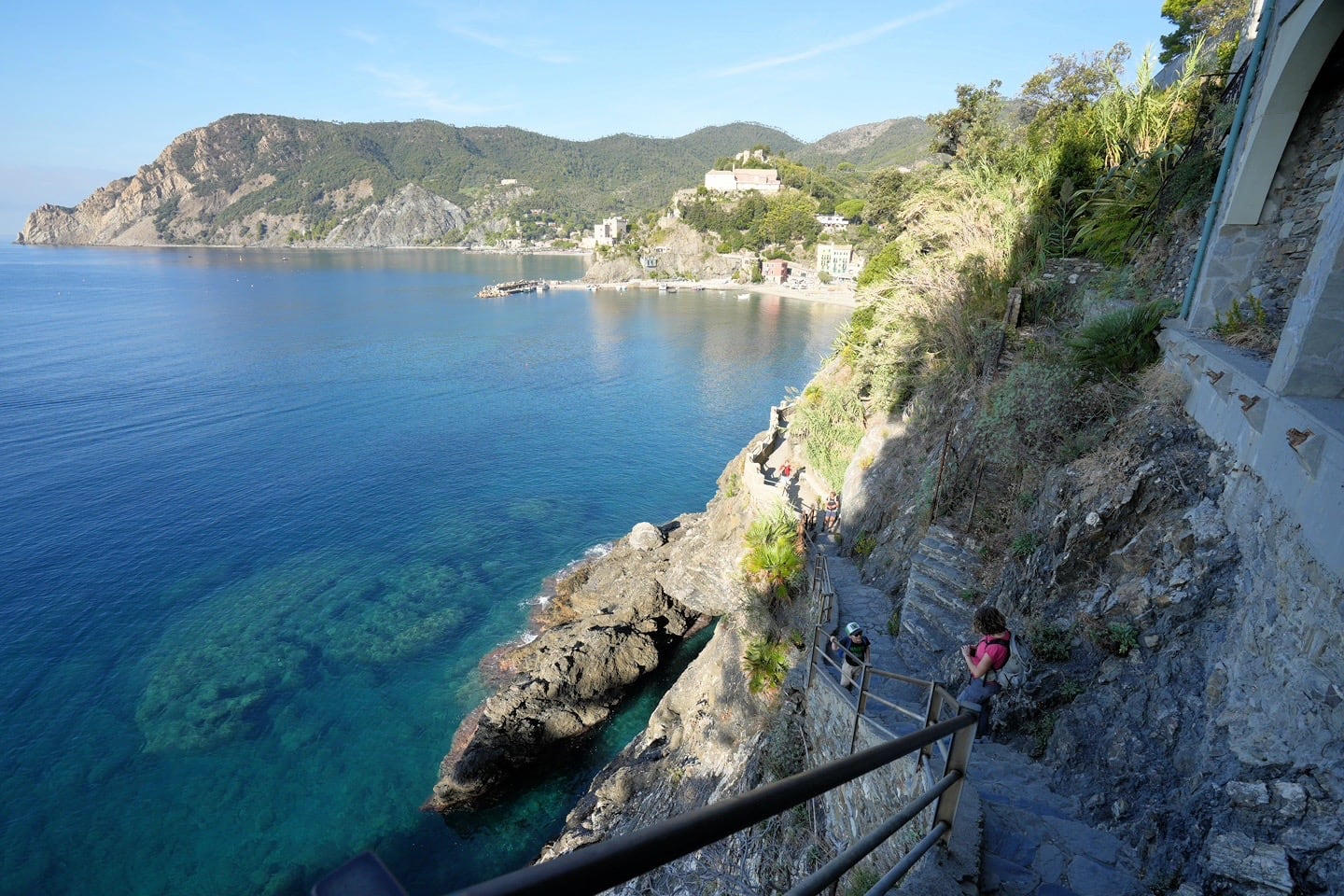
The good news is that much of the trail passes through shaded areas in mid-morning, which we appreciated even in October. I’d imagine that shade becomes even more valuable during the hotter summer months.
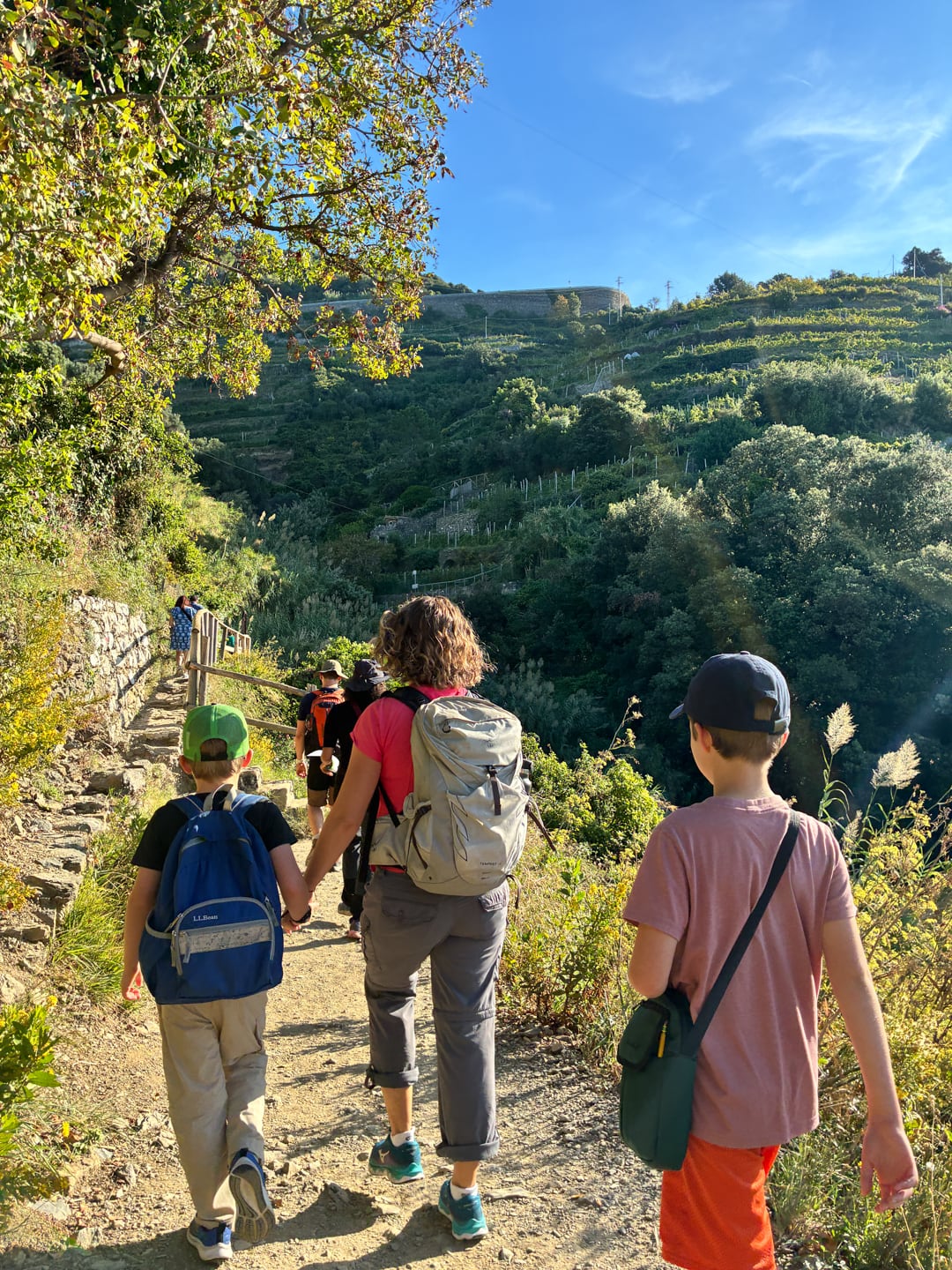
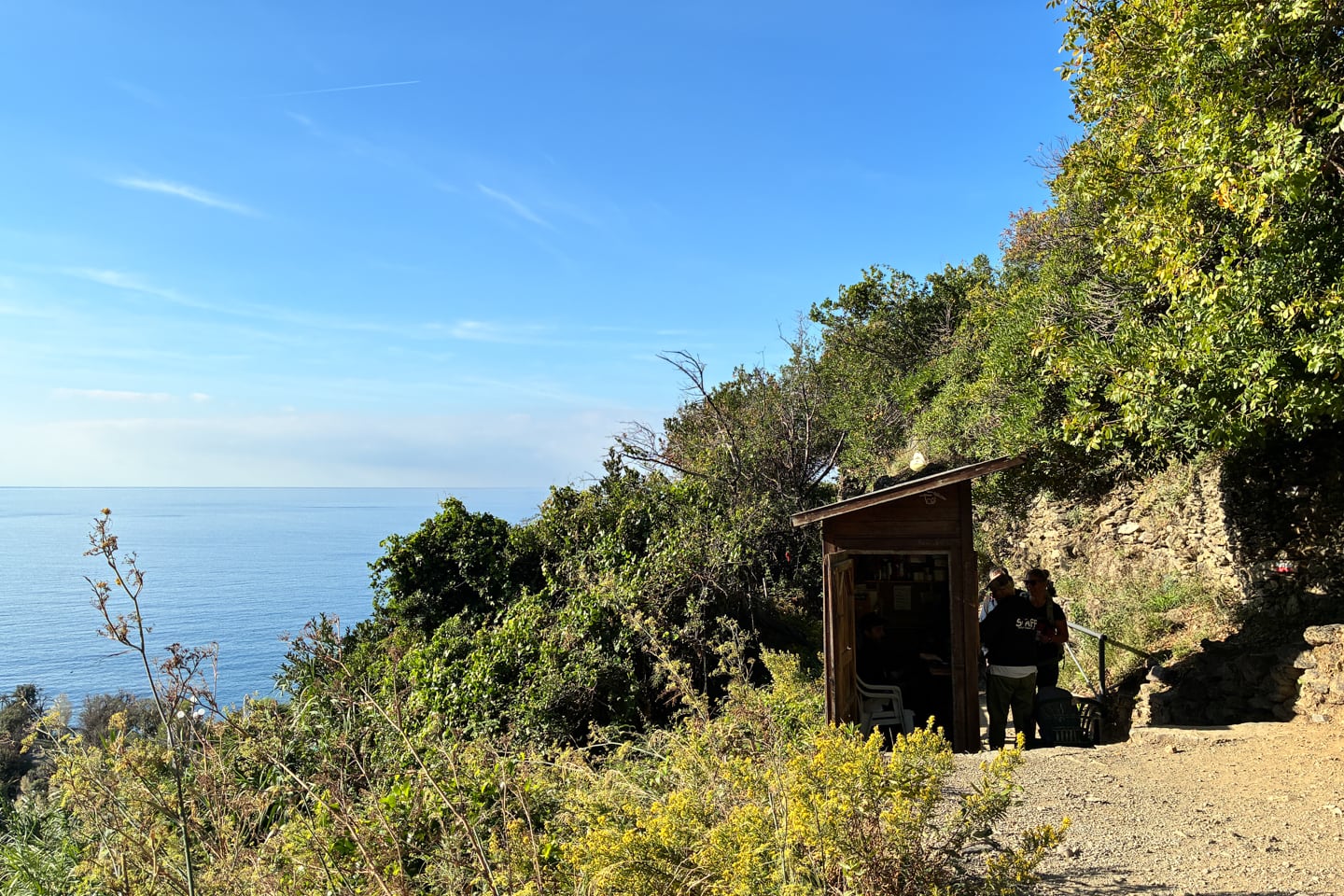
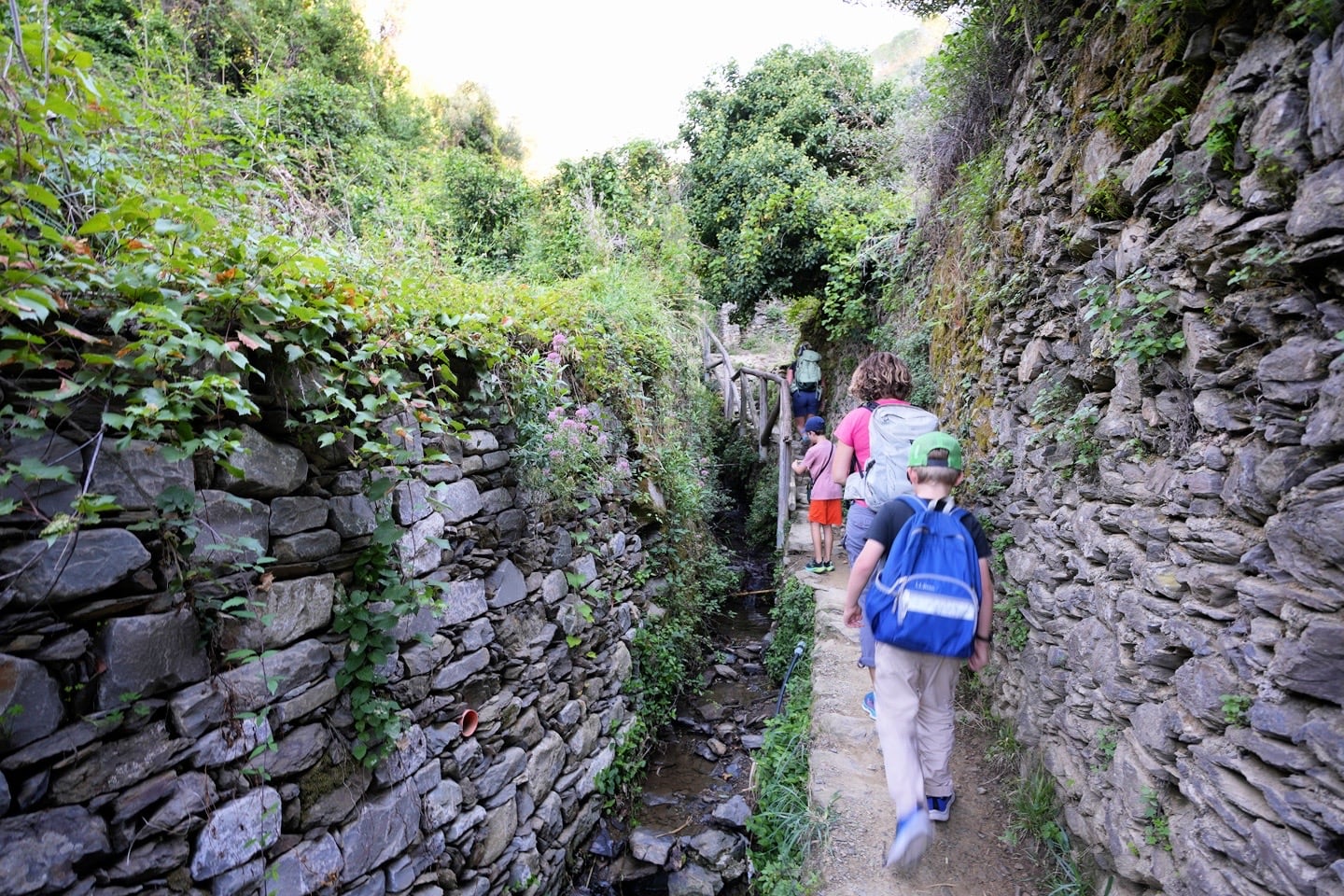
And the views? More wonderful than we imagined (the weather had a lot to do with that, though).
The trail winds along the rugged coastline, passing terraced hillsides and offering increasingly breathtaking views over the Mediterranean.
We found ourselves stopping a lot, partly to catch our breath and partly because we couldn’t resist another photograph.
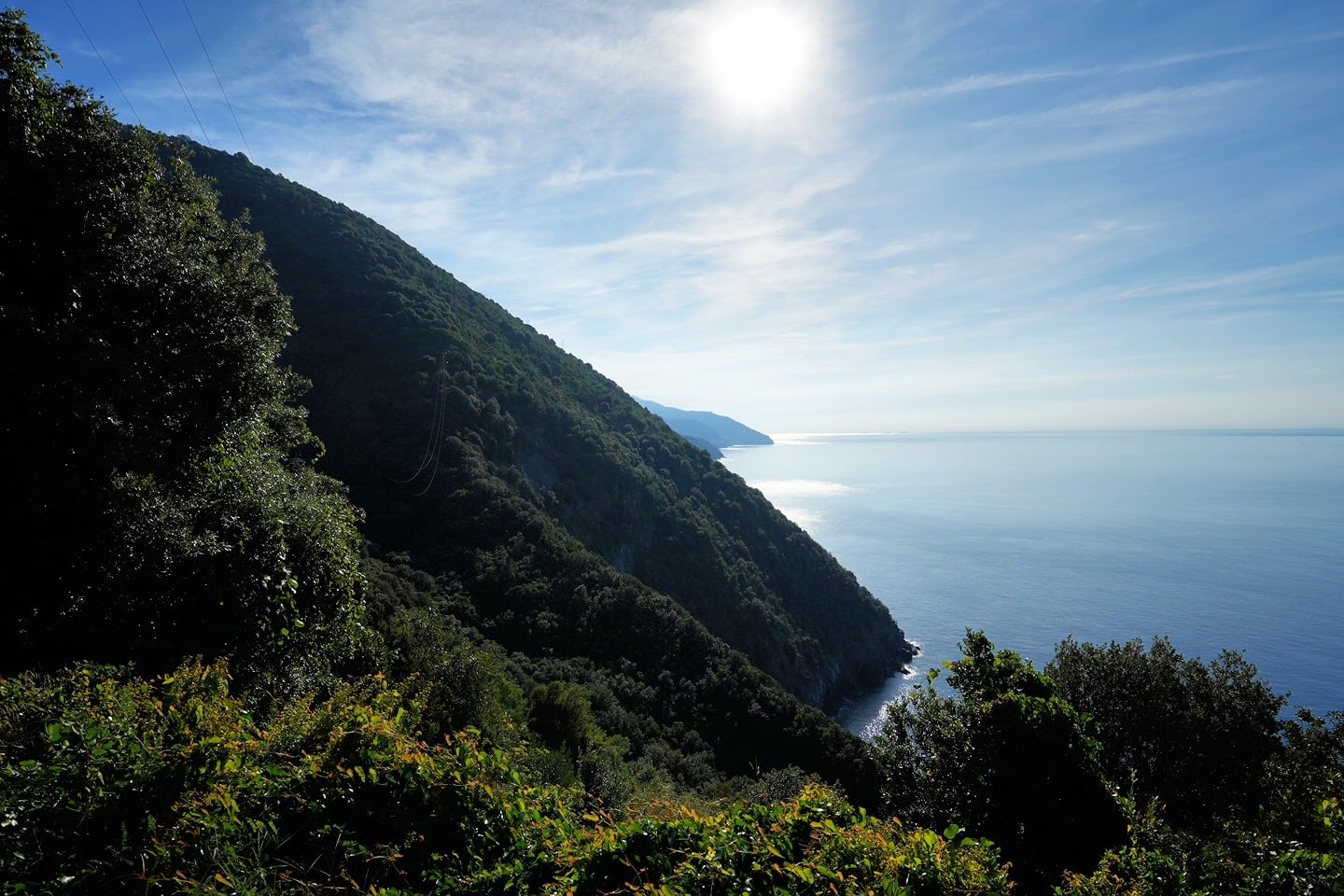
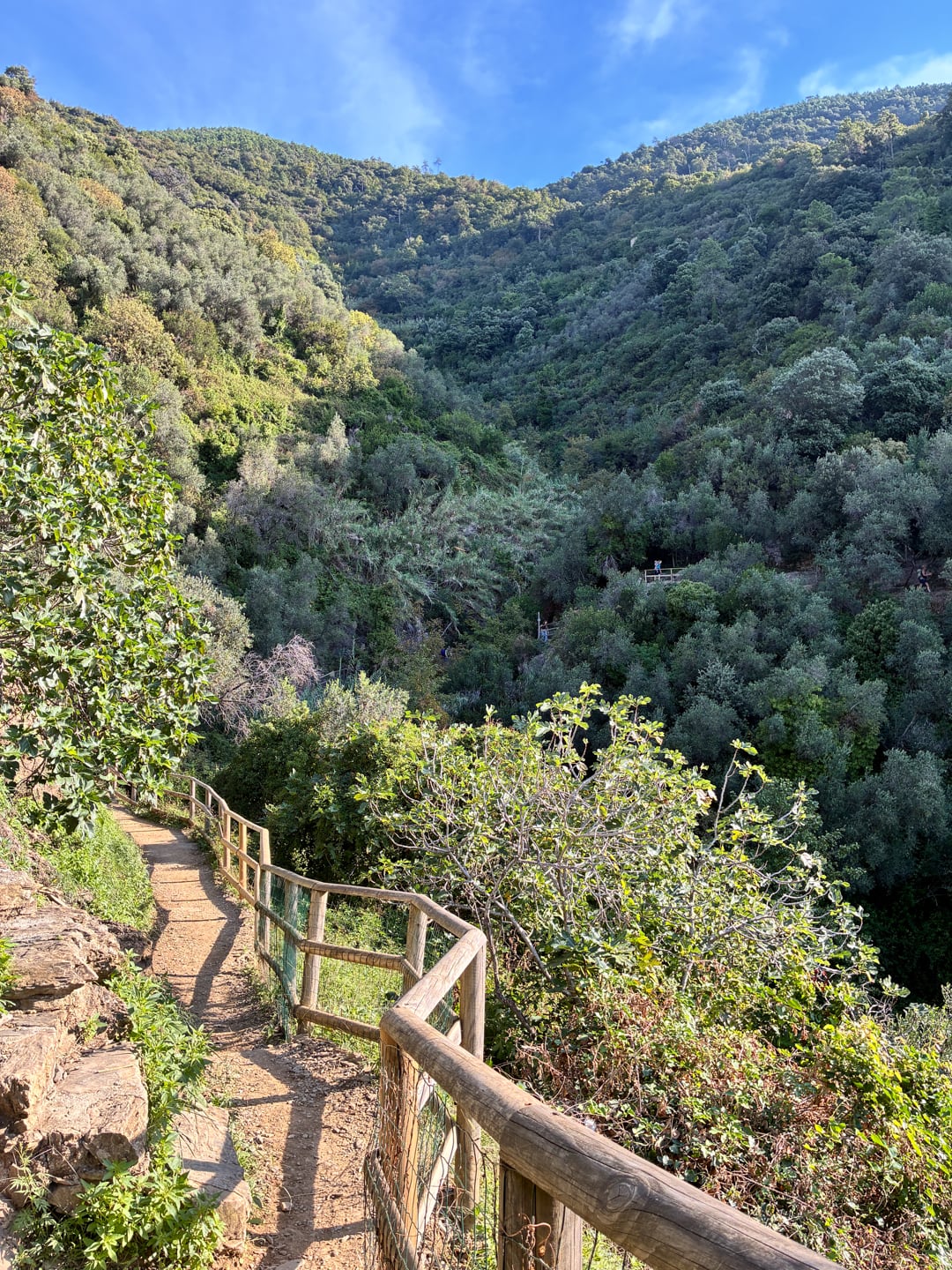
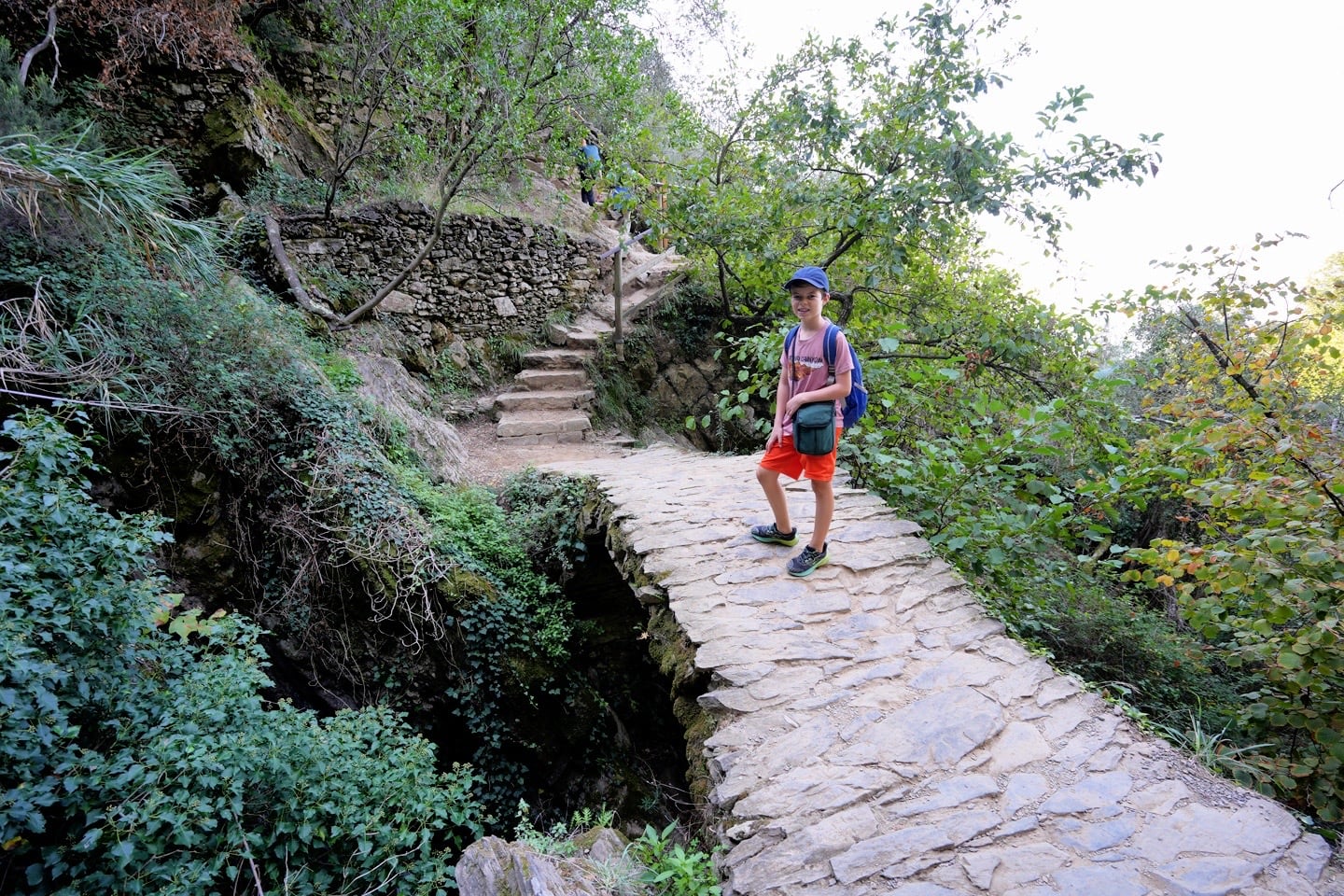
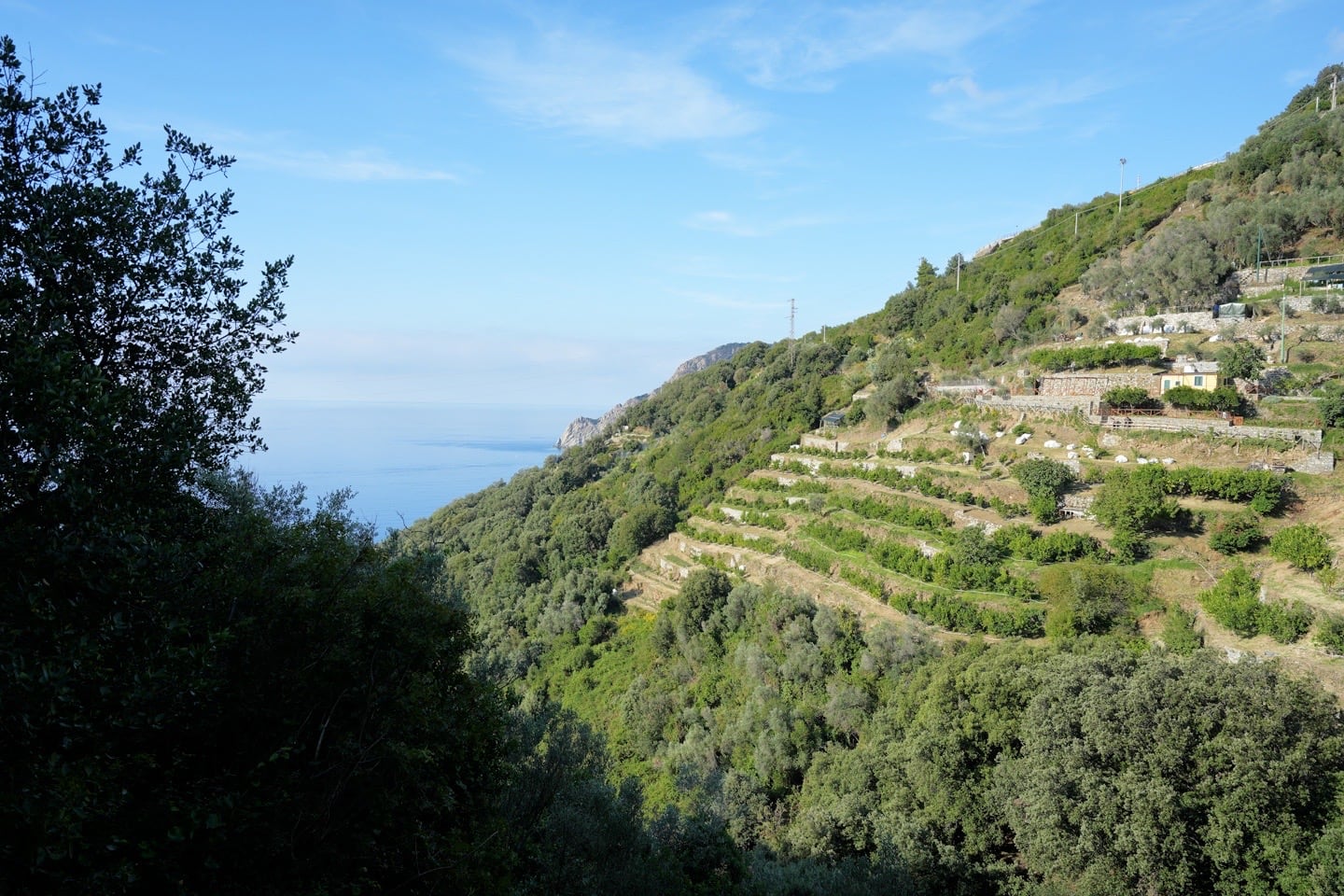
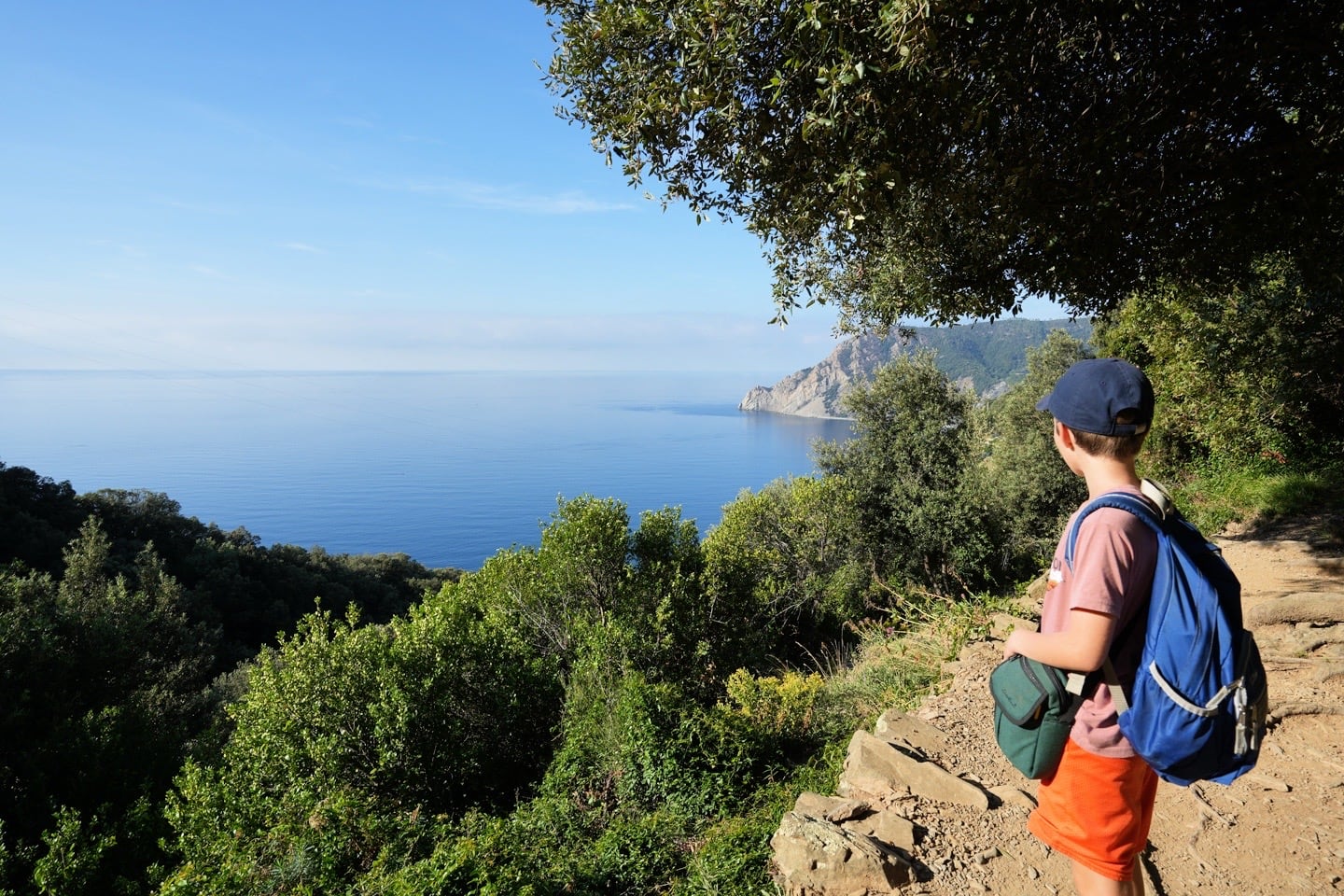
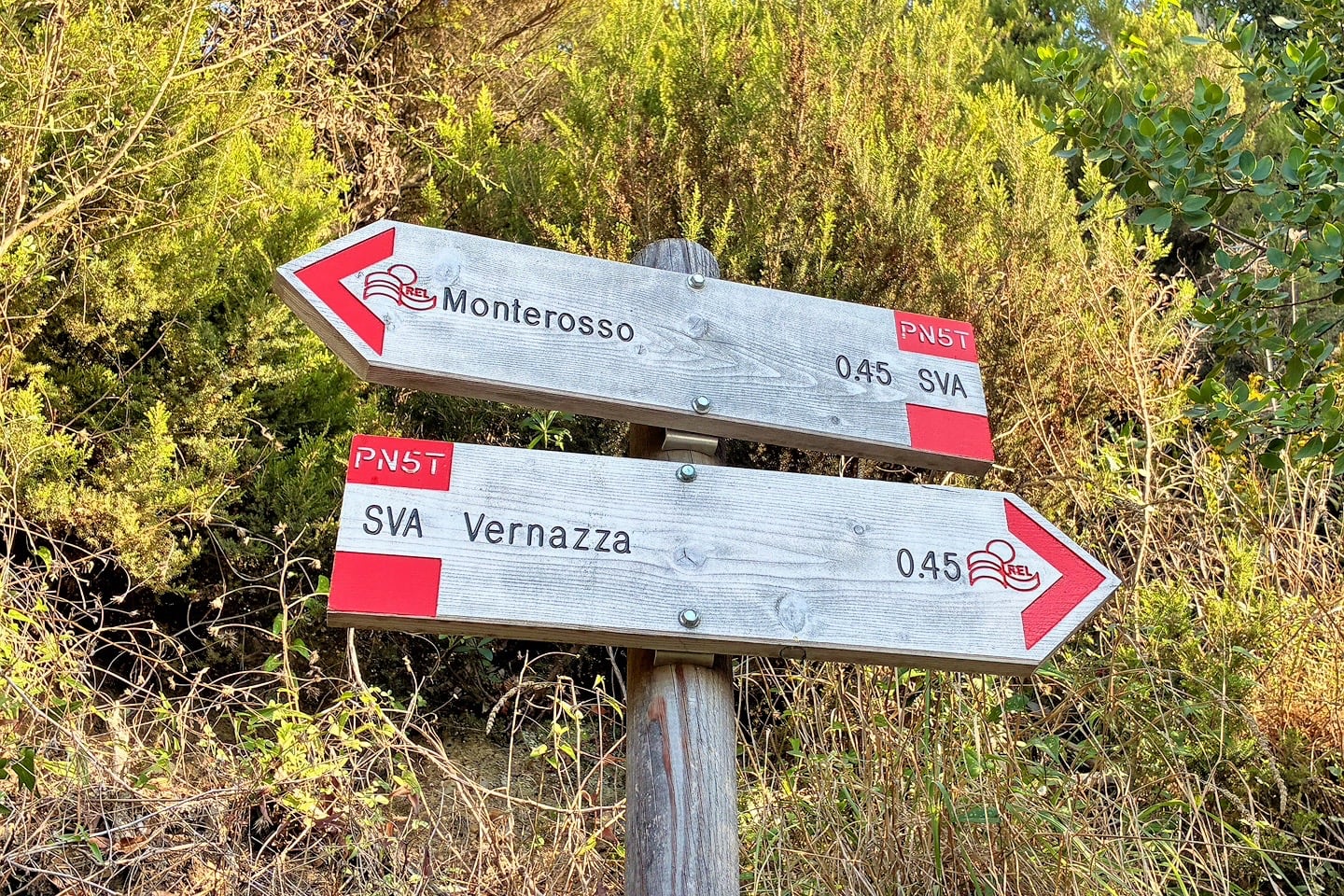
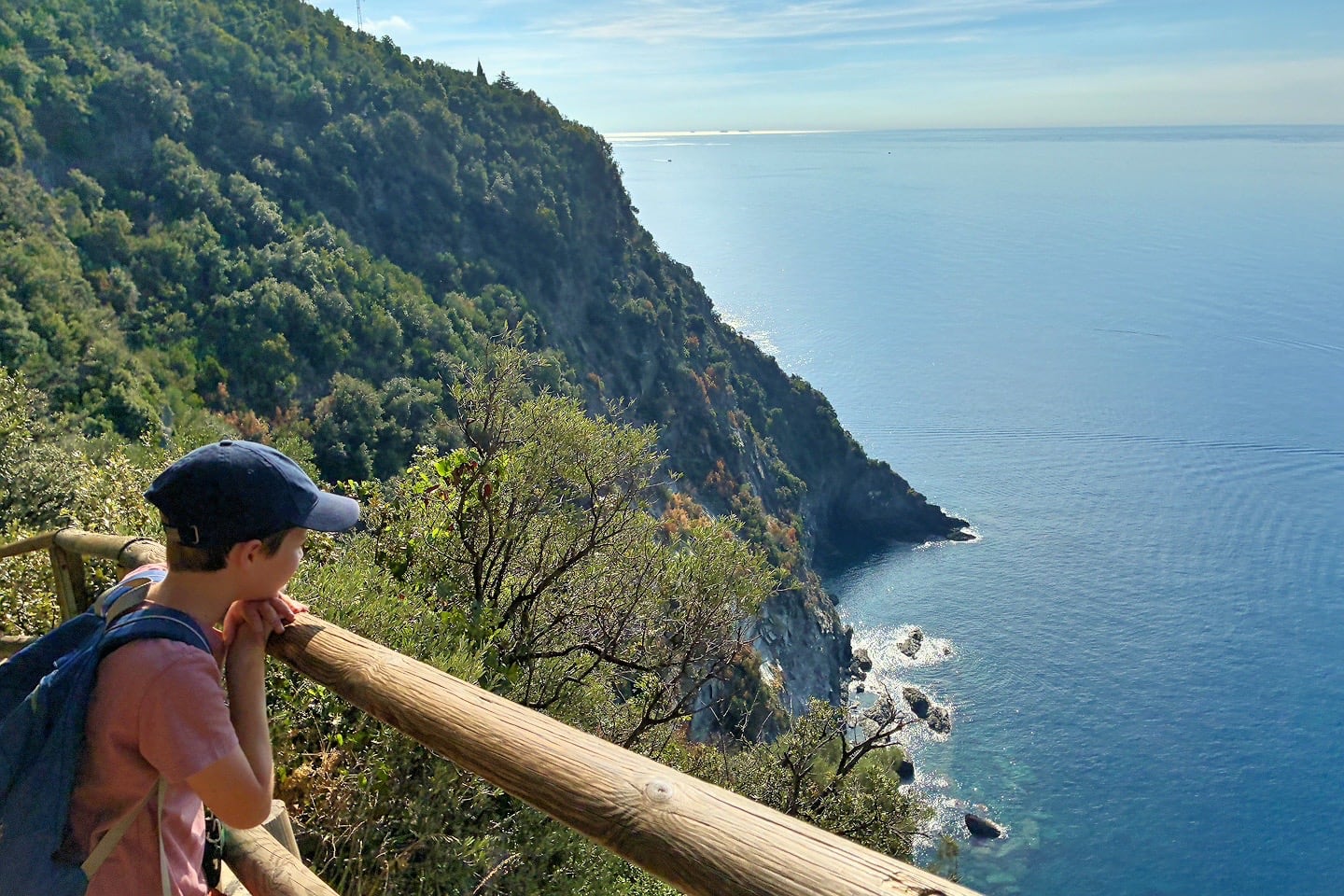
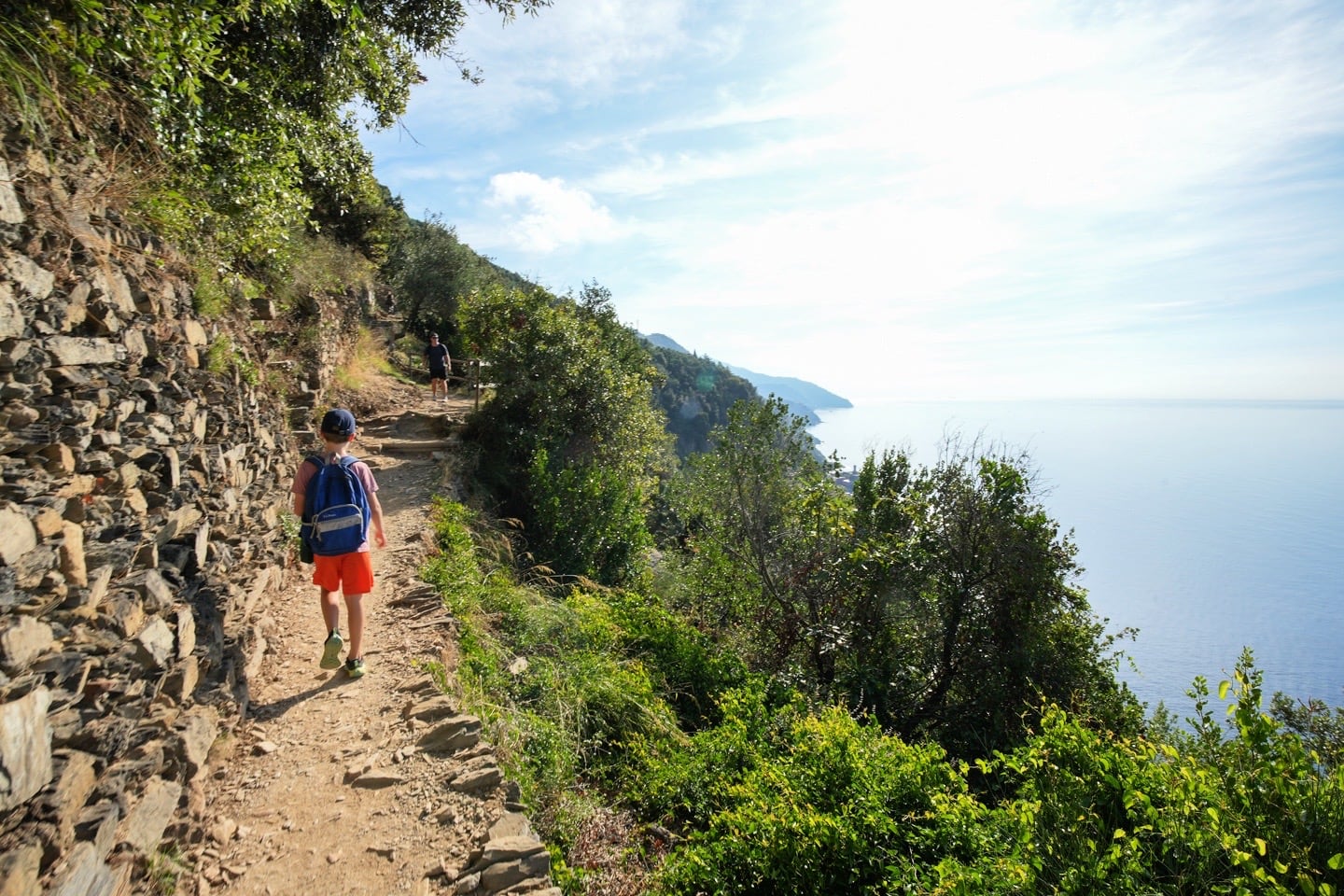
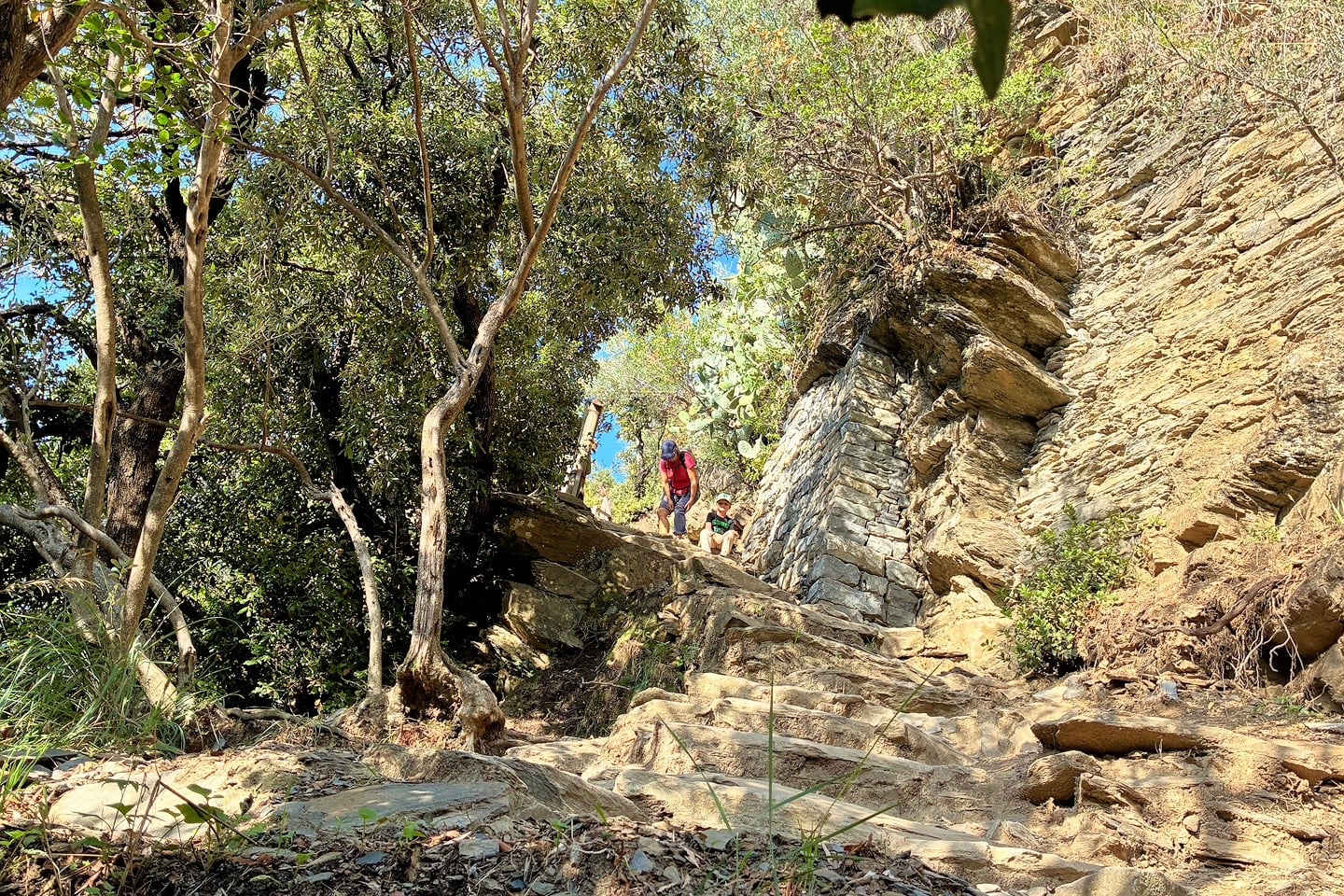
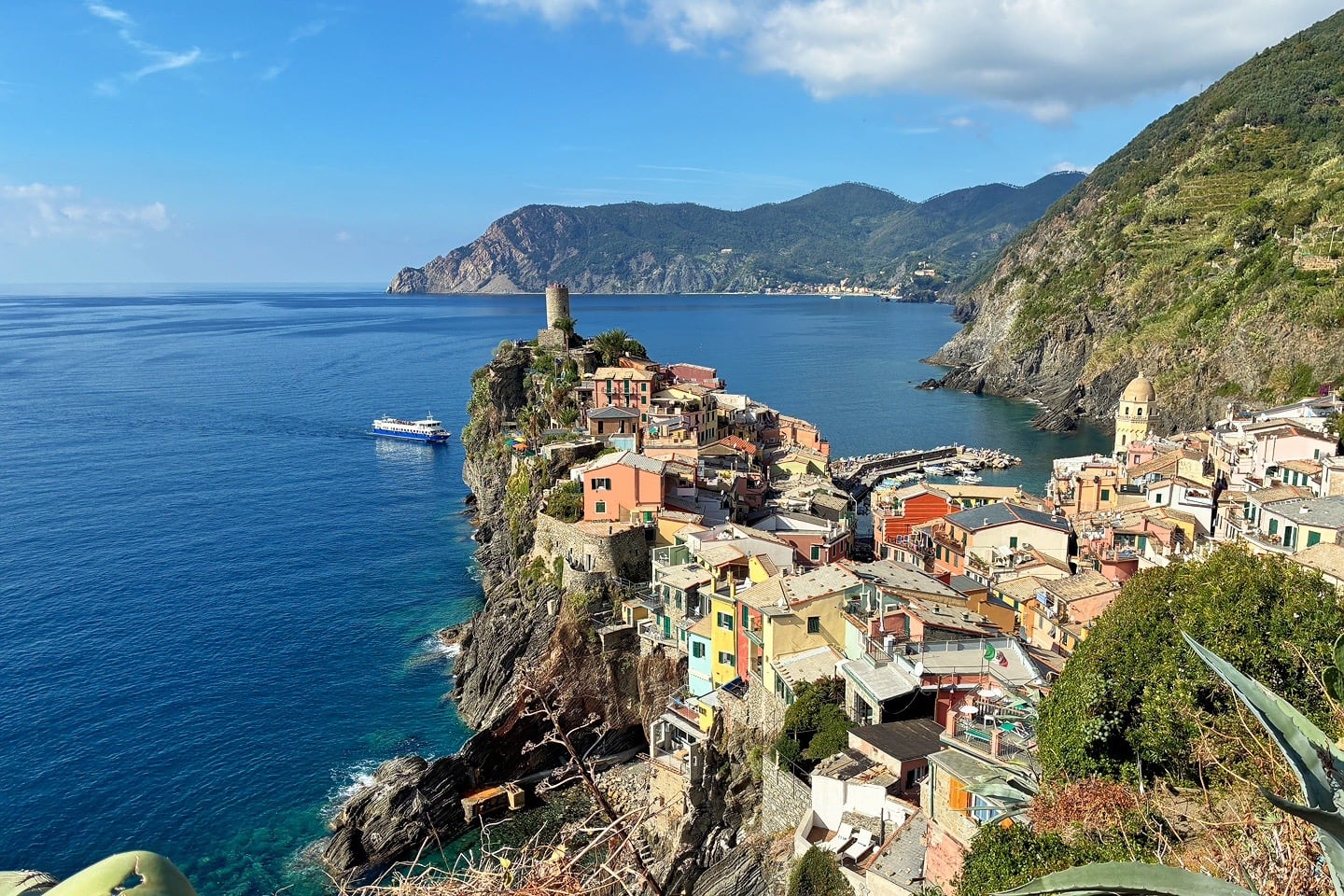
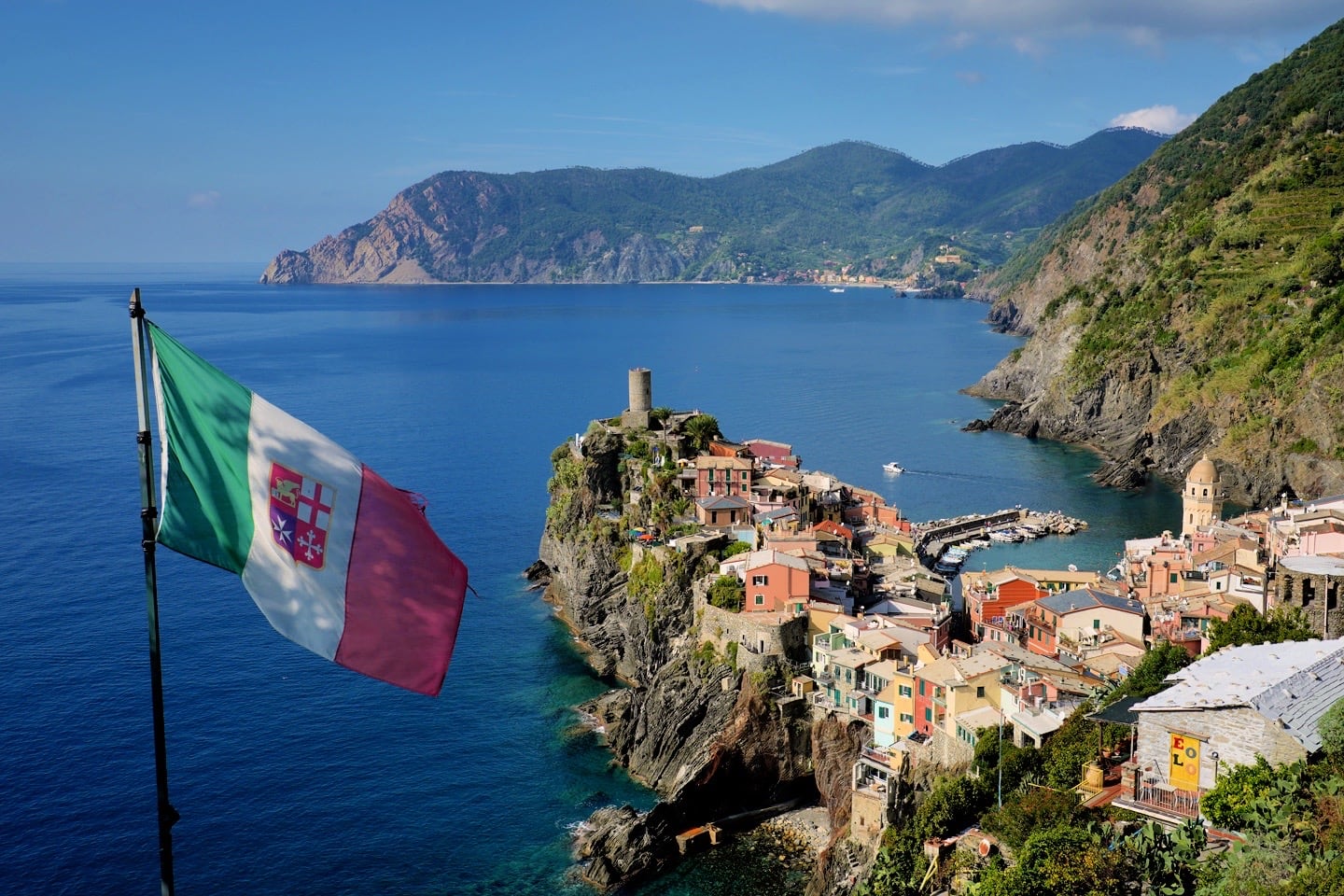
As we approached Vernazza, we finally got the views we came to Cinque Terre for!
The colorful buildings wrapped around the tiny harbor look supremely photogenic from just about any angle, but seeing Vernazza from above after hiking along the coast is on another level (even if the intense backlighting from the mid-morning sun seemed to be conspiring against our photos).
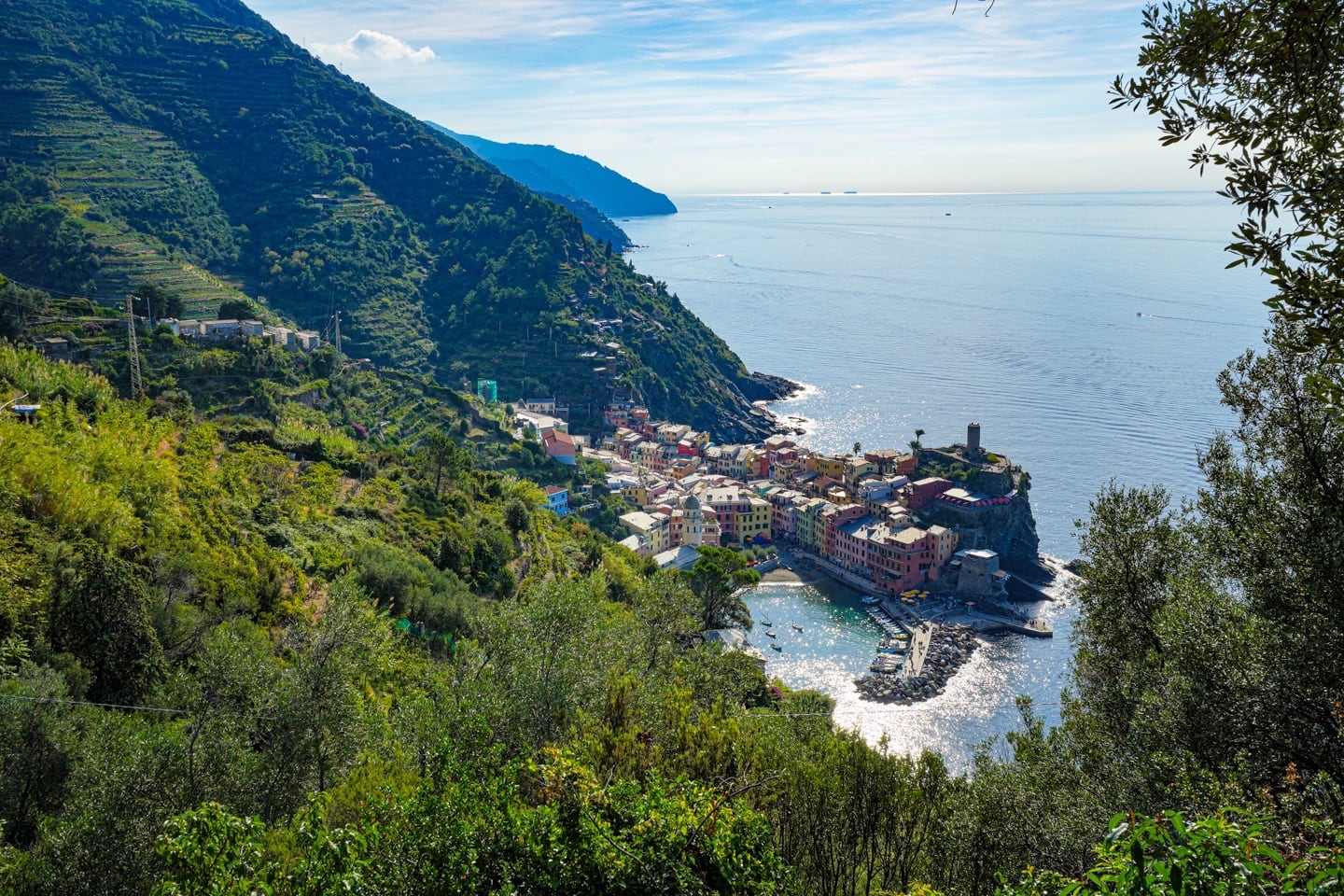
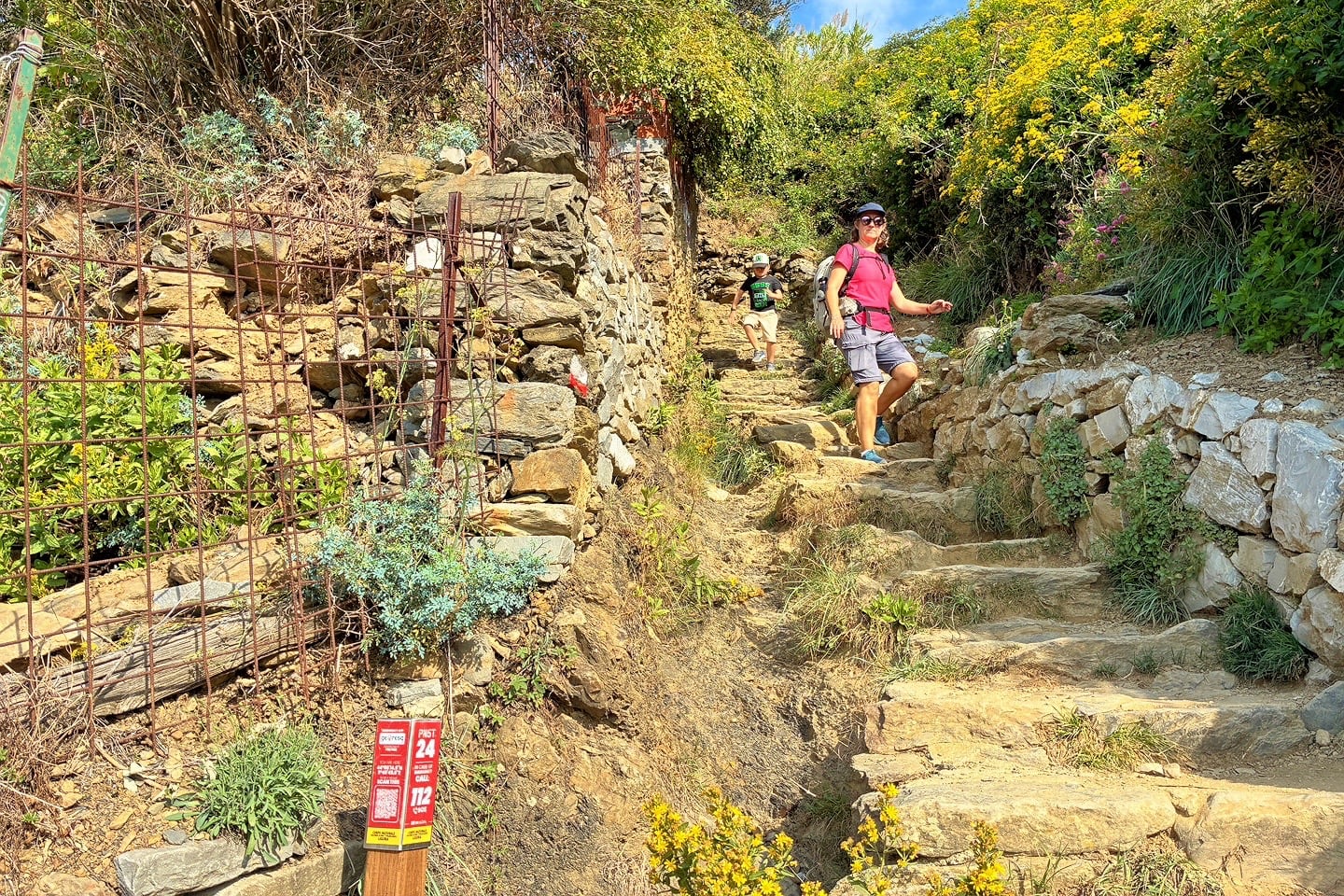
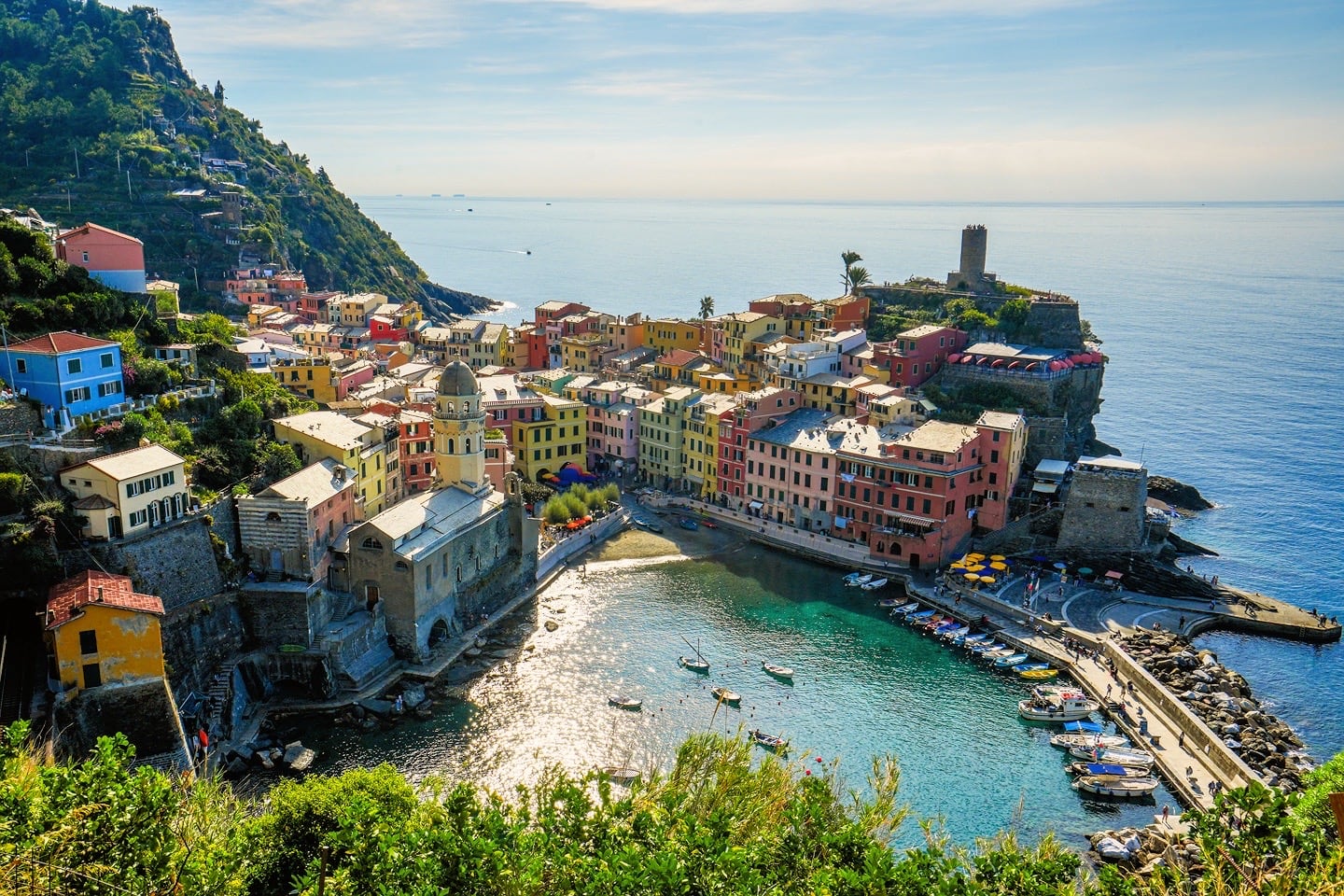
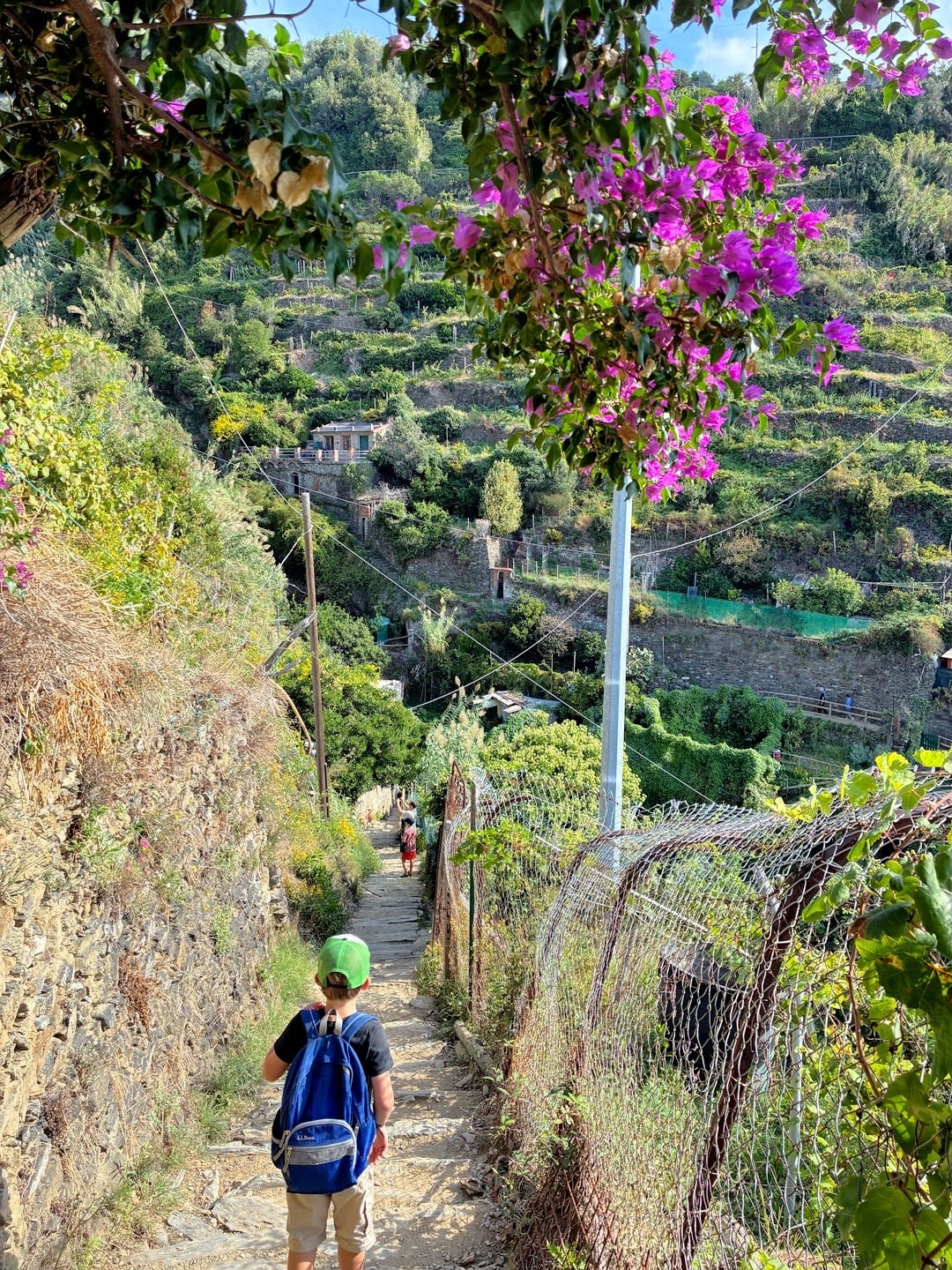
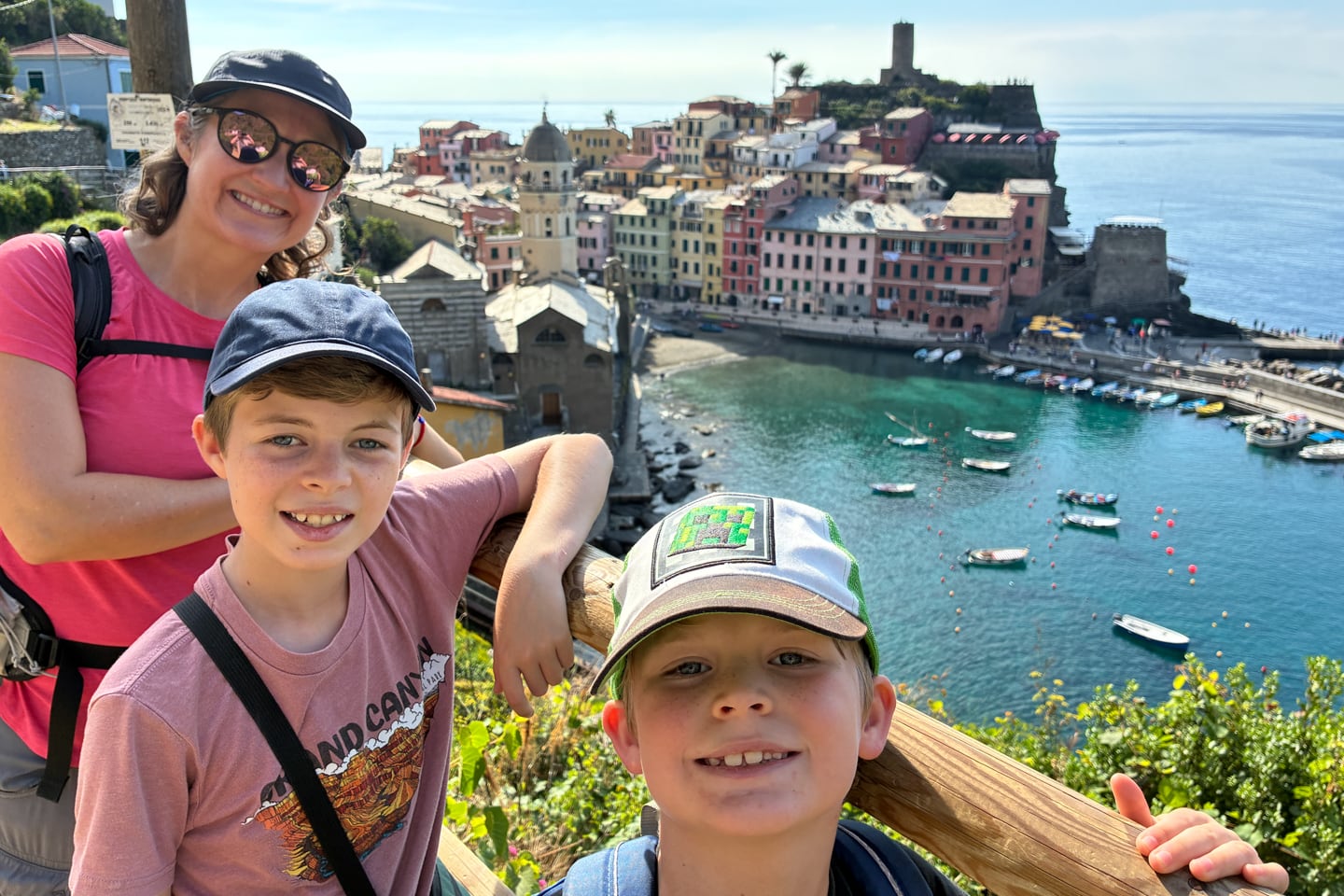
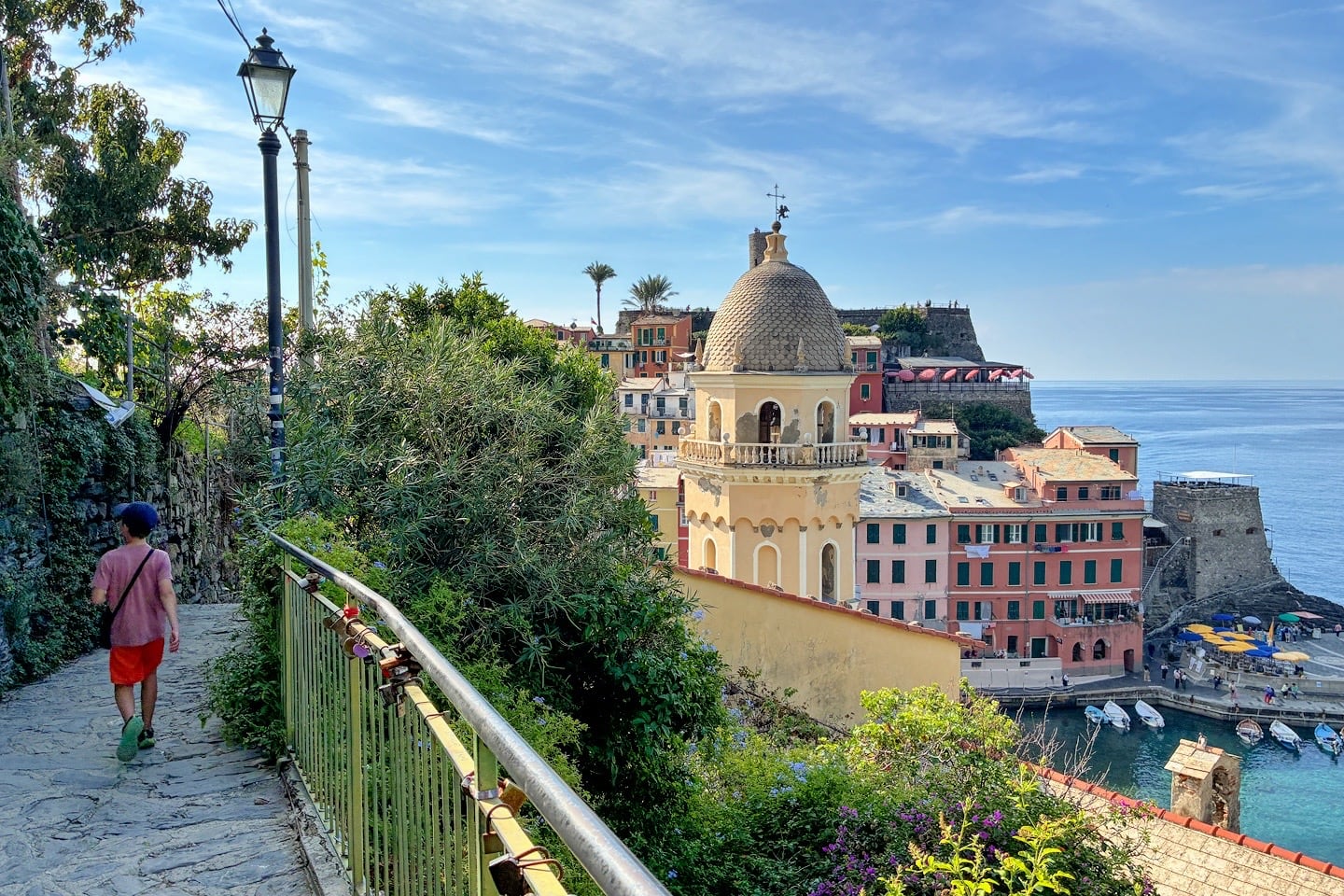
One detail we think worth mentioning here is that some of the most iconic viewpoints of Vernazza are along the paid section of the trail, beyond the ticket checkpoint.
So if you’re hoping to take that classic photograph overlooking Vernazza, you’ll probably need a hiking ticket (or you can just settle for the view right before the checkpoint, which isn’t bad at all).
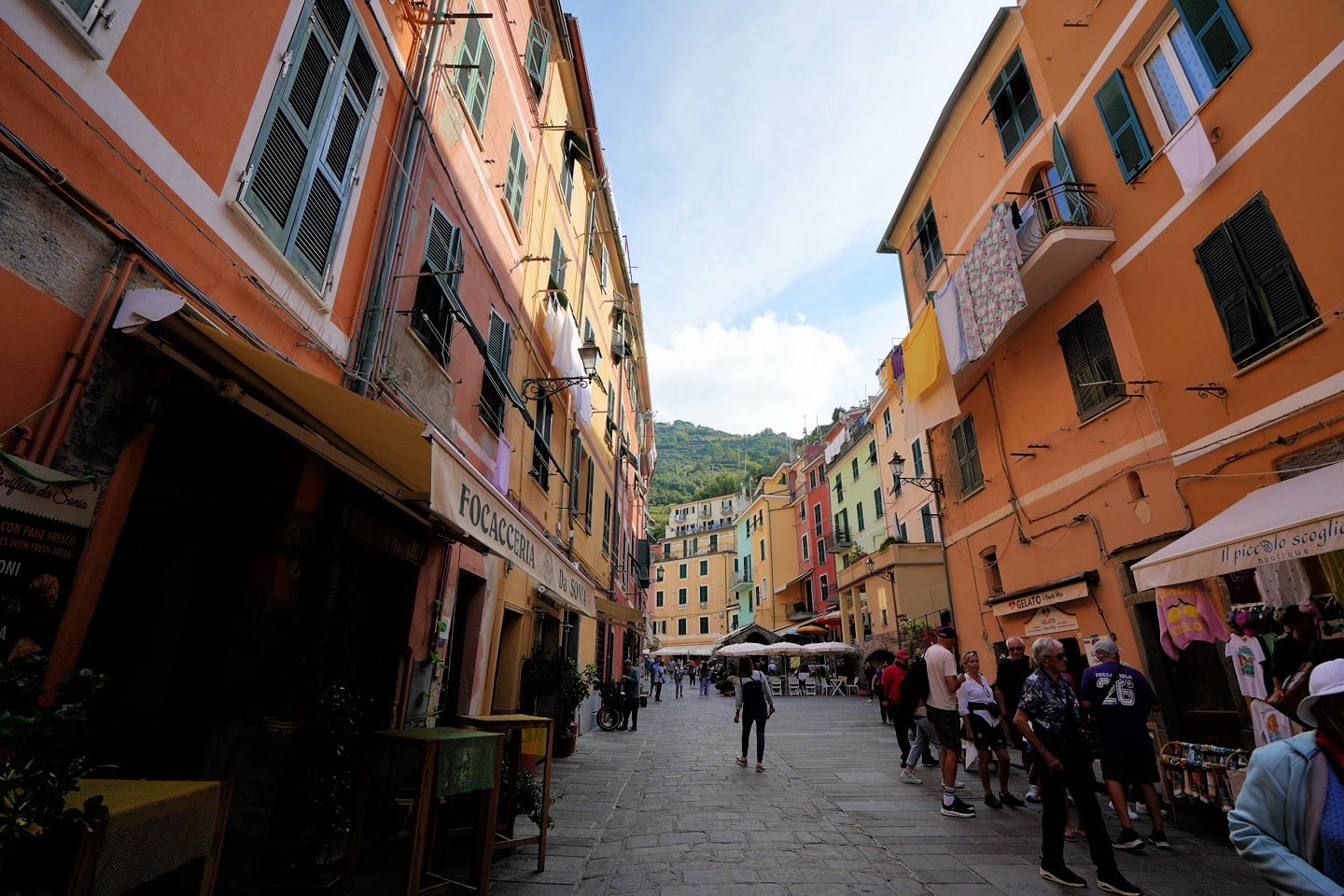
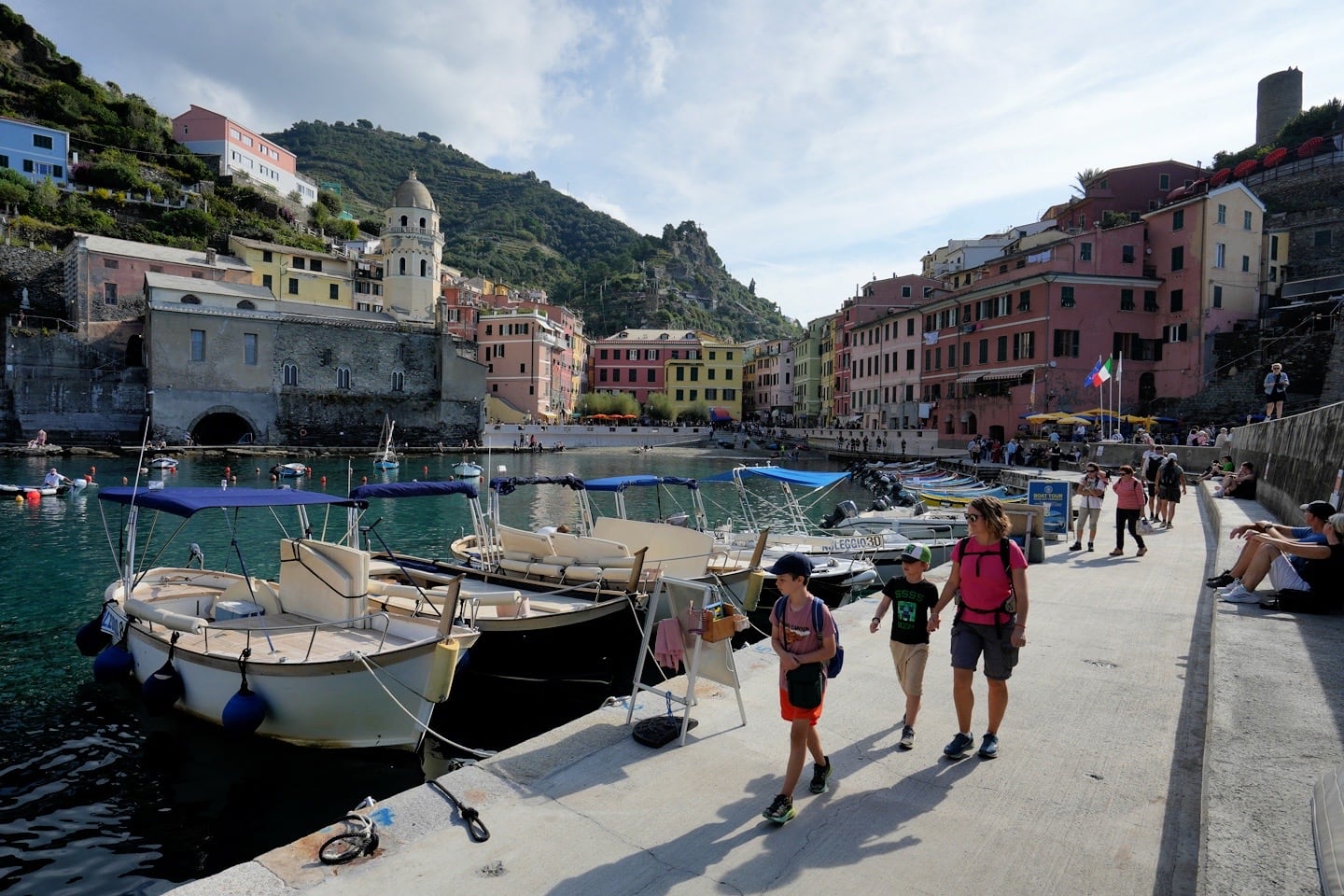
✪ Our Take Monterosso to Vernazza is a fantastic hike, particularly for some of those famous Cinque Terre coastal panoramas. Just don’t underestimate the climbing, especially during warmer months.
② Vernazza to Corniglia: Spectacular Views and a Well-Earned Slushy
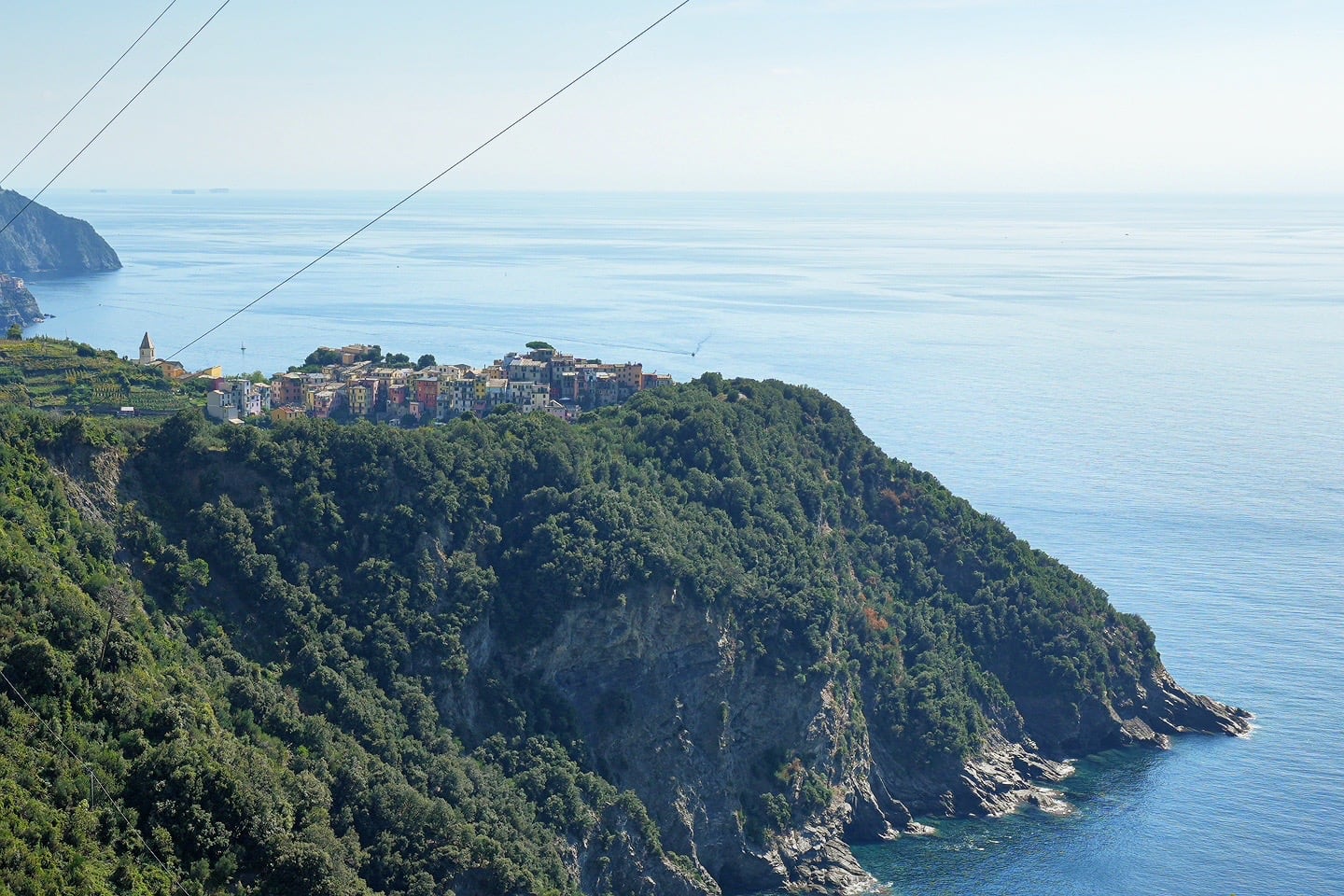
Our Vernazza to Corniglia hiking time: Longer than the first section, including a refreshment stop
After exploring Vernazza and enjoying lunch, we made our way up and out of town and continued south toward Corniglia.
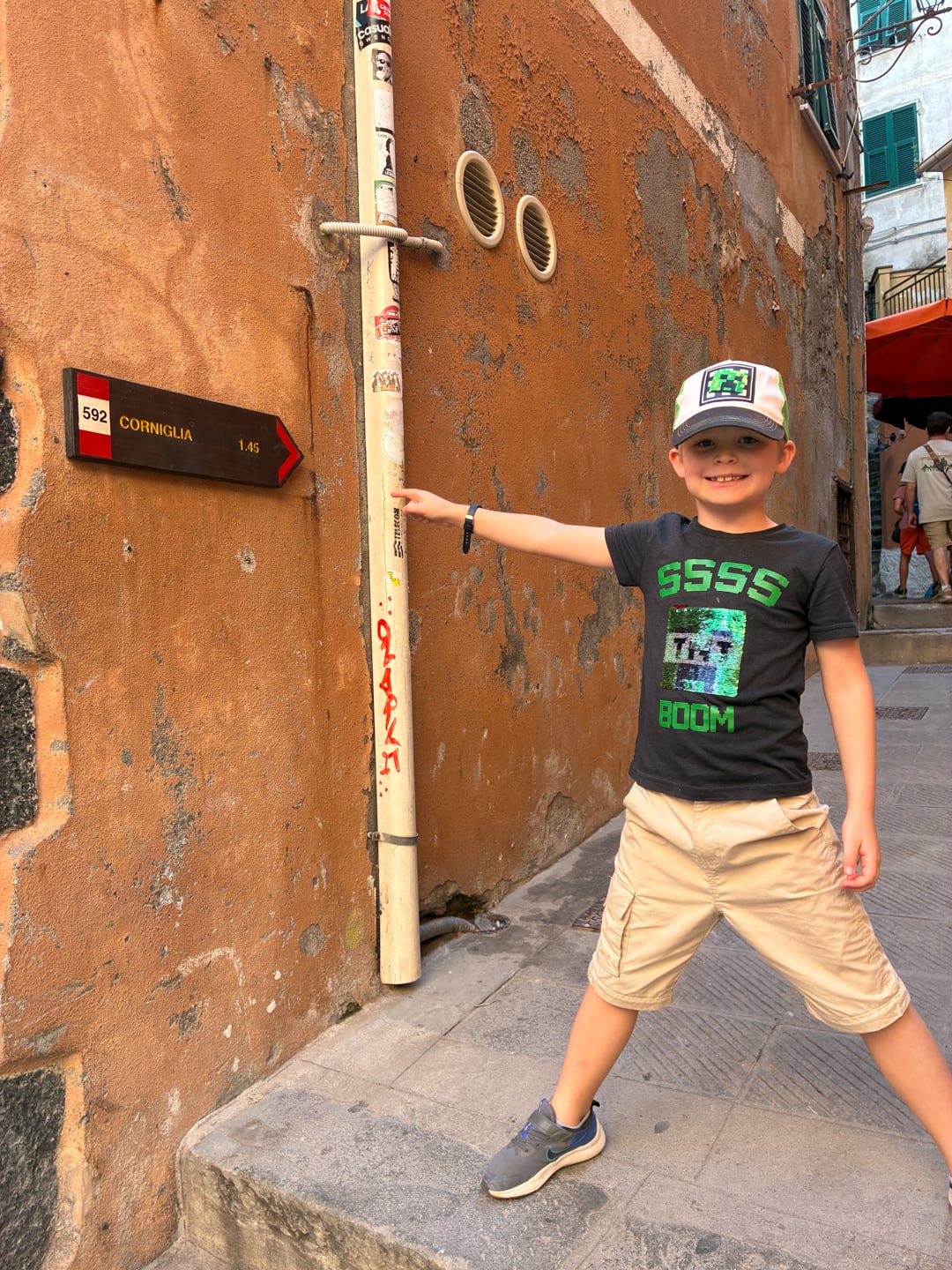
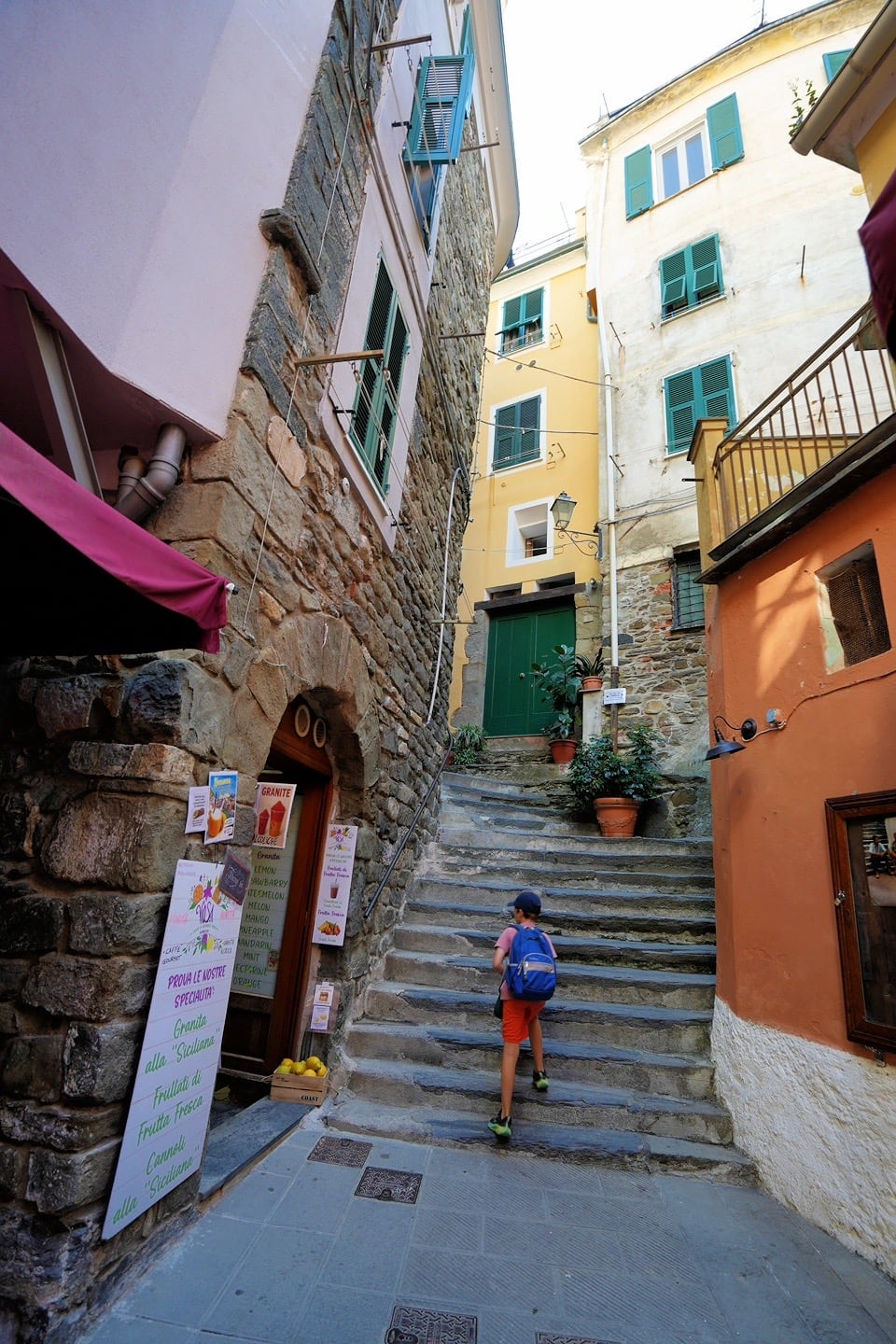
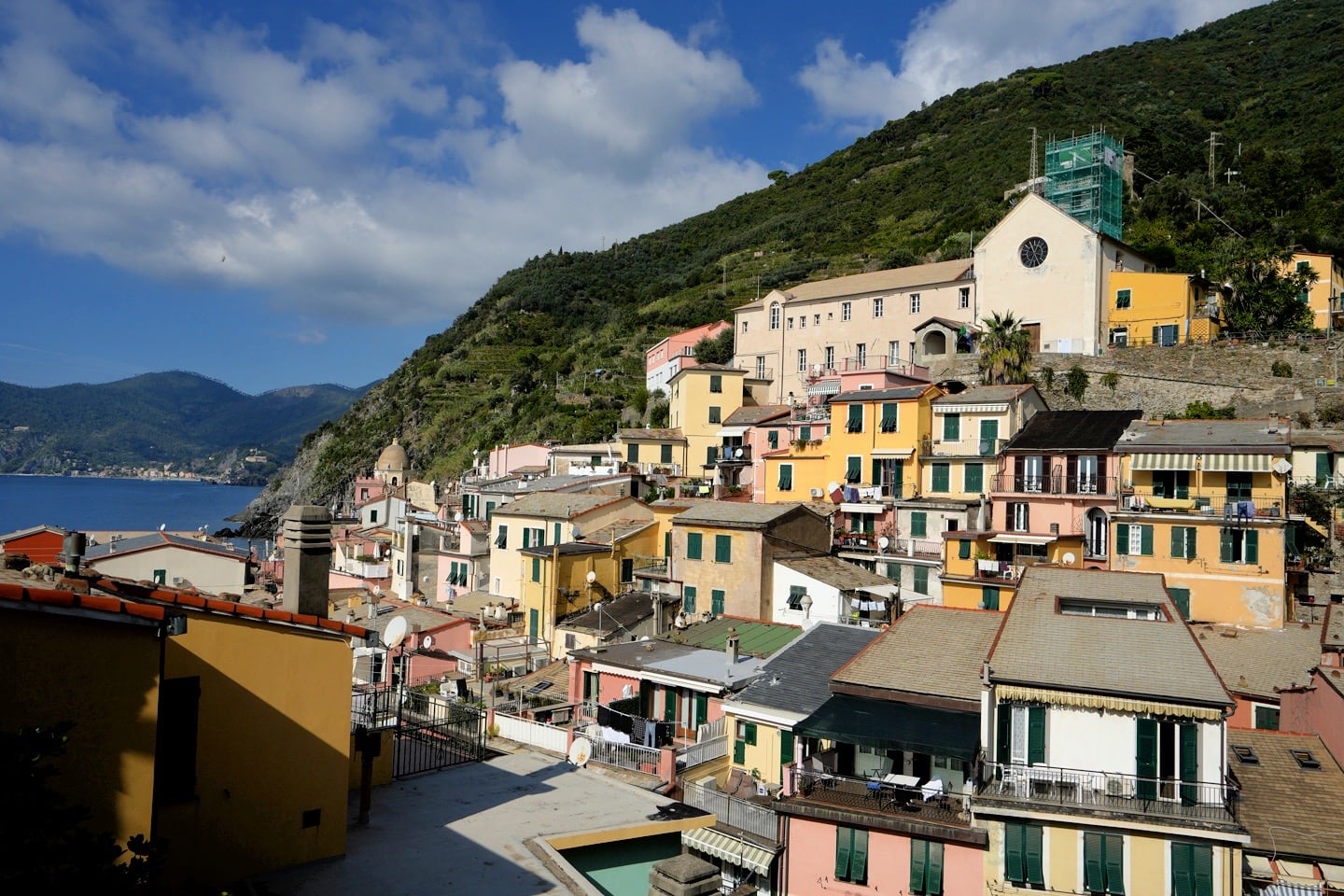
This section of the Blue Trail felt different as soon as we left Vernazza.
Where the Monterosso-Vernazza leg involved substantial climbing and some welcome shade, the route between Vernazza and Corniglia seemed much more exposed to the sun.
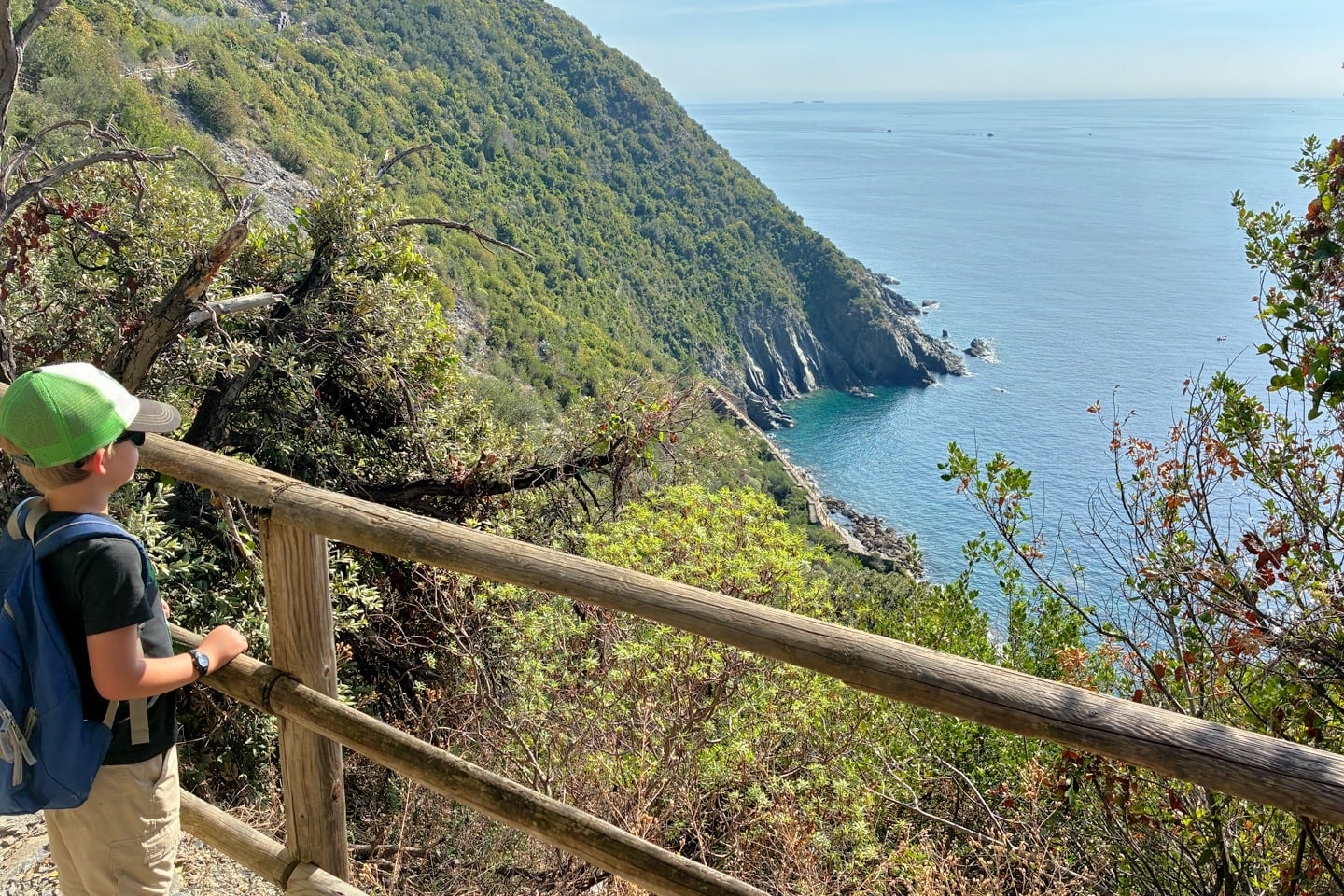
There are still climbs and stone steps. But overall, we found the scenery just as rewarding, offering expansive coastal views and plenty of opportunities to take in the ancient terraced landscape.
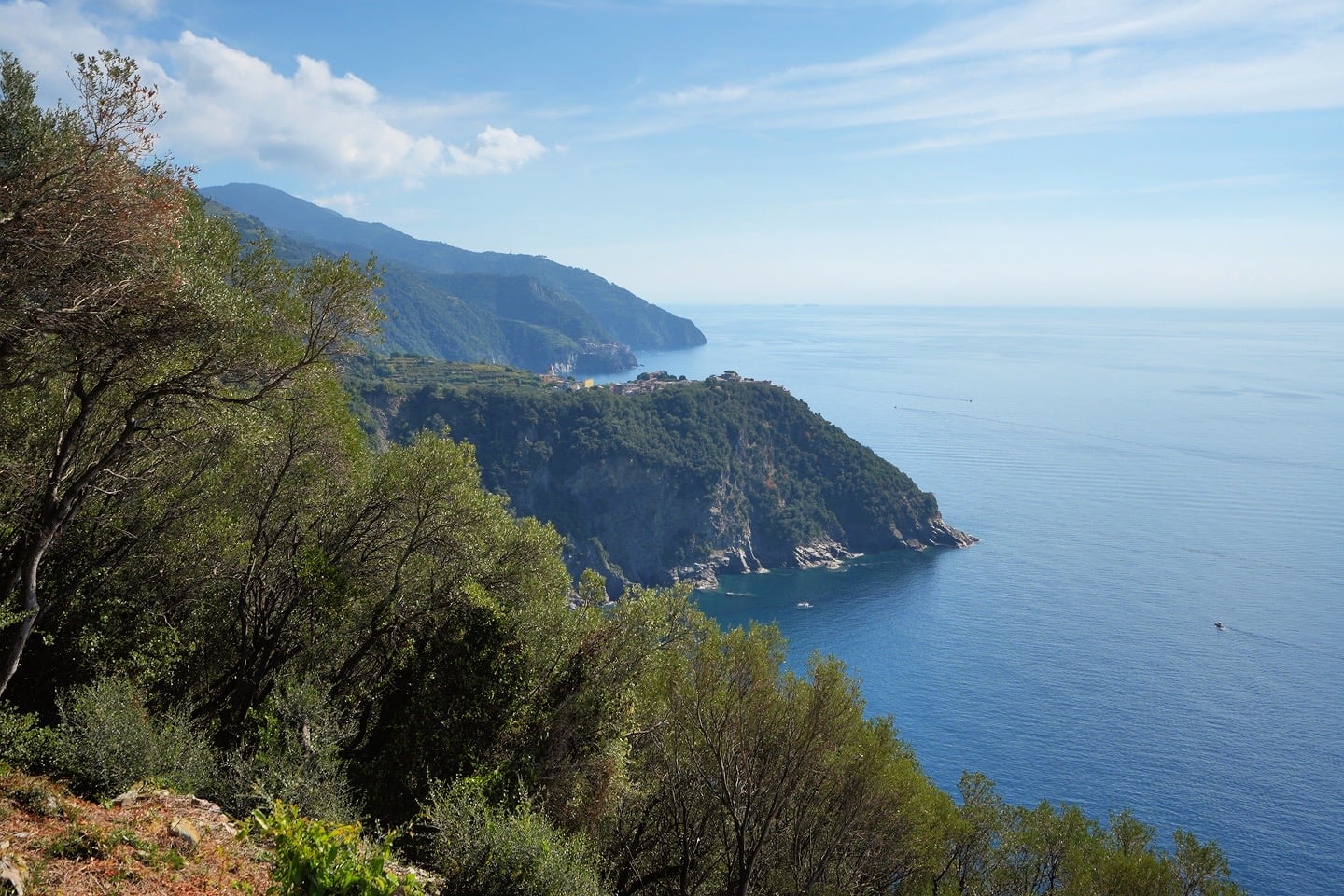
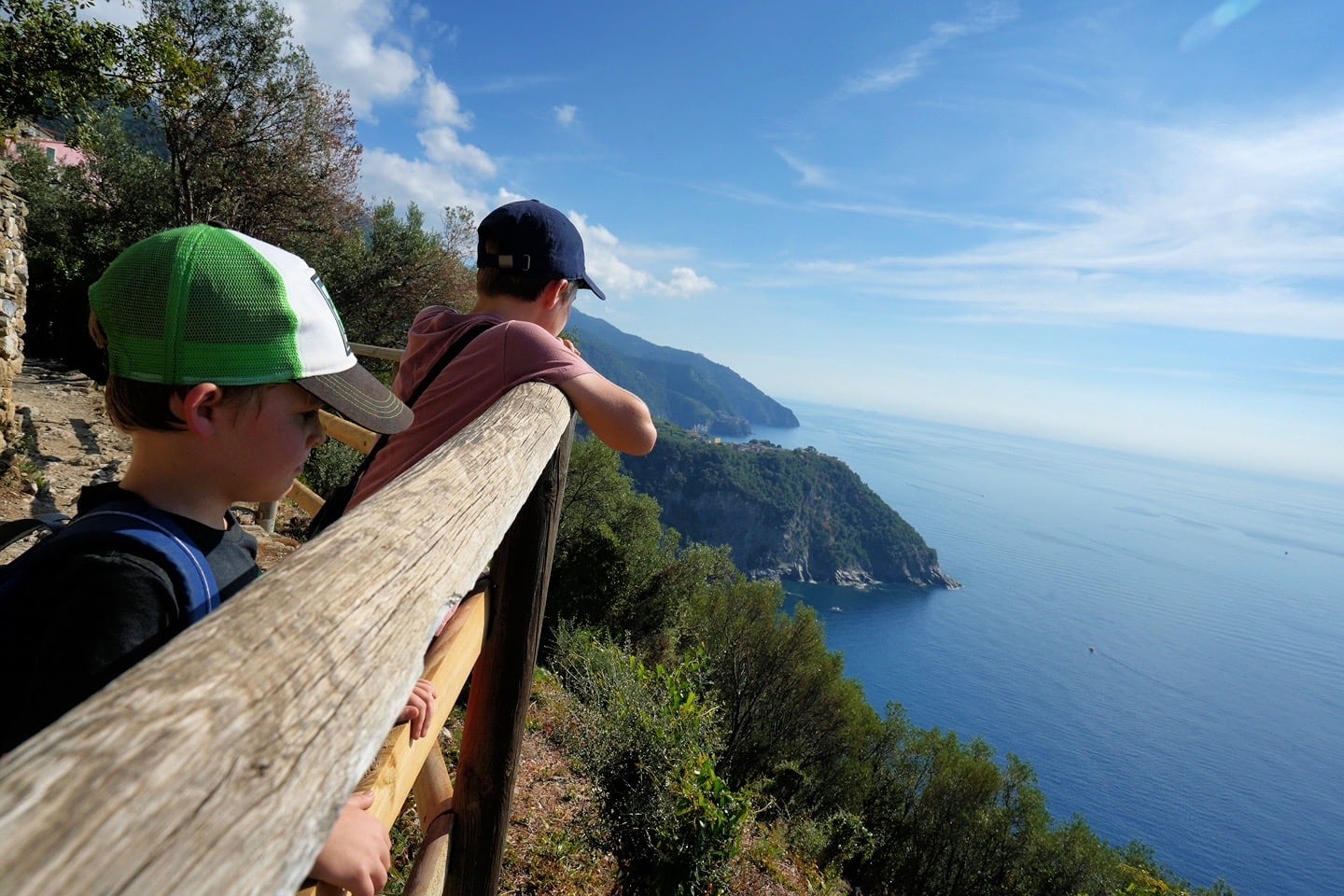
One of our favorite surprises came around the halfway point.
Perched along the cliffside was Prevo, a historic oasis with a smattering of places offering refreshments and lovely views out over the Mediterranean.
We couldn’t resist stopping for a couple of fruit slushies. We would have been crazy not to!
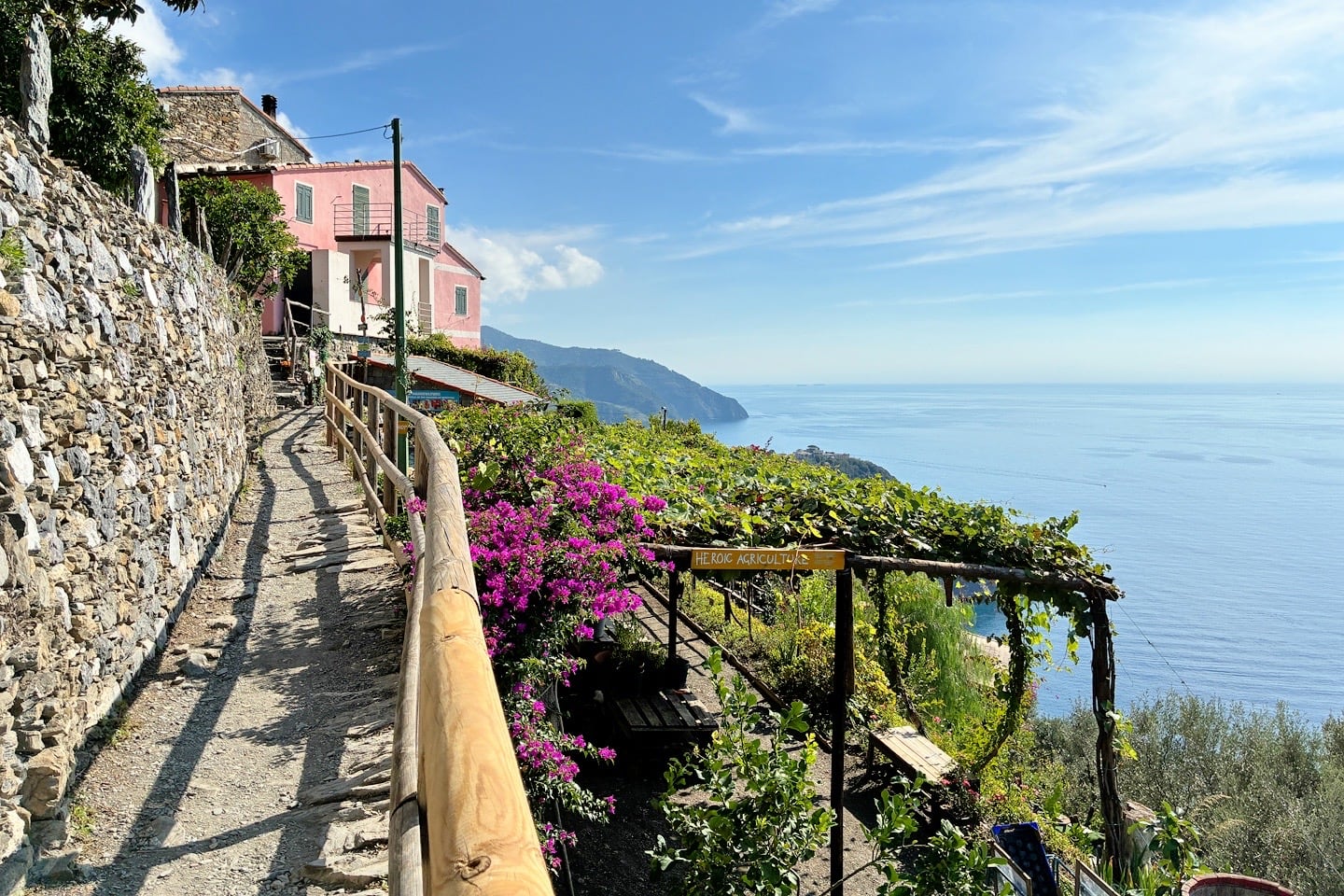
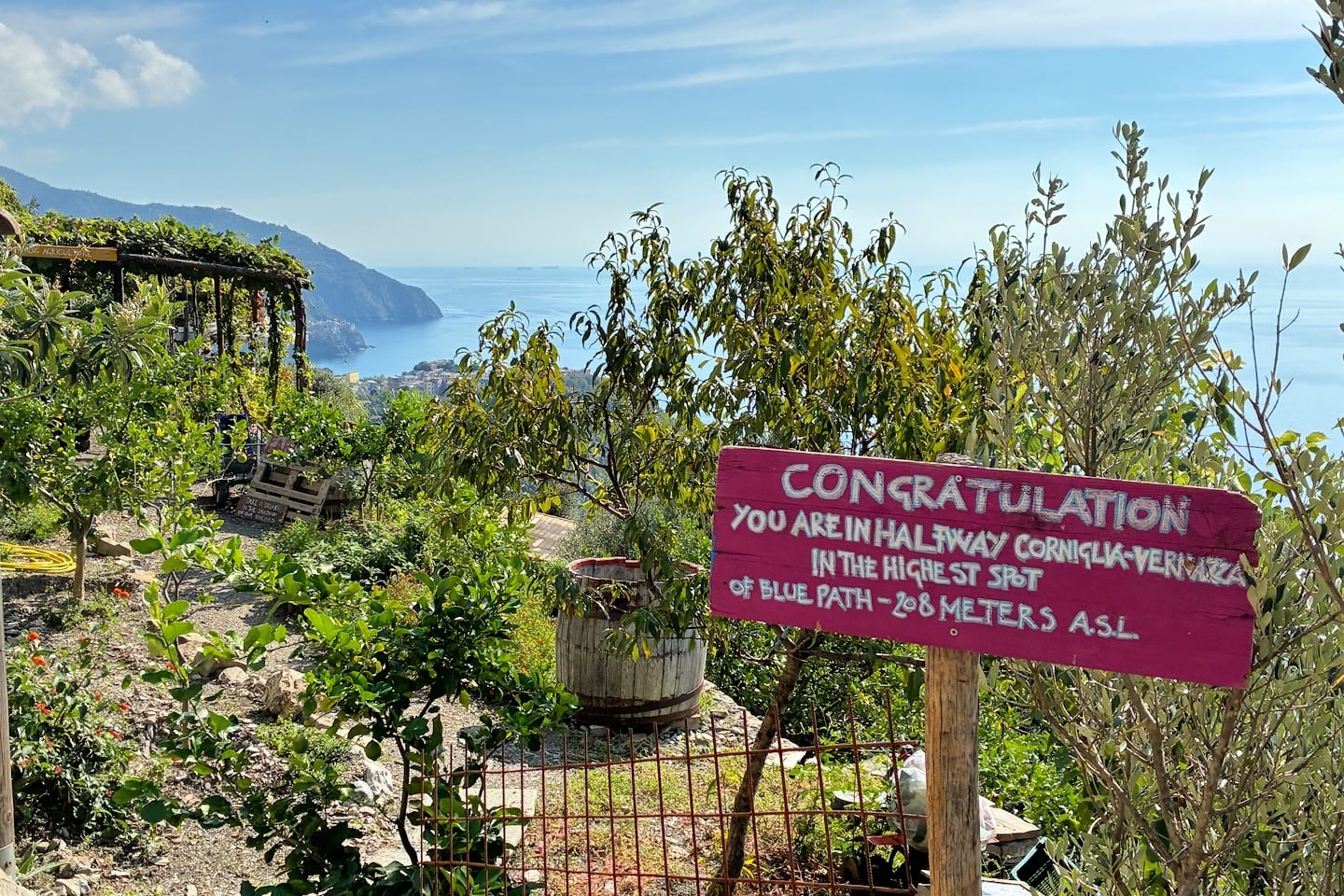
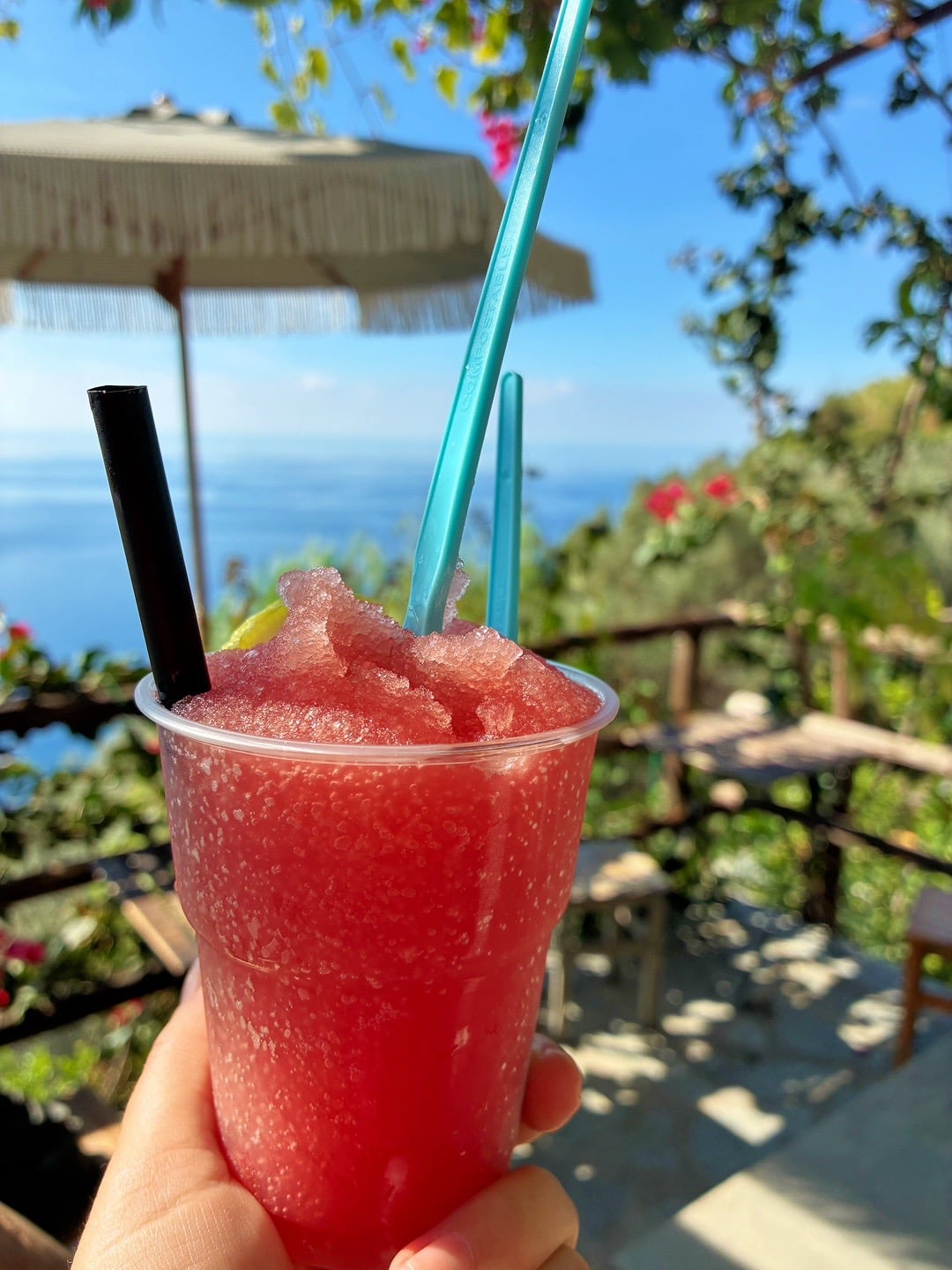
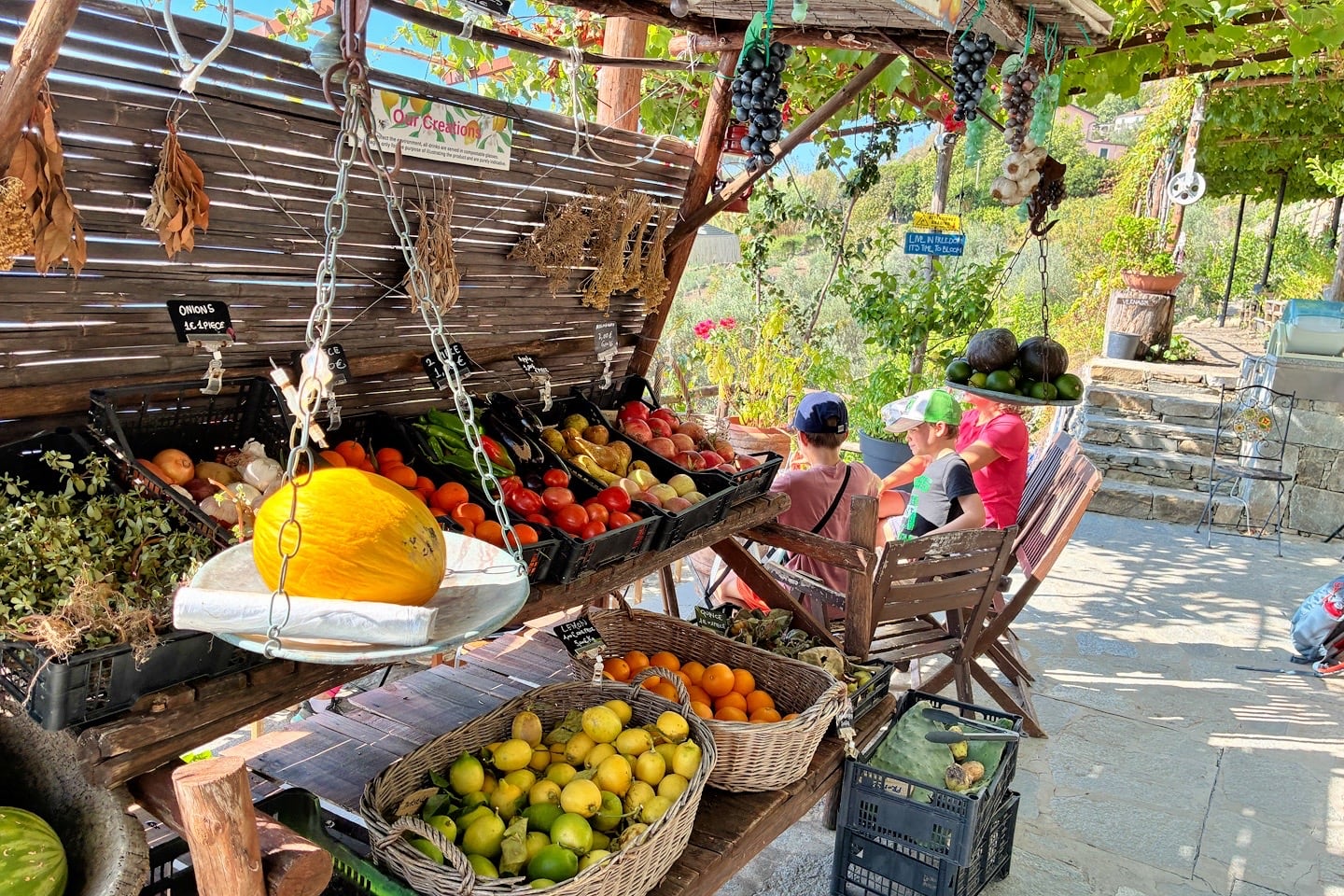
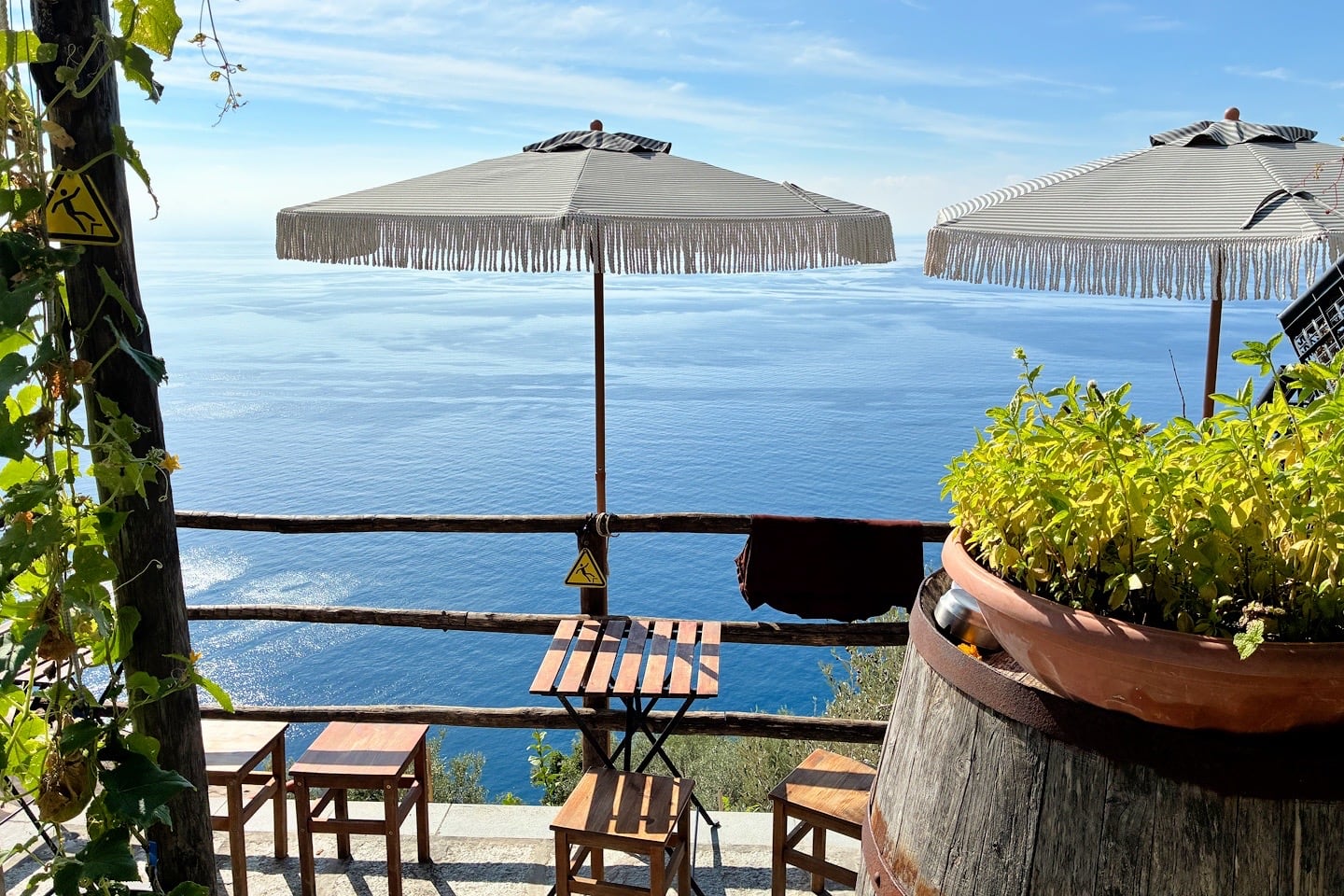
Sitting there enjoying the sea views, knowing we still had three more villages to explore, reminded us why we’d wanted to hike Cinque Terre in the first place.
We weren’t trying to set any speed records. We just wanted to enjoy the experience.
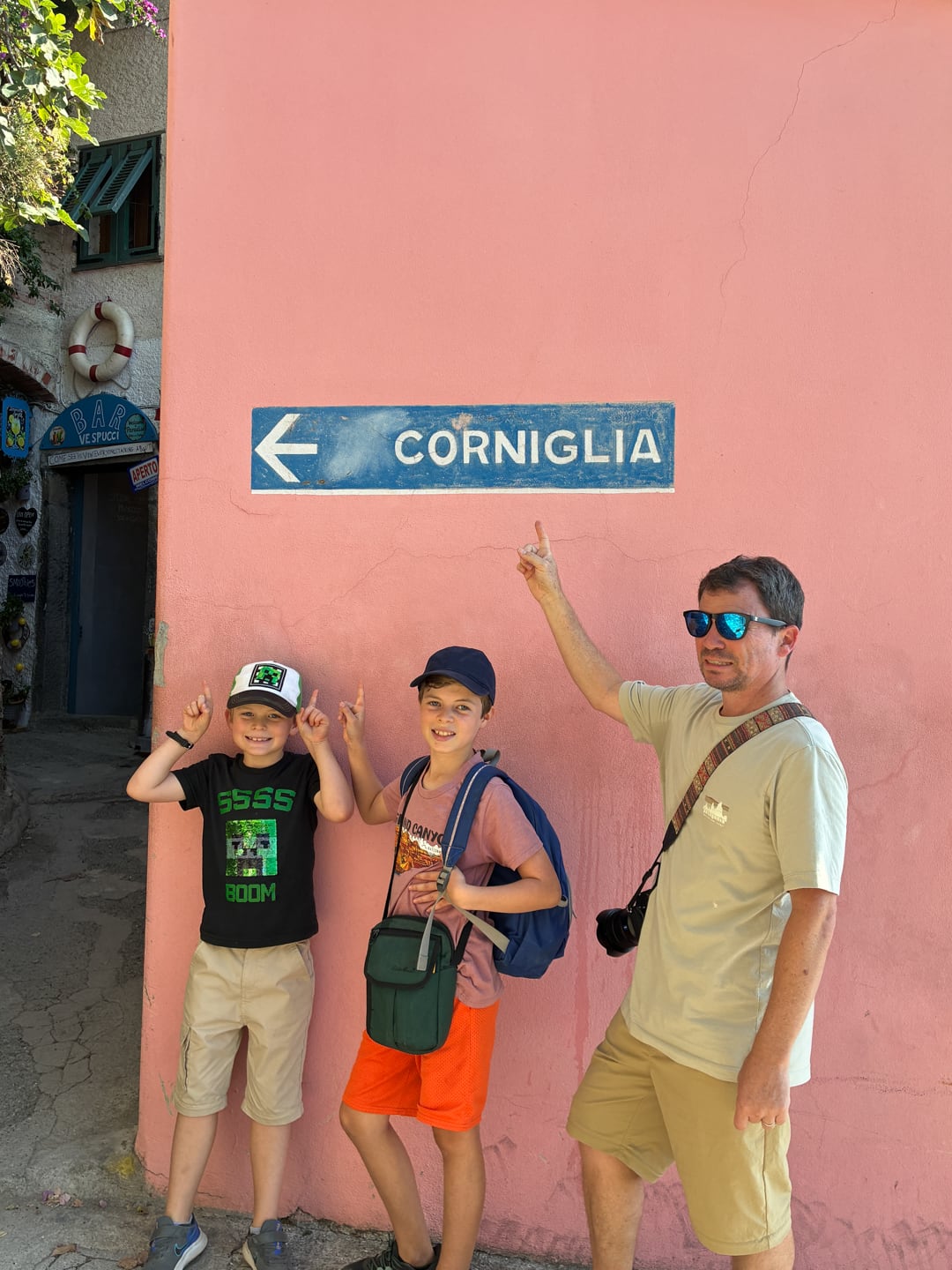
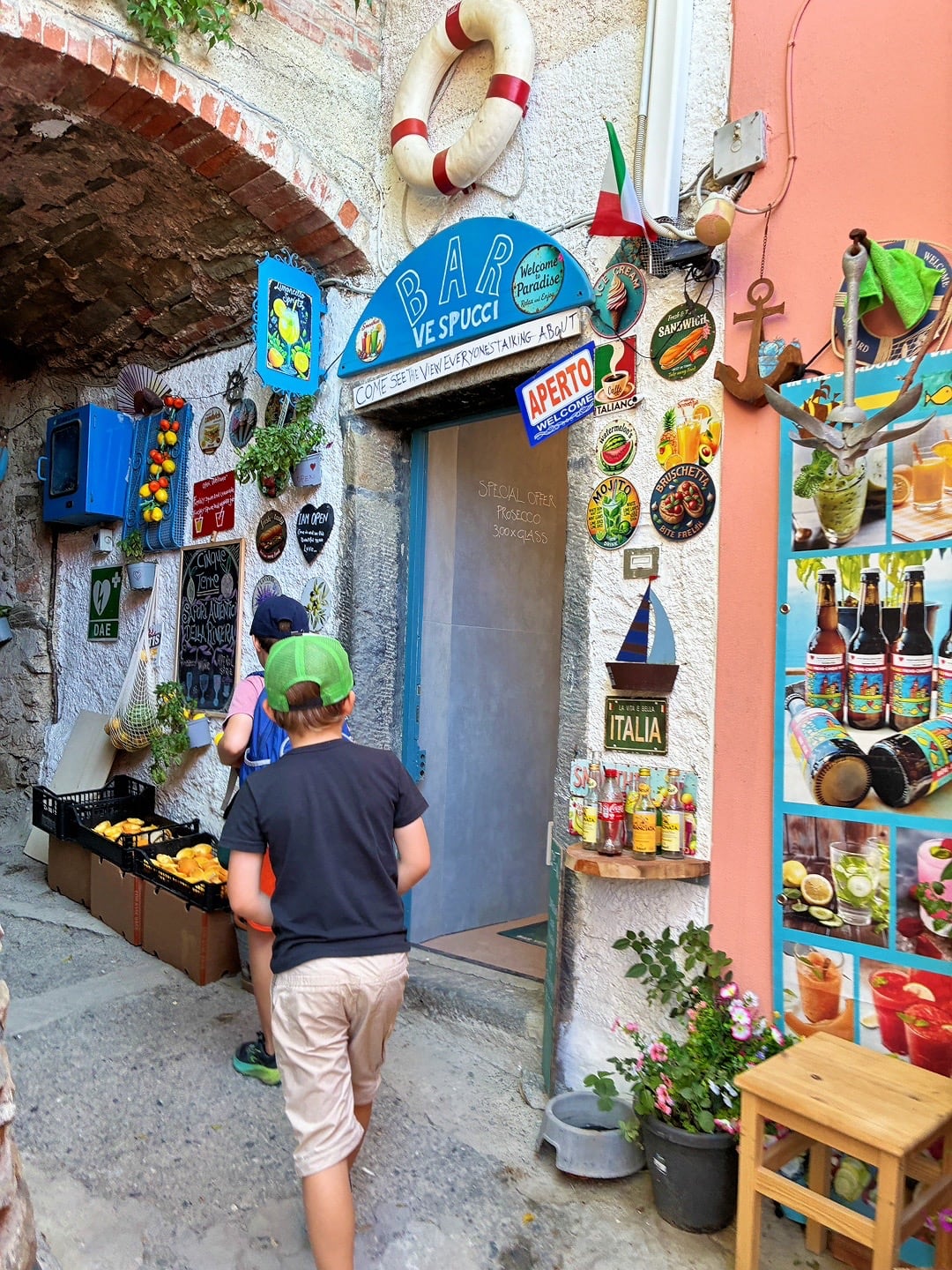
Eventually, we bid arrivederci to Prevo and our perfect perch and continued toward Corniglia, arriving at the village sitting high above the sea.
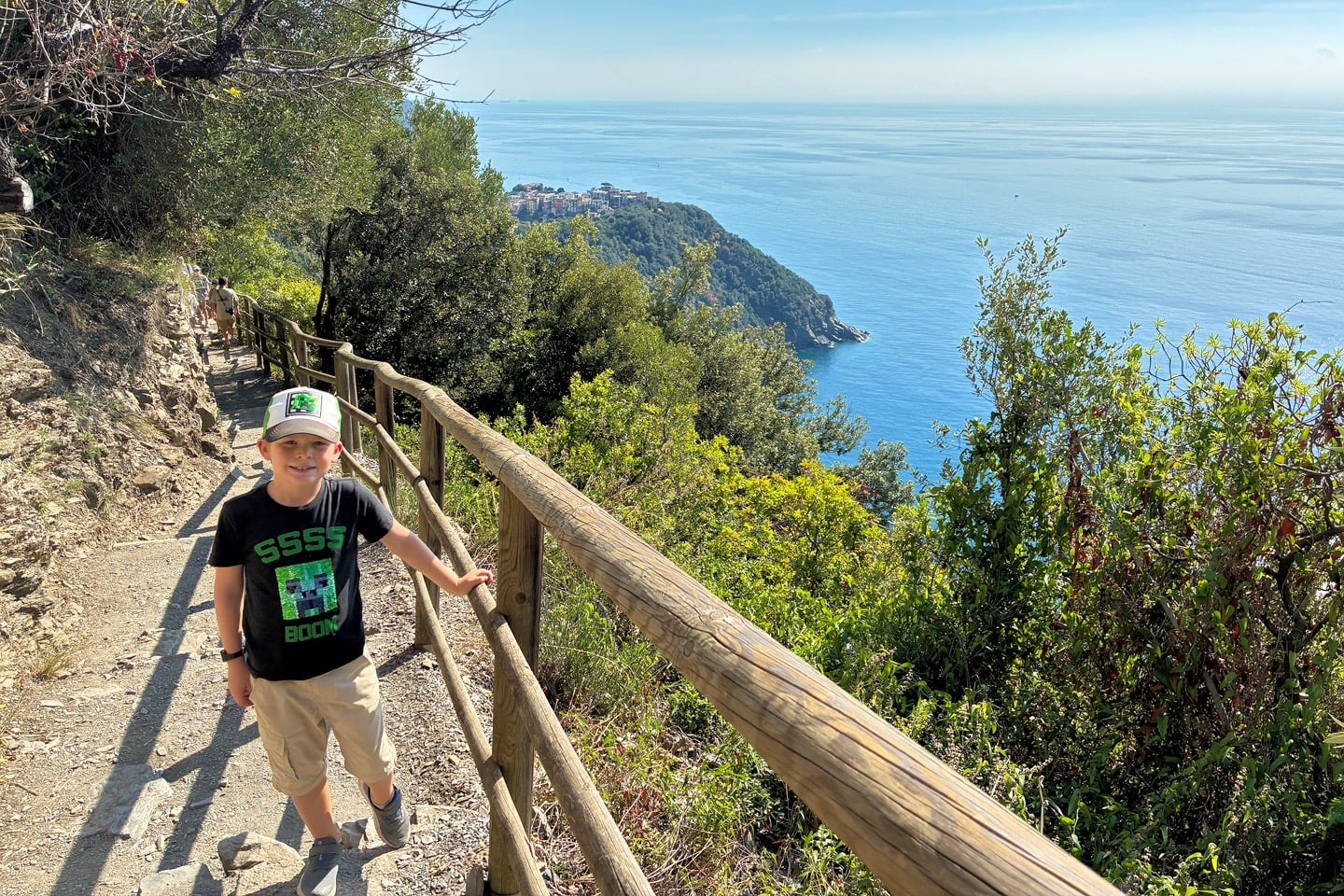
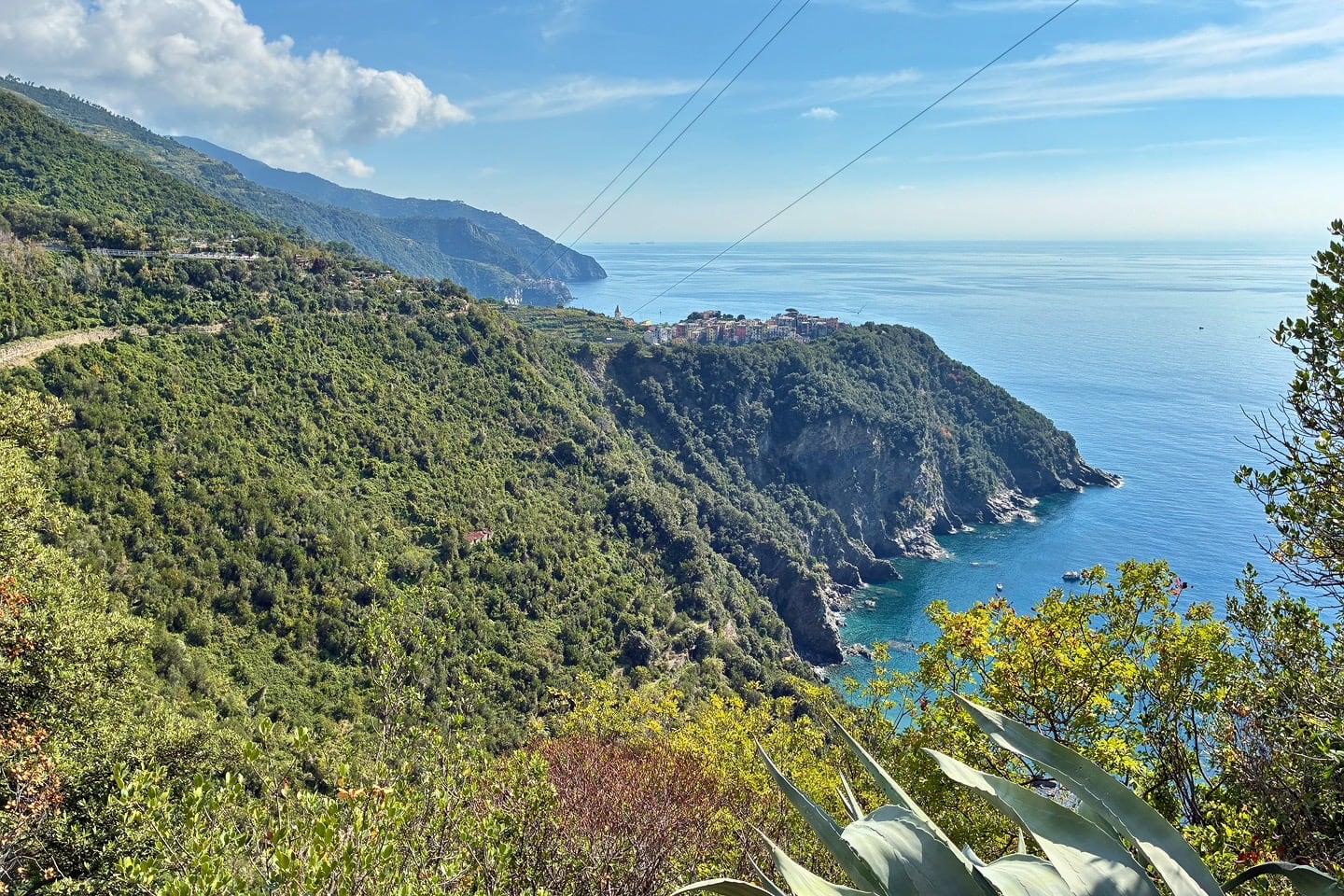
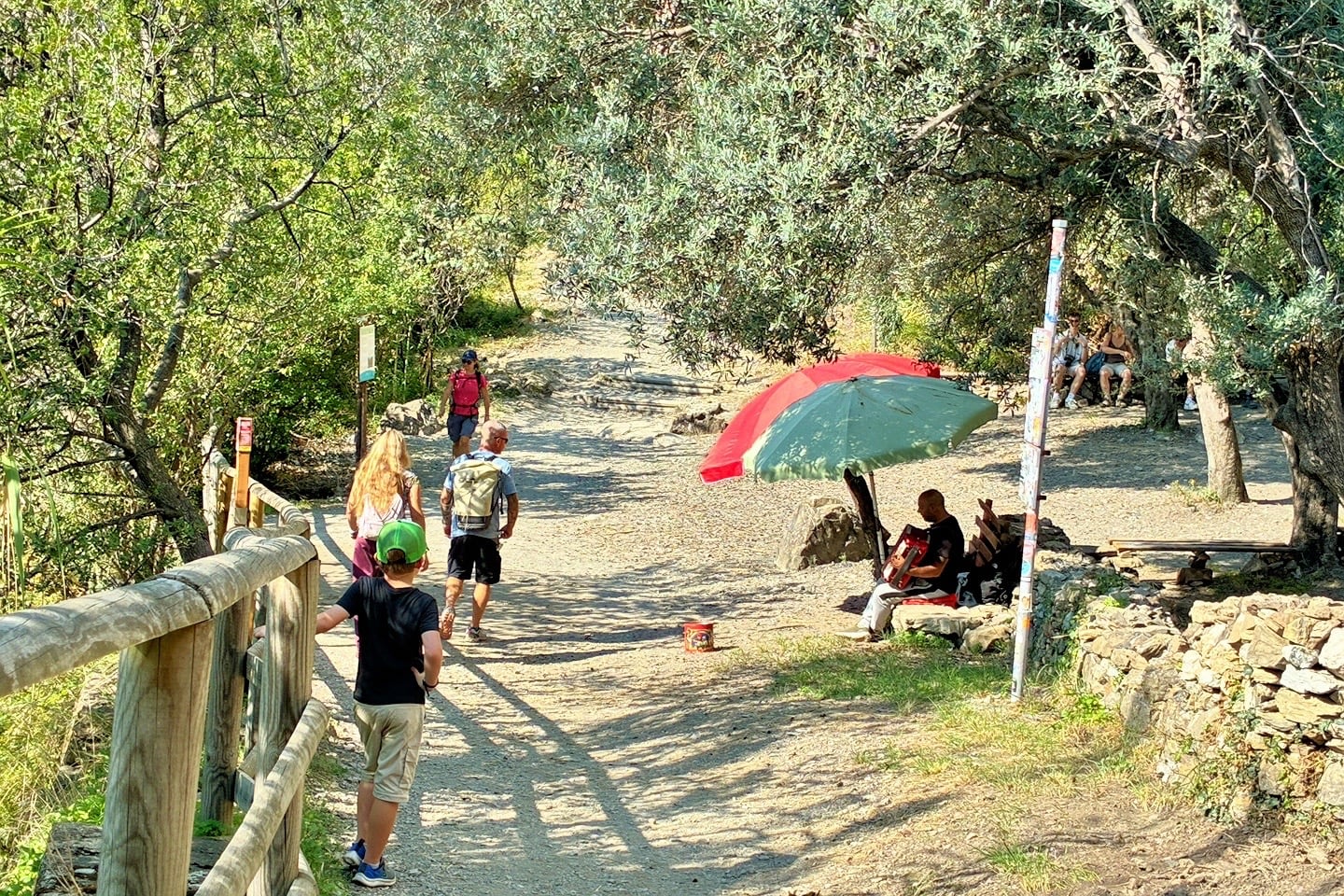
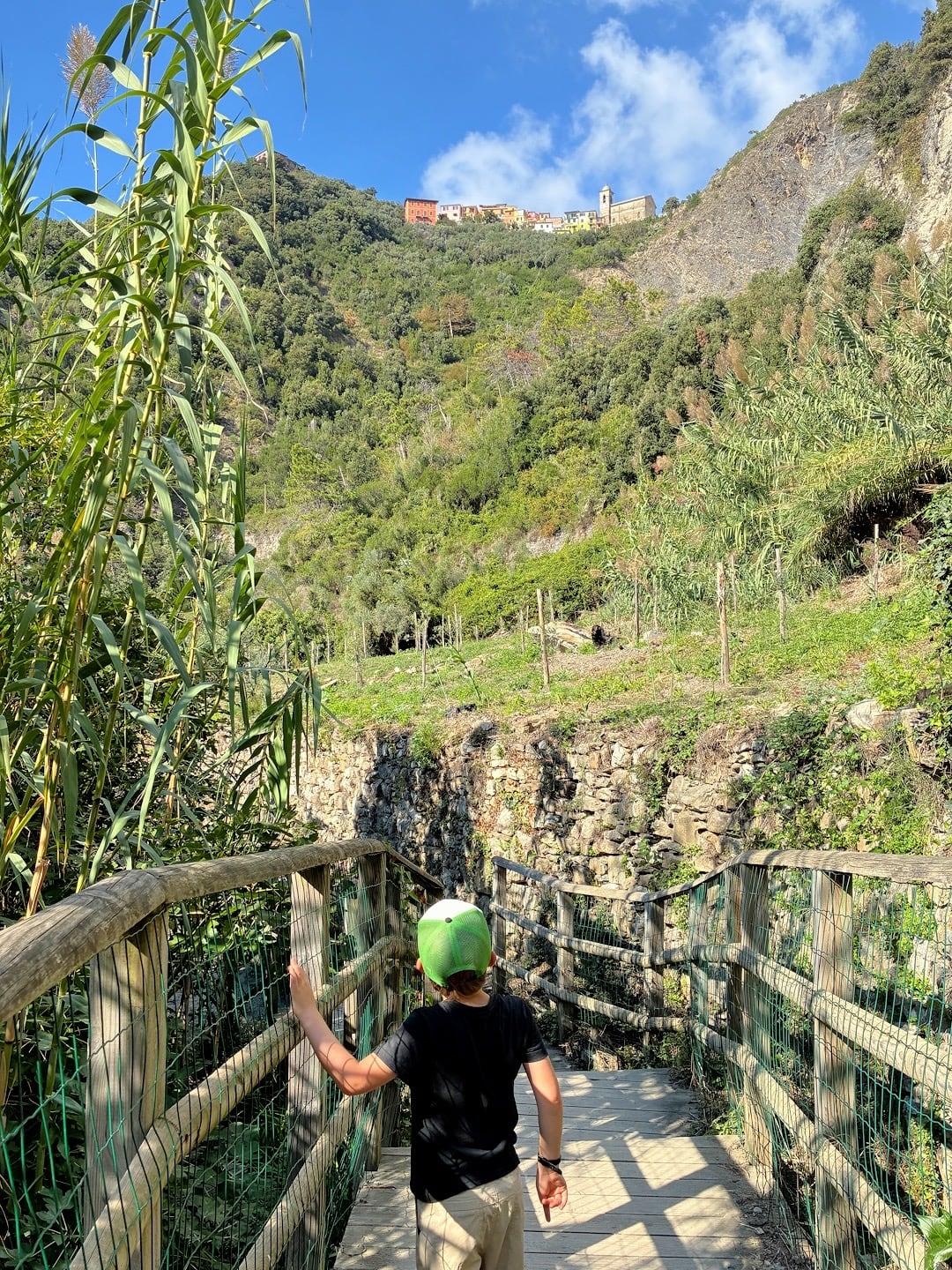
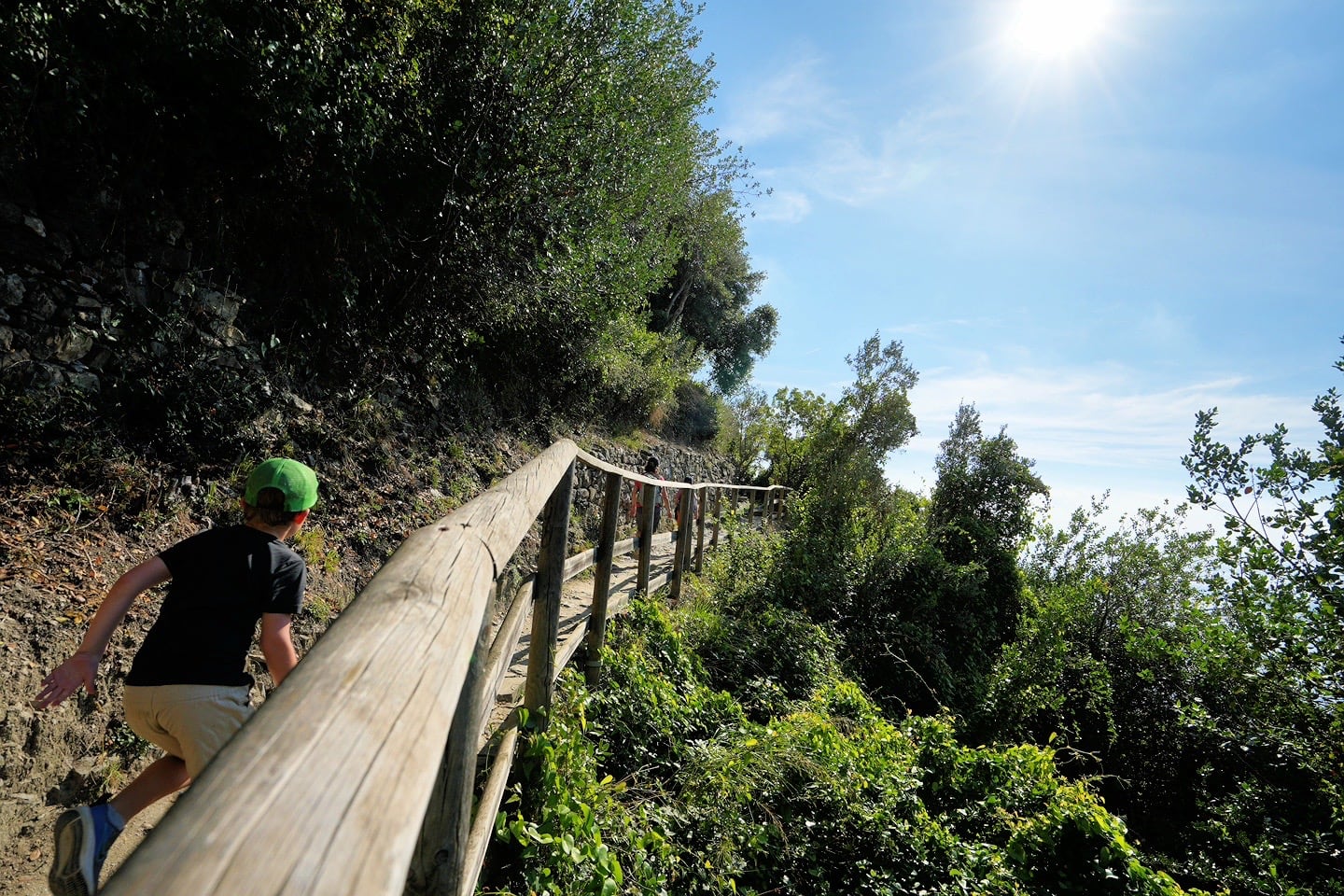
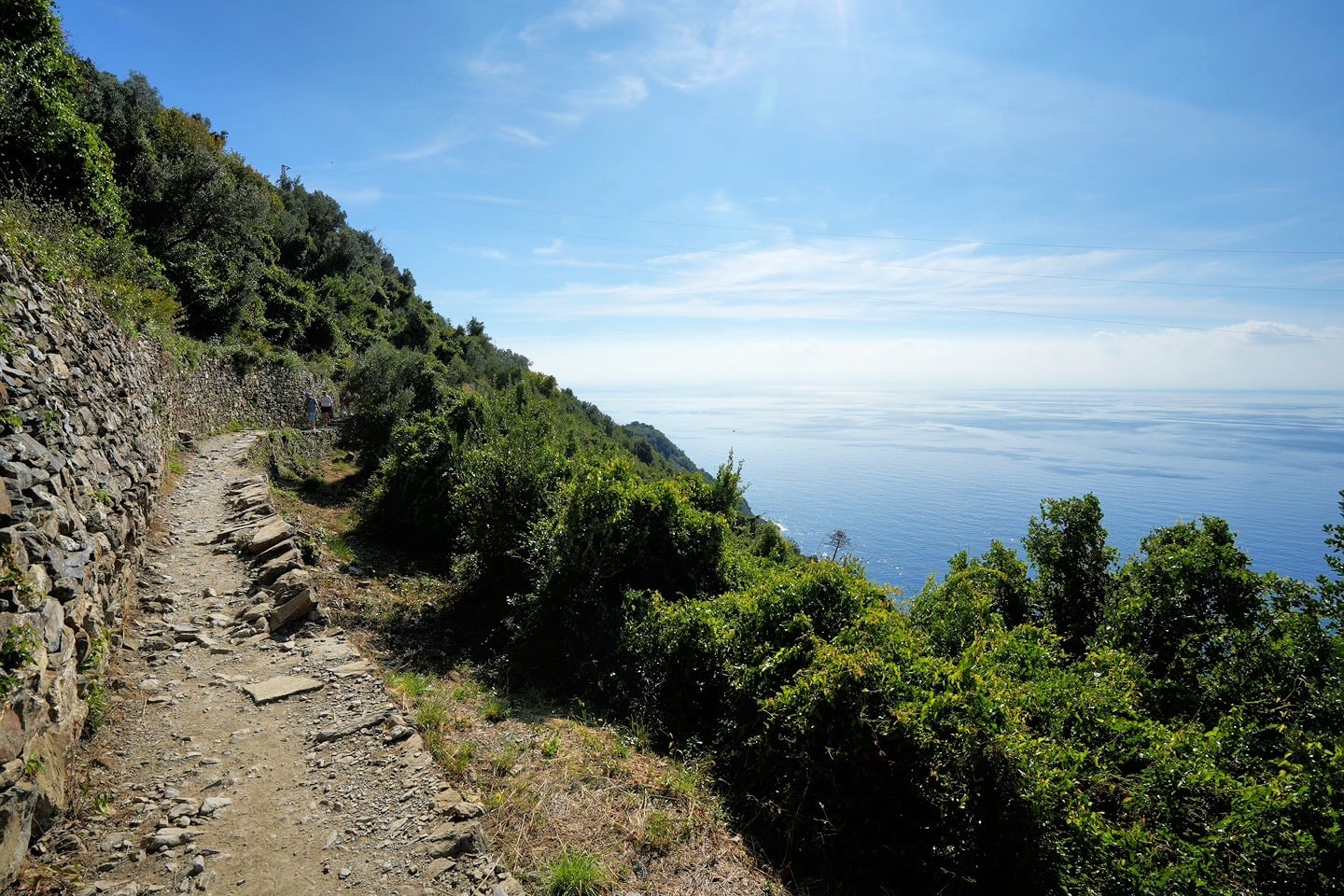
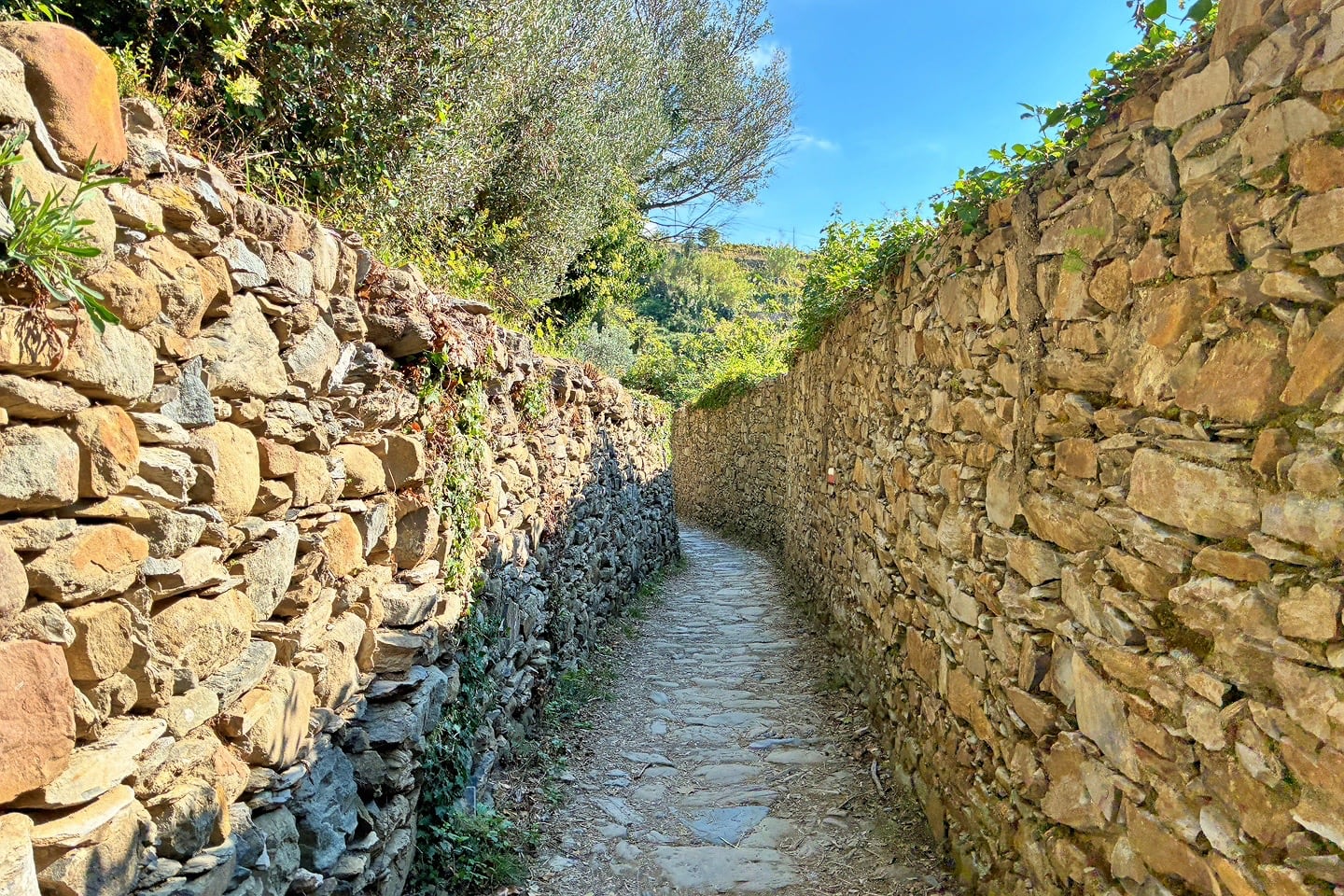
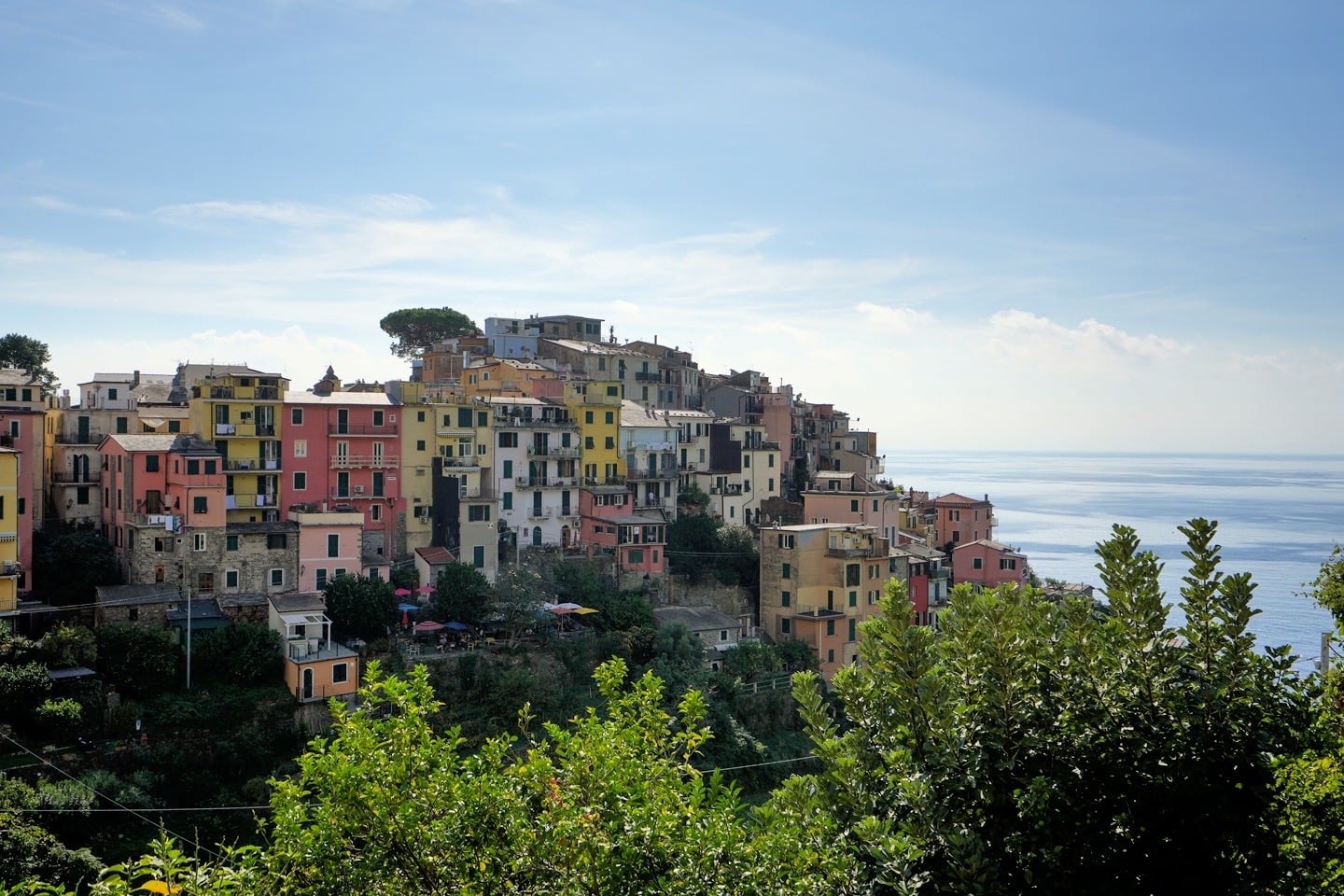
Unlike the other four villages, Corniglia doesn’t have a traditional waterfront harbor. Instead, you arrive in a compact hilltop community overlooking the coastline.
It makes for a pleasant place to wander after the hike, especially if you’re not in any particular hurry.
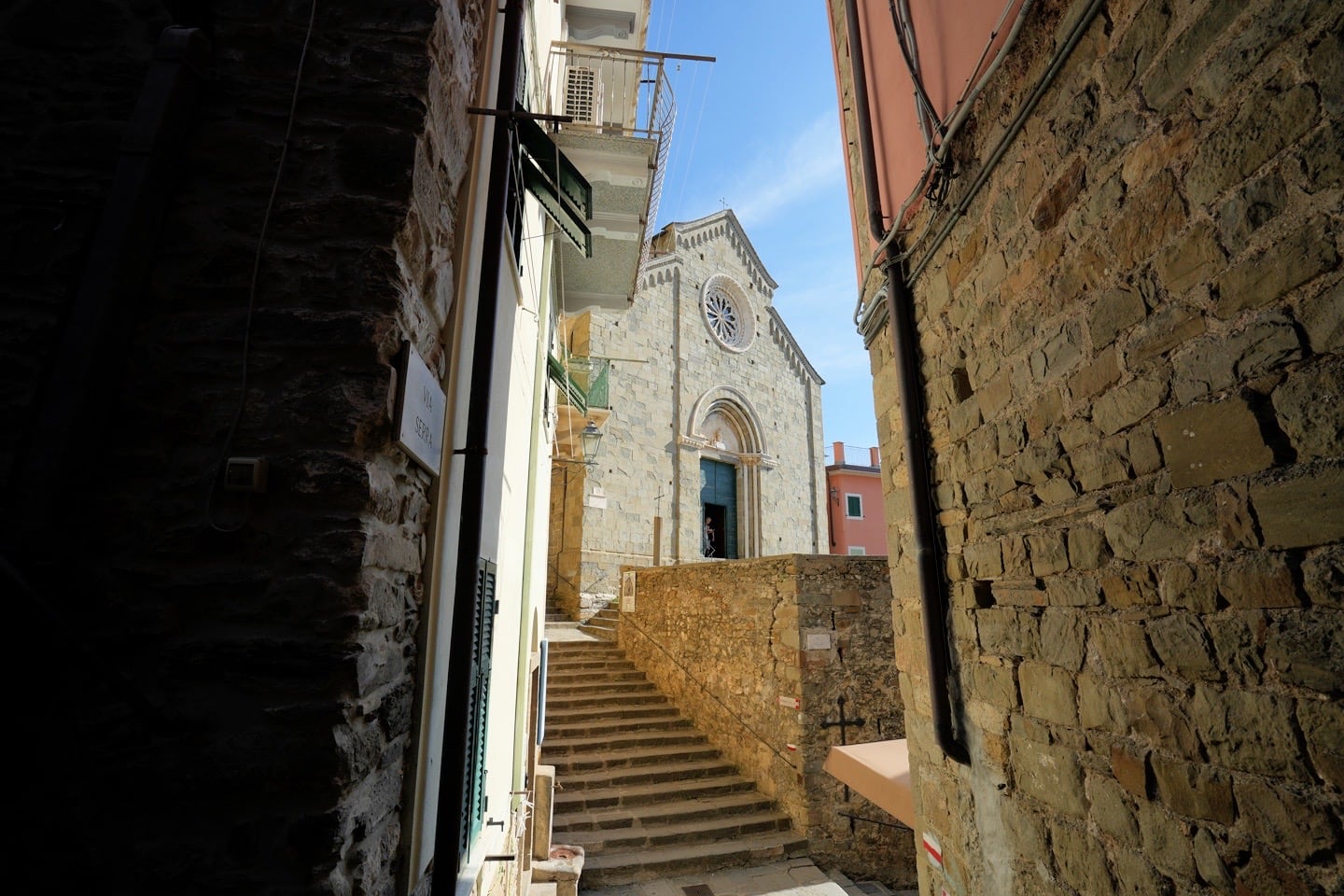
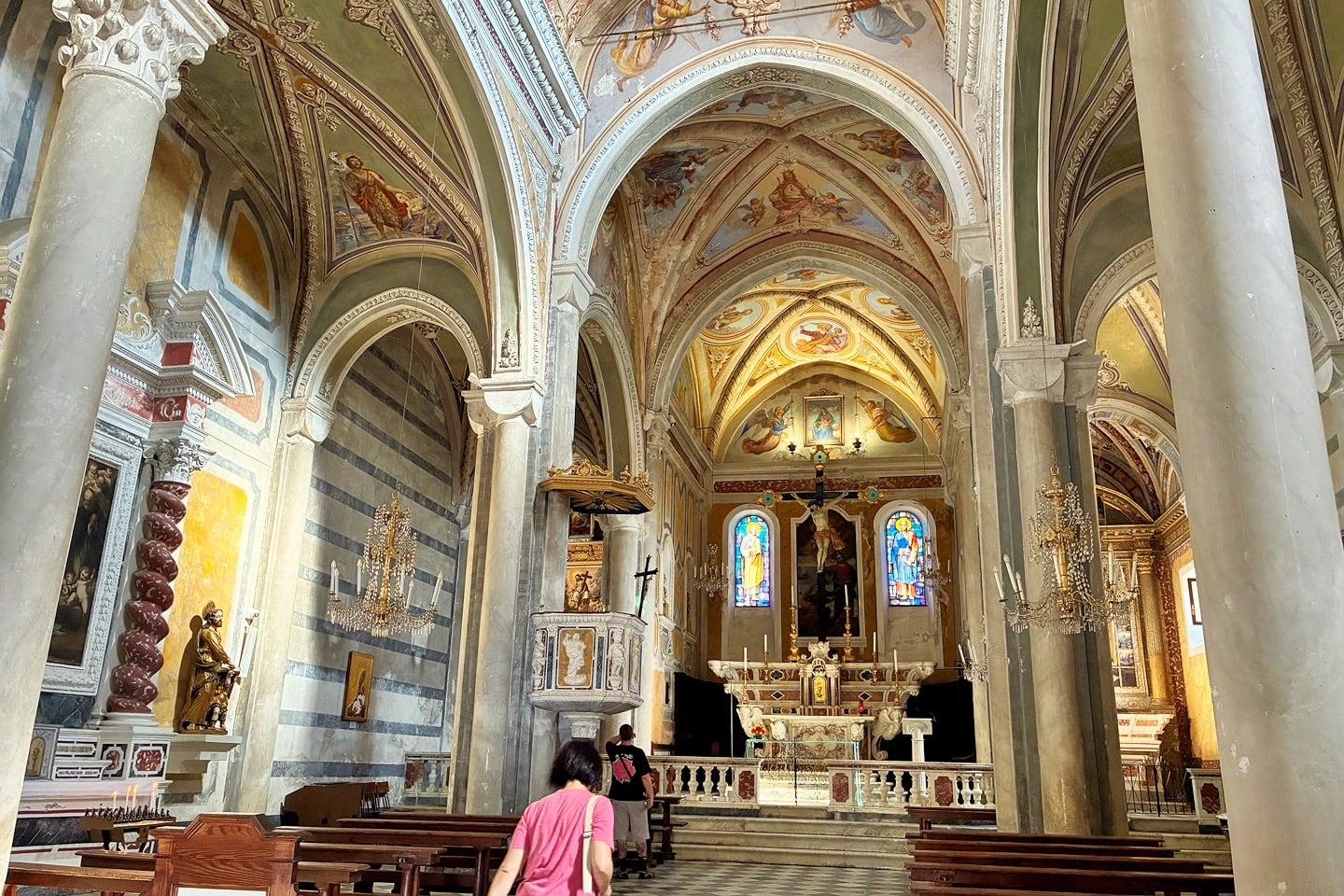
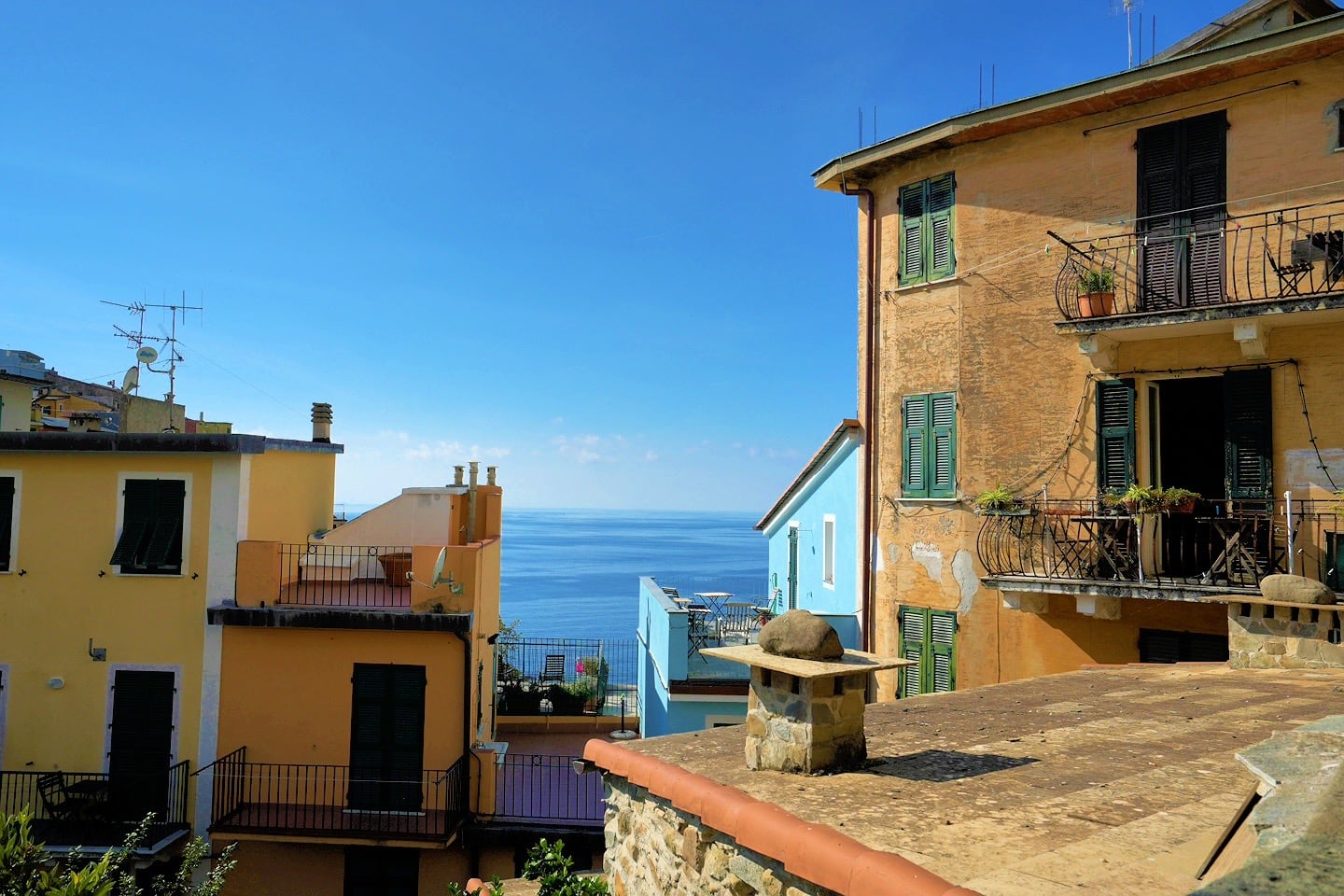
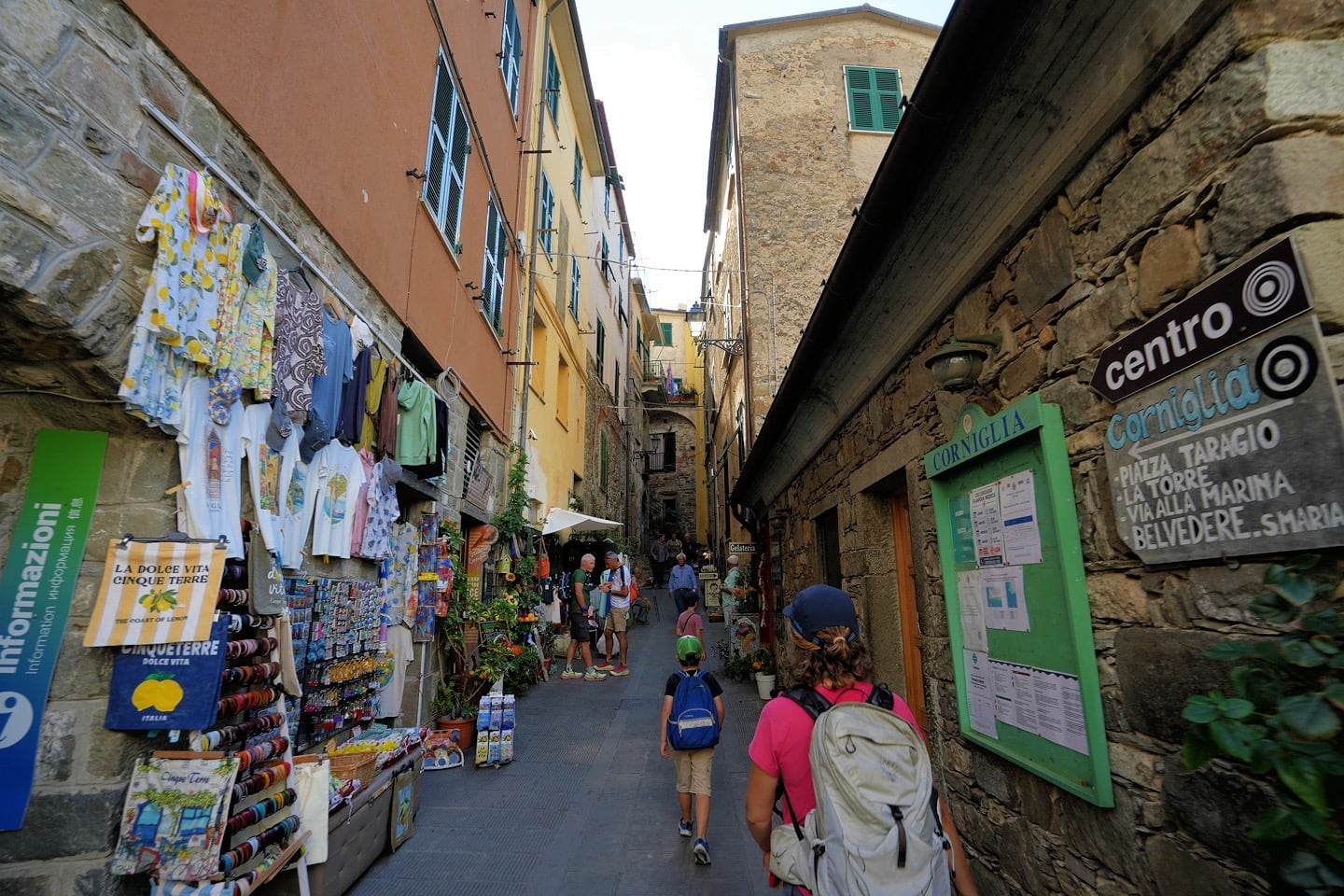
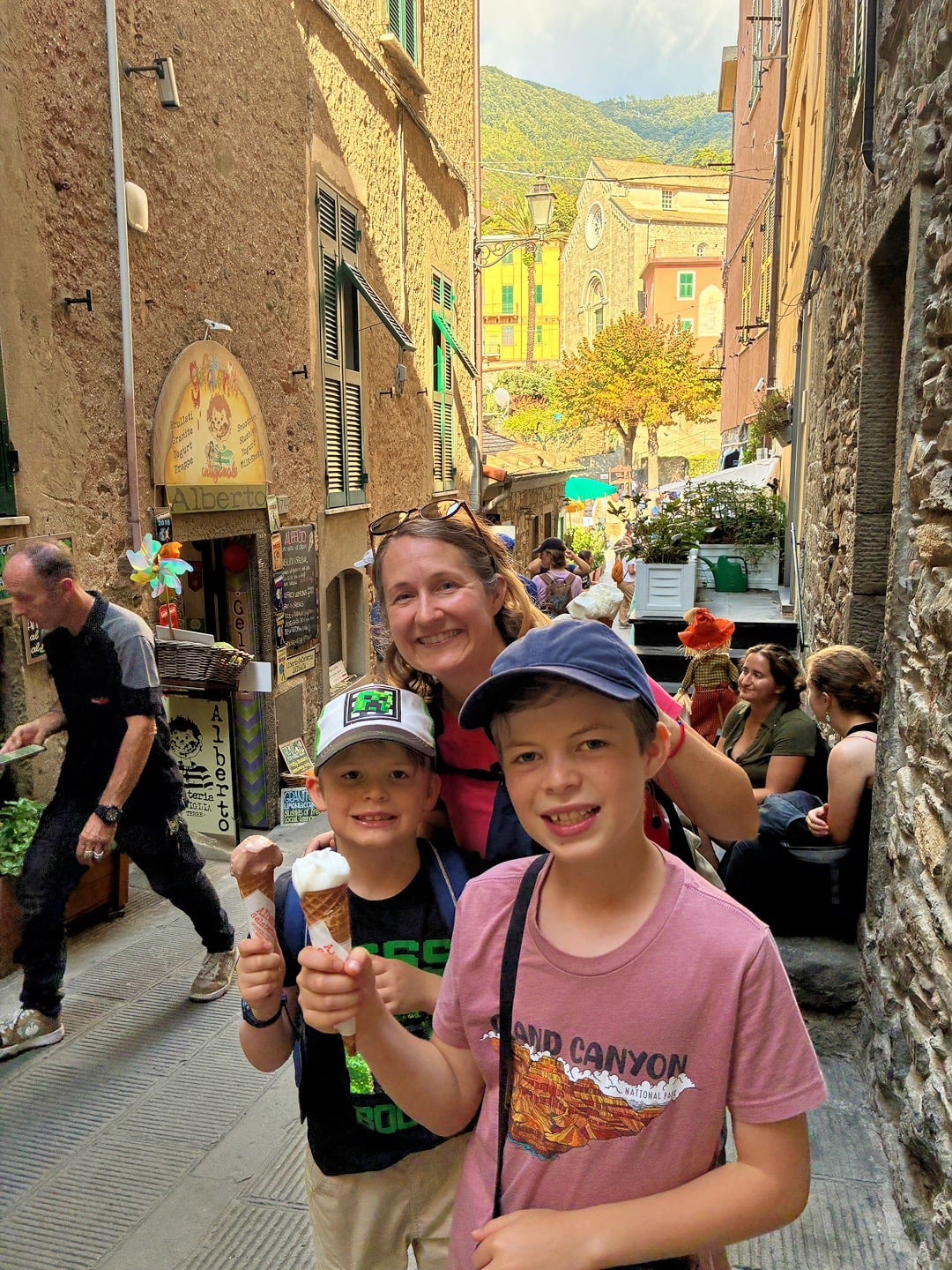
Corniglia’s also a superb place to grab a gelato while passing through town. We chose Alberto Gelateria and especially liked their signature basil flavor.
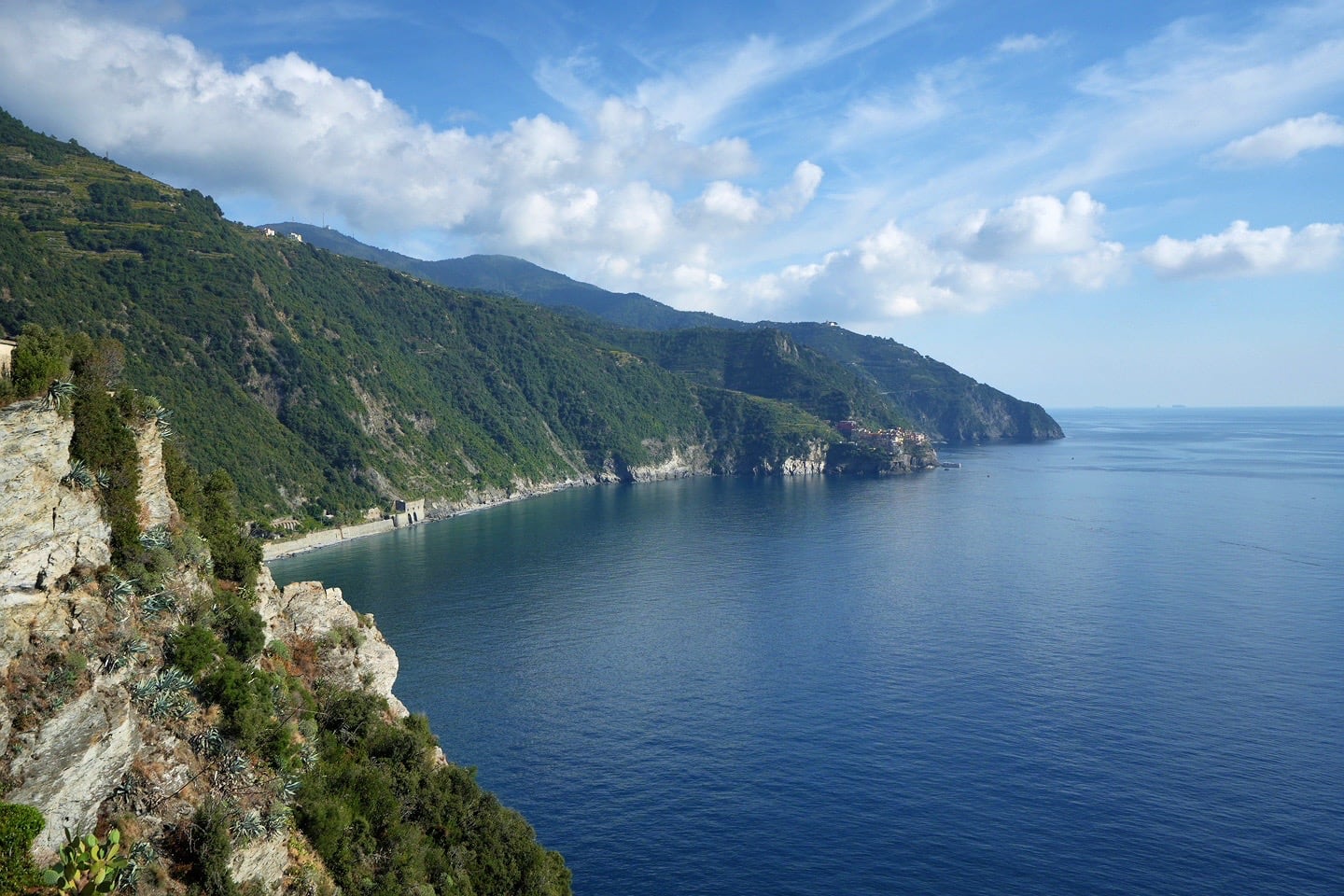
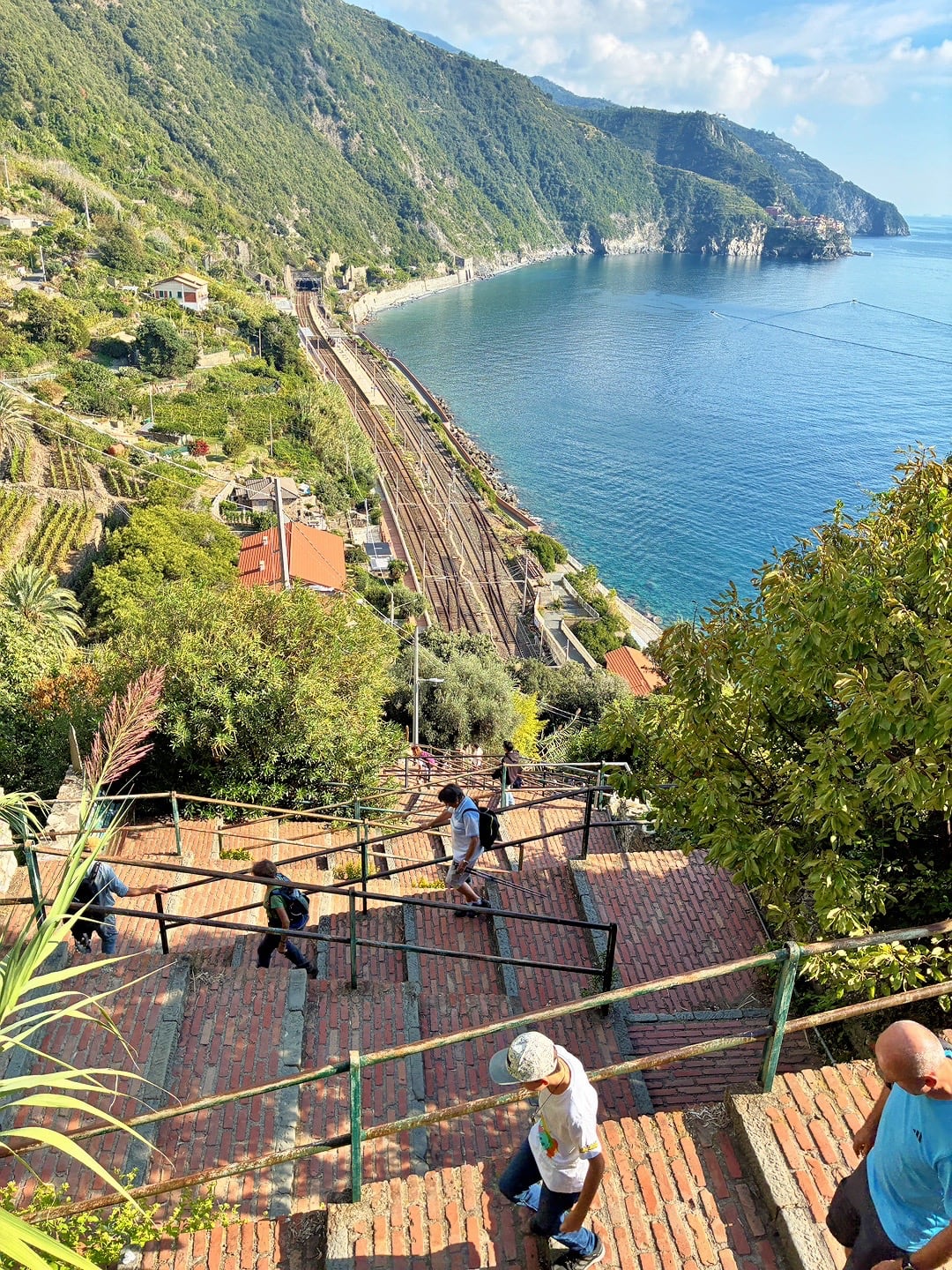
Since Corniglia sits well above its train station, it’s worth mentioning here that you’ll need to descend 300 steps to get to the station. There’s also a shuttle bus if you’re dogs are barking and you don’t mind waiting.
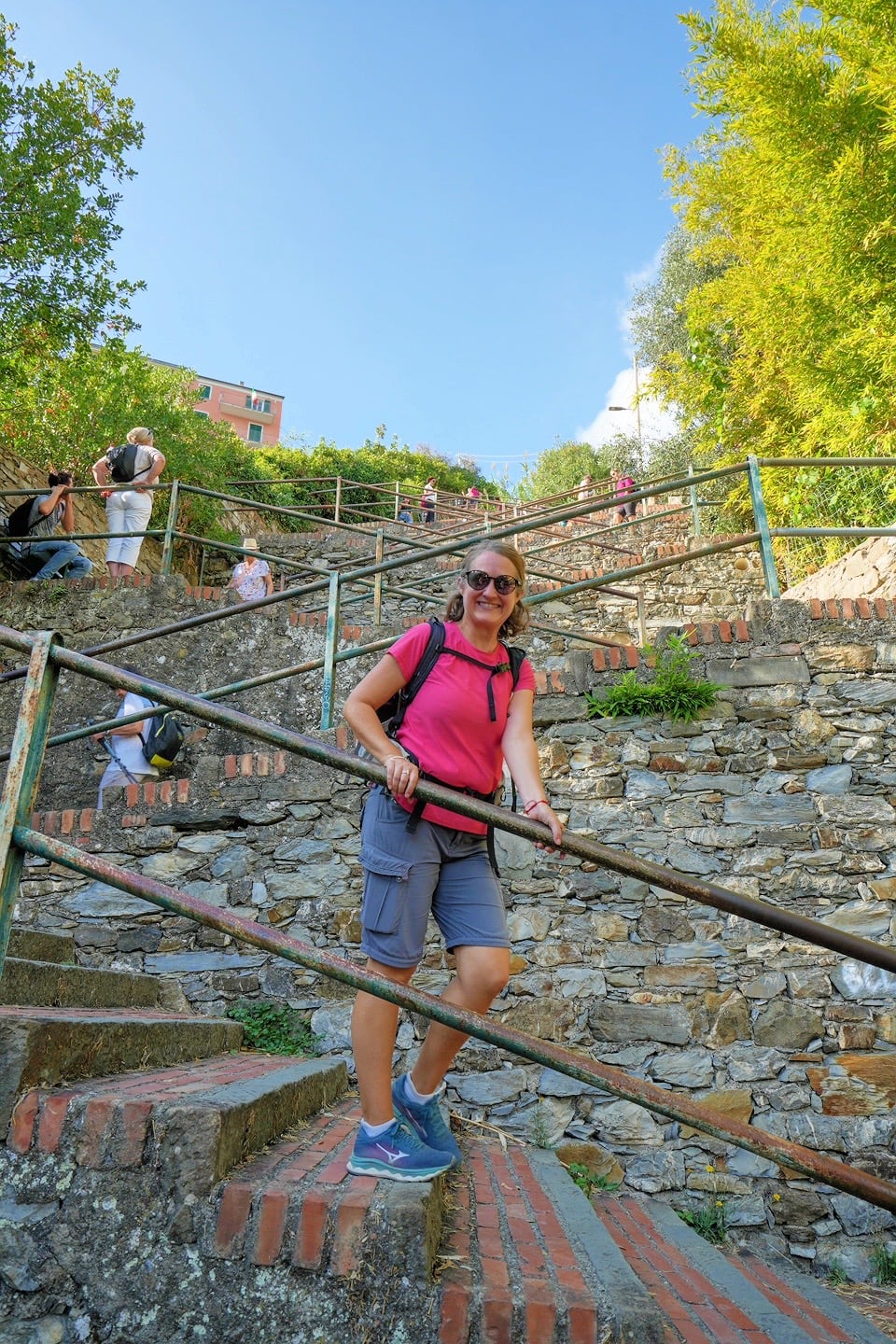
✪ Our Take Vernazza to Corniglia is every bit as worthwhile as Monterosso to Vernazza, but we found it more exposed. We’d pack plenty of water and sun protection, particularly in the warmer months.
And we’d absolutely stop for another slushy.
③ Corniglia to Riomaggiore: Why We Took the Train
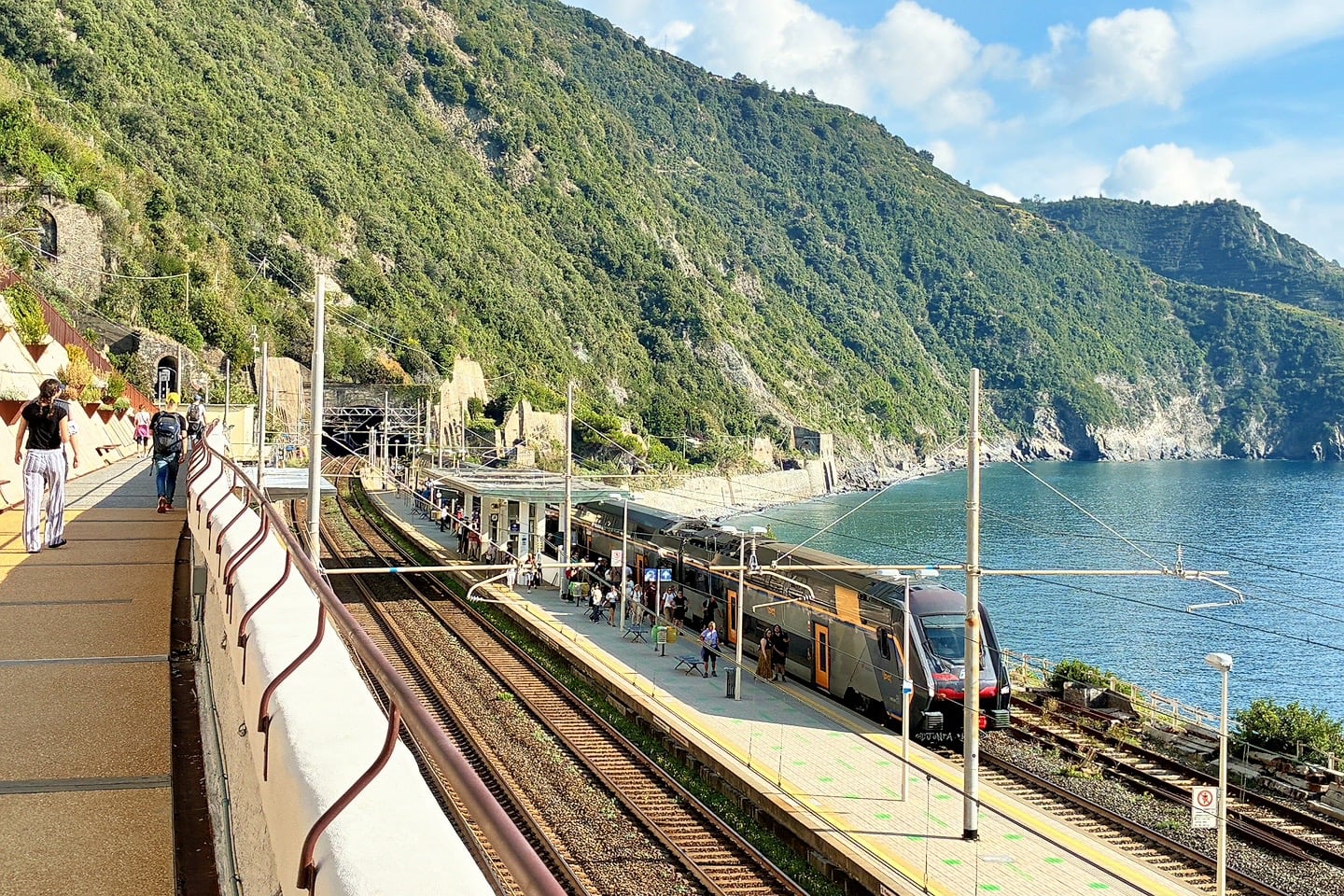
It would have been nice to have been able to hike between all five villages. But the lower coastal trail between Corniglia and Manarola was closed during our visit, and we’d heard the Volastra alternative added around 5.5 km (3.4 mi) more and involved considerably more climbing.
By the time we finished exploring Corniglia, we’d already enjoyed two excellent hikes. With two boys in tow and several hours on the trails already behind us, we decided to save our energy.
Instead, we caught the regional train from Corniglia to Riomaggiore (with the intention of hiking back to Manarola on the Via dell’Amore). It ended up totally being the right decision for us.
The train journey was quick (about five minutes), giving us time to wander around Riomaggiore without feeling obligated to rush through town.
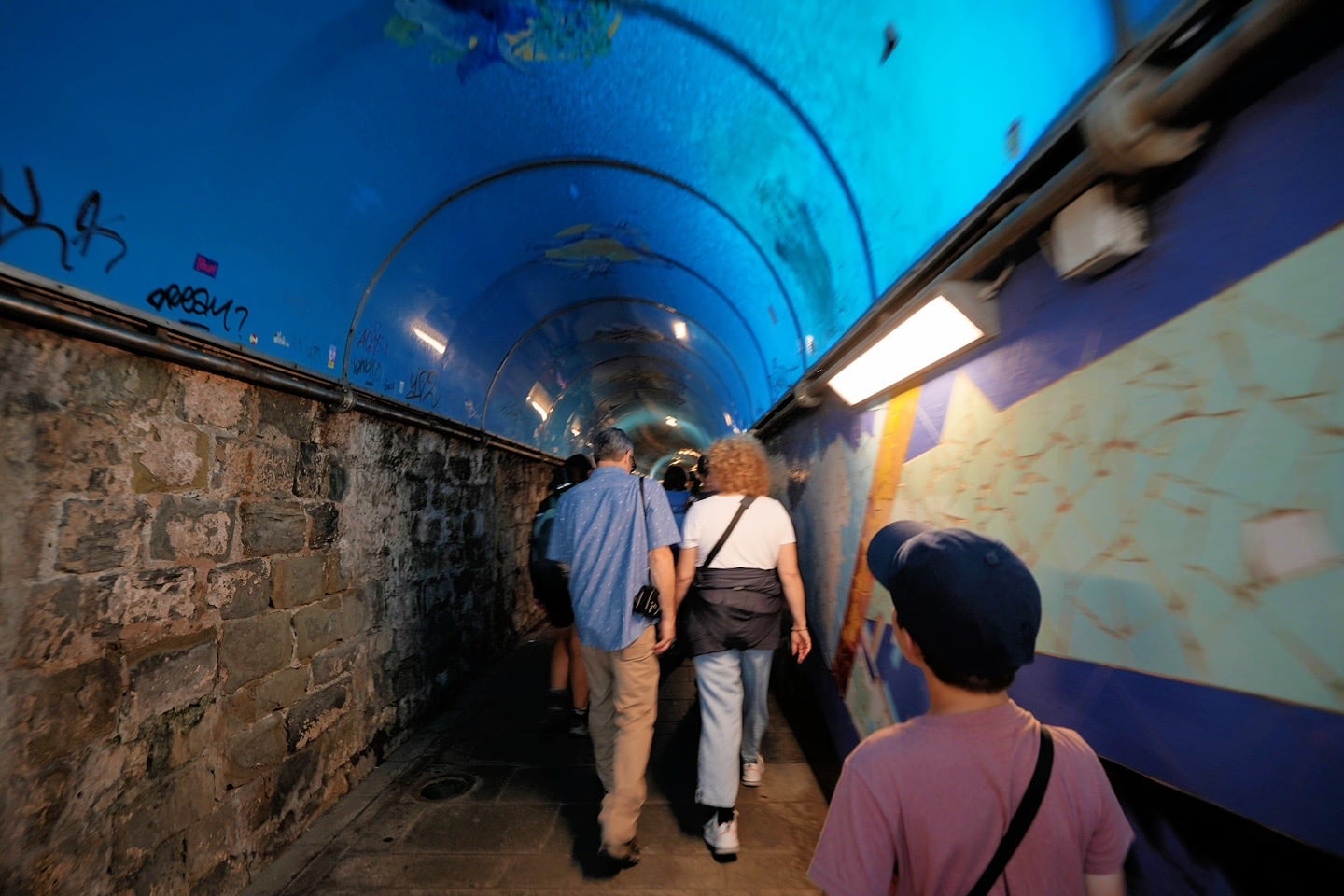
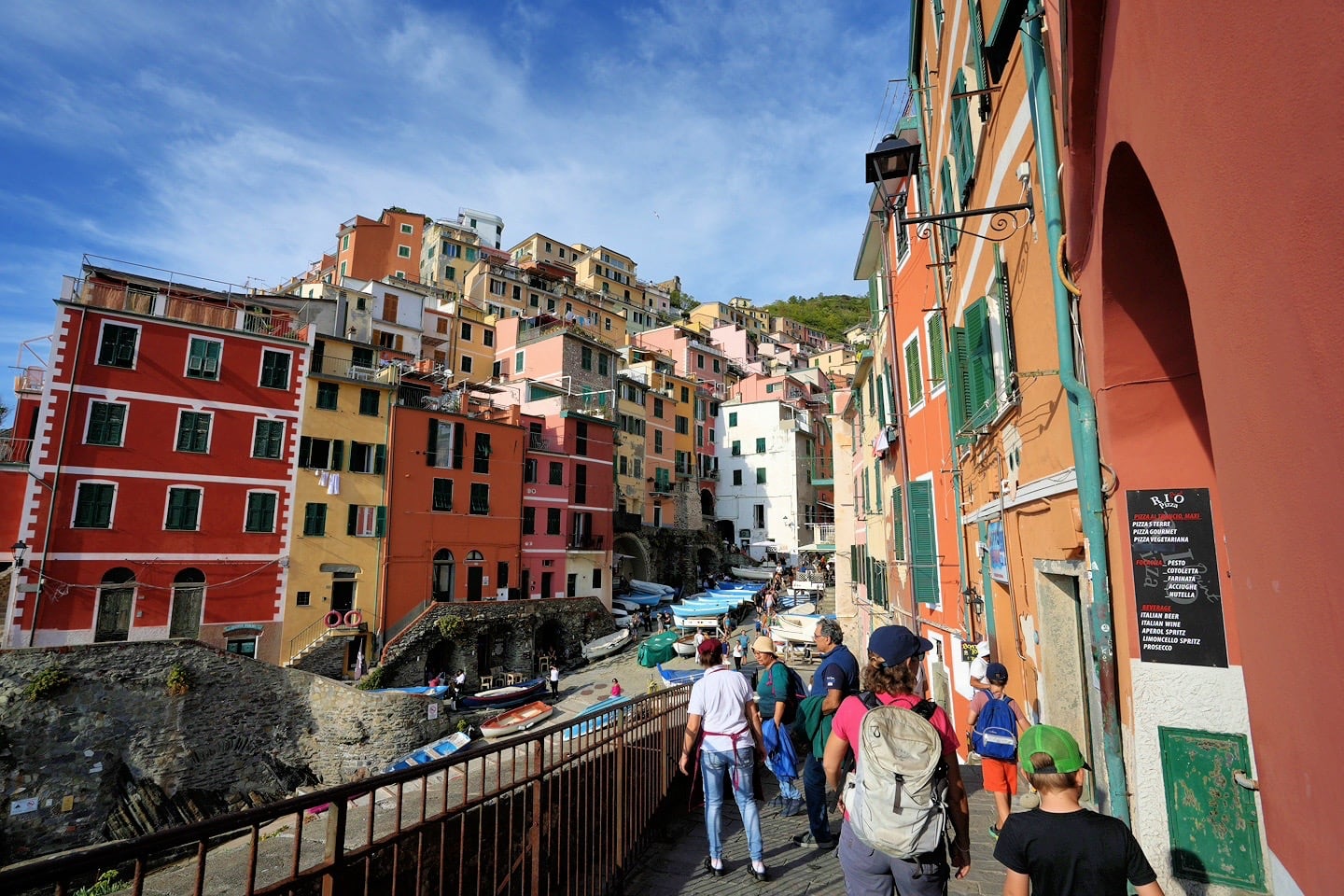
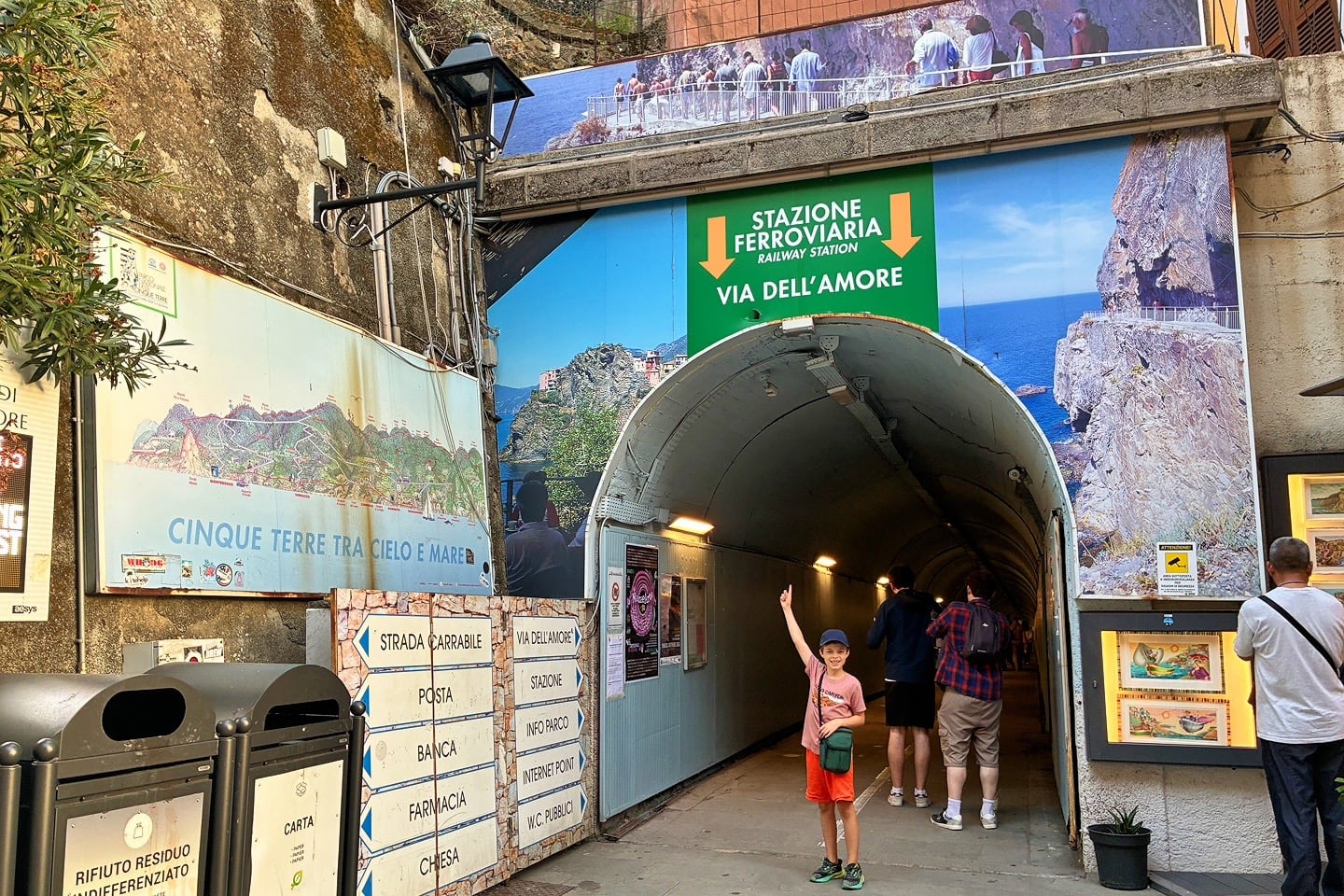
Riomaggiore ended up being perhaps the busiest of the five villages that day, particularly around the tunnel connecting the station to Old Town and the harbor.
But we found that the crowds thinned out considerably the farther we ventured uphill.
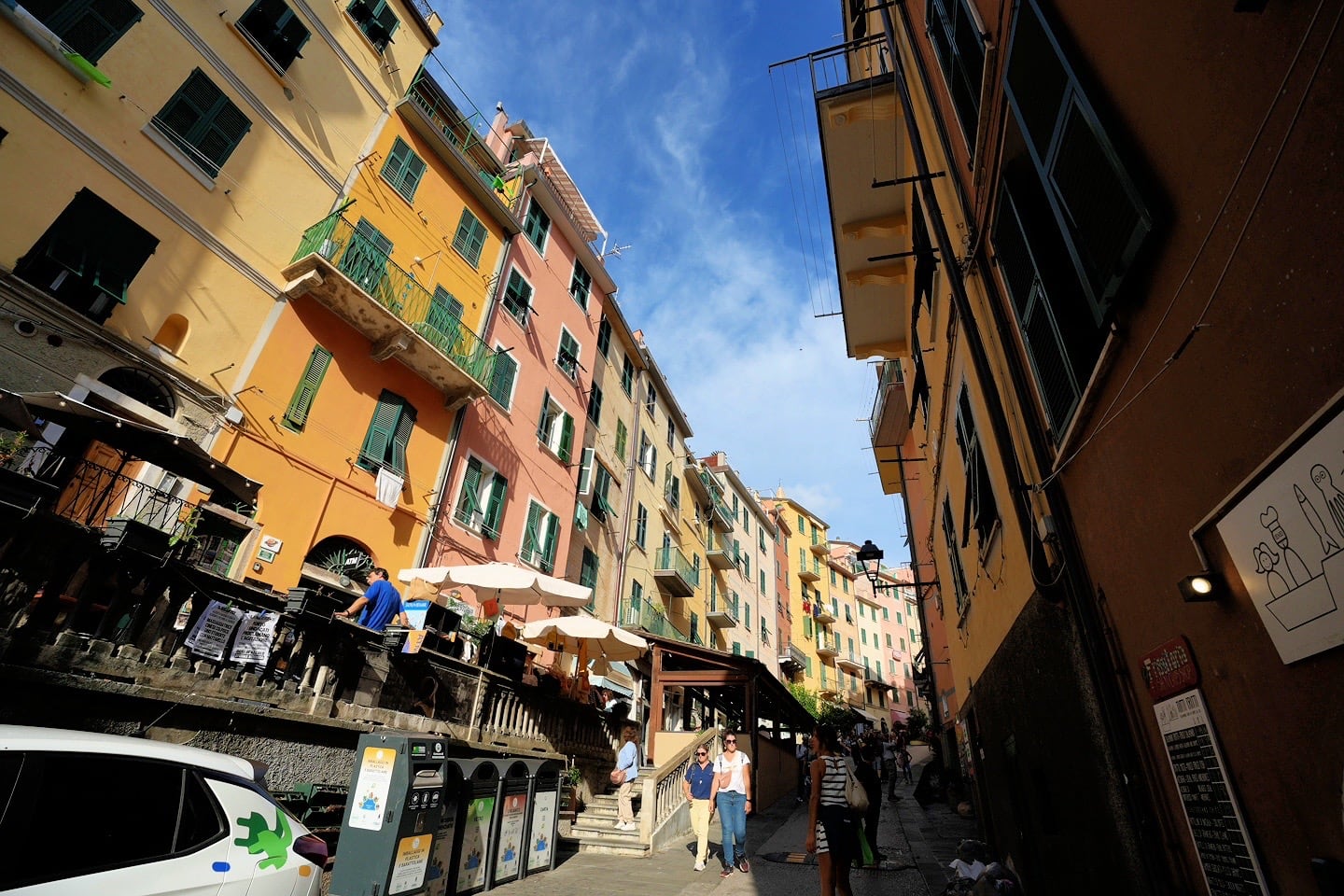
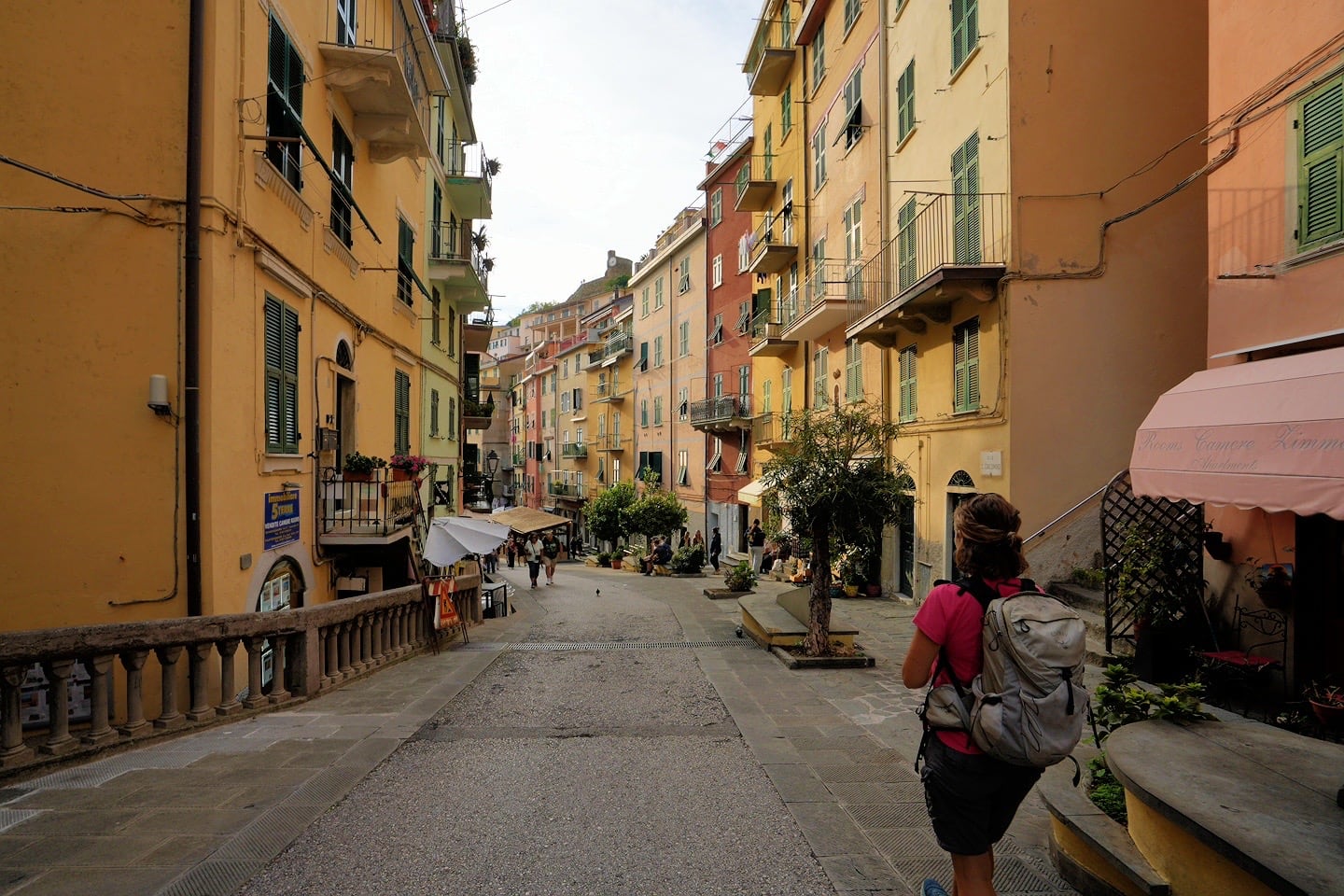
As a bonus, there’s even a small rock beach just beyond the harbor, accessed by a narrow footpath around the southeastern side of town.
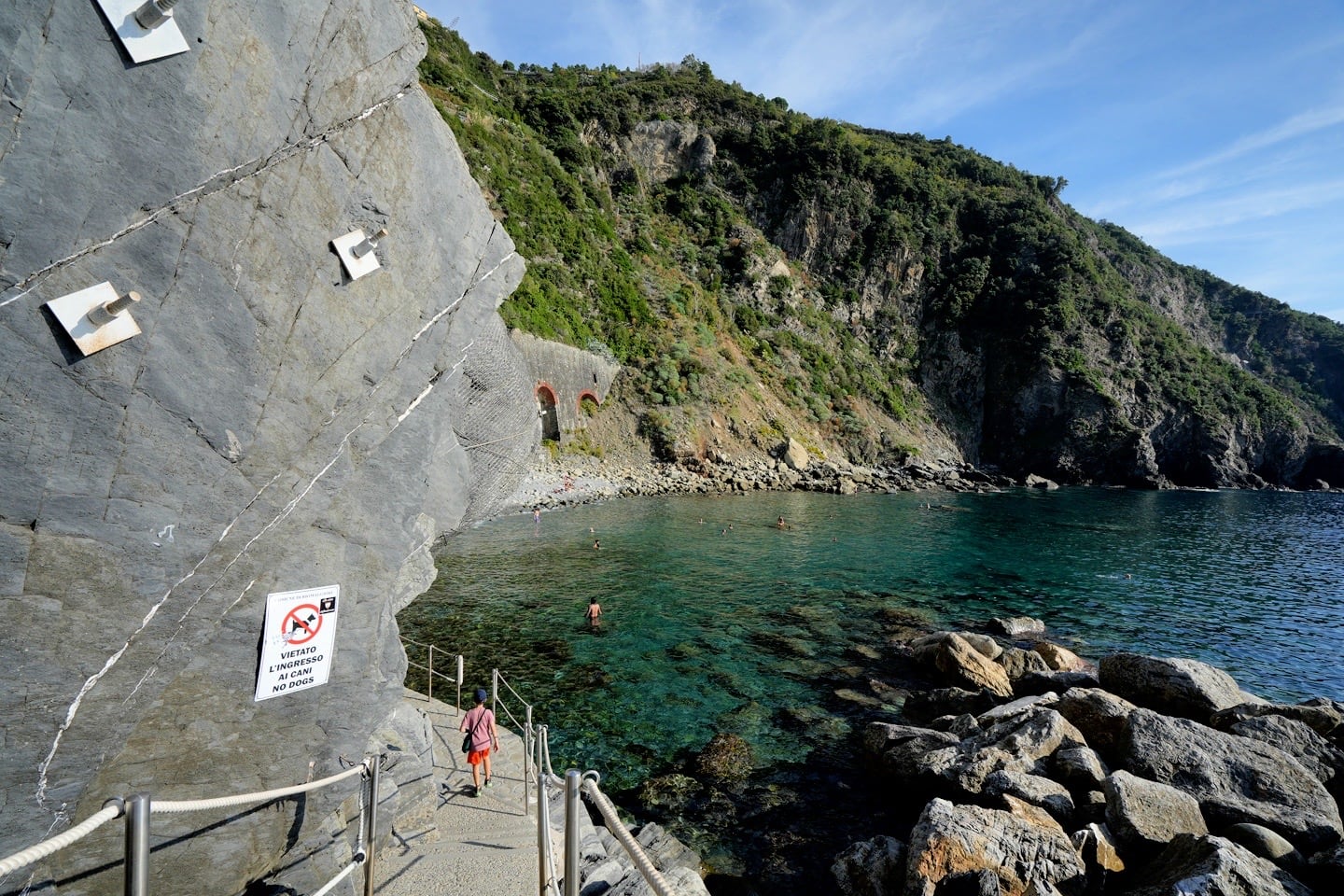
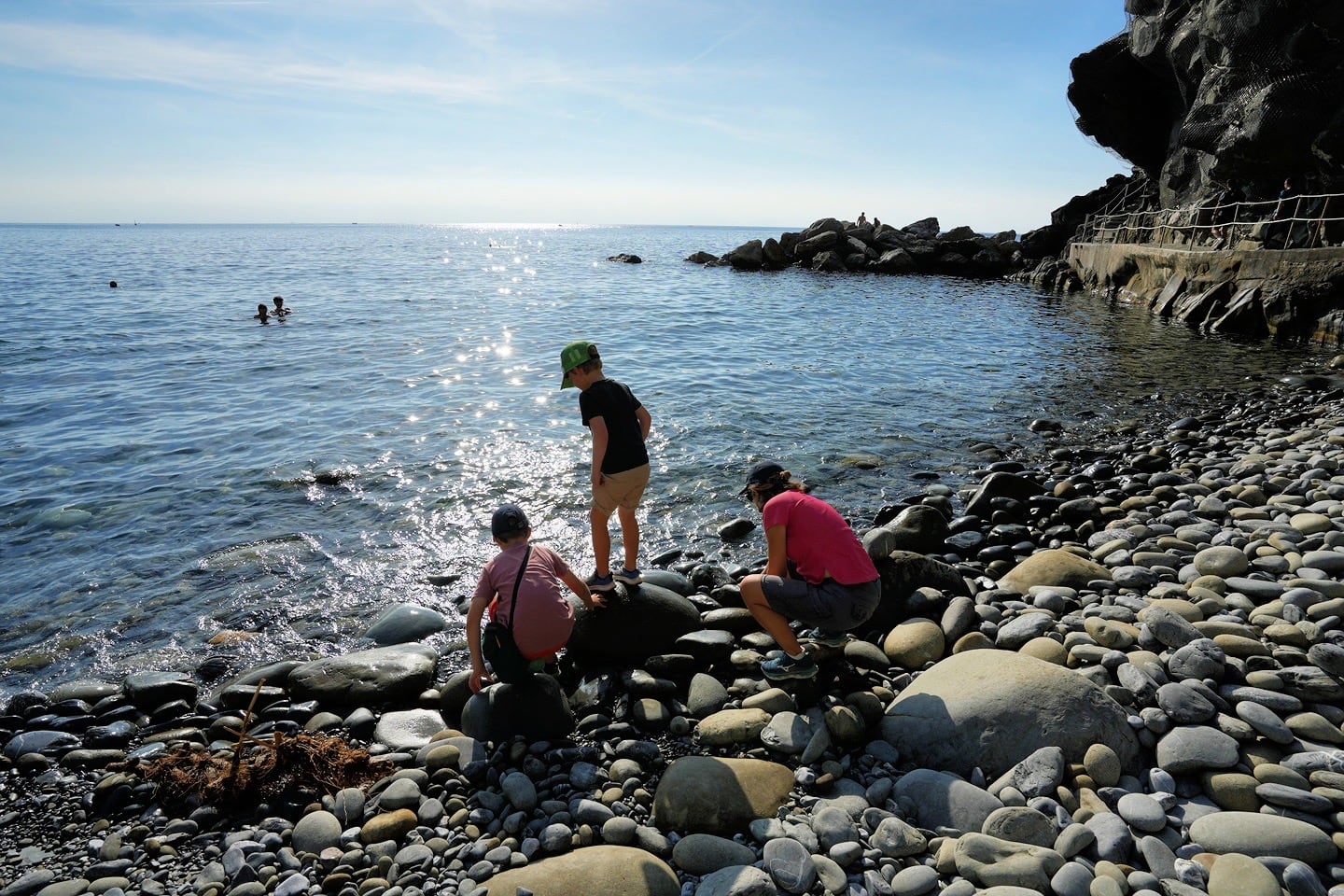
Even in mid-October, the water felt pretty darn inviting. Next time, we’ll be sure to pack our swimsuits.
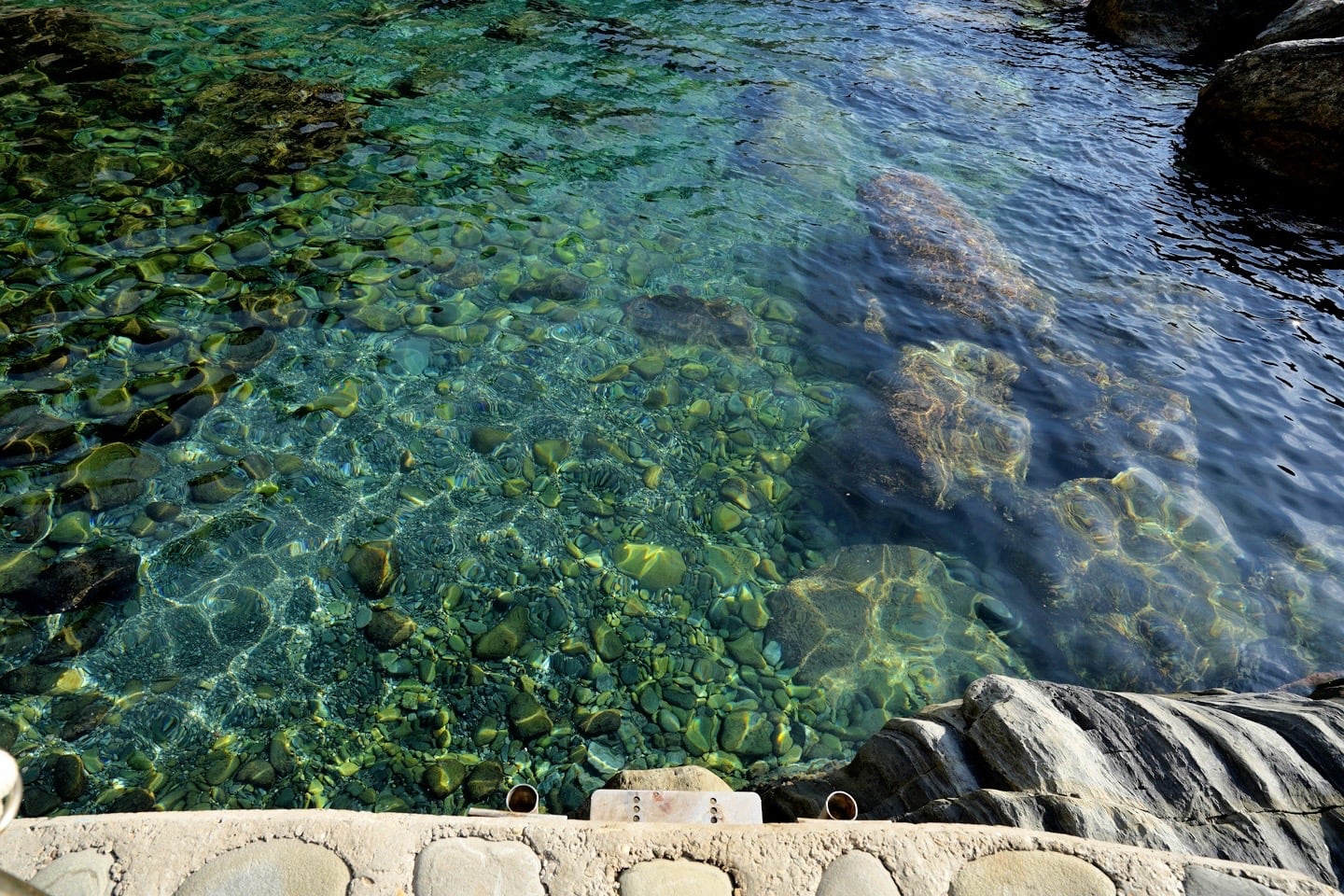
We didn’t regret taking the train for a second, and found that combining the trails with the train was a very nice way to explore the region in one day
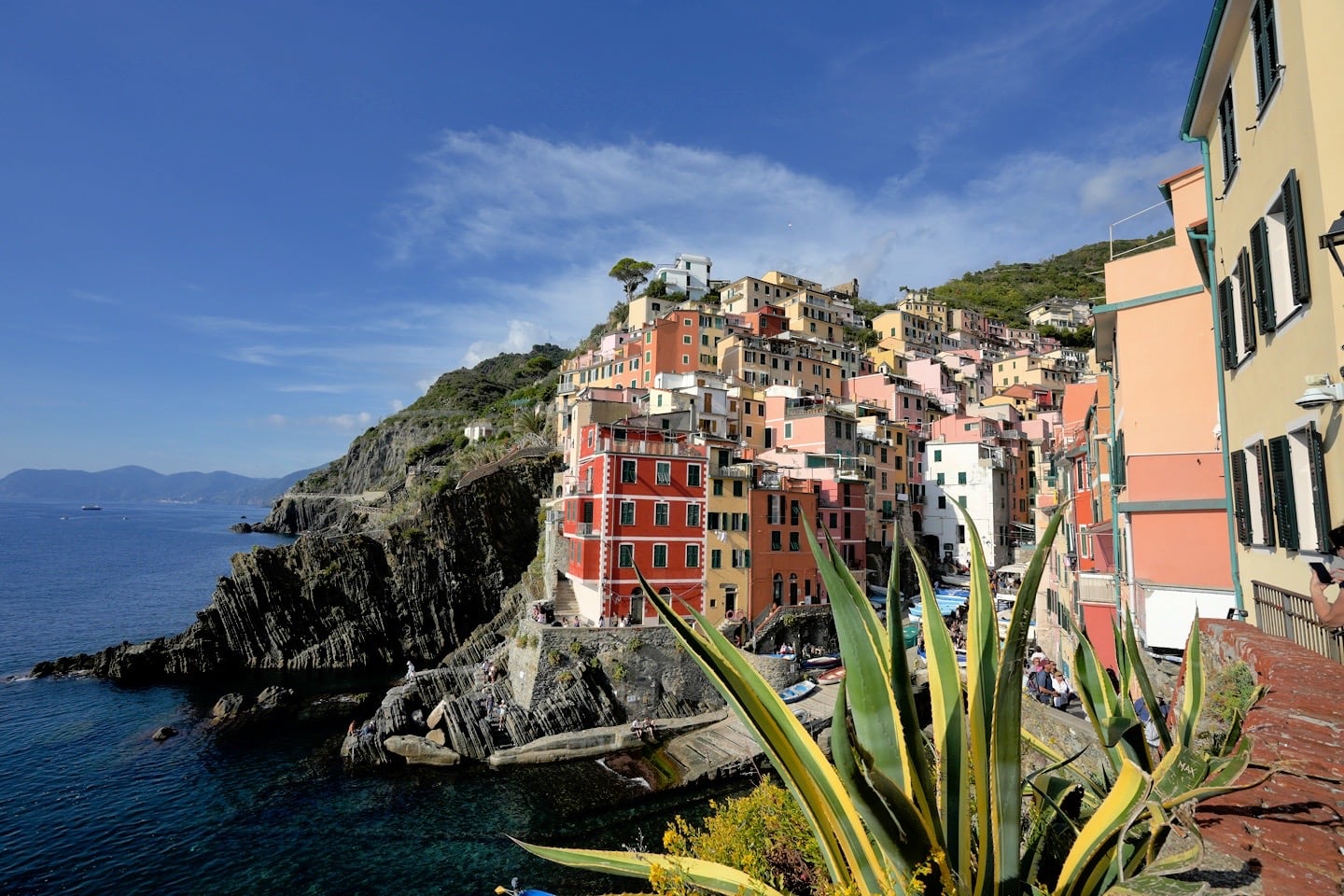
④ Riomaggiore to Manarola: Finishing on the Via dell’Amore
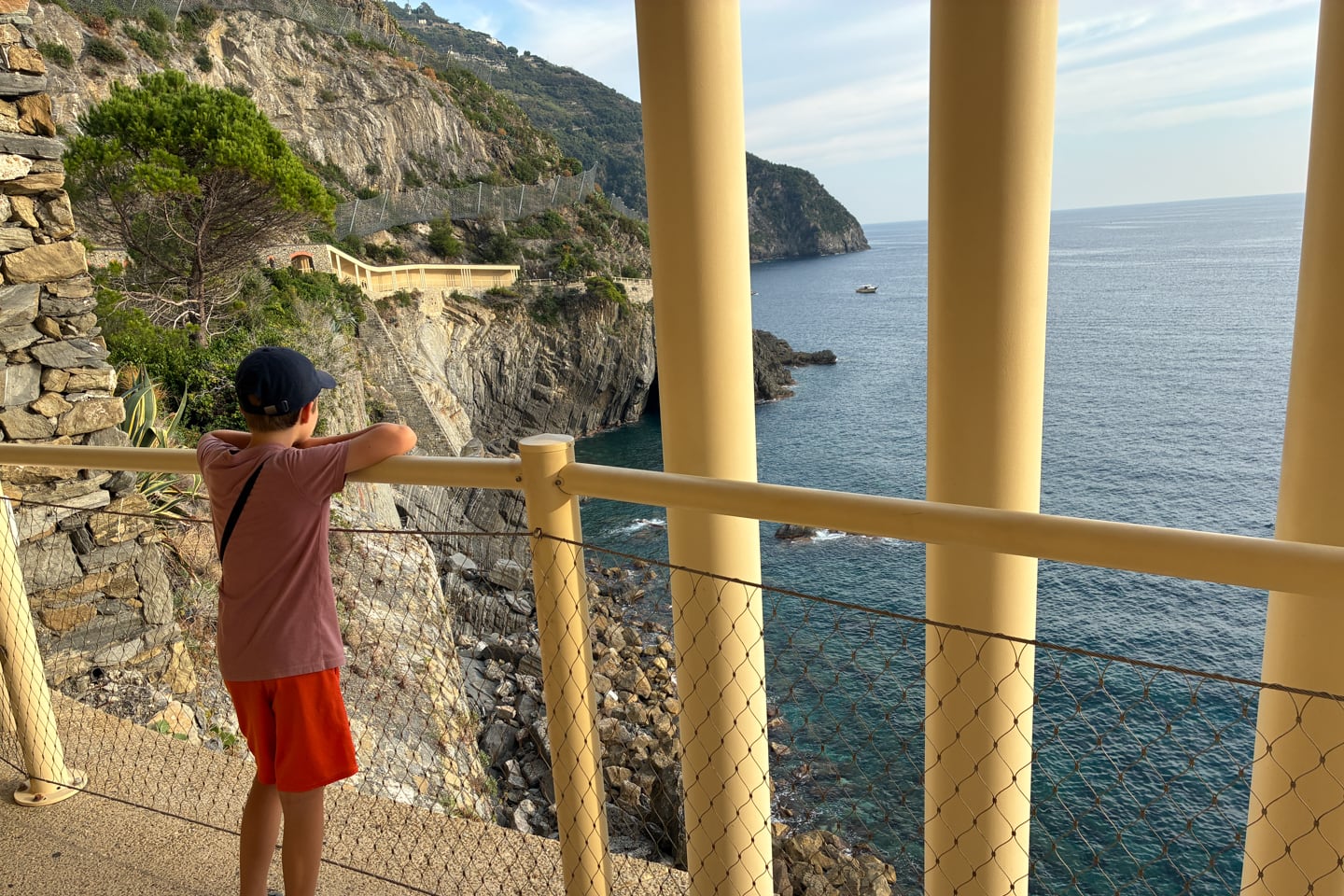
Our Riomaggiore to Manarola walking time: About 30 minutes
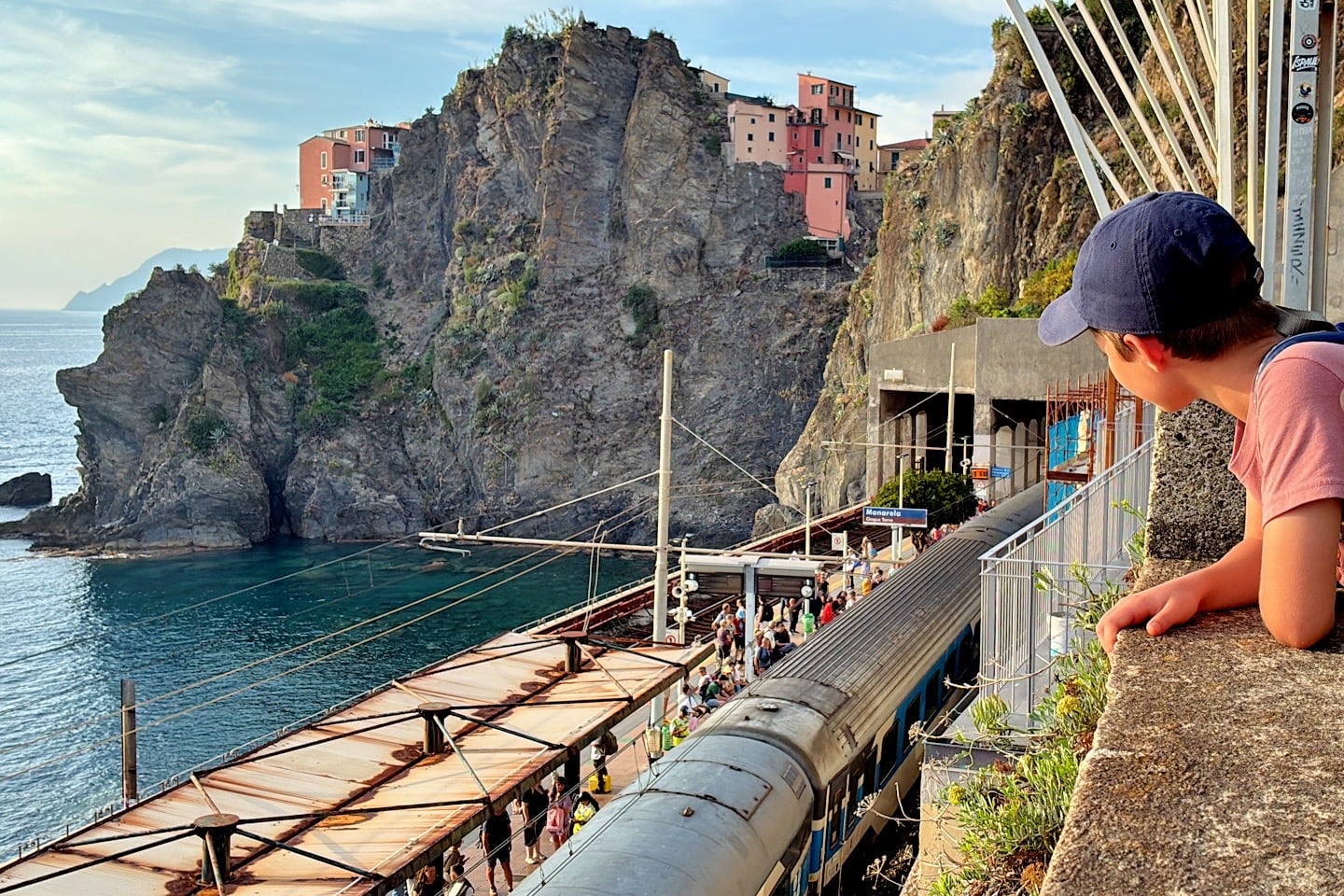
Our final hike of the day (more like a leisurely stroll) was along the famous Via dell’Amore (Lover’s Lane), connecting Riomaggiore with Manarola.
It turned out to be a awesome way to finish an already wonderful day.
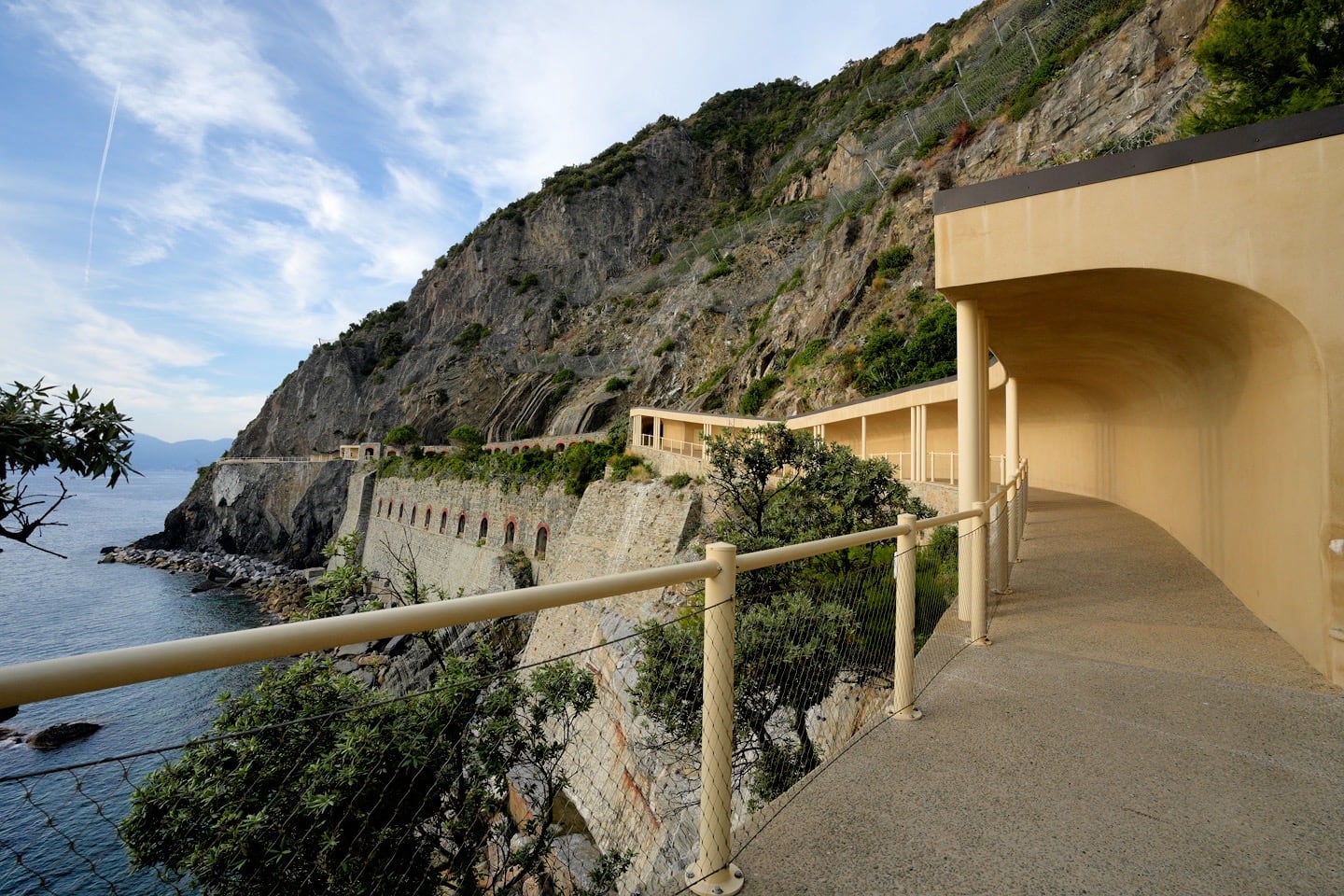
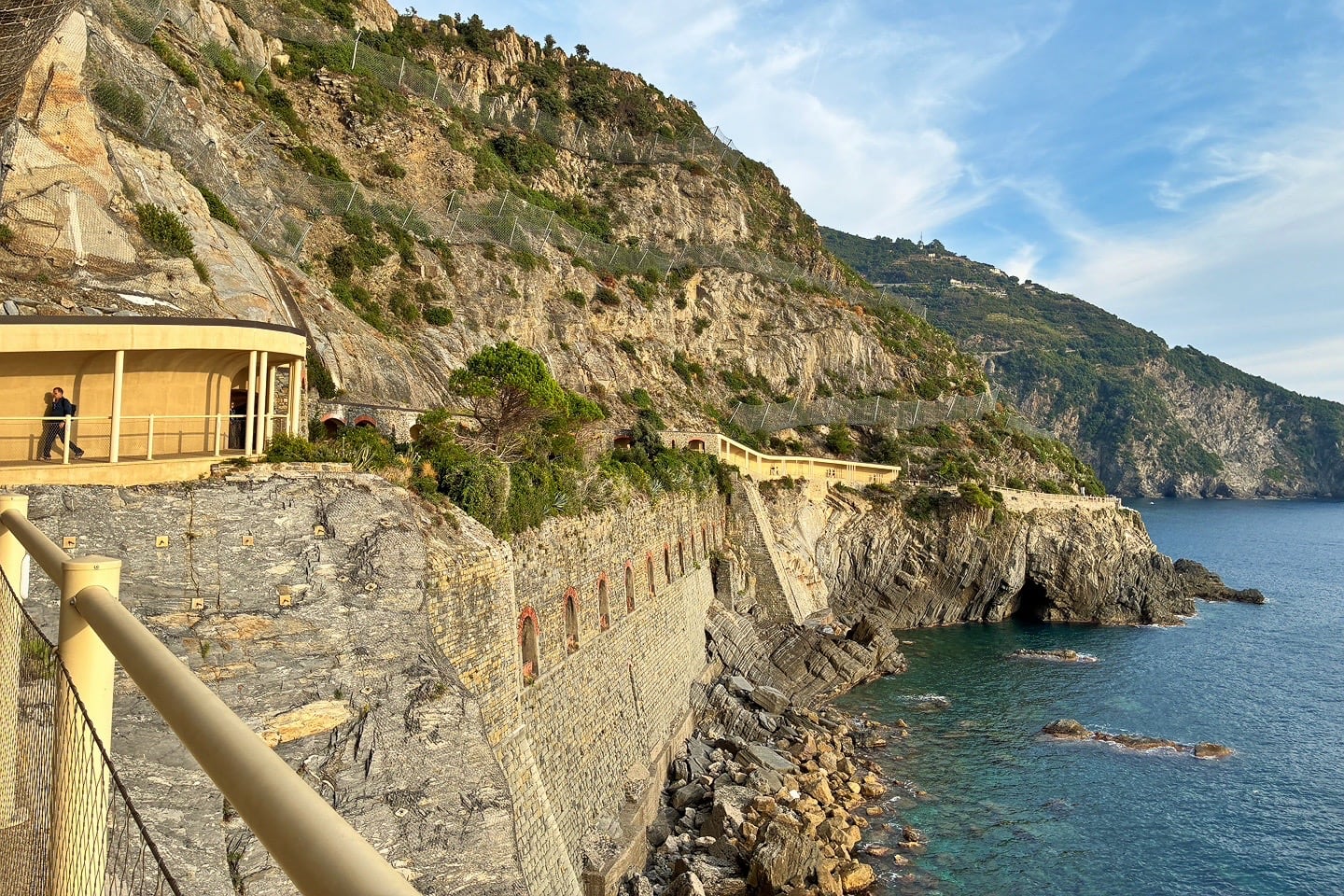
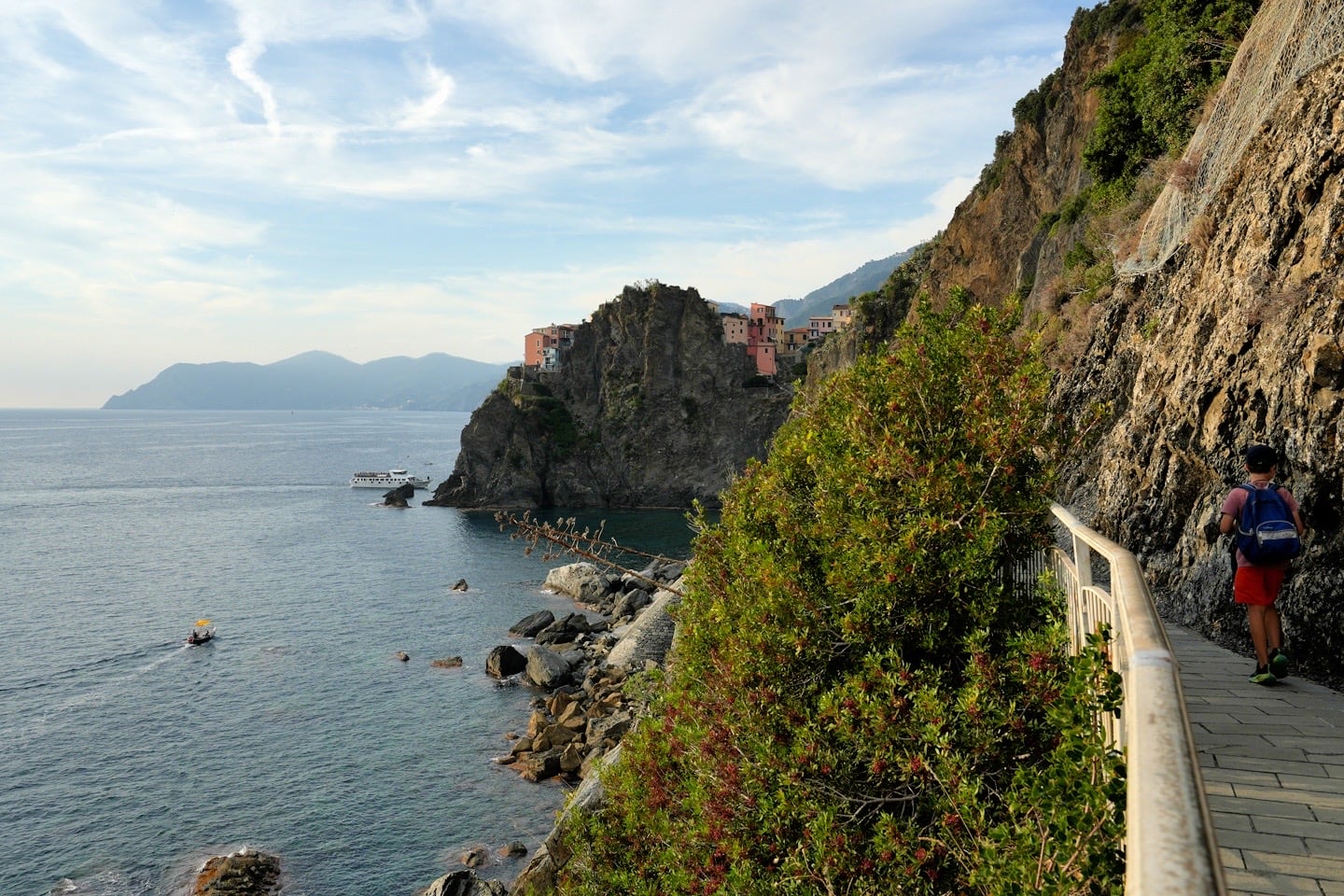
Unlike the somewhat demanding trails we’d tackled earlier in the day, the Via dell’Amore is a paved coastal walkway carved into the cliffs above the sea.
There are no long staircases or strenuous climbs to contend with.
Instead, you follow the coastline, enjoying the picturesque views of the rocky cliffs and Mediterranean below.
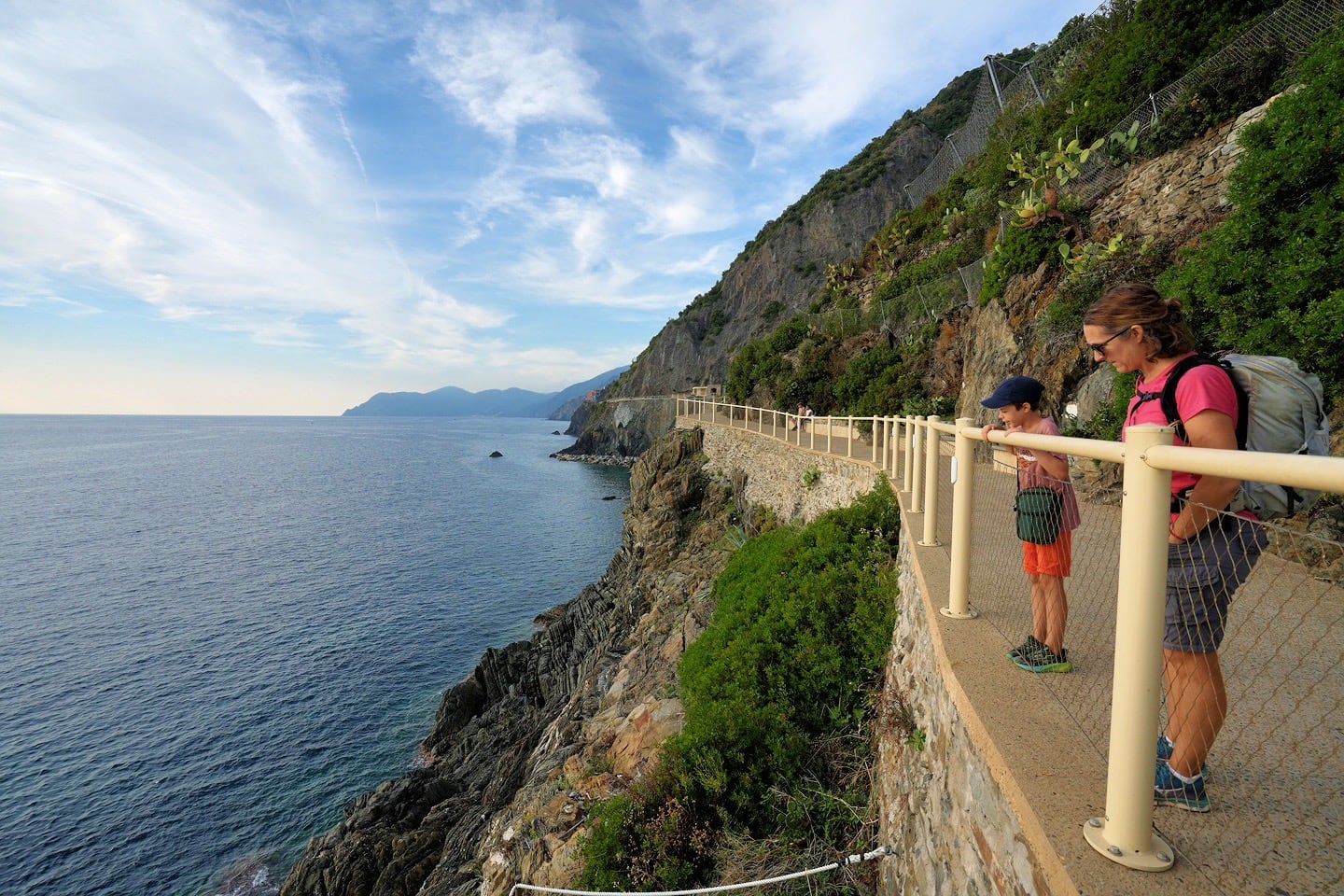
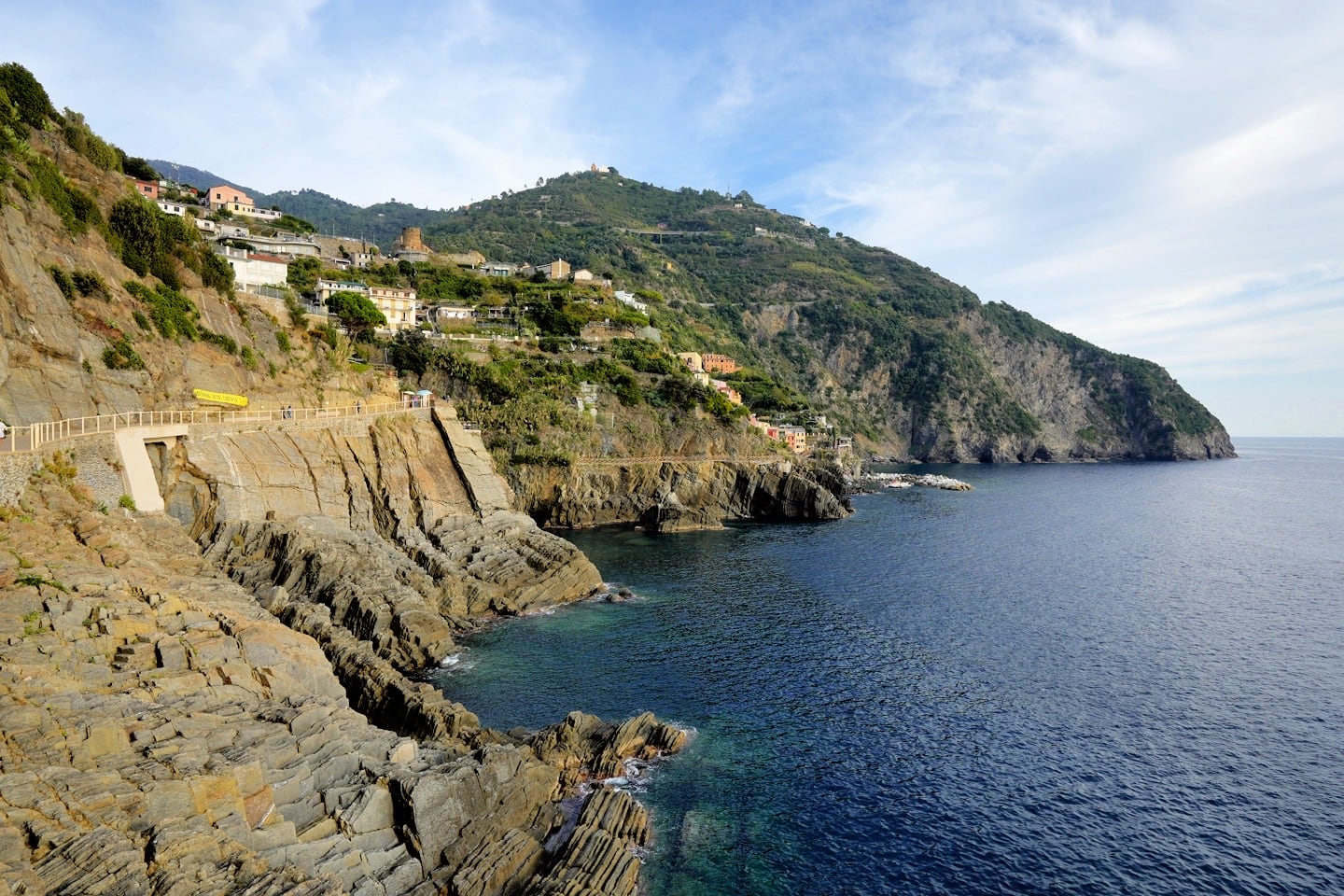
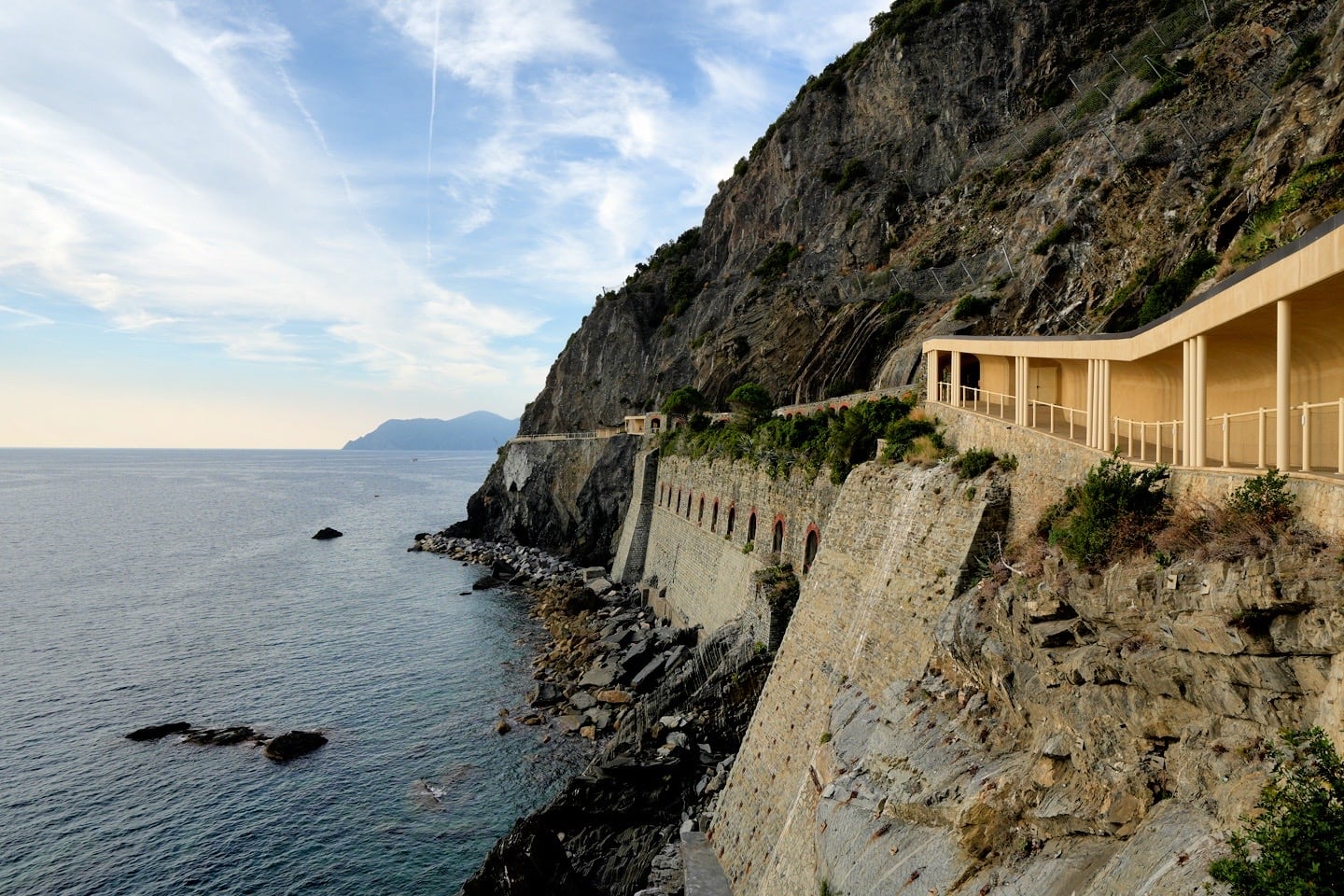
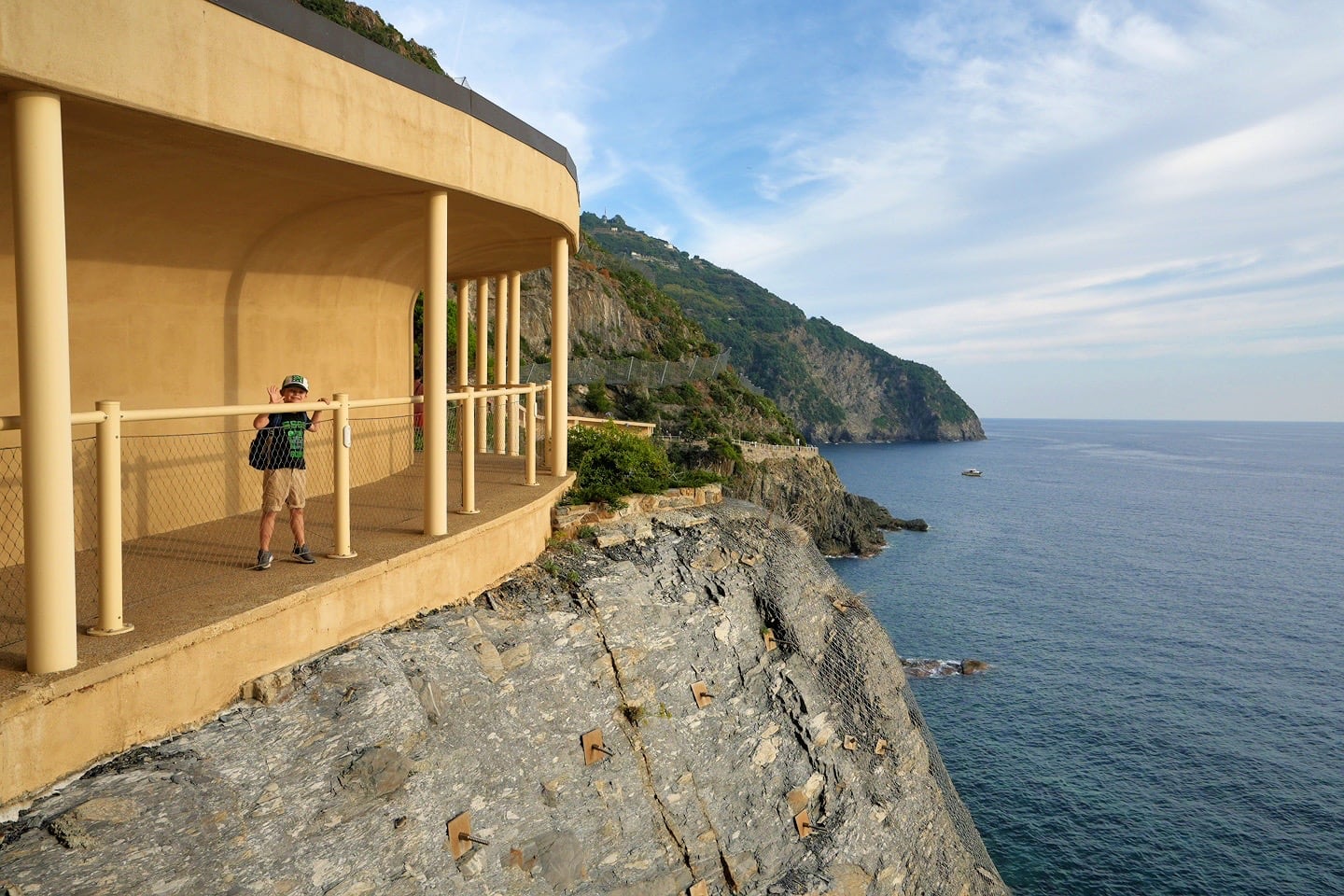
It’s worth noting that the Via dell’Amore doesn’t get you the classic colorful-village panoramas that Cinque Terre is famous for.
The main attraction here is the coastline itself.
We took about 30 minutes to complete the walk, moving at a leisurely pace and stopping frequently for photographs.
The late-afternoon light made the experience particularly memorable.
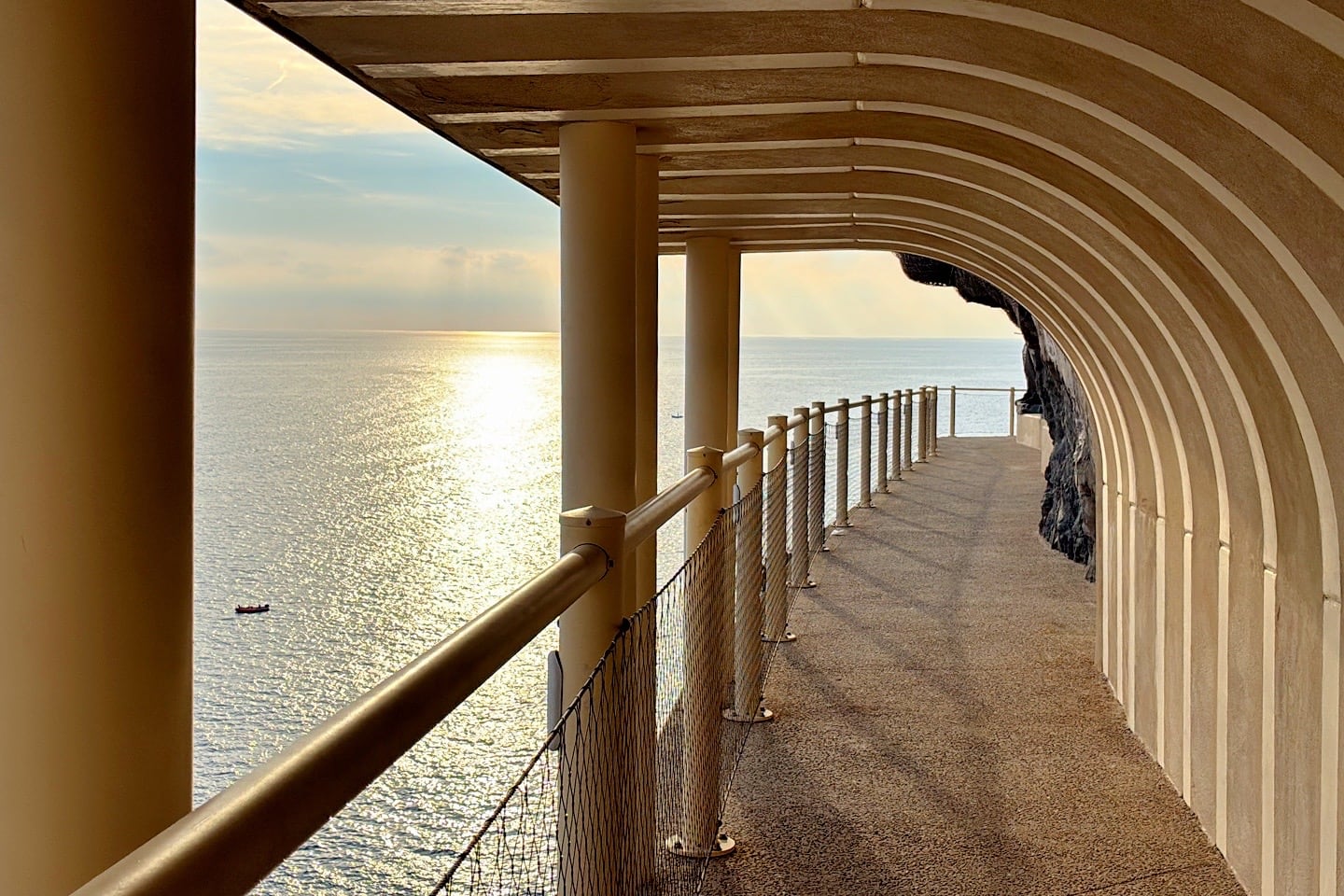
By the time we reached Manarola around 5:15 p.m., we felt like we’d experienced a pretty descent cross-section of what Cinque Terre has to offer.
Rigorous coastal hiking, photogenic Italian fishing villages, spectacular viewpoints, and an easy stroll above the sea just before sunset to finish.
For us, it was a perfect day of Cinque Terre hiking and more.
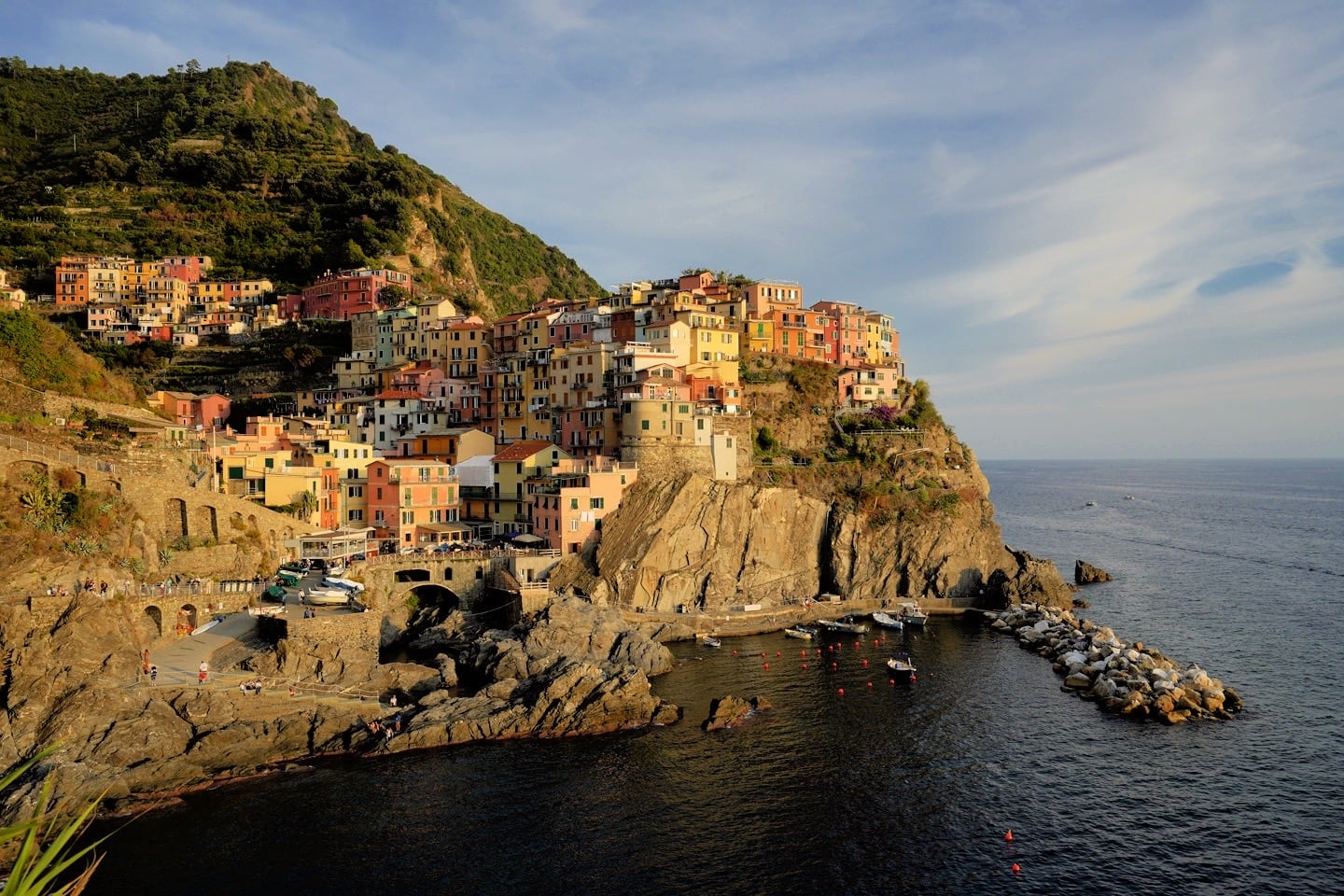
✪ Traveler Tip The Via dell’Amore requires a timed-entry reservation and has separate ticketing arrangements through the Cinque Terre Card system. The standard visitor route runs one way from Riomaggiore toward Manarola, with a maximum visit duration of 30 minutes. Check the official Via dell’Amore website before planning your walk.
How Difficult Is Hiking Cinque Terre?
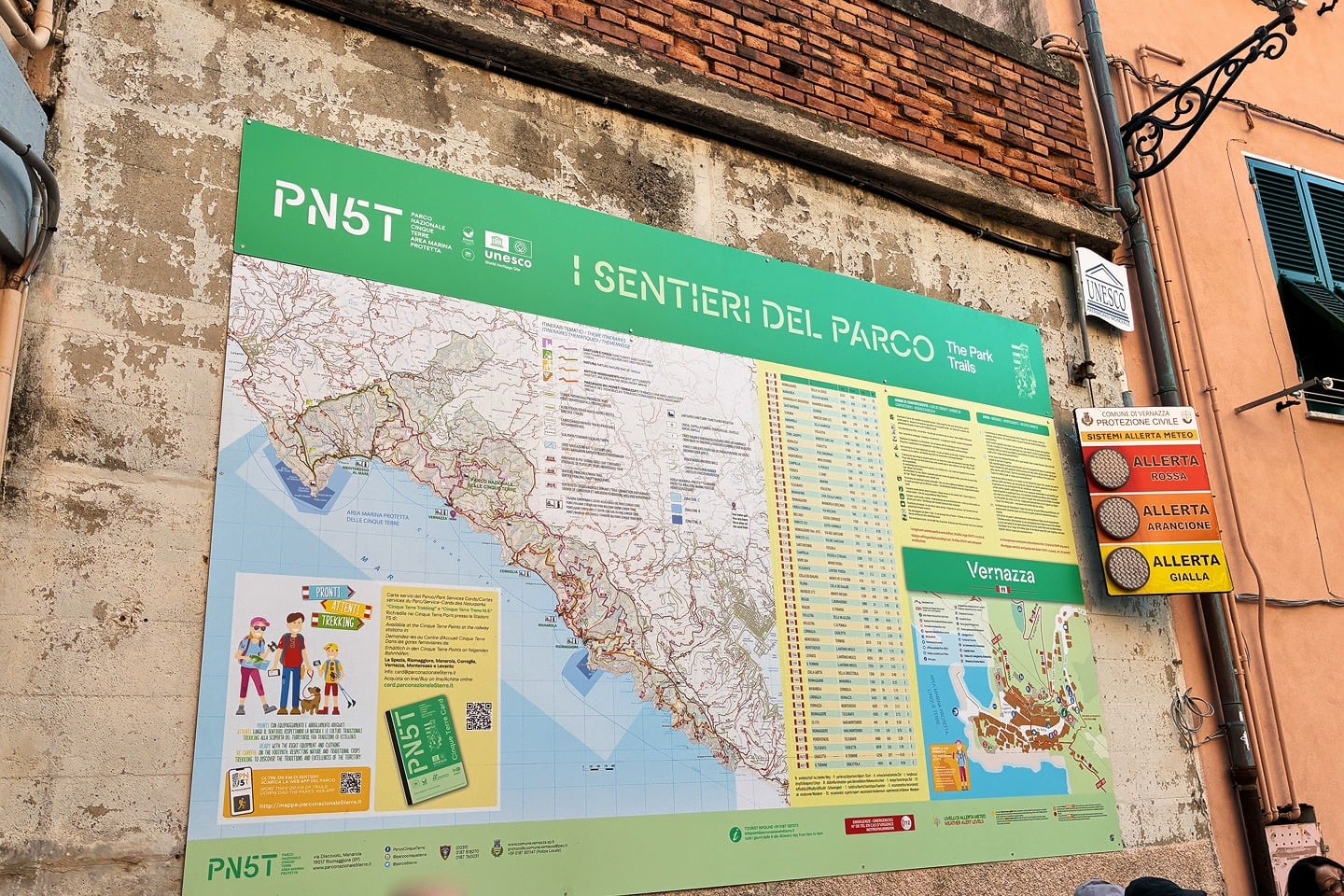
One thing we’d want first-time visitors to understand is that the Blue Trail is a proper hike.
There’s nothing particularly technical about the route between Monterosso and Corniglia, but it’s also not the sort of flat coastal path where you can wander along in sandals without much preparation.
There are long staircases, uneven stone surfaces, narrow sections, and plenty of climbing.
On the two northern sections, we also encountered places where we’d pay close attention to our footing, particularly with children.
For us, the biggest difference between the two trails was the combination of climbing and sun exposure.
| Consideration | Monterosso–Vernazza | Vernazza–Corniglia |
|---|---|---|
| Our impression | More demanding climb | More sun exposure |
| Shade | More shaded stretches | More exposed |
| Views | Spectacular views approaching Vernazza | Beautiful coast and terraced hillsides |
| Refreshments | Best to arrive prepared | We enjoyed a cliffside stop midway |
| Our pace | About 90 minutes | Longer, including a break |
The national park classifies both northern sections as routes for experienced hikers, so we wouldn’t assume that their popularity makes them easy.
If you’re not accustomed to hiking, we’d suggest starting with one section rather than committing to both.
You can always use the train to reach the other villages.
Is Hiking Cinque Terre With Kids Worth It?
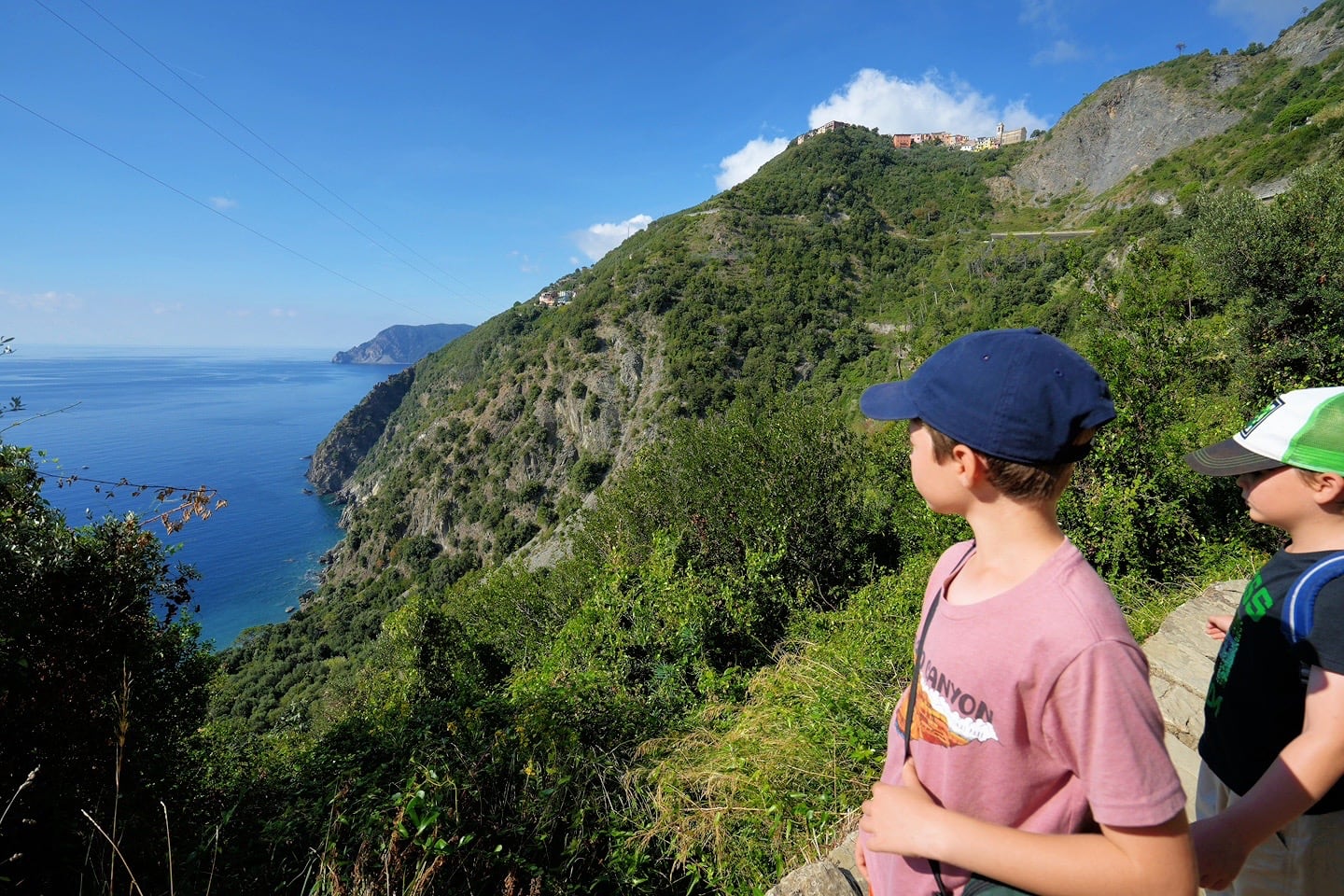
We tackled the Blue Trail with our two boys, who were 8 and 10 at the time. And they did great.
But they’re also strong hikers accustomed to longer days on the trail.
We saw families with considerably younger children hiking the same routes, so it’s certainly possible.
That being said, we wouldn’t necessarily recommend our full day for every family.
There are a few narrow or exposed sections where we’d keep younger children close. But for most families, the bigger challenge will likely be the cumulative climbing and distance.
Our eight-hour outing included plenty of breaks, and that always makes a difference.
We packed water, snacks, and sunscreen. There are places to refill water in the villages, but don’t assume you’ll find refreshments whenever you need them along the trail.
And for something considerably easier, the Via dell’Amore is worth considering, with its paved surface and relatively short distance.
Cinque Terre Hiking Tickets: Which Pass Do You Need?
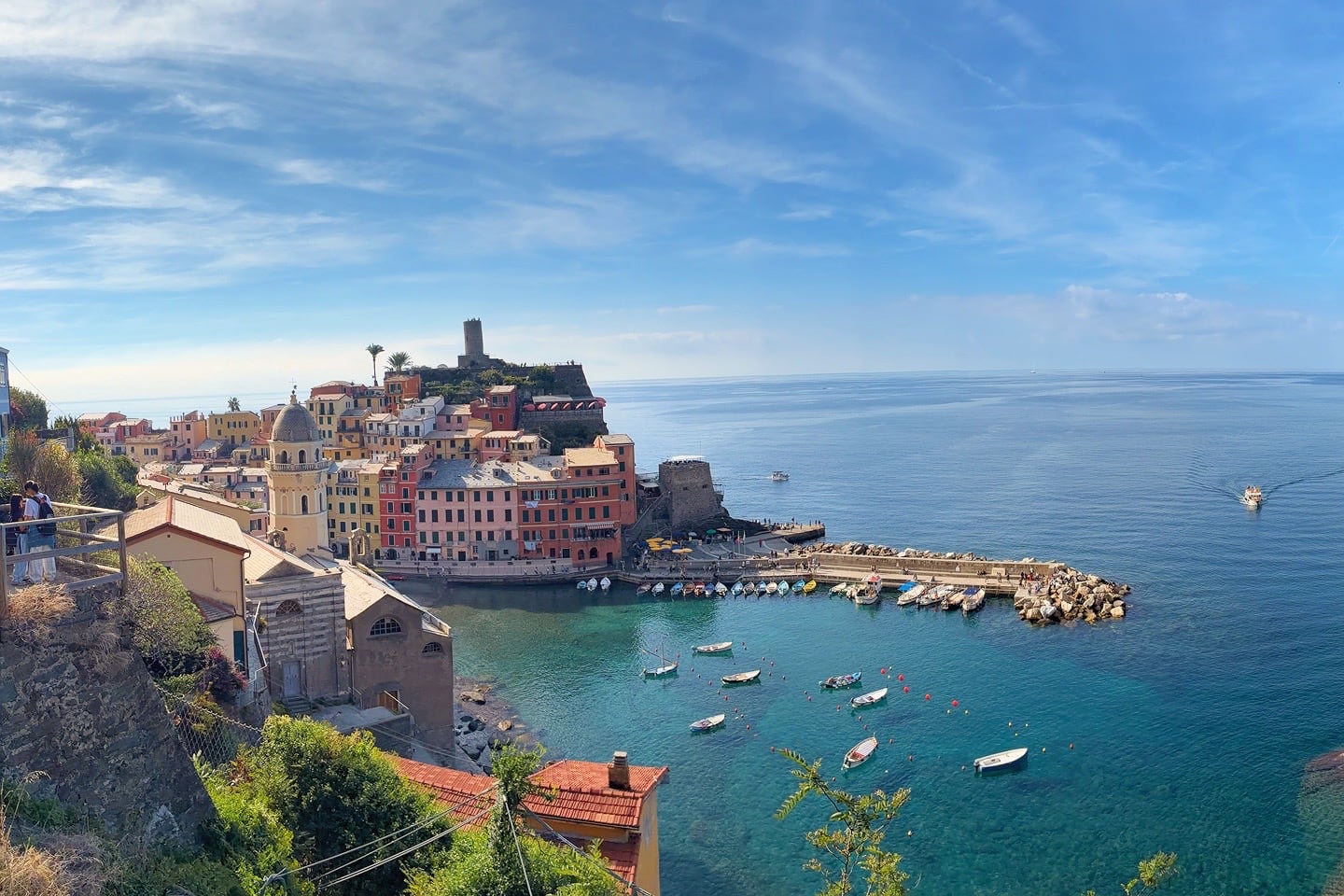
Since we were combining hiking with trains, choosing the right pass was an important part of our planning.
For our family of four, we purchased a Cinque Terre Treno MS Card family pass, which covered eligible regional train journeys and the paid sections of the Blue Trail.
It worked well for our itinerary.
On other days, when we weren’t planning multiple train journeys, we bought individual tickets (but you can get the MS Card for multiple days).
There are two main card types worth comparing:
✪ Cinque Terre Trekking Card: For visitors who want access to the park’s paid hiking sections and associated park services, without unlimited train travel.
✪ Cinque Terre Treno MS Card: Includes eligible regional train travel between Levanto and La Spezia, along with trekking benefits.
If you’re hiking one section and taking the train only once, a trekking card plus an individual ticket might be a better value.
But if you’re combining several villages and train journeys in one day, the Treno MS Card is worth comparing.
For us, it was convenient (and way cheaper) than having to purchase separate tickets throughout the day.
✓ Heads Up The Via dell’Amore has additional ticketing and timed-reservation requirements. Don’t assume an ordinary trekking or train card guarantees admission at your preferred time.
Check the official Cinque Terre National Park ticketing website for current prices, family options, and inclusions.
What About the Free Cinque Terre Hiking Trails?
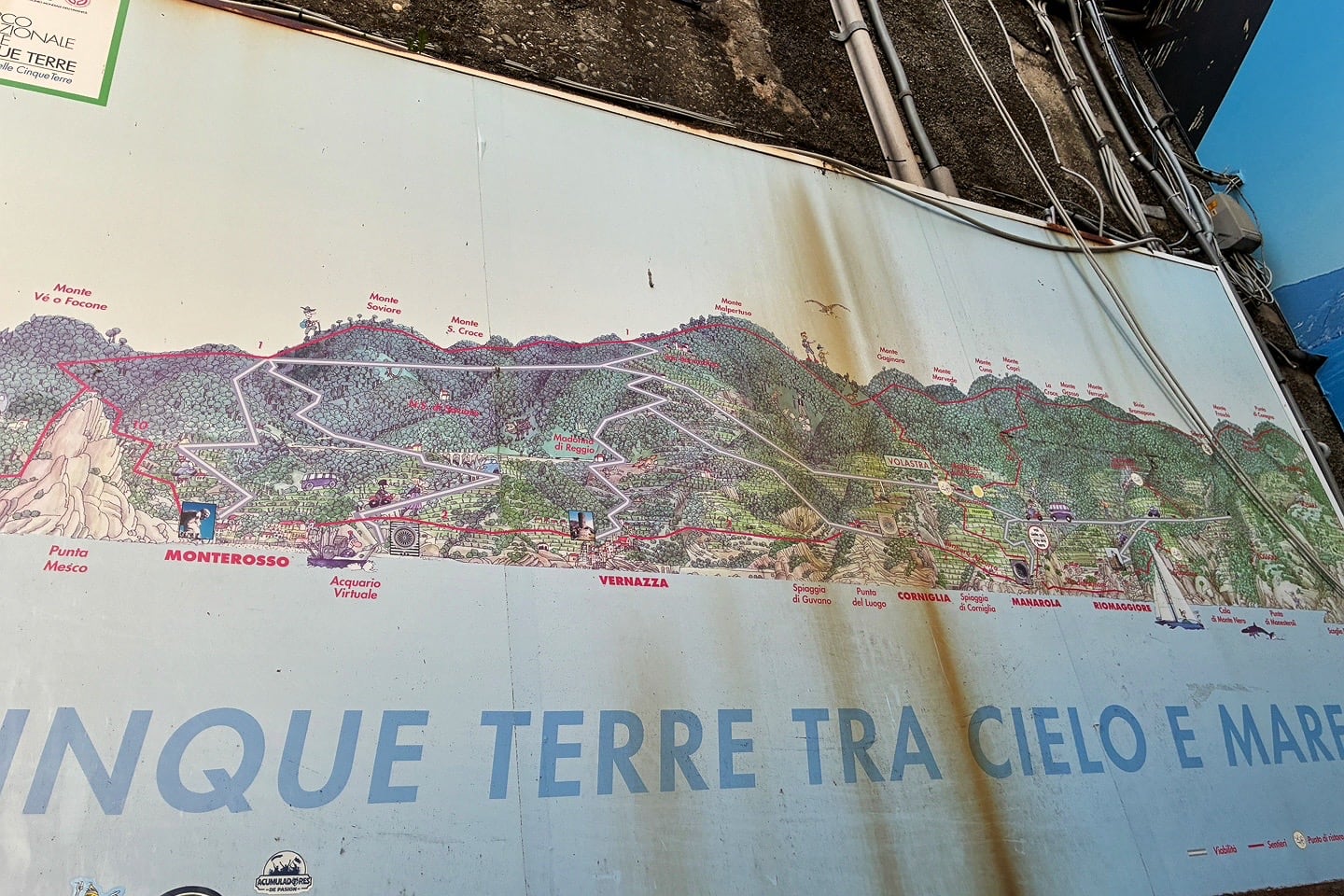
Not every hiking trail in Cinque Terre requires a paid trekking card.
The wider network includes higher hillside routes, old mule tracks, and paths through vineyards and olive groves.
Some are free to access.
The best-known alternative around the central villages is the higher route connecting Corniglia and Manarola via Volastra.
This passes through the terraced hillsides above the coast and involves considerably more climbing than the Via dell’Amore.
We didn’t hike it ourselves, so we can’t offer a firsthand comparison.
But if we returned with more time, it would certainly be worth investigating, particularly if the lower section is still closed and we were intent on through-hiking all five villages.
Our advice would be to choose your trail based on distance, elevation, and the scenery you want to experience—not simply whether it requires a ticket.
Essential Tips for Hiking Cinque Terre
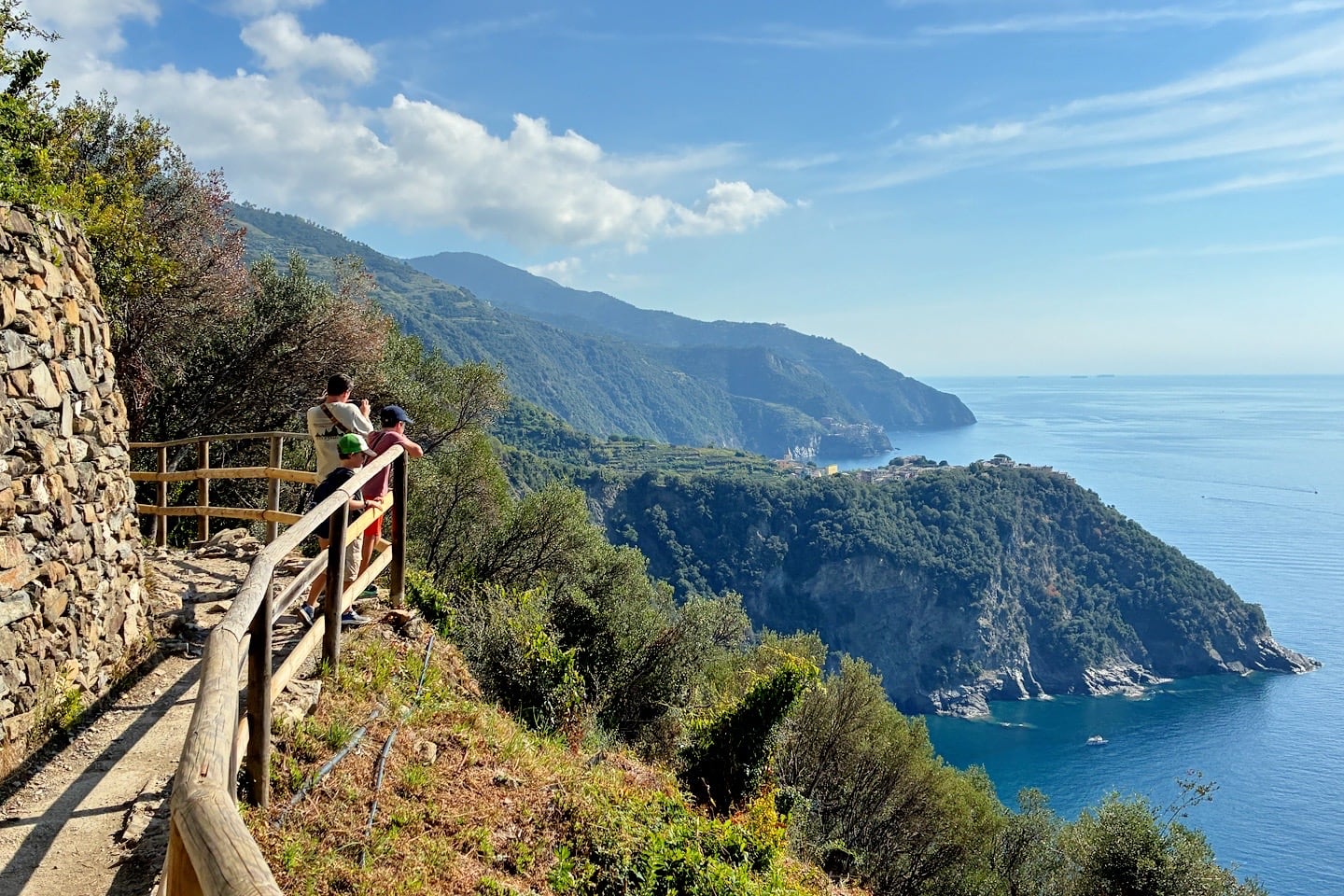
A few things we’d do the same way again:
- Start early. We hit the trail around 9:15 a.m., which worked well in October. During the hotter months, we’d start earlier.
- Wear proper hiking shoes. There are uneven steps, rocky surfaces, and steep sections. Good grip matters.
- Carry water and sun protection. We found the Vernazza–Corniglia section particularly exposed.
- Allow time for the villages. The hiking is only part of the experience. Our coffee, lunch, slushy, gelato, and beer stop (at the end) were some of the day’s highlights.
- Check cruise ship schedules. We used CruiseMapper and CruiseDig to check arrivals in La Spezia and plan our hiking day around major cruise visits.
- Check current trail conditions. Closures can occur after heavy rain, landslides, or maintenance. Consult the official Cinque Terre National Park trail information before heading out.
And if the forecast looks questionable, we’d be prepared to shift the hiking to another day (if possible).
Is a Guided Cinque Terre Hike Worth It?
We hiked independently and wouldn’t hesitate to recommend doing the same to confident hikers.
The popular Blue Trail sections are well-marked, established routes, and we didn’t feel that hiring a guide would have significantly improved our experience.
But a local guide could add another dimension.
The terraced vineyards, dry-stone walls, agricultural traditions, and old footpaths are a big part of what makes Cinque Terre special.
Having someone explain the landscape and its history while you’re walking through it could be worthwhile, particularly on routes beyond the busiest coastal trails.
And if you’re traveling solo and looking to meet up with like-minded hikers, there are few better ways to do so than hopping on a group hiking tour.
If we were booking a guided experience, we’d start by comparing Cinque Terre trekking & hiking tours.
We’d prioritize small groups, an interesting route, and a guide with strong local knowledge rather than paying someone simply to walk us between villages we could easily visit independently.
Would We Hike Cinque Terre Again?
Hiking the Blue Trail was one of the biggest reasons Cinque Terre surpassed our expectations.
We arrived knowing the villages would be crowded and that the region had become one of Italy’s most popular destinations.
But once we were up on the trails, enjoying those spectacular views over the Mediterranean, much of that seemed to matter a little less.
The climbing made the views feel that much more rewarding.
If we returned, we’d happily hike the two northern Blue Trail sections again. We’d also consider exploring some of the higher alternatives, particularly the route through Volastra.
But we wouldn’t feel any obligation to hike every kilometer between all five villages.
For us, combining the coastal trails with the train and finishing along the Via dell’Amore was a fantastic way to spend a day.
And it’s an itinerary we’d recommend to other reasonably fit travelers who want to experience some of the best of Cinque Terre on foot without turning their visit into a race.
More Guides to Mediterranean UNESCO Heritage Sites
- Which Cinque Terre Village Is Best for You?
- 12 Worthwhile Things to Do in Venice, Italy in 1-3 Days
- Day Trip to Cordoba (Spain) from Seville: How to Plan Your Visit
- The Royal Alcázar of Seville, Spain: How to Plan Your Visit
- Pena Palace in Sintra (Portugal): The Complete Guide
More Hiking & Trekking Guides
- Istanbul Walls (Turkey): Self-Guided Walking Tour
- Ponta da Piedade in Lagos (Portugal): Our 4 Favorite Ways to Visit
- Todra Gorge (Morocco): How to Visit & What to See in 1–3 Days
- Taishan Mountain (China): Detailed Guide + Trip Report
- Sayulita Beaches: Complete Guide to the Area’s Best
- Colca Canyon Trek (Peru): Detailed Guide + What to Expect