
Lori and I were hesitant to visit Topkapi Palace. It is, afterall, a major stop for the long and never-ending convoys of tour buses that ferry around out-of-towners. Hagia Sophia! Blue Mosque! Topkapi! REPEAT!
But Topkapi Palace was well worth a visit—and the mild inconvenience of waiting in a line that could have been much worse. It took us back to some of the great palaces of Rajasthan (India), and gave us further insight into the Ottaman Empire and lavish lifestyle of its royal family.
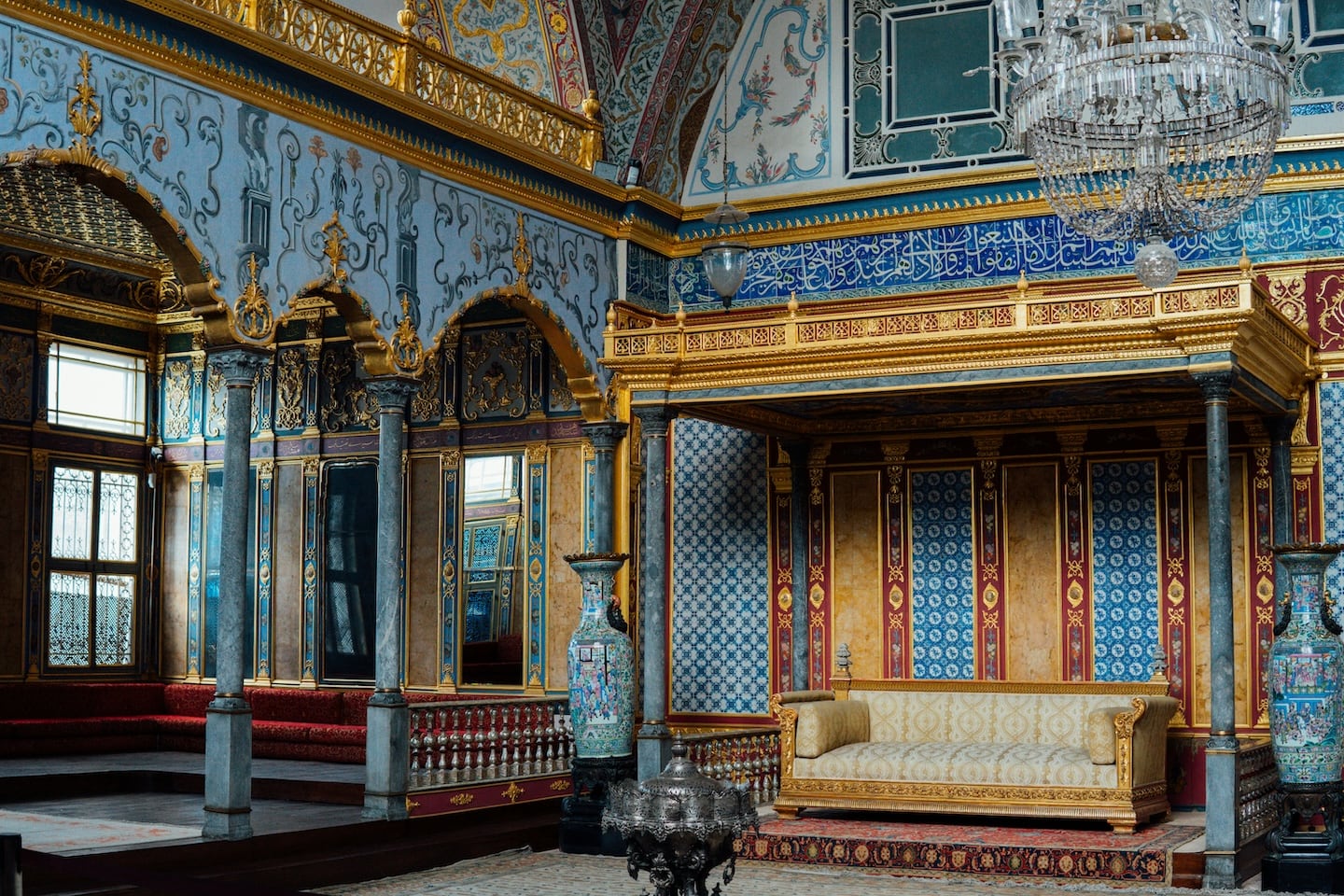
You’ve got your bedazzled thrones and sacred relics, and of course your sweeping city views fit for a sultan. Every room tells a story of ridiculous riches and conspicuous consumption—all on display for the traveling masses.
In this guide, we share what it’s really like to tour Topkapi Palace, and why you might want to do a little visit. We tell you exactly how to visit, how to save money doing so, and what you might want to be on the look out for while you make your way around this sprawling and intriguing complex.
Why Visit
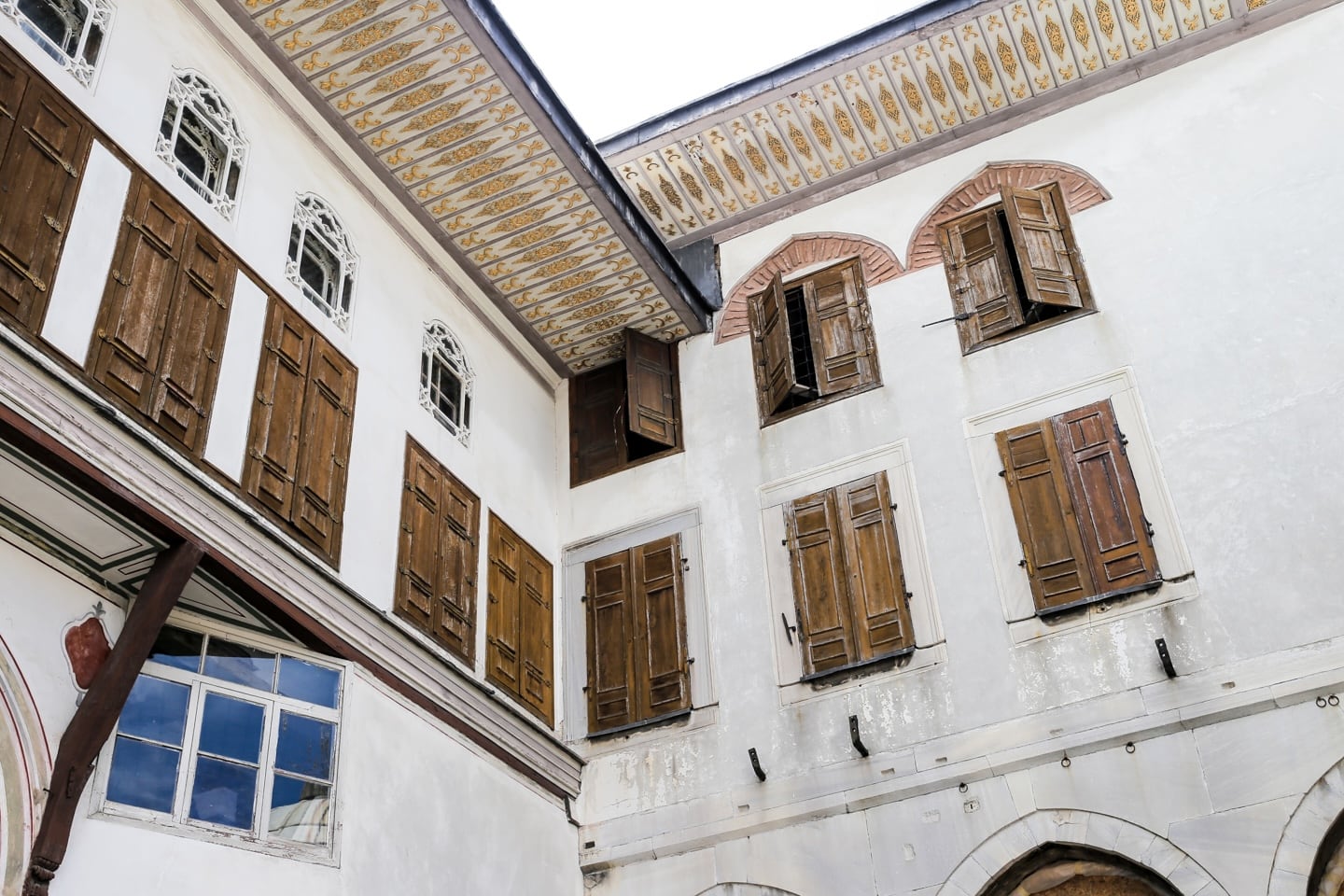
So, why would you ever want to visit this place? For starters, it’s one of Istanbul’s top attractions—and for good reason. Visiting is stepping back in time a few hundred years to the height of the Ottoman Empire.
Built by Sultan Mehmed II shortly after his conquest of Constantinople in 1453, the palace became a city within a city, housing thousands of courtiers, guards, and servants. For nearly four centuries, it was the beating heart of one of the world’s greatest empires.
Here’s more reasons why you might want to pencil in Topkapi near the top of your Istanbul itinerary:
- A Living Chronicle of Ottoman Life: The palace offers a physical connection to the sultans, their families, and their courtly rituals.
- Art and Architecture: The pinnacle of Ottoman design, it blends Islamic calligraphy, tilework, and swanky courtyards into a harmonious whole.
- Cultural Depth: Beyond the opulence, Topkapi reveals a lot about the complexity of imperial governance, religion, and everyday life within these palace walls.
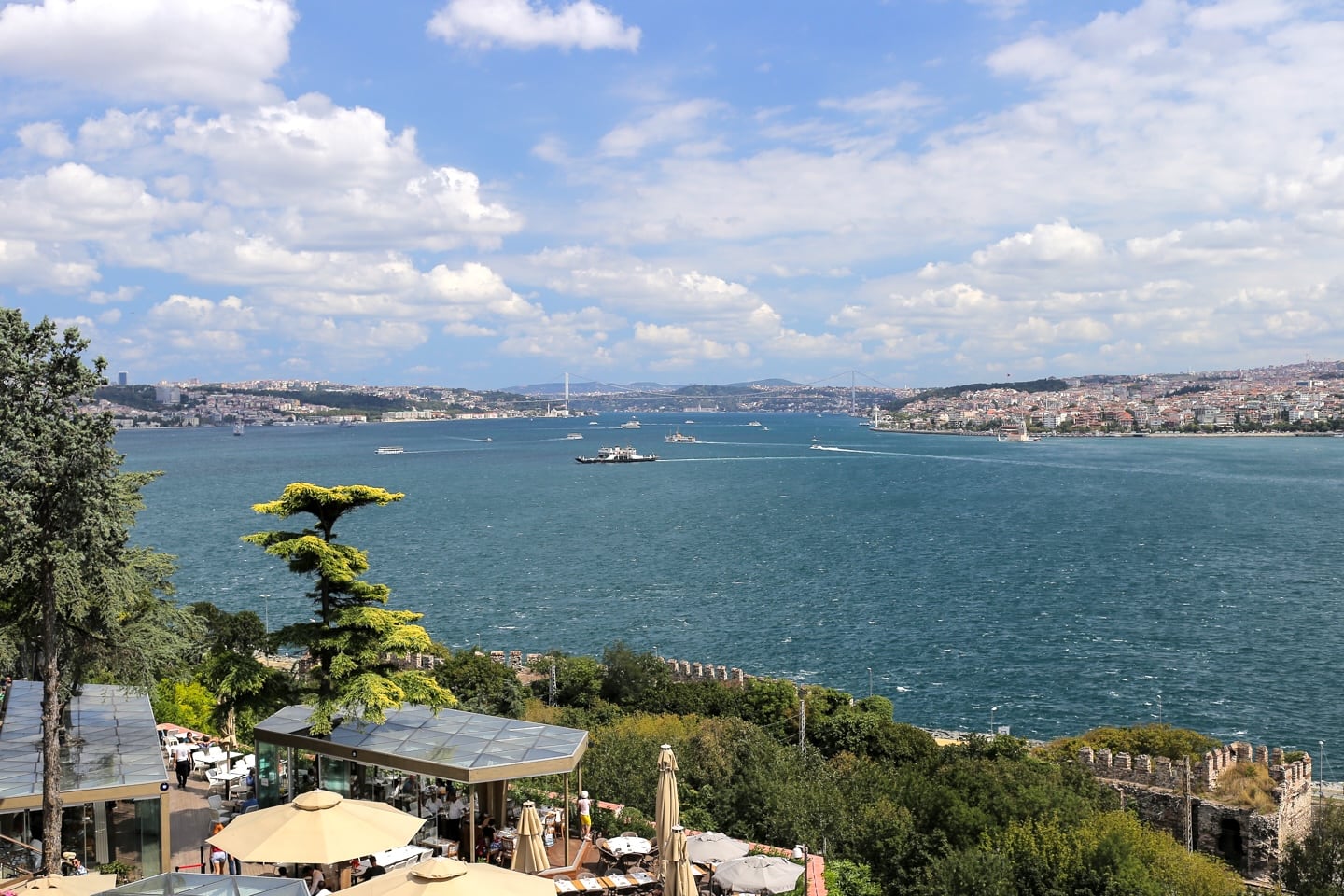
- Breathtaking Views: Overlooking the Bosphorus and the Sea of Marmara, it offers some of the most photo-worthy panoramas in Istanbul.
- Spiritual Treasures: The collection of Islamic relics—including items believed to belong to the Prophet Muhammad—make it a site of deep reverence.
So there you have it. If you’re leaning towards touring the palace, the rest of this guide has all the essentials you’ll need to plan your visit.
The Best Ways to Visit Topkapi Palace
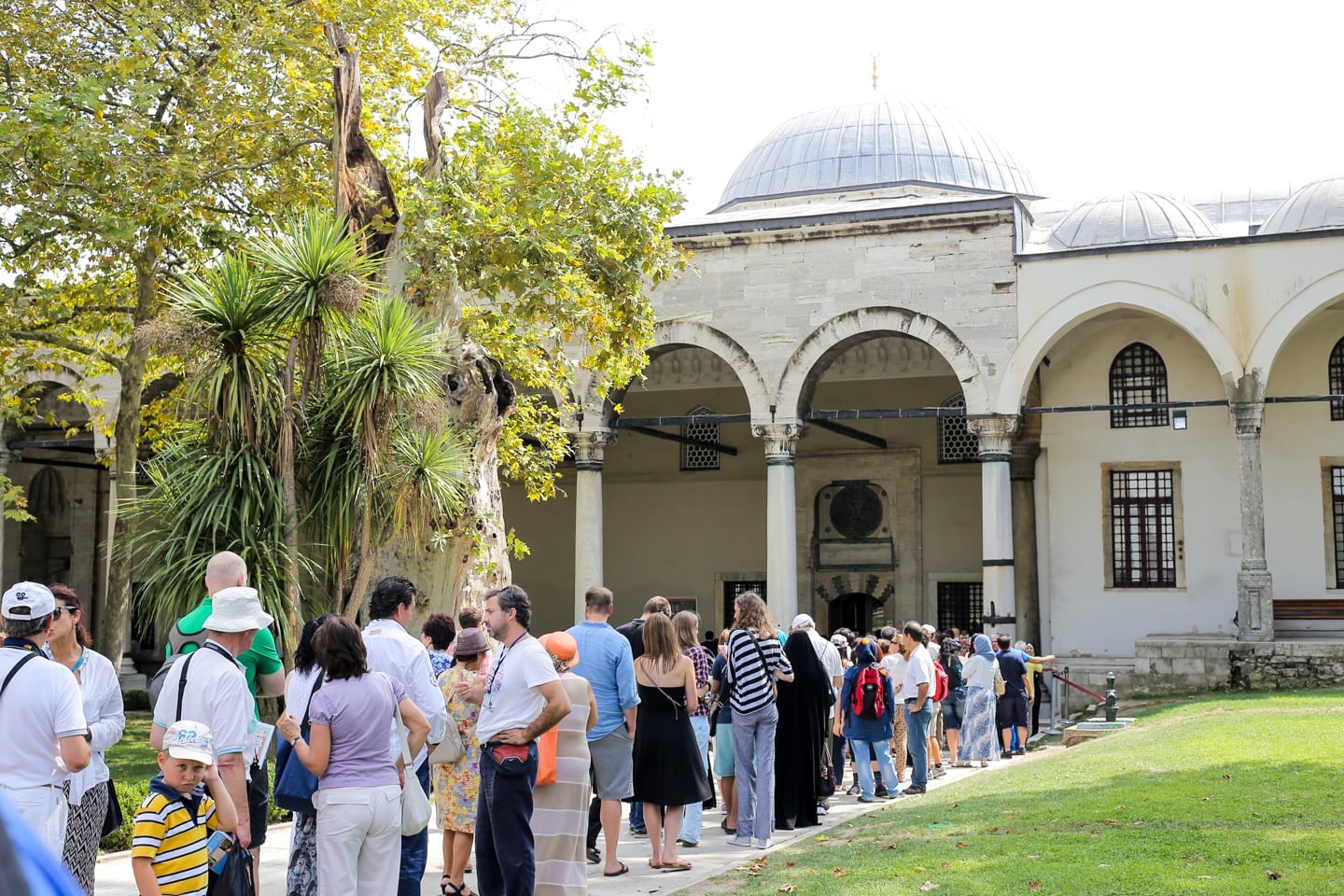
Topkapi Palace can get busy. Very busy. But the people in charge of these places in Istanbul have been dealing with crowds for a while and seem to do a pretty good job of managing the high numbers on the whole.
You’ll still find yourself waiting a bit here and there, but knowing the best ways to visit will go a long way in making your visit super enjoyable.
Here are three reliable and genuinely helpful ways to visit Topkapi Palace, depending on how you like to explore major historic sites:
Book a Reputable Guided Tour
If you want context without being overwhelmed, we think this is the most rewarding option.
Licensed guides in Istanbul know the palace inside and out—from the lives of the sultans to the intrigue of the Harem—and they’ll help you navigate all of the highlights efficiently.
Guided tours also tend to move faster through security and entry lines, which can save you a significant amount of time during high season and busy hours.
Visit Independently with an Audio Guide
For travelers who prefer flexibility, we think exploring on your own with an audio guide (or a reliable app-based guide) is a great middle-ground.
You can linger where you want, skip what doesn’t interest you, and still get enough background to get the gist of the palace’s role in Ottoman history.
This is an excellent option for visitors who prefer to set their own pace.
Go Early with a Pre-Purchased Skip-the-Line Ticket
Topkapi can get crowded and hot, especially in peak season. Arriving right when the palace opens—with a prebooked skip-the-line ticket—lets you enjoy the courtyards, treasury, and uber-popular Harem section before they’re packed.
It’s the simplest and most efficient way to see the site if you’re short on time or don’t need detailed commentary. We particularly recommend this choice for families traveling with young kids.
Ticket + Entry Tips
- Standard Admission: Includes the main palace areas. Expect to pay an additional fee for the Harem section.
- Buy Tickets Online: To skip long queues, especially during peak season.
- Guided Tours: Highly recommended for historical context—guides bring the palace’s stories to life.
- Audio Guides: Available in multiple languages for self-guided exploration.
Opening Hours: Typically 9:00 AM–6:00 PM (closed Tuesdays; check current times before you visit).
Location: Cankurtaran, 34122 Fatih, Istanbul — within the Sultanahmet district, next to Hagia Sophia.
Getting There
Topkapi Palace is located in the heart of Istanbul’s Sultanahmet and historic peninsula, making it pretty darn easy to reach from most major attractions in the Old City.
This area is well connected by public transport, and many visitors choose to combine the palace with nearby big-name landmarks such as Hagia Sophia and the Blue Mosque.
The easiest option for most travelers is going to be the T1 tram, with Sultanahmet and Gülhane stations both within a short walking distance of the palace gates. The route is direct, frequent, and avoids the traffic congestion that builds up around Sultanahmet.
If you’re already exploring Sultanahmet on foot, the palace is accessible via pedestrian-friendly streets that link the major historical monuments. We were able to easily walk between sights, as the distances are manageable and the Old City is relatively compact.
Taxis and ride-share services can also drop passengers near the palace. Asking for “Topkapı Sarayı” will take you to the correct area, though it’s wise to allow extra time for bad traffic, especially during rush hour and peak visiting hours.
Exploring Topkapi Palace’s Top Sights
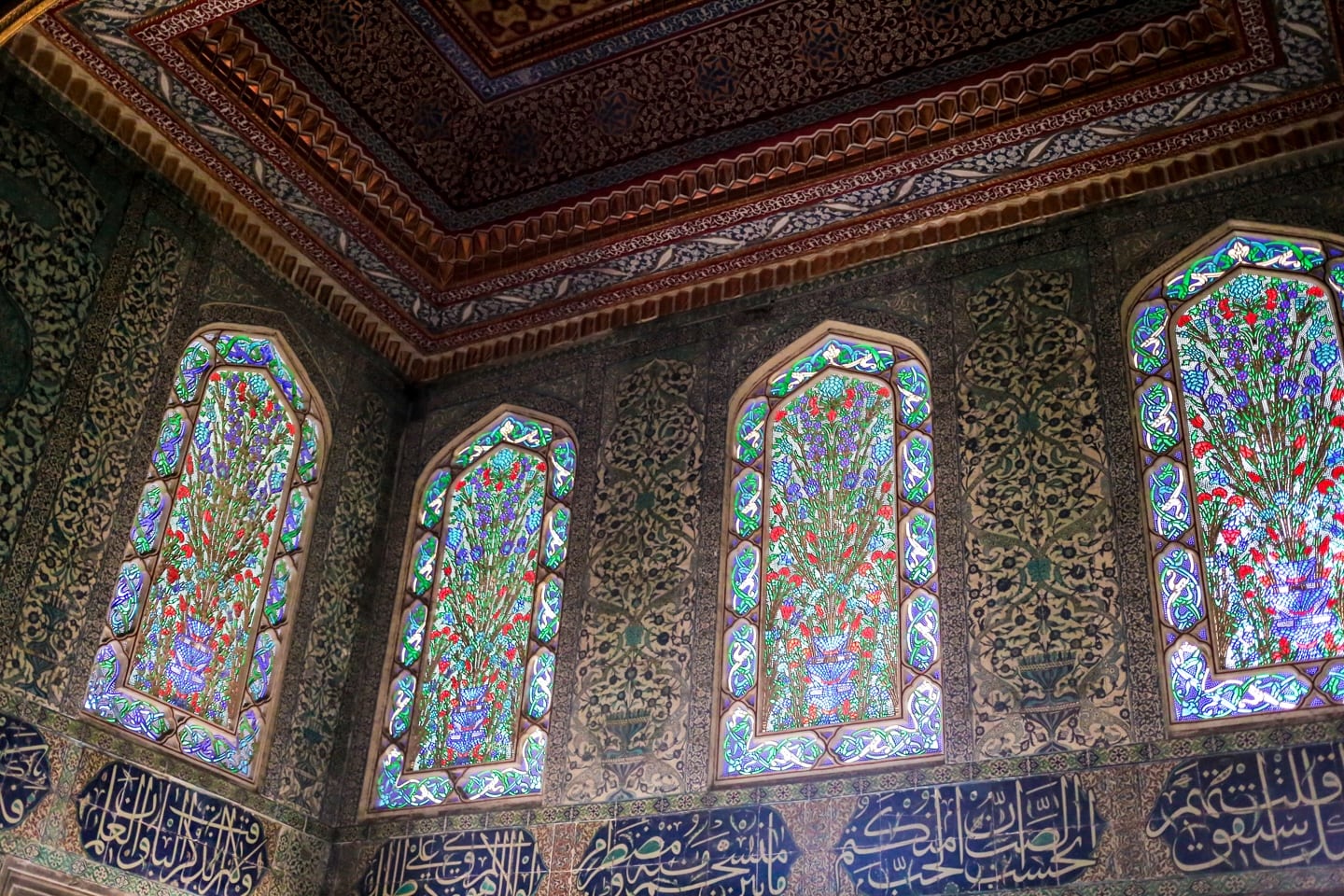
Topkapi Palace spans over 700,000 square meters, organized into four main courtyards and several key buildings. Plan at least three hours to explore thoroughly, though history lovers could easily spend an entire day wandering through its chambers.
First Courtyard: Imperial Gate & Outer Grounds
Our visit to Topkapi Palace began at the Imperial Gate, or Bab-ı Hümayun, the towering stone portal that marks the official threshold between busy Sultanahmet and the relative serenity of the Ottoman court.
Passing through the gate, we entered the First Courtyard, the only part of the palace complex accessible to the public during Ottoman times.
Despite its role as the outer defensive zone, the courtyard feels more like a park. From a few different angles, you can even catch sight of Hagia Sophia’s domes.
On the left side of the courtyards is Hagia Irene. It doesn’t draw the same attention as the bigger, more famous churches and mosques nearby, but nonetheless, it is one of the city’s oldest surviving Byzantine churches, dating from the 4th century.
A short walk away, we encountered the Fountain of the Executioner. At first, we thought it was just another old stone fountain. Oh no, no, no. According to legend, this is where executioners washed their swords after carrying out sentences.
The palace wasn’t just the home of the Sultan and his family, it was also the center of government for the empire, which brings us to the next section…
Second Courtyard: Power & Administration
Passing through the Gate of Salutation, we stepped into the administrative center of the Ottoman Empire. This courtyard once operated as the hub of government, diplomacy, and ceremony.
Along the left side, the Imperial Kitchens dominate the courtyard with a long row of domes. These kitchens once prepared meals for several thousand palace residents every single day, from high-ranking officials to soldiers.
Today, the space houses one of the world’s largest collections of Chinese and Japanese porcelain—gifts from centuries of trade and diplomacy.
Nearby stands the Council Chamber, or Divan.This room functioned as the empire’s executive office, handling legal disputes, foreign policy, and internal affairs.
Above the chamber rises the Tower of Justice, the tallest structure within the palace complex. Directly facing the Divan is the golden grillwork window, behind which the sultan could inconspicuously observe council meetings.
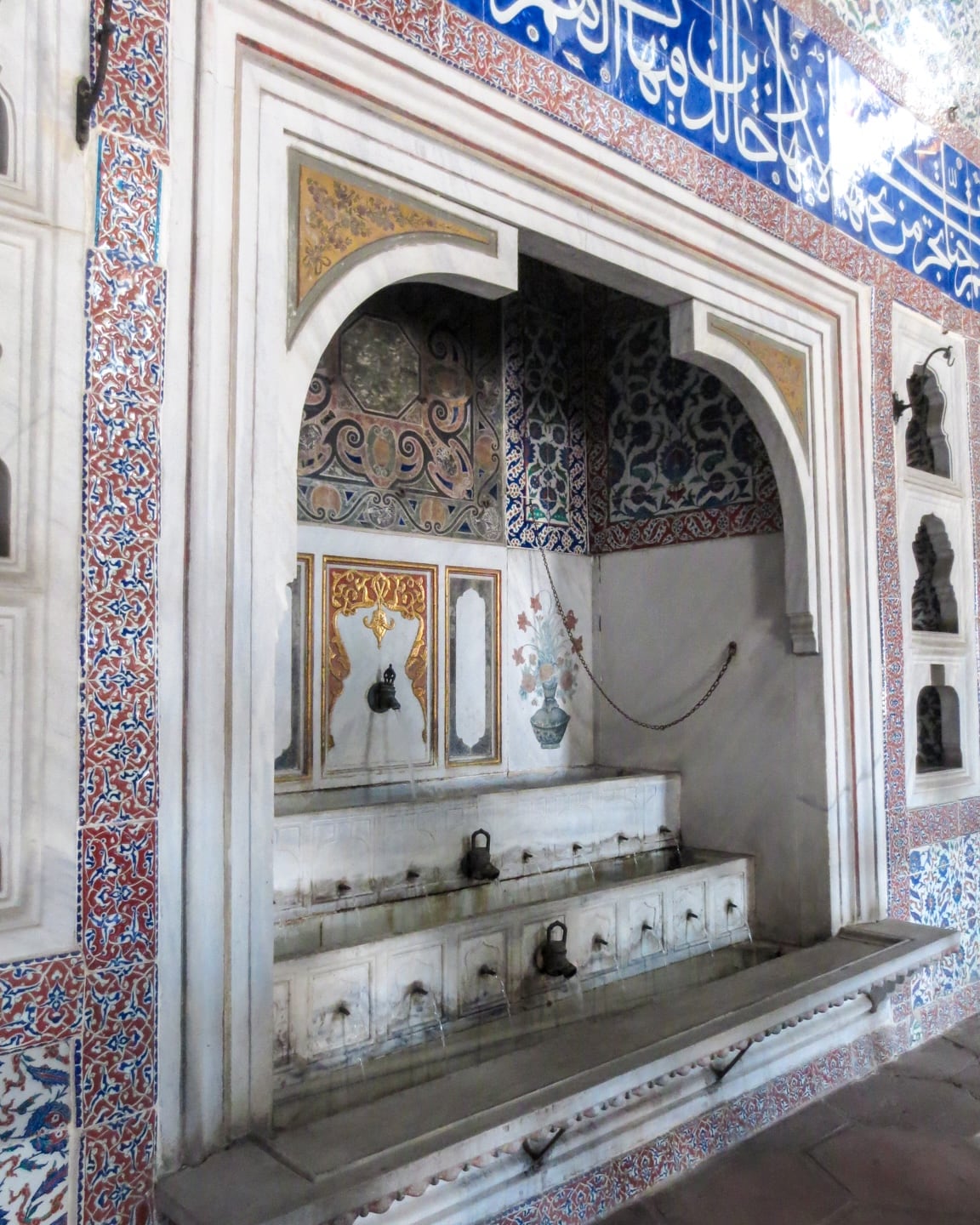
Third Courtyard: Heart of the Palace
Passing through the Gate of Felicity, we entered the most restricted and important section of Topkapi Palace. This courtyard made up the sultan’s inner world and the core of the Ottoman court.
Not just anyone could enter this corner of the grounds. Access was limited to only important officials and members of the royal household.
At its center stands the Audience Chamber, the blinged-out hall where the sultan met with foreign dignitaries.
Nearby, the Treasury showcases an impressive collection of royal jewels and ceremonial pieces, the most famous being the bedazzled Topkapi Dagger, and the Spoonmaker’s Diamond, a HUGE 86-carat jewel.
The Holy Relics Room occupies one of the most revered spaces in the palace. It’s home to a number of sacred objects such as the Prophet Muhammad’s mantle, sword, and footprint.
Fourth Courtyard: Gardens & Pavilions
Entering the Fourth Courtyard brought us into the sultan’s private retreat. Set on a series of terraces overlooking the Bosphorus, this courtyard combines manicured gardens with impressive pavilions.
Historically, this area was reserved for the sultan and select members of the royal household, making it perhaps the most exclusive corner of the palace complex (except for perhaps the Harem).
The standout structure here is the Baghdad Pavilion, built in the 17th century to celebrate Ottoman victories in Baghdad (looke for the intricate tilework, wood carvings, and blue and gold nooks and crannies).
At the edge of the errace is the Iftar Pavilion, a gilded canopy that provided the sultan with a nice vantage point for breaking his fast during Ramadan. It also happens to be one of the best places to take in the views of the Golden Horn and the shores of Asia.
The Harem: Life Behind the Palace Walls
In addition to its historical significant, the Harem is also one of the top highlights for visitors to Topkapi Palace.
We learned that, despite its reputation in popular culture, it operated as more of a highly regulated institution. It was also the private residential quarters of the sultan’s family.
Access today requires a separate ticket, but we think the additional cost is worth it. For us, it was one of the most interesting parts of the whole tour.
The visit to the Harem begins near the Courtyard of the Black Eunuchs, where the eunuchs responsible for the security and administration of the harem once lived and worked.
Deeper inside are the Apartments of the Valide Sultan, the mother of the reigning sultan who was one of the most powerful people in the Ottoman court.
Then on to the Sultan’s Private Rooms, which, as you might expect, occupy some of the most impressive corners of the harem. Take note of the tile and woodwork throughout—and don’t miss the mother-of-pearl inlays.
Best Time to Visit
Topkapi Palace is open year round, but the experience can vary big-time from season to season. Because much of the complex includes open courtyards and outdoor walkways, weather and crowd levels will likely impact how good your visit will be.
Spring (March–May) is generally considered the prime time to visit. Temperatures are mild, the palace gardens are in full bloom, and visitor numbers are not as bad as peak summer season.
Summer (June–August) brings the biggest crowds and the hottest weather. The palace has a tendancy to get particularly busy late in the morning, so we recommend arriving early for a better chance of getting through the courtyards before congestion builds. Shade is limited in some areas of the palace, so it’s worthy keeping in mind the heat.
Autumn (September–November) is our favorite time to visit, with cooler temperatures and fewer visitors being more of the norm. Clear skies and softer light also make this a nice time for picture-taking.
Winter (December–February) tends to be a fairly quiet time to visit. While some outdoor sections can get pretty darn chilly (and windy), the smaller crowds allow you to see the palace at a less-hurried pace.
✪ Hot Tip Arrive early (opening time is usually 9:00 AM) to enjoy the courtyards before tour groups arrive. Weekdays are generally less crowded than weekends.
More Tips for a Fabulous Visit
- Set aside at least three hours. The palace is vast and filled with detail.
- Bring water and wear comfortable shoes. You’ll be walking across stone courtyards and stairs.
- Respect sacred spaces: Especially in the Holy Relics Room.
- Dress modestly: Shoulders and knees should be covered in religious sections.
- Photography: Flash is not allowed inside most exhibits, but natural light provides eye-catching shots.
- Combine visits: Hagia Sophia, the Blue Mosque, and the Basilica Cistern are all within a short walk.
- Don’t miss the views: The terrace behind the Fourth Courtyard offers some of the best panoramas in the city.
Final Thoughts
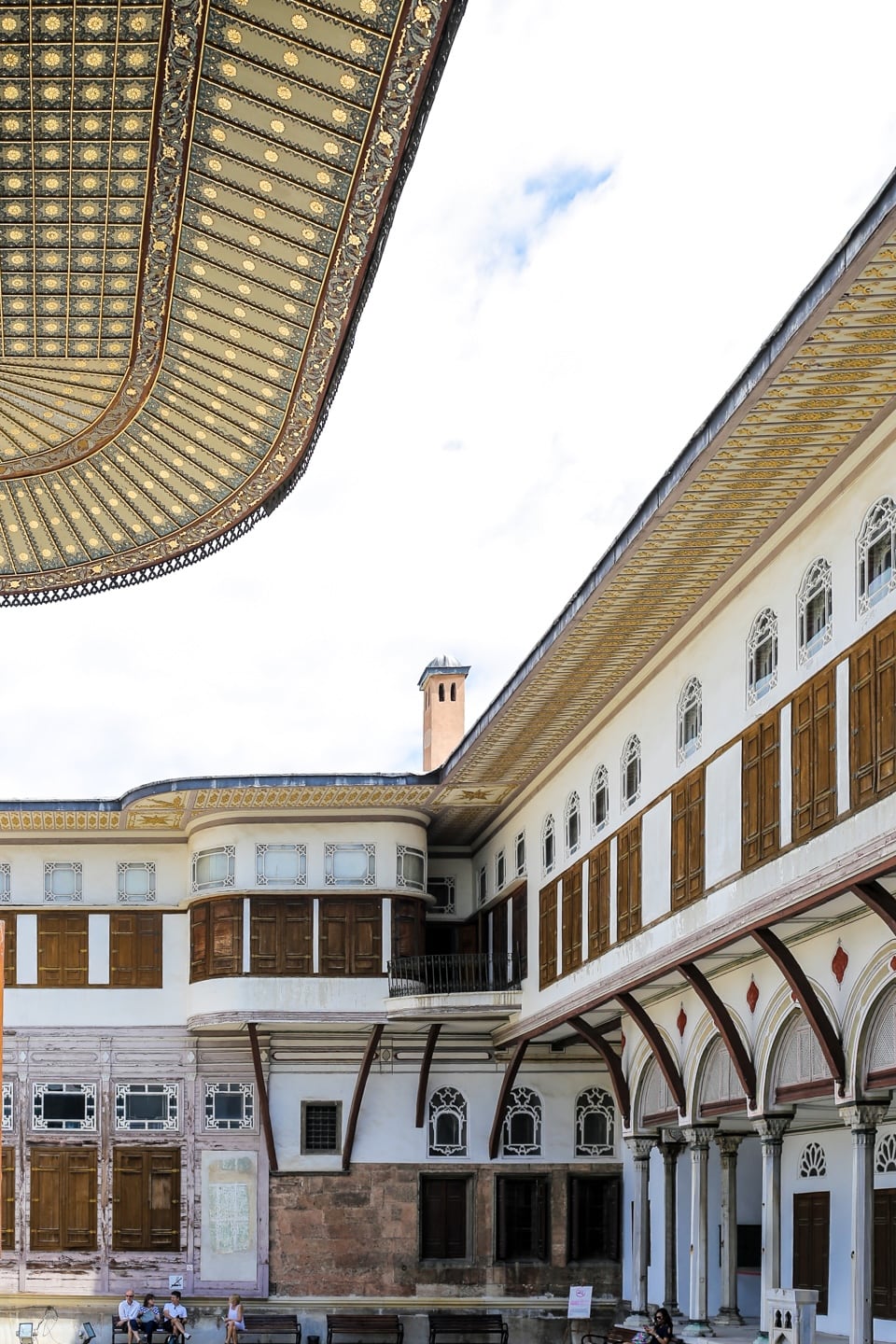
Lori and I had some trepedation going into our Topkapi Palace tour. It’s got a bit of a reputation as being something of a madhouse, particularly in the summer high season.
We managed to visit early during midweek and avoided the worst of the crowds. The result was a thoroughly enjoyable experience, making Topkapi one of the highlights of our time in Istanbul.
We think Topkapi Palace could easily be one of the highlights of your visit to Istanbul as well—with the right mindset and information.
Happy travels!

More Turkey & Europe
Around Istanbul & Turkey
- 7 Best Ways to Cruise the Bosphorus
- The Best Things to Do in Istanbul with Kids
- Basilica Cistern: How to Explore Istanbul’s Underworld
- Istanbul City Walls Self-Guided Walking Tour
- 8 Worthwhile Things to Do in Selçuk (Besides Ephesus)
Around Europe & Morocco
- Royal Alcázar: Plan Your Visit (Sevilla, Spain)
- 8 Worthwhile Things to Do in Aït Benhaddou (Morocco)
- Pena Palace: Visitor Guide (Sintra, Portugal)
- São Jorge Castle: 5 Mistakes to Avoid (Lisbon, Portugal)
- Moorish Castle of Sintra: How to Visit (Sintra, Portugal)
- 8 Best Things to Do in Sagres (Algarve, Portugal)
- The 8 Best Beaches in Lagos (Algarve, Portugal)
Featured Image: Nima Aksoy / Unsplash