
When Lori and I set out to visit Ayutthaya from Bangkok, we had a fairly simple plan: catch a train, explore the ancient temples, and return to Bangkok that evening.
It mostly worked out that way. But between missing the inexpensive train we’d intended to catch, hunting down a little passenger ferry, and figuring out how to reach the more distant ruins, we learned that a successful Ayutthaya day trip can benefit from a bit of planning and prep beforehand.
We also learned that we didn’t need to visit every temple to have a worthwhile day (which is a very good thing, because the Ayutthaya complex is huge!).
Located about 80 km (50 miles) north of Bangkok, Ayutthaya was once the capital of the Kingdom of Siam. Today, its remarkable temple ruins are among Thailand’s most important historical attractions—and close enough to Bangkok to visit independently in a day.
In this guide, we’ll share what we think are the best ways to get from Bangkok to Ayutthaya, how much time and money to allow, the temples we’d prioritize, and how we’d plan the trip today.

This post contains affiliate links. If you click and make a purchase, we might receive a commission (at no added cost to you). Thanks for supporting independent, ad-free blogs!
Bangkok to Ayutthaya: At a Glance
| Our recommendation | |
|---|---|
| Best DIY option: | Train from Bangkok |
| Easiest option: | Guided day tour |
| Most flexible: | Private driver |
| Most unusual: | Guided tour with river-cruise return |
| Train journey: | Approximately 50 minutes–2 hours, depending on service |
| Time needed: | One full day |
| Best way around: | Walking and tuk-tuks |
| Top temples: | Wat Maha That, Wat Ratchaburana, Wat Phra Si Sanphet, Wat Chaiwatthanaram |
✓ Our Recommendation For independent travelers, taking the train from Bangkok to Ayutthaya is affordable and enjoyable. But if time is limited or you’re particularly interested in the history, we think a guided day tour can be a worthwhile alternative (and would probably do one next time).
How to Get from Bangkok to Ayutthaya

One of the first decisions we had to make was how to reach Ayutthaya.
Although the ancient capital is only about 80 km north of Bangkok, there are several ways to get there, each with advantages depending on your budget, available time, and preferred style of travel.
We chose the train, which we’d definitely take again. But having experienced the logistics of an independent visit, we also understand the appeal of booking a tour.
Bangkok to Ayutthaya by Train
Taking the train was one of the things we were most looking forward to (Lori and I love train travel!).
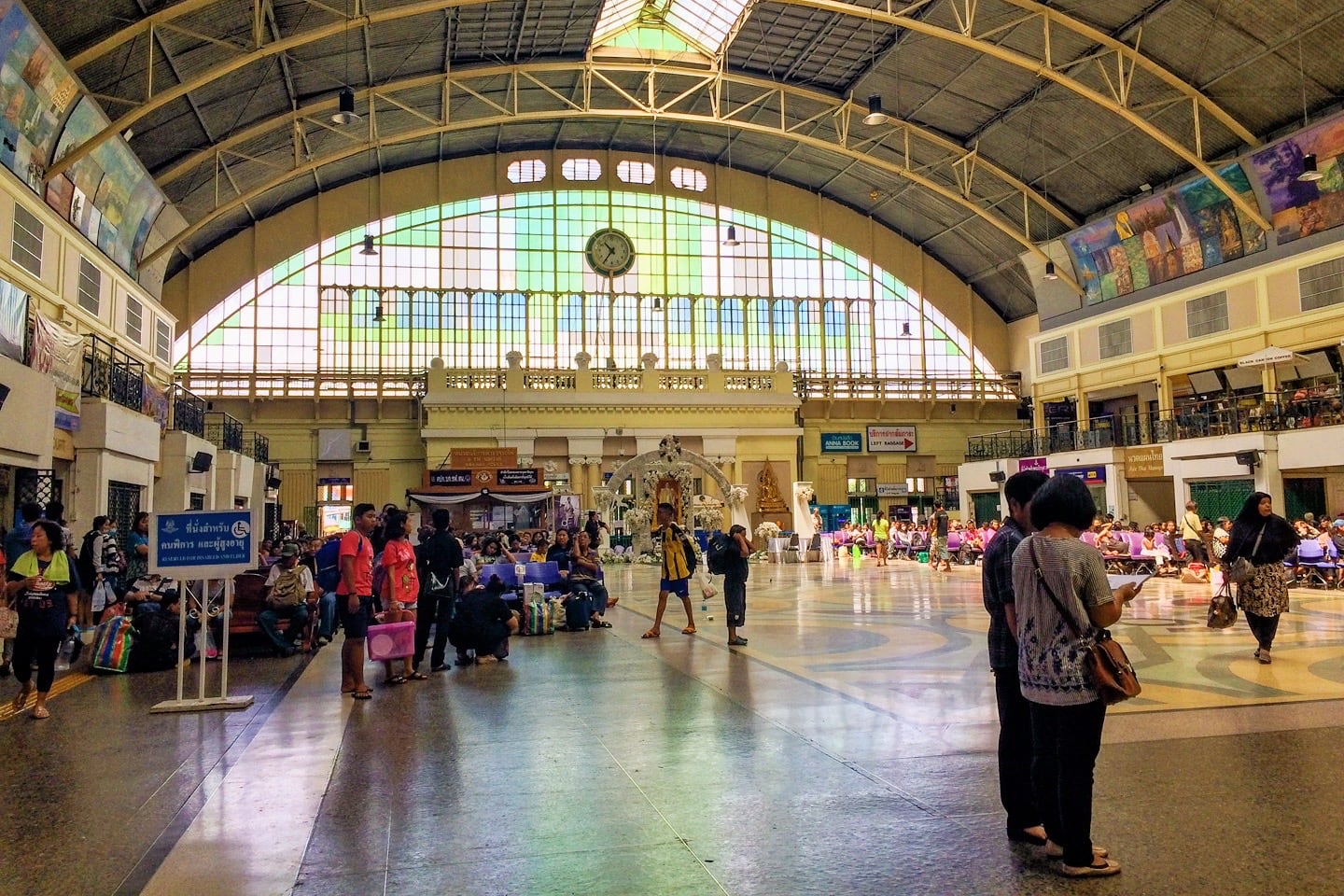
We headed to Bangkok’s historic Hua Lamphong Railway Station, planning to take one of the inexpensive third-class trains north.
Unfortunately, we’d just missed it.
Our next option was a considerably more expensive air-conditioned express train. Rather than spend valuable sightseeing time waiting at the station, we paid the difference and climbed aboard.
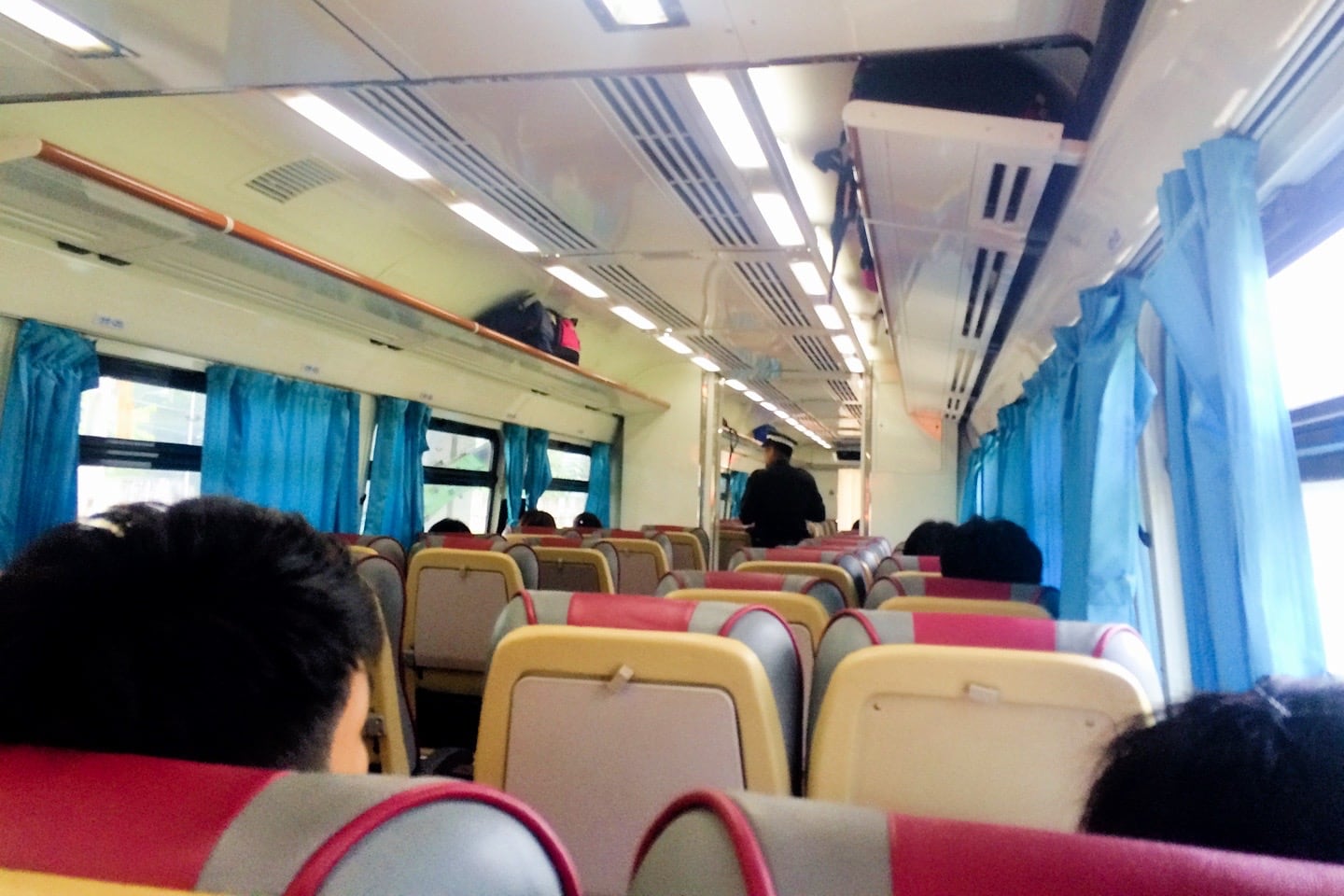
As it turned out, the more comfortable train was a good fit for traveling with our one-year-old son. We had plenty of space, could stand up and move around, and enjoyed watching Bangkok gradually give way to smaller towns and countryside.
The journey took around 90 minutes.
The experience also taught us a lesson that remains relevant today: check the train schedule before heading to the station, particularly if you’re hoping to travel on a particular service or fare.
Which Bangkok train station should you use?
This is one of the most important details to check because not a lot of folks may know that Bangkok’s railway arrangements have changed in recent years.
Most long-distance, rapid, and express trains heading toward Ayutthaya now depart from Krung Thep Aphiwat Central Terminal, while ordinary and commuter services continue to depart from Hua Lamphong.
Krung Thep Aphiwat is connected to Bangkok’s MRT Blue Line through Bang Sue station, making it accessible by public transportation.
Hua Lamphong is closer to the older parts of central Bangkok and may be more convenient depending on where you’re staying.
Both stations have trains serving Ayutthaya, but not every service departs from both.
✓ Our Take Though slower, an ordinary train departing from the old Hua Lamphong station may actually be the better bet, particularly if you’re staying on Rattanakosin Island and the Old Royal Quarter. However, ordinary trains do tend to get a lot more crowded in our experience.
How much does the train cost?
Train fares vary substantially depending on the service and class.
As of October 2026, some third-class services are listed from around 20 baht, while certain air-conditioned express services cost 200–300 baht or more. Ordinary services from Hua Lamphong may be cheaper.
Thailand’s State Railway also introduced the air-conditioned Bangkok Connex service from Krung Thep Aphiwat to Ayutthaya in August 2026, which is also worth looking into.
✓ Heads Up We use 12go.asia to book trains and buses online ahead of time to avoid language mix-ups and ensure our U.S. credit card isn’t rejected.
One important distinction: not every inexpensive local service can be reserved online, and third-party booking platforms may not display every departure.
How long is the train journey?
Depending on the train, the journey can take anywhere from approximately 50 minutes to two hours.
Some faster services from Krung Thep Aphiwat take around an hour, while ordinary trains from Hua Lamphong generally take longer.
For a day trip, we’d aim to arrive in Ayutthaya by about 9:00 a.m. That leaves plenty of time to explore before the afternoon heat becomes too tiring.
Don’t forget the return train
One thing we hadn’t anticipated was how different the journey back to Bangkok would be.
We returned on an ordinary third-class train on a Sunday evening. Unlike our comfortable outbound journey, this one was packed.
I spent much of the first hour standing and rocking our son to sleep in his carrier. Several passengers kindly offered me their seats, but standing was actually easier while trying to settle him.
As the train emptied closer to Bangkok, we eventually found somewhere to sit.
It was a memorable journey, although not necessarily one we’d recommend to anyone hoping for a quiet, comfortable ride home after a long day of sightseeing.
If you’re traveling with young children, older relatives, or anyone who might struggle to stand for an extended period, it’s worth paying attention to the return service as well as the outbound journey.
Bangkok to Ayutthaya by Guided Tour
Although we enjoyed organizing our own Ayutthaya day trip, a guided tour has several advantages.
First, it eliminates most of the transportation logistics. Instead of navigating railway stations, ferry crossings, and local tuk-tuks, you can concentrate on the temples themselves.
Second, we know from past experience at other archeological sites that a knowledgeable guide can help bring the ruins to life.
Ayutthaya’s temples are impressive even without much historical background. But while wandering among the crumbling brick structures, we occasionally found ourselves wishing we understood more about the royal families, religious traditions, and events that shaped the ancient capital.
If your time in Bangkok is limited—or you’d simply rather focus on Ayutthaya’s history than the logistics of getting around—we think a guided tour is well worth considering.
✪ These are the types of tours we’d personally shortlist today:
- Best Overall: Full-day guided tour with hotel pickup and lunch.
- Best Small Group: Small-group historical tour with a private driver.
- Best Private Tour: Private guide, vehicle & customizable itinerary.
- Most Unique: Full-day Ayutthaya tour returning to Bangkok by river cruise.
The river-cruise option particularly appeals to us. Rather than simply retracing the journey back to Bangkok, it offers a different perspective on the landscape along the Chao Phraya River.
Before booking, compare the actual itinerary, pickup location, group size, and what’s included. Some tours include admission fees and meals, while others charge separately.
Bangkok to Ayutthaya by Private Driver or Taxi
Hiring a private driver is another good option, particularly for families or small groups.
The main advantage is flexibility. You can leave directly from your accommodation, visit temples in whatever order suits you, and return to Bangkok when you’re ready.
You also avoid having to arrange separate transportation between sites.
The downside, as always, is cost. A private vehicle will generally be considerably more expensive than taking the train, especially for one or two people.
For a family traveling with grandparents or anyone who prefers a less physically demanding day, however, the convenience could easily justify the additional expense.
If arranging a private driver, we’d agree on the total price, sightseeing duration, and any waiting charges beforehand.
What About Buses, Minivans, or Driving Yourself?
Buses and minivans are additional possibilities, although we’d generally favor the train for an independent day trip.
Road transportation is subject to Bangkok’s unpredictable traffic, and departure points can change. A train avoids much of that uncertainty.
Driving yourself is also possible, but unless you’re already renting a vehicle for a longer trip around Thailand, it wouldn’t be our first choice.
After a full day exploring temples in the heat, navigating Bangkok traffic (which has a bit of a reputation, to put it mildly) is unlikely to be the highlight of your day.
Getting Around Ayutthaya
Map: Ayutthaya Railway Station, Ferry Docks & Major Temples.
One thing we hadn’t fully appreciated before arriving was how spread out Ayutthaya’s attractions are.
The main historical area is relatively compact, and several famous temples sit within walking distance of one another. Others are separated by rivers, busy roads, or several kilometers.
We found that combining walking with occasional tuk-tuk rides worked particularly well for us (though tuk-tuks were sometimes harder to find than we thought).

From Ayutthaya Train Station to the Historical Park
Ayutthaya Railway Station is located east of the historic island, across the Pa Sak River from the main archaeological sites.
During our visit, we crossed the river using a small passenger ferry.
Finding it took a little more effort than we’d expected.
There weren’t obvious English-language signs directing us to the dock, and we ended up consulting Google Maps. Once we realized the ferry was essentially straight ahead from the railway station, it seemed remarkably straightforward.
The crossing itself was short and enjoyable.
From the island-side ferry landing, it’s approximately a 1 km walk to Wat Maha That, one of the most famous temples in the historical park.
Because local ferry arrangements can change, confirm that the crossing is operating before relying on it. If it isn’t, a road transfer across one of the bridges is an alternative.

Tuk-Tuks
Ayutthaya’s distinctive pink tuk-tuks are one of the city’s more memorable sights.
We walked between the centrally located temples but hired tuk-tuks to reach places farther away, particularly Wat Chaiwatthanaram on the western side of the city.
We thought it was money well spent.
After several hours walking through exposed archaeological sites, a tuk-tuk ride was a welcome break from the heat.
Drivers can often be found near the railway station and popular temples. For a single journey, agree on the fare before departing. If you’re hiring a driver for several stops, clarify the route and total price.
Walking
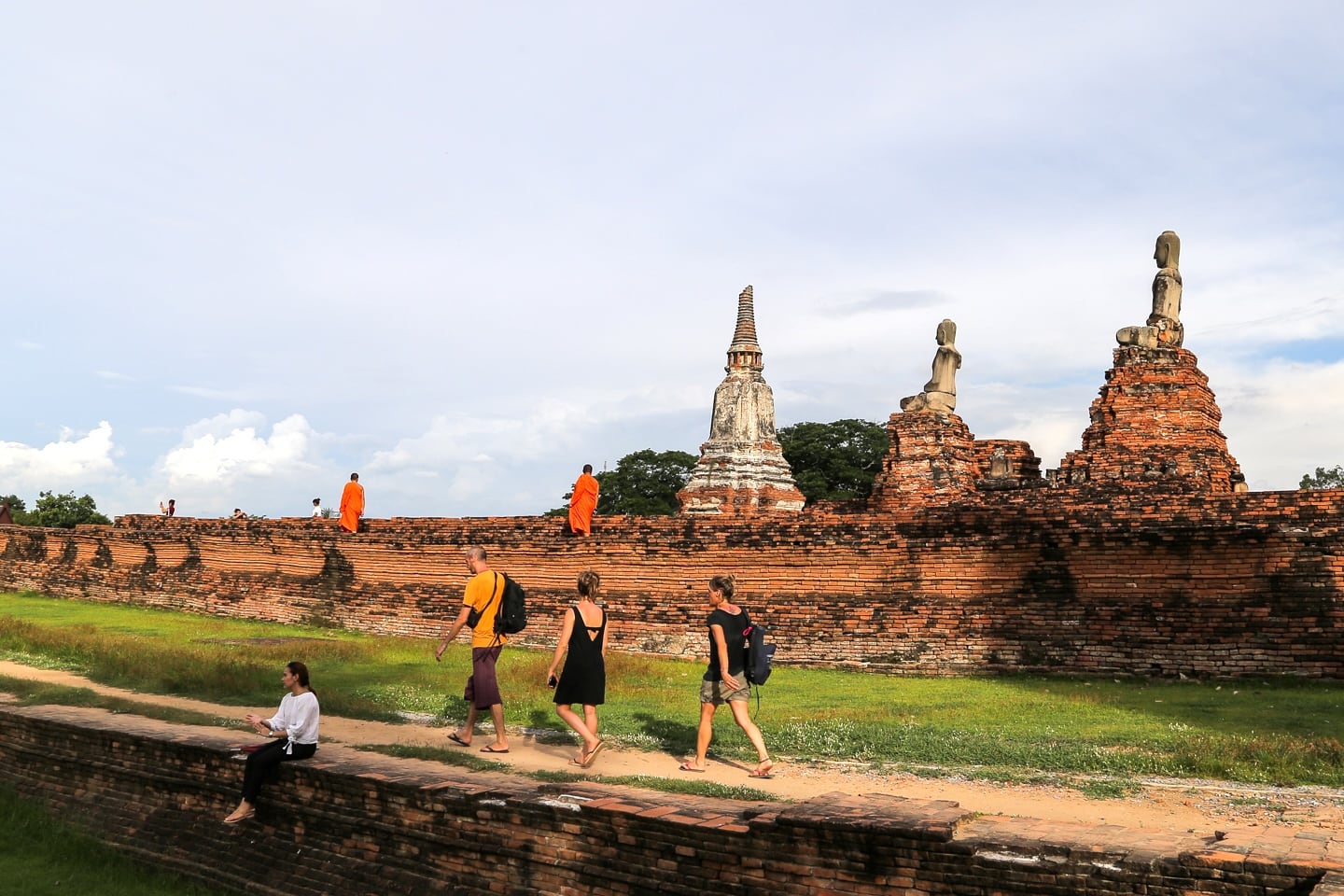
Walking ended up being our preferred way to explore the historic center.
Wat Maha That, Wat Ratchaburana, Wat Phra Ram, and Wat Phra Si Sanphet can all be incorporated into a central sightseeing route.
The advantage is that we noticed smaller ruins and details along the way that would have been easy to miss if we were traveling in a vehicle.
Just remember that much of the historical park offers limited shade. Even relatively short distances started to feel considerably longer in the afternoon heat.
Bicycles
Renting a bicycle is another popular way to explore Ayutthaya.
The terrain is mostly flat, and cycling gives you considerably more range than walking while allowing you to stop whenever something catches your attention.
We didn’t rent bicycles because we were traveling with our young son, but it’s an option we’d seriously consider on a future visit, especially if we were staying overnight.
It’s worth keeping in mind that you’ll be sharing some roads with cars and other traffic. For visitors uncomfortable cycling in Thai traffic, walking and tuk-tuks are a reasonable alternative.
Grab and Ride-Hailing
Grab can be useful for arranging local transportation, although driver availability may vary depending on your location and the time of day.
It’s worth checking the app when you need a longer transfer, but we wouldn’t depend on it as the only way to move between temples.
The Temple Ruins We’d Prioritize
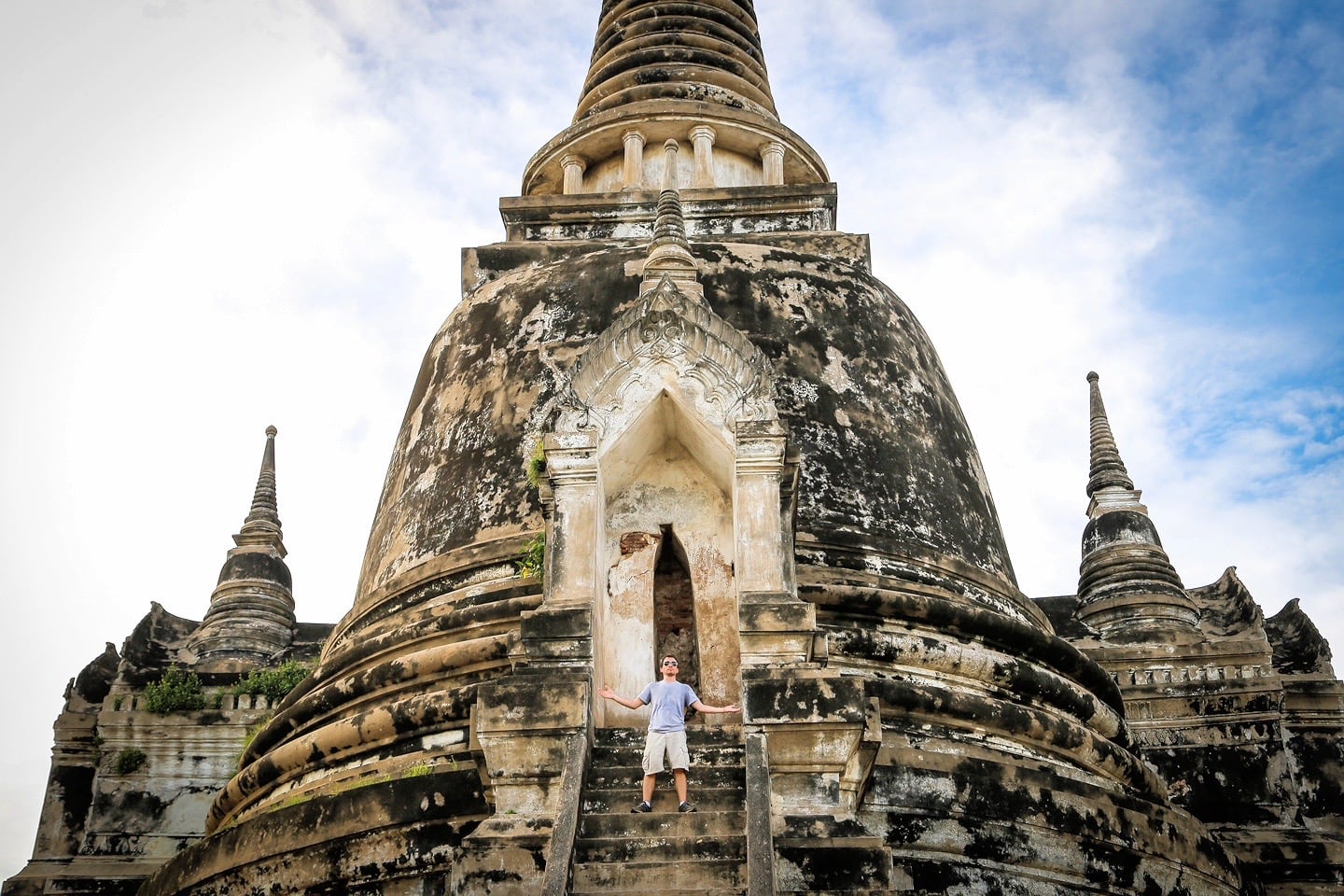
Ayutthaya was founded in 1351 and served as the capital of Siam for more than four centuries before the Burmese invasion of 1767 brought the kingdom to an end.
At its height, it was one of the wealthiest and most influential cities in Asia. Today, the surviving temples and monasteries form the UNESCO-listed Historic City of Ayutthaya.
With so many ruins scattered around the city, deciding which to see and in what order was one of our biggest challenges of the day.
We visited five of the major temple complexes during our day trip, along with a number of smaller ruins. Four stood out as places we’d particularly recommend to first-time visitors.

Wat Maha That
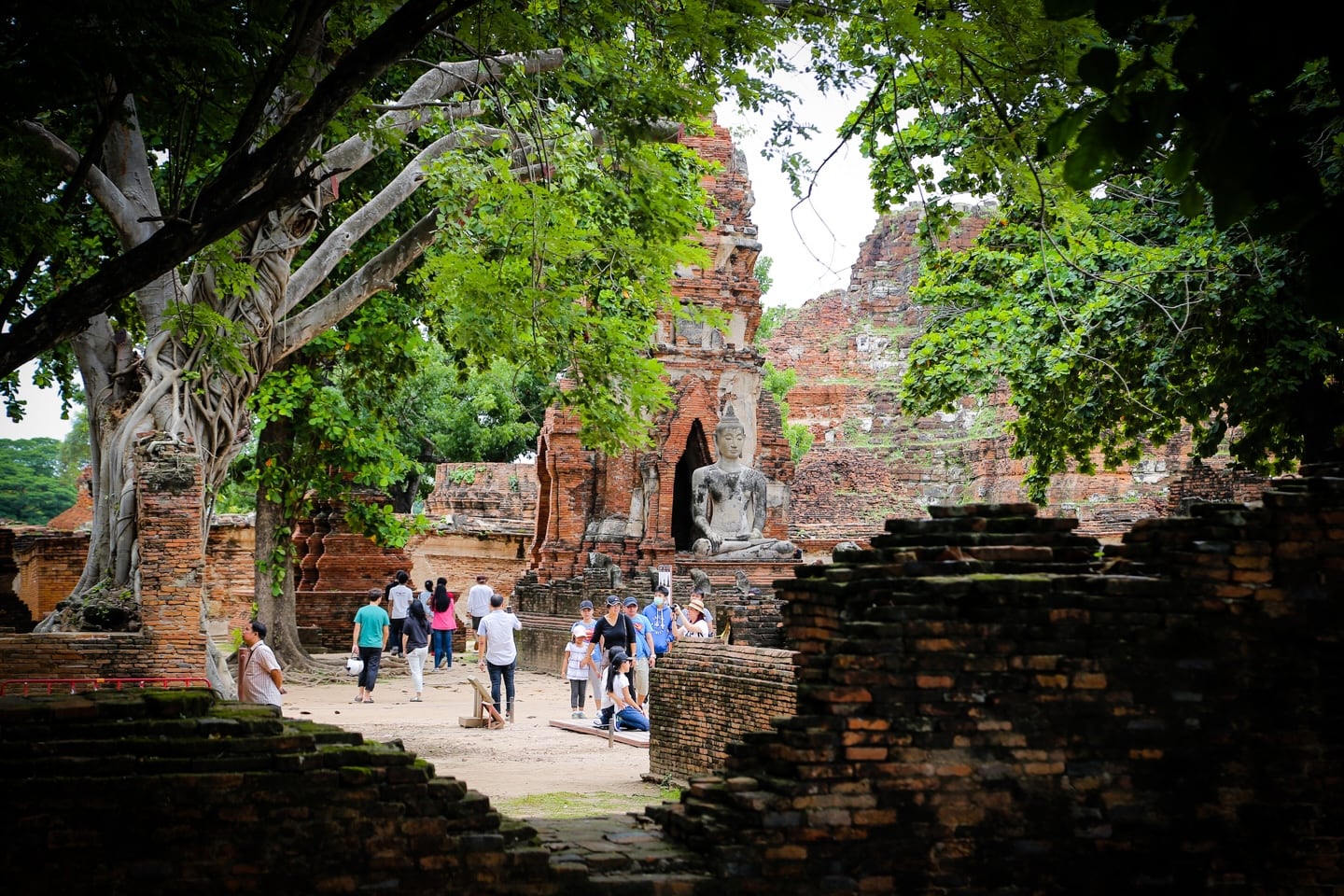
Wat Maha That is home to Ayutthaya’s most recognizable image: a sandstone Buddha head surrounded by the roots of a banyan tree.
It was our first major stop after crossing the river from the railway station.
Although the Buddha head attracts most of the attention, there’s quite a bit more to see here.
We spent time wandering around the brick stupas, headless Buddha statues, and the remains of structures that once formed one of the kingdom’s most important religious complexes.
The site gives visitors a good introduction to Ayutthaya’s history and architecture without requiring you to know much about it ahead of time.
Because it’s relatively close to the railway station approach and other major ruins, we think Wat Maha That is a natural place to begin your independent day trip (you also get it out of the way before the big tour groups start arriving).
Allow: Approximately 45–60 minutes.

Wat Ratchaburana
A short walk north of Wat Maha That brings you to Wat Ratchaburana, one of our favorite stops of the day.
The impressive central prang dominates the complex, but what made this temple particularly memorable was being able to actually explore inside the ancient structure.

During our visit, visitors could climb the steep staircase and descend into the lower chamber.
Access to historic structures can change for conservation and safety reasons, so check current restrictions before planning to enter the prang.
Wat Ratchaburana also felt noticeably quieter than Wat Maha That during our visit, giving us more time to appreciate the ruins without crowds gathering around one or two famous attractions.
Allow: Approximately 30–45 minutes.

Wat Phra Ram
Wat Phra Ram is one of the sites that seems to receive less attention than it probably deserves.
Located near the former royal palace grounds, it’s an easy addition to a walking route through central Ayutthaya.
We really enjoyed wandering through these particular ruins, which gave us a better sense of just how massive the ancient capital must once have been.
It’s also a good example of why we liked exploring independently. Not every worthwhile stop needs to be one of the city’s most famous attractions.
If time is limited, we’d prioritize Wat Maha That and Wat Phra Si Sanphet first. But Wat Phra Ram fits naturally between the major sites without going out of your way to make a lengthy detour.
Allow: Approximately 20–30 minutes.

Wat Phra Si Sanphet
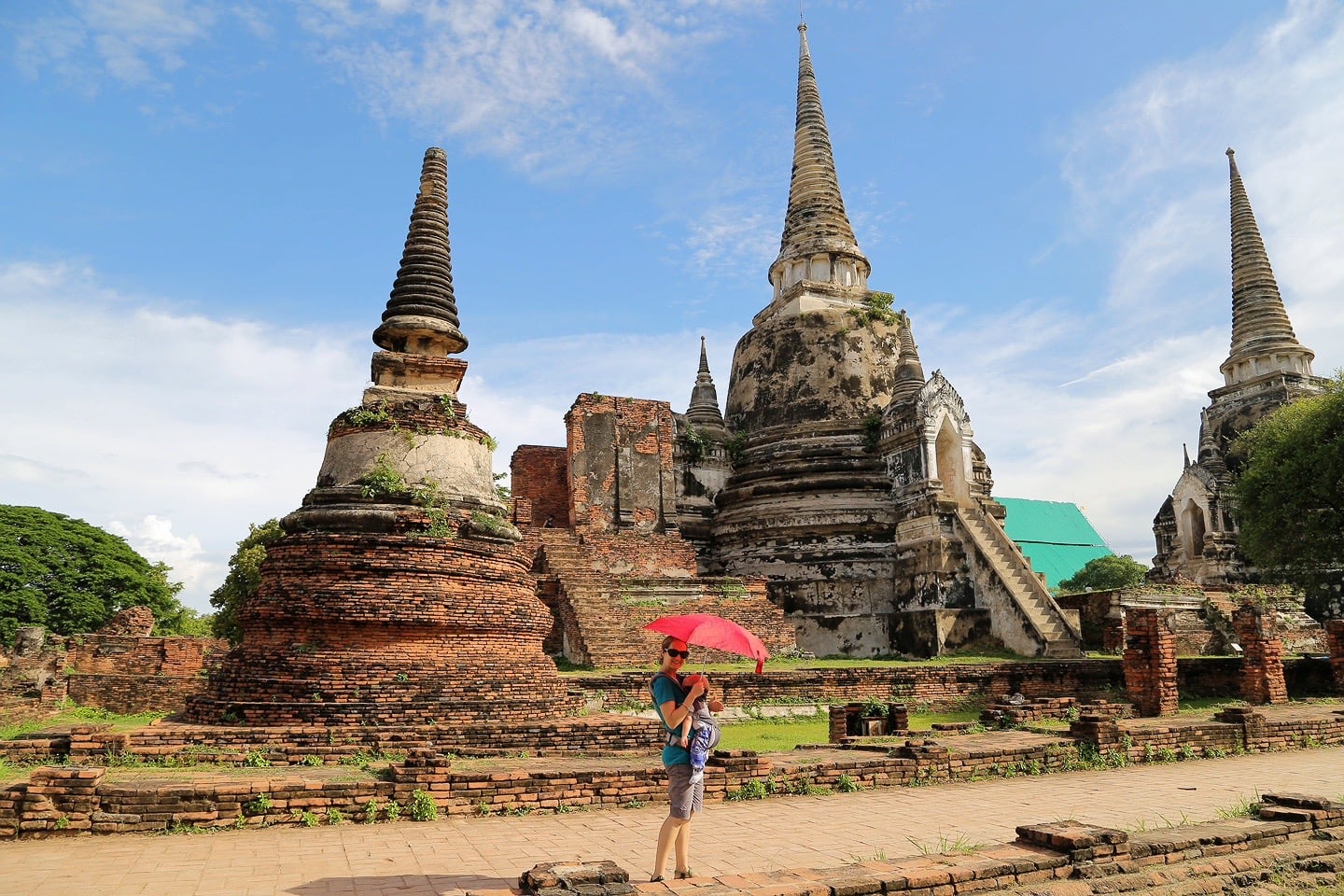
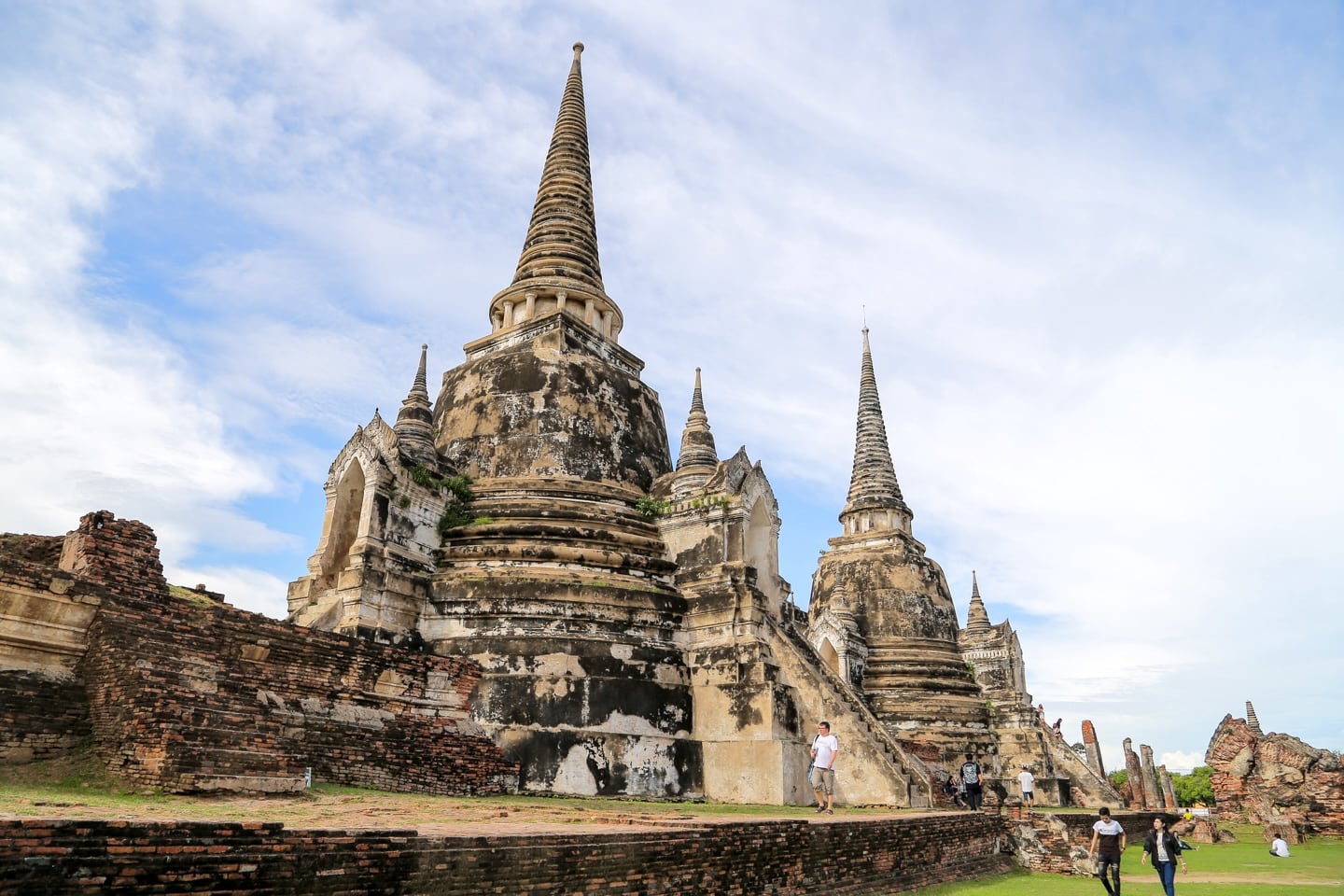
Of all the temples we visited, Wat Phra Si Sanphet was probably the most impressive from a distance.
Its three enormous bell-shaped chedis rise above the remains of the former royal temple, making for one of Ayutthaya’s most iconic views.
Wat Phra Si Sanphet once stood within the royal palace complex and was among the most important religious sites in the kingdom.
And the scale of this particular temple is pretty darn impressive.
Even after having already visited several other temples that morning, we found ourselves lingering here for longer than expected taking in the massive chedis and exploring the wider complex.
It’s a great place to stop and try to imagine the enormous royal city that once occupied this part of modern Ayutthaya.
Allow: Approximately 30–45 minutes.
Wat Chaiwatthanaram
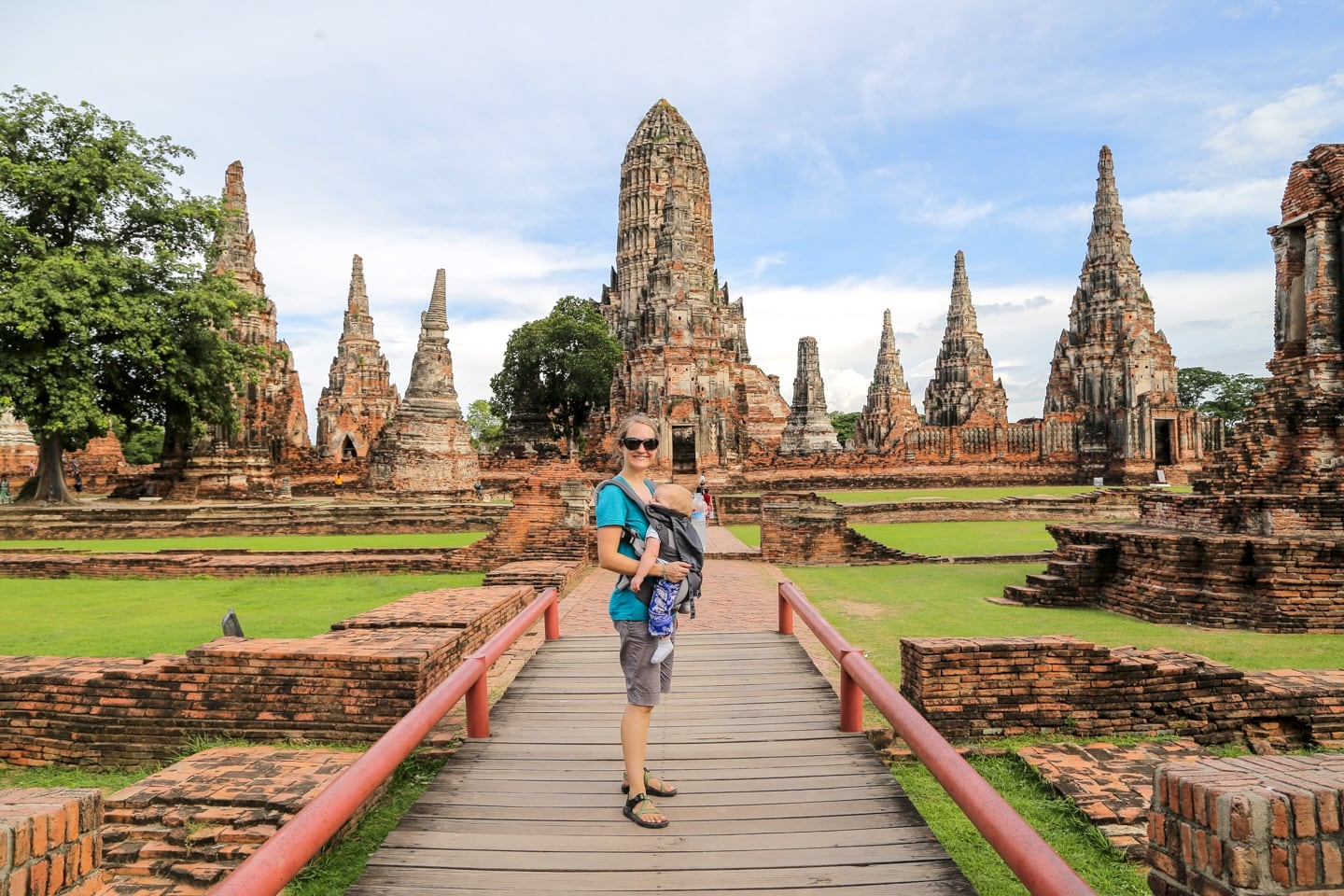
Wat Chaiwatthanaram was our final major temple stop and ended up being one of the highlights of the day.
Located southwest of the main historical area, across the river, it required a little more effort for us to reach. We ended up hiring a tuk-tuk rather than attempting the journey on foot.
The temple’s central Khmer-style prang, surrounding towers, and symmetrical layout give it a distinctly different appearance from the ruins we’d visited earlier.
Having explored Angkor in Cambodia, we recognized some similarities in the architecture, although we’d say Wat Chaiwatthanaram has a character of its own.
Its riverside setting is another reason to make the trip.
We were glad we’d saved enough time and energy to explore it properly rather than squeezing it into an already hurried day.
For visitors spending the night in Ayutthaya, we think this is a particularly appealing place to visit in the late afternoon.
Allow: Approximately 45–60 minutes, plus travel time.
What About Wat Yai Chai Mongkhon?
Wat Yai Chai Mongkhon is another of Ayutthaya’s best-known temples, but we didn’t manage to visit it.
By the time we’d explored the central historical area and Wat Chaiwatthanaram, we were ready to head back toward the railway station.
It’s probably a worthwhile option for visitors with more time, especially if you are hiring a driver to take you around or spending the night in town.
For our one-day visit, though, we were satisfied with the temples we’d seen.
Our One-Day Ayutthaya Itinerary from Bangkok

We felt that one full day was enough to see several of Ayutthaya’s most impressive temples without feeling that the entire trip was spent rushing between the different areas.
Our route combined walking through the historic center with tuk-tuk rides to the more distant sites.
The following itinerary is how we’d probably organize a similar trip today. Times are approximate planning targets rather than a minute-by-minute account of our original visit.
| Time | Activity |
|---|---|
| 7:00–9:00 a.m. | Train from Bangkok and transfer to historical park |
| 9:00–10:00 a.m. | Wat Maha That |
| 10:00–10:45 a.m. | Wat Ratchaburana |
| 10:45 a.m.–12:15 p.m. | Wat Phra Ram and Wat Phra Si Sanphet |
| 12:15–1:30 p.m. | Lunch and break from the heat |
| 1:30–3:00 p.m. | Tuk-tuk to Wat Chaiwatthanaram and explore |
| 3:00–4:30 p.m. | Return toward station, allowing time for a drink or snack |
| Late afternoon | Train back to Bangkok |
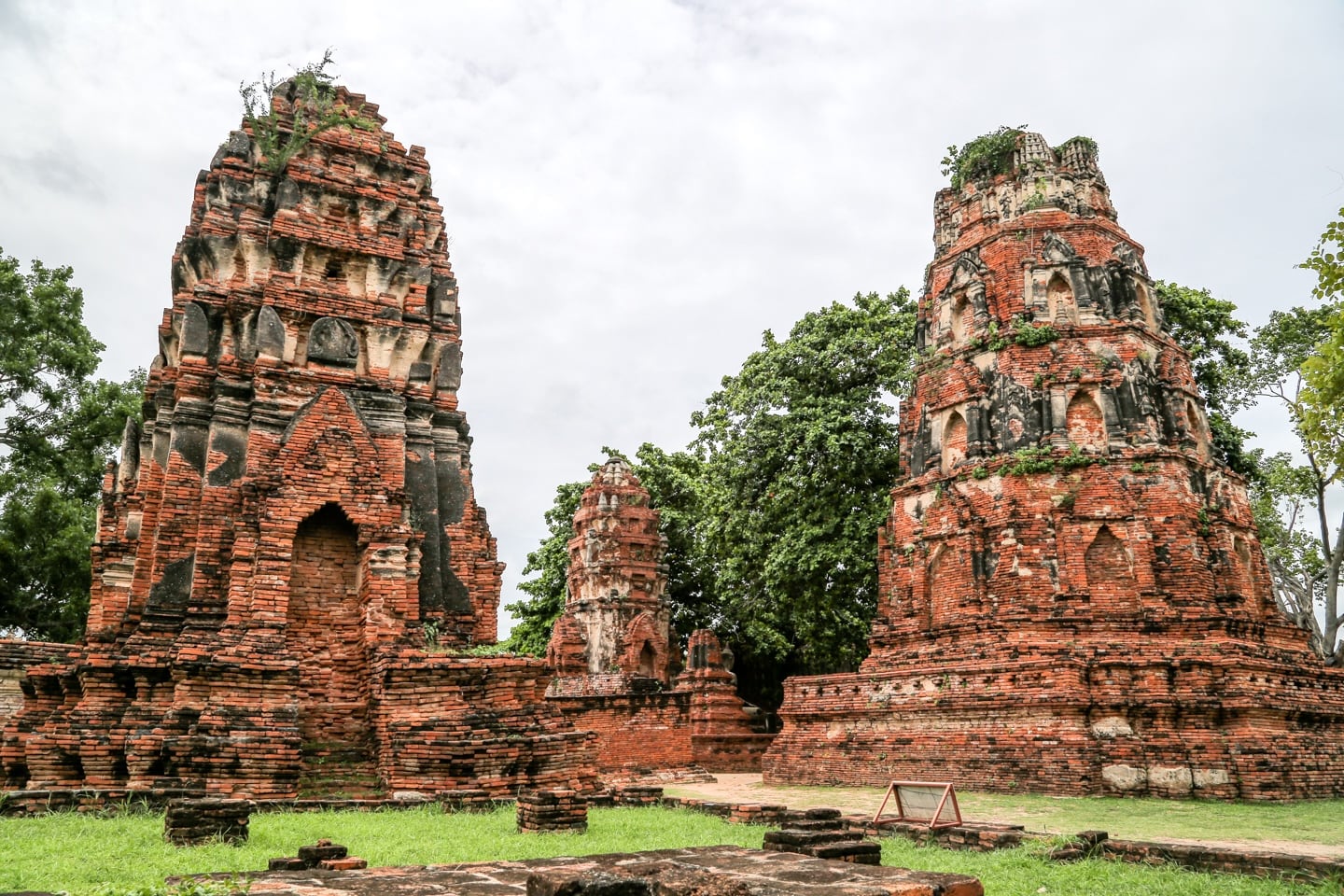
Morning: Arrive & Explore the Historic Center
We’d aim to arrive in Ayutthaya around 9:00 a.m., giving ourselves the cooler morning hours for exploring the most concentrated group of temples.
After crossing the river from the railway station, we’d begin at Wat Maha That and continue to Wat Ratchaburana.
Both are within easy walking distance of one another, so there’s little reason to arrange transportation between them.
From there, we’d make our way toward Wat Phra Ram and Wat Phra Si Sanphet.
This part of the historical park is particularly enjoyable on foot, with smaller ruins and reminders of the former capital appearing all around.
Midday: Lunch and a Break
By midday, we’d be ready for a proper break.
One of the things we appreciated about traveling independently was being able to stop when we needed to rather than following a fixed group schedule (particularly important with a little one in tow).
There are casual restaurants and cafés around the historic center, especially around Chikun Road and U Thong Road.
We wouldn’t make lunch elaborate or anything. A nearby restaurant with good Thai food, cold drinks, and somewhere to escape the heat is all that’s needed before continuing the afternoon.
Afternoon: Wat Chaiwatthanaram
After lunch, we’d hire a tuk-tuk to Wat Chaiwatthanaram.
It’s the one temple outside the central historic core that we’d make a special effort to reach.
As a bonus, the journey offers an opportunity to see a bit more of modern Ayutthaya, beyond the main cluster of archaeological sites.
Allow at least 45 minutes at the temple, along with sufficient time for the return journey.
If you’re traveling independently, it’s worth arranging your return transportation before the driver leaves, rather than assuming another tuk-tuk will be waiting nearby.
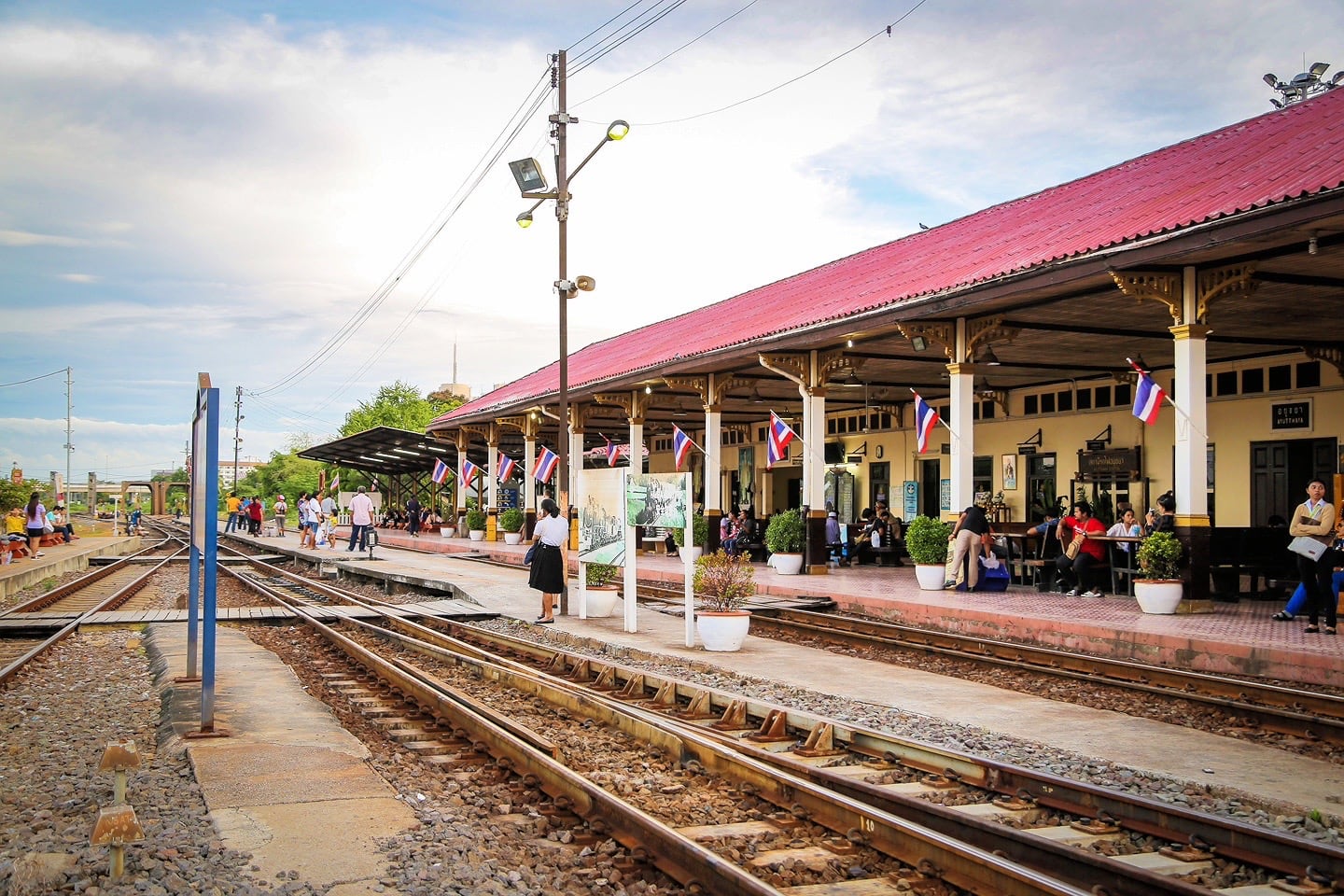
Late Afternoon: Return to Bangkok
Our original return journey was memorable for reasons we hadn’t anticipated.
We took an ordinary third-class train back to Bangkok on a Sunday evening, and it was packed with passengers.
After a long day walking around the temples, standing for much of the journey wasn’t exactly what we’d hoped for.
But the open windows, busy carriage, and kindness of fellow passengers were all part of the experience.
For anyone who prefers a more comfortable return, we’d pay closer attention to train class and expected passenger demand than we did.
If you’re planning to spend the night in Ayutthaya instead, the late afternoon is a good opportunity to visit another temple or enjoy the historical park when many day-trippers have departed.
▸ If you are toying with the idea of staying the night, you can use this handy-dandy map to peruse top-rated hotels by location in Ayutthaya:
Planning Your Ayutthaya Day Trip

How Much Does an Independent Day Trip Cost?
One of the biggest advantages of visiting Ayutthaya independently is the potential cost savings.
The train itself can be remarkably inexpensive, especially if you travel third class from Hua Lamphong. But the total cost will ultimately depend on which temples you visit and how much you spend on local transportation in Ayutthaya.
Here’s a practical way to budget.
| Expense | Planning estimate per person |
|---|---|
| Return train, inexpensive class | From approximately 40–100 baht |
| Admission to four major ticketed temples | Approximately 300 baht with a qualifying combination ticket |
| Food and drinks | 150–300 baht |
| Local transportation | Variable; depends on tuk-tuk arrangements |
| Estimated total | Around 500–1,000+ baht |
These are planning estimates, not a fixed package price. The train fare depends on the service; local transportation costs depend on how many people share a tuk-tuk. Premium trains can increase the total considerably.
For the major historical sites, a local Ayutthaya historical reference currently lists foreign admission at 80 baht per temple or 300 baht for a seven-site combination ticket. Confirm the latest prices and participating temples at the ticket counter.
The combination ticket can be good value if you’re visiting several included sites.
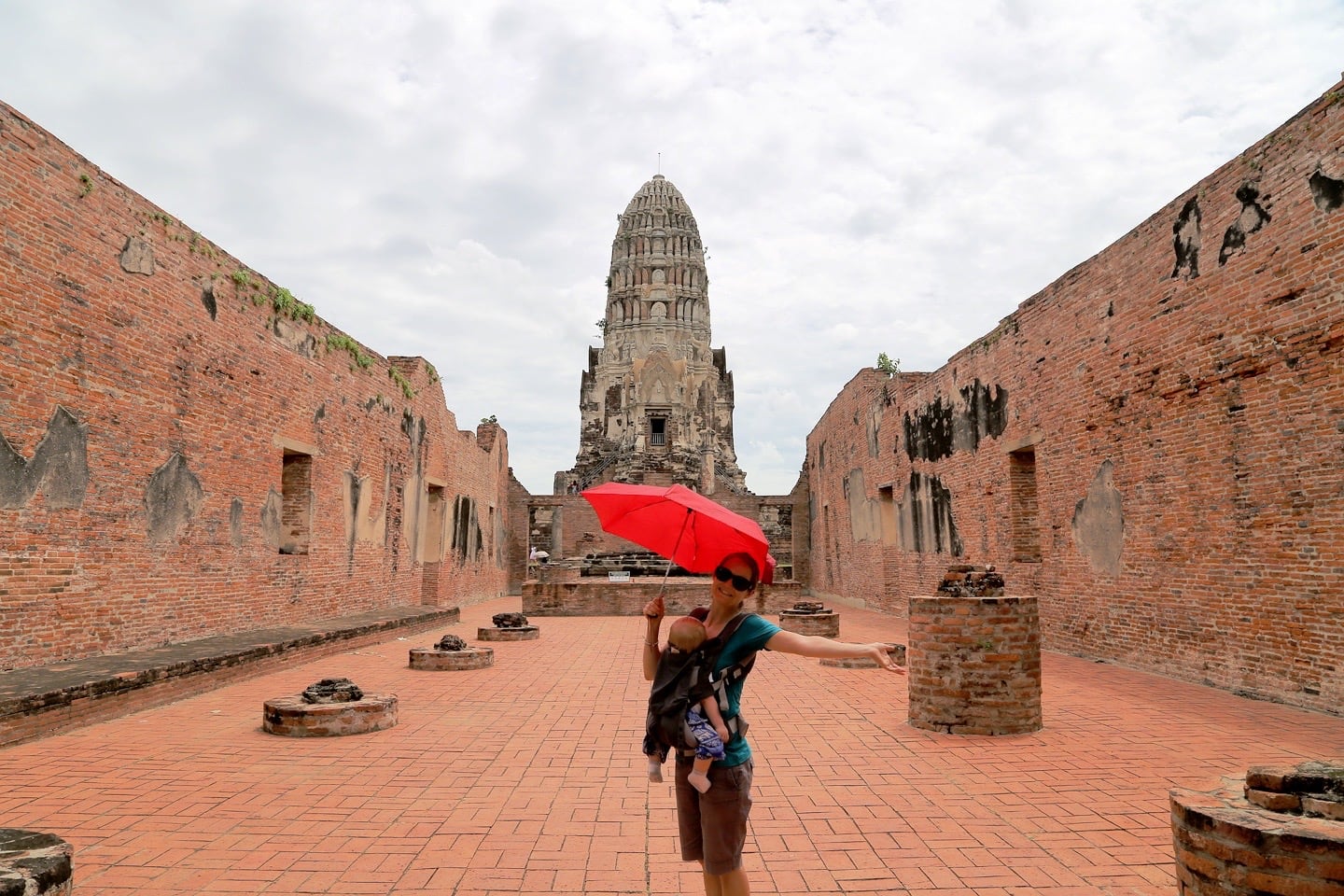
Best Time to Visit Ayutthaya
The most comfortable months for exploring Ayutthaya are generally November through February, when temperatures are somewhat cooler than during Thailand’s hottest months.
That doesn’t mean the historical park is off-limits at other times of year.
It does mean that starting early becomes even more important.
Many of the ruins are exposed to direct sunlight, and after several hours of walking, the heat can become tiring (we visited in June).
We found the morning particularly enjoyable and appreciated having time to slow down for lunch before continuing.
During the rainy season, we’d also bring a compact umbrella and factor some flexibility into your schedule.
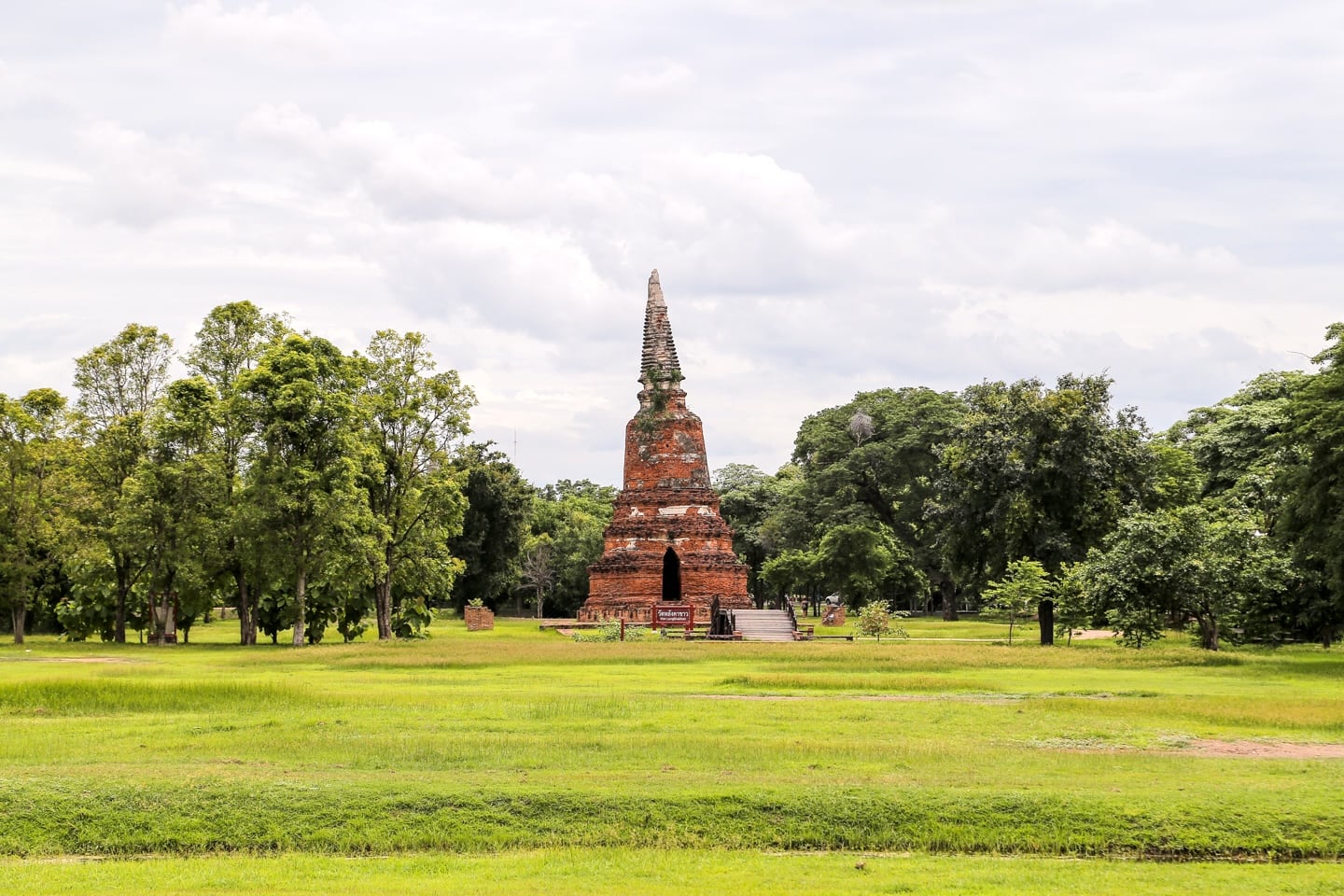
Tickets and Opening Hours
Ayutthaya Historical Park isn’t a single enclosed attraction with one entrance ticket.
Instead, the major ruins are spread across several individual temple complexes, many of which charge separate admission.
So…a combination ticket may be worthwhile if you’re planning to visit multiple participating sites.
Many of the principal historical temples generally operate from around 8:00 a.m. until late afternoon or early evening, although hours can vary by site and special circumstances.
We recommend checking current admission prices and opening hours shortly before your visit, particularly if you’re hoping to visit late in the day.
Where to Eat in Ayutthaya
We didn’t plan our day around a particular restaurant.
Instead, we stopped when we were ready for lunch and appreciated having time to cool off before continuing.
The area around Chikun Road is convenient for visitors exploring the central temples, while U Thong Road has additional restaurants, including some near the river.
If you’re returning by train, there are also places to eat near the railway station.
One of my favorite little memories from the day happened near the station when I returned from a minimarket to discover Lori eating noodles while our young son was attracting considerable attention from people gathered around a nearby food cart.
It was a reminder that some of our most memorable travel experiences often have little to do with the attractions we came to see.

Visiting Ayutthaya with Kids
We visited Ayutthaya with our one-year-old son, and although it made for a long day, we found the trip manageable.
The train was particularly convenient on the way there. Having space to stand up and walk around made it easier to keep him entertained than a similarly long journey in a car or bus.
For exploring the ruins, a baby carrier was far more useful than a stroller.
Many of the temple complexes have uneven brick surfaces, steps, and exposed archaeological areas that aren’t especially stroller-friendly.
We also made sure to carry plenty of water, snacks, diapers, and spare clothing.
The most important consideration, however, was just allowing enough time for breaks.
Trying to visit every temple in one day would have been exhausting, especially with a toddler. By choosing a manageable route, we were able to enjoy the historical sites without turning the trip into an endurance test.
What to Pack
We wouldn’t bring much beyond the essentials: comfortable walking shoes, sunscreen, a hat, plenty of water, a compact umbrella, and some cash for admission tickets and local transportation.
If you’re traveling independently, a charged phone with offline maps is particularly useful.
It helped us locate the ferry on our original visit, and it remains a handy way to navigate between the ruins.
Is Ayutthaya Worth a Day Trip from Bangkok?

We think so, especially if you’re interested in Thailand’s history or want to experience something different from Bangkok’s modern attractions.
Ayutthaya offers an opportunity to explore the remains of an entire royal capital rather than a single temple or palace.
And because it’s close enough to visit in a day, you don’t need to rearrange your entire Thailand itinerary to experience it.
For us, taking the train, crossing the river by ferry, wandering among the ruins, and riding Ayutthaya’s distinctive pink tuk-tuks were all part of what made the day memorable.
The only thing we’d seriously consider changing is hiring a guide for at least part of the visit.
We really enjoyed the freedom of exploring independently, but a little more historical context would have helped us appreciate what we were seeing.
If you enjoy organizing your own trips, Ayutthaya from Bangkok is a rewarding and relatively straightforward independent excursion. If you’d rather leave the transportation and logistics to somebody else, a guided tour can make equally good sense.
Either way, we’d happily set aside another day to explore Thailand’s former capital!
More Reading for Your Thailand Trip
Thailand Beaches
Hello! I love this article about Ayutthaya! I’m just wondering regarding your day trip—how did you get back to Bangkok? If you took the train, what time did it leave (if you remember!)? I’m currently only seeing trains that leave at 6:30pm at the latest. Just wanted to make sure that’s right!
Thank you very much!
Noah
Noah, thanks for your question! A bit has changed in the past couple of years with the opening of the new trains station. But it appears that there should still be local trains from Ayutthaya station to Hualamphong (1h45m) departing 12:14 (#202), 12:40 (#234) and 18:48 (#210). There’s also some earlier trains listed, but a bit of a gap unfortunately between 12:40 and 18:48. You can check current time tables at railway.co.th. Hope that helps!