
When Lori and I first started planning our visit to the Royal Alcázar of Seville (Real Alcázar de Sevilla), we underestimated how much thought it deserved.
On paper, it looked simple enough: buy a ticket, walk through a palace, wander some gardens, move on to tapas. In reality, it’s one of those attractions where timing, entry method, and pacing can make or break the experience.
We’ve visited enough UNESCO sites to know that these places usually fall into two categories. Some are fantastically wonderful no matter how you visit. Others require a little strategy to really shine.
The Royal Alcázar is probably in the second group for most people. Done well, it can be one of the most rewarding historic sites in Spain. Done poorly, it’s crowded, confusing, and exhausting.
We wrote this guide for travelers who don’t want to just wing it and hope for the best (not recommended). Here are the best ways to visit the Alcázar of Seville (and what to expect), with plenty of concrete tips for making your own visit absolutely fantastic.
This post contains affiliate links. If you click and make a purchase, we might receive a commission (at no added cost to you). Thanks for supporting independent, ad-free blogs!
Why We Think You Should Visit
Europe has no shortage of palaces. Some are massive and formal, others are ornate but kind of boring.
What we think makes the Royal Alcázar of Seville so compelling is that it doesn’t belong to a single moment in history. Instead, it’s a place that’s been shaped by different groups of people and centuries of change.
The Alcázar began as a fortified Islamic complex, later transformed by Christian rulers who decided it was better just to build on top of it rather than destroy it.
The result is a palace where Islamic geometry, Christian symbolism, Mudéjar craftsmanship, Gothic halls, and Renaissance additions all somehow exist side by side in stunning fashion.
It’s also a UNESCO World Heritage Site (along with the Seville Cathedral and the Archivo de Indias), which puts it in rare company. But unlike many UNESCO sites that are soley museums, the Royal Alcázar is still used today by the Spanish royal family.
For us, the biggest reason to visit is that the Alcázar is an oh-so-fun place to explore and get lost in. No two spaces are the same and there are plenty of them here to occupy you for hours.
The Best Ways to Experience the Royal Alcázar of Seville
There’s no single best way to visit the Royal Alcázar of Seville—but we think there are better (and worse) approaches depending on your travel style and what you’re hoping to get out of your visit.
Here are the three main ways we recommend experiencing the Alcázar, with helpful tips for choosing the right one for you.
① Visiting the Royal Alcázar on a Guided Tour
If you want to get the absolute most out of your visit (and helpful context without doing a ton of homework), we strongly recommend doing a guided tour.
A good guide won’t just lead you around and point to things—they’ll provide meaningful background (the why and how) that makes the historic spaces come alive and will seem a lot more interesting to the casual visitor.
Two top-rated tours consistently stand out among the pack:
✪ This Small-Group Alcazar of Seville Guided Tour with Entry Ticket focuses entirely on the palace complex and gardens. It’s ideal if the Alcázar is your main priority for the day and you want to feel like you’re getting your money’s worth without feeling rushed.
✪ This Skip-the-Line Seville Alcázar, Cathedral & Giralda Guided Tour combines Seville’s three biggest landmarks into one itinerary. We recommend this option if you’re short on time or are planning on doing a guided tour of all three sites. Just be aware that the Alcázar portion will move faster, especially in the gardens.
Guided tours work particularly well for first-time visitors to Spain, families with older kids, and travelers who enjoy structured storytelling. The trade-off of course is flexibility—once you commit to a tour, you’re moving at the group’s pace.
② Visiting as Part of a City Walking Tour
Some Seville walking tours include the Alcázar of Seville as part of a broader city overview. These are good if your priority is getting a sense of Seville as a whole, but they’re not ideal if the Alcázar is one of your top priorities.
In our experience, these tours tend to skim the surface. You’ll see the highlights, but you won’t have a lot of time to absorb the palace or wander the gardens. We think this option works best for travelers who are in Seville for a very short time and want to see as much as possible.
✪ This top-rated 2-hour Seville Guided Small-Group Walking Tour hits all the highlights such as the Royal Alcázar, Seville Cathedral, Archivo General de Indias, Torre Giralda, and Plaza de Espana. Keep in mind that entrance tickets are not included and you will be covering a lot of ground in a relatively short amount of time.
③ Visiting the Alcázar on Your Own (Self-Guided/DIY)
This is how Lori and I ended up experiencing the Alcázar on our most recent visit, and for independent travelers, it’s often the most satisfying option—as long as you prepare a bit.
Visiting on our own gave us complete control over our pace (ideal when traveling with younger kids). We could linger in the Alcázar Gardens and not feel rushed, move quickly through rooms that didn’t grab us, and double back to rooms we felt deserved more time.
The downside is that the Alcázar didn’t exactly hold our hand. There’s limited interpretive signage here, and without context, things could start to feel repetitive or not as interesting as they might otherwise. For this reason, we recommend doing a bit of reading beforehand and strongly recommend using the audio guide provided on their website.
If you’re visiting independently, book the earliest entry slot of the day if at all possible. The difference between arriving at opening time and arriving an hour later can be dramatic.
Plan to spend at least two to three hours (more if you enjoy leisurely strolling through gardens). The Alcázar isn’t a place you’ll want to rush through—and the gardens alone can easily take an hour for some visitors.
How to Buy Tickets (and Avoid Headaches)
It seems that ticket purchasing is where many visitors to the Royal Alcázar of Seville get tripped up. This really isn’t one of those sights where you can reliably show up and buy a ticket on the spot—especially during spring, summer, holidays, or later in the day.
Like more and more popular attractions these days (Portugal’s Pena Palace and Jerónimos Monastery immediately spring to mind), the Alcázar operates on timed entry, with strict capacity limits. Once tickets sell out for a particular time slot, that’s it.
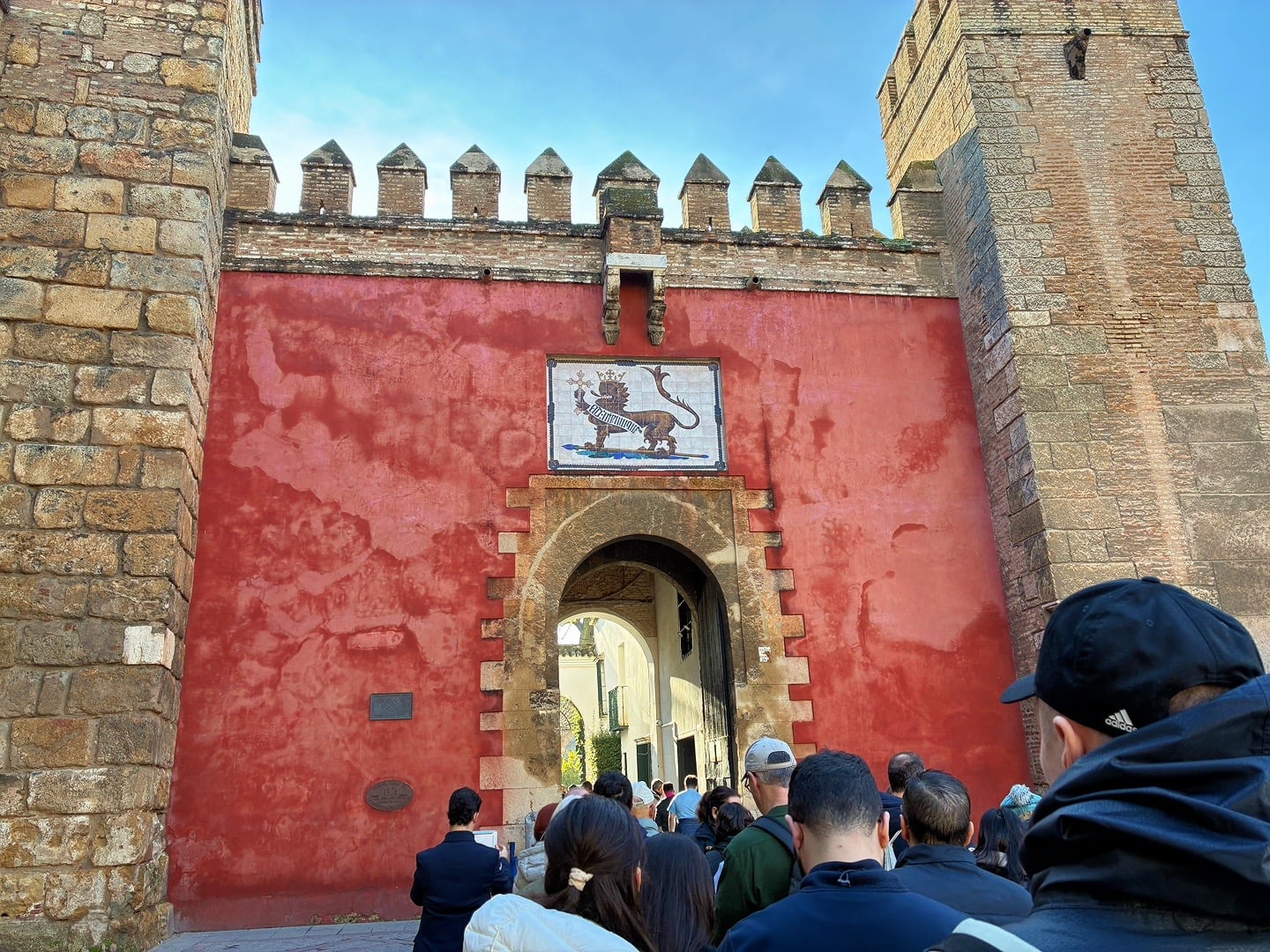
We saw quite a few people turned away at the gate who assumed they could buy tickets on arrival.
It’s best to buy your tickets online in advance [official website].
Once you’ve booked, make sure you arrive 15–20 minutes early. Everyone passes through security, and lines can get long. Bring photo ID (your passport is a good bet), as names on tickets are checked more often than you might expect.
Mobile tickets are accepted, but we recommend always downloading the PDF rather than relying on screenshots or spotty data coverage.
Oh, and one final thing worth mentioning: there is no re-entry. Once you leave the Alcázar, your visit is over. That’s another reason to save the gardens for last.
The Highlights You Shouldn’t Skip
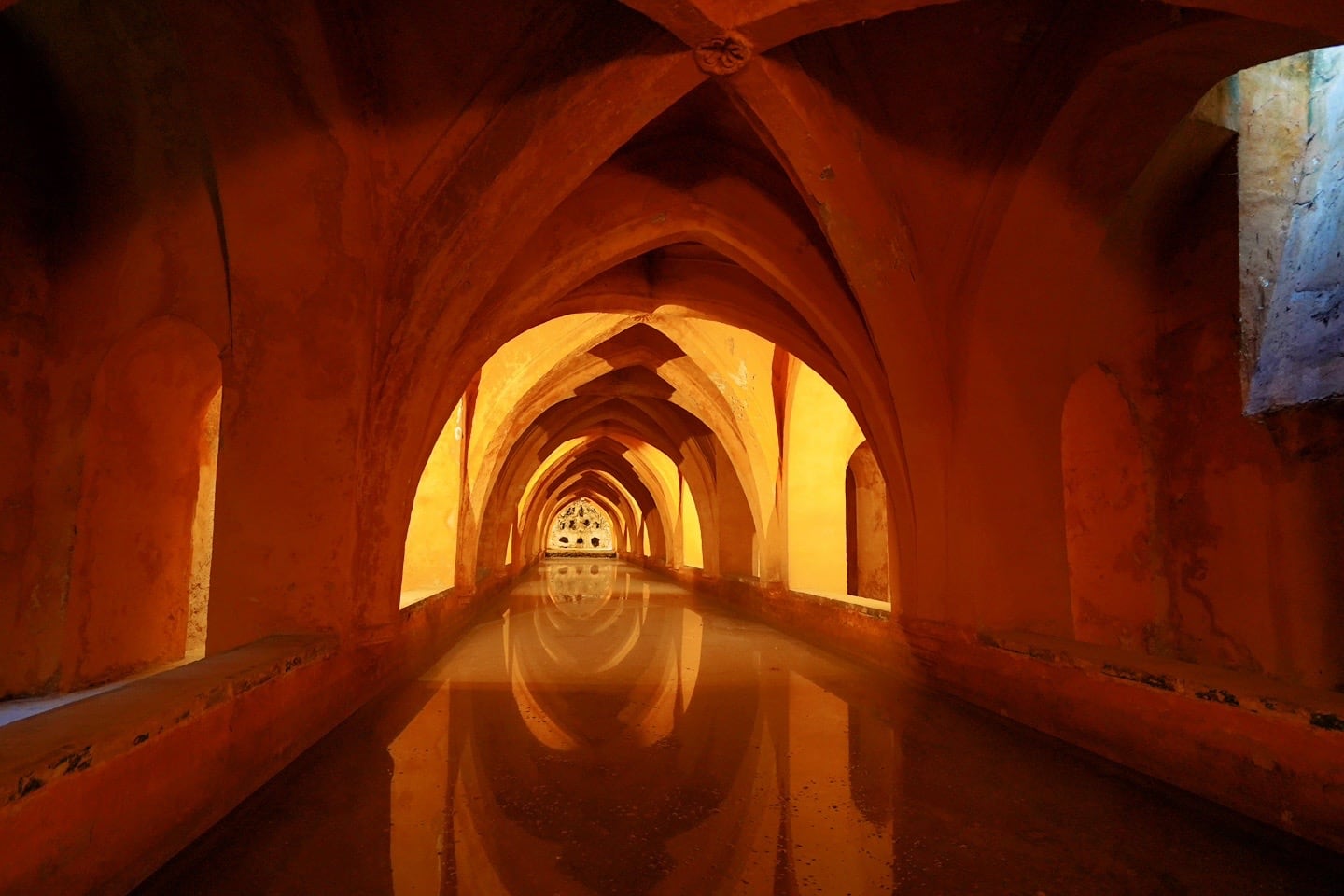
If you’re touring the Royal Alcázar on your own, the official online audioguide is going to do a far better job of explaining all the ins and outs of the palace and grounds than Lori and I ever could (the audioguide link is here and you can listen on your phone).
The Royal Alcázar is large, and not every room carries equal weight. Some spaces are historically significant but understated on the surface. Others are about as impressive or awe-inspiring as anything we’ve seen elsewhere in Spain.
In this section, we’ve simply provided a brief overview of a handful of key spaces we think you probably won’t want to miss (this map can help you follow along).
The Puerta del León, or Lion Gate, is the main entrance and your first taste of the Alcázar’s previous life as a fortress.
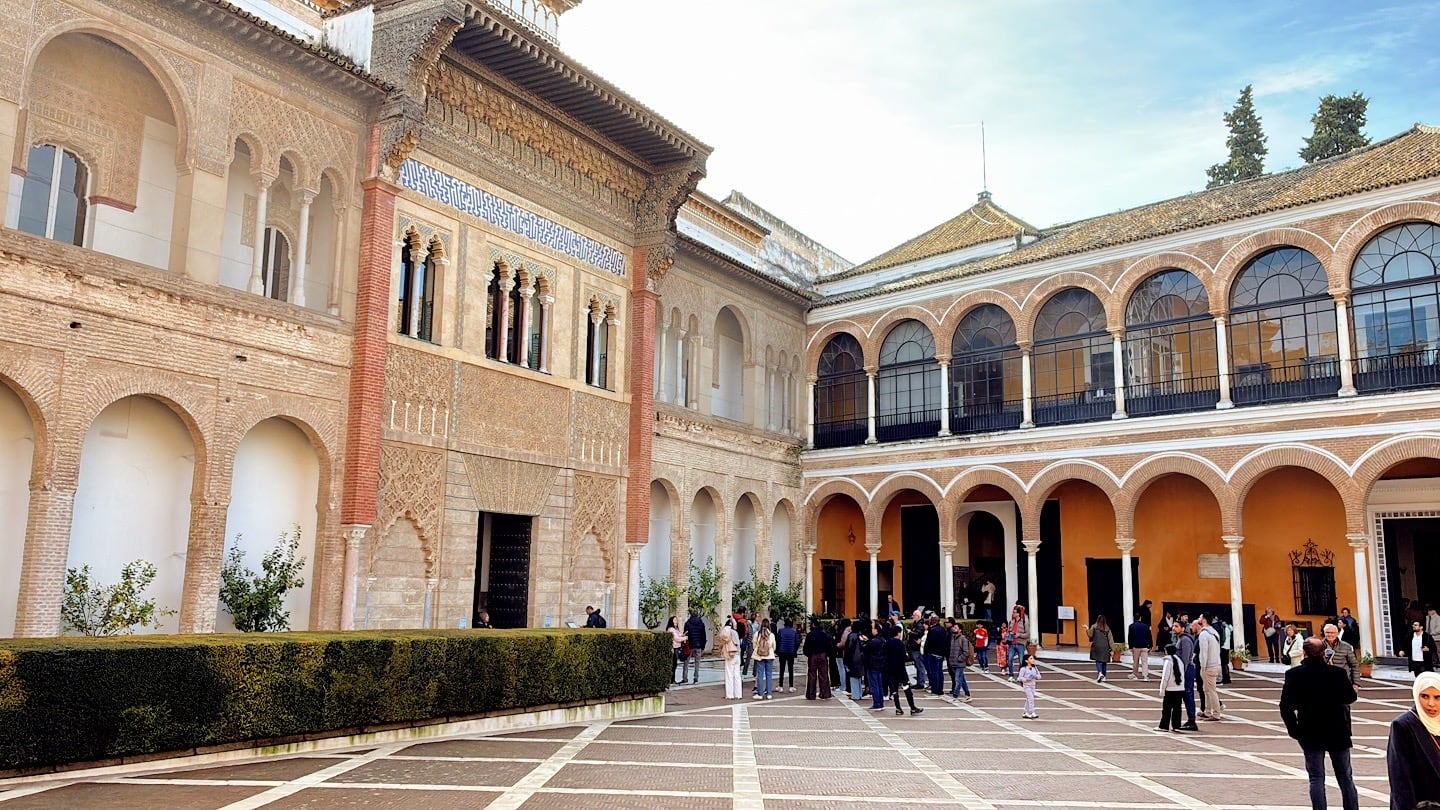
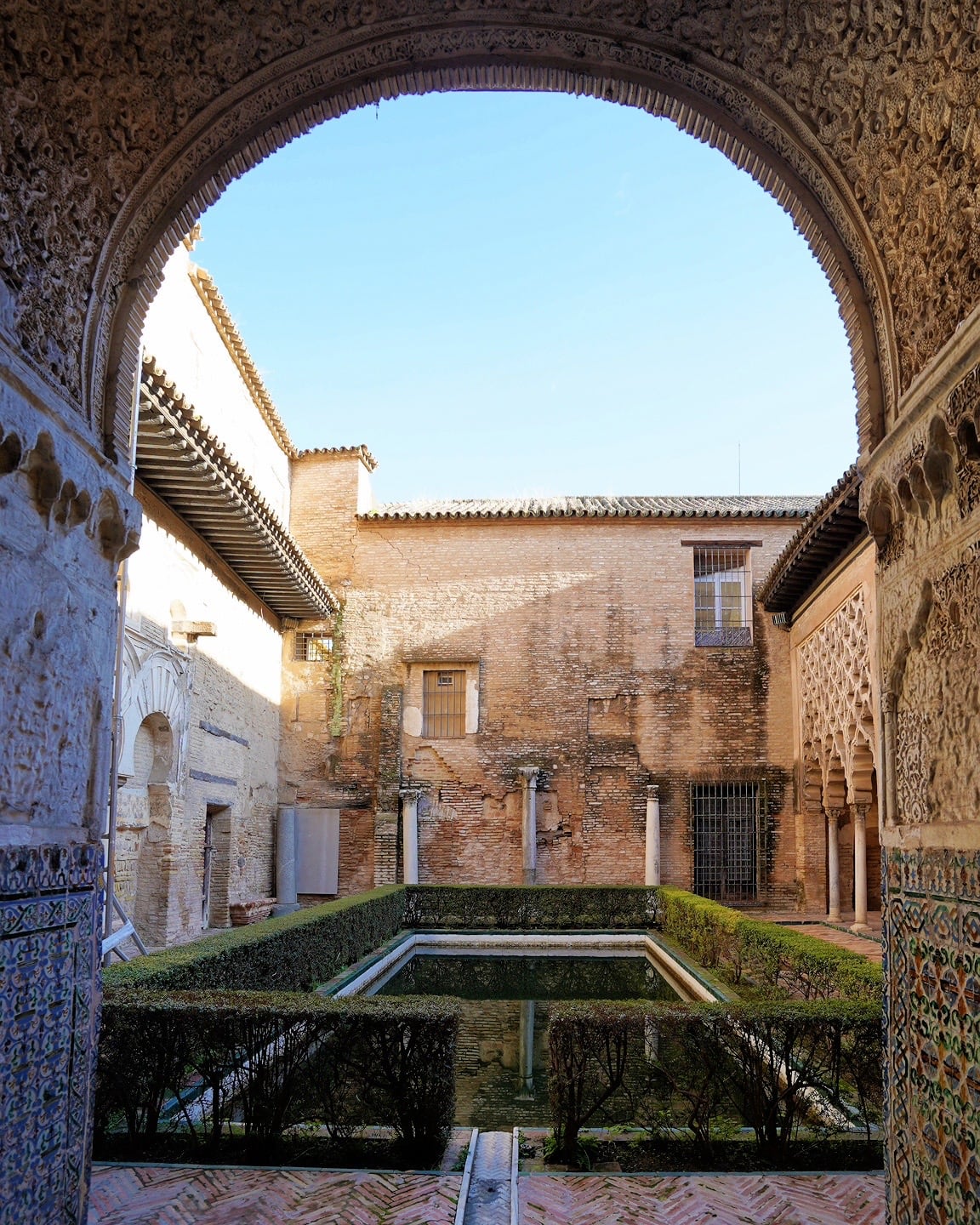
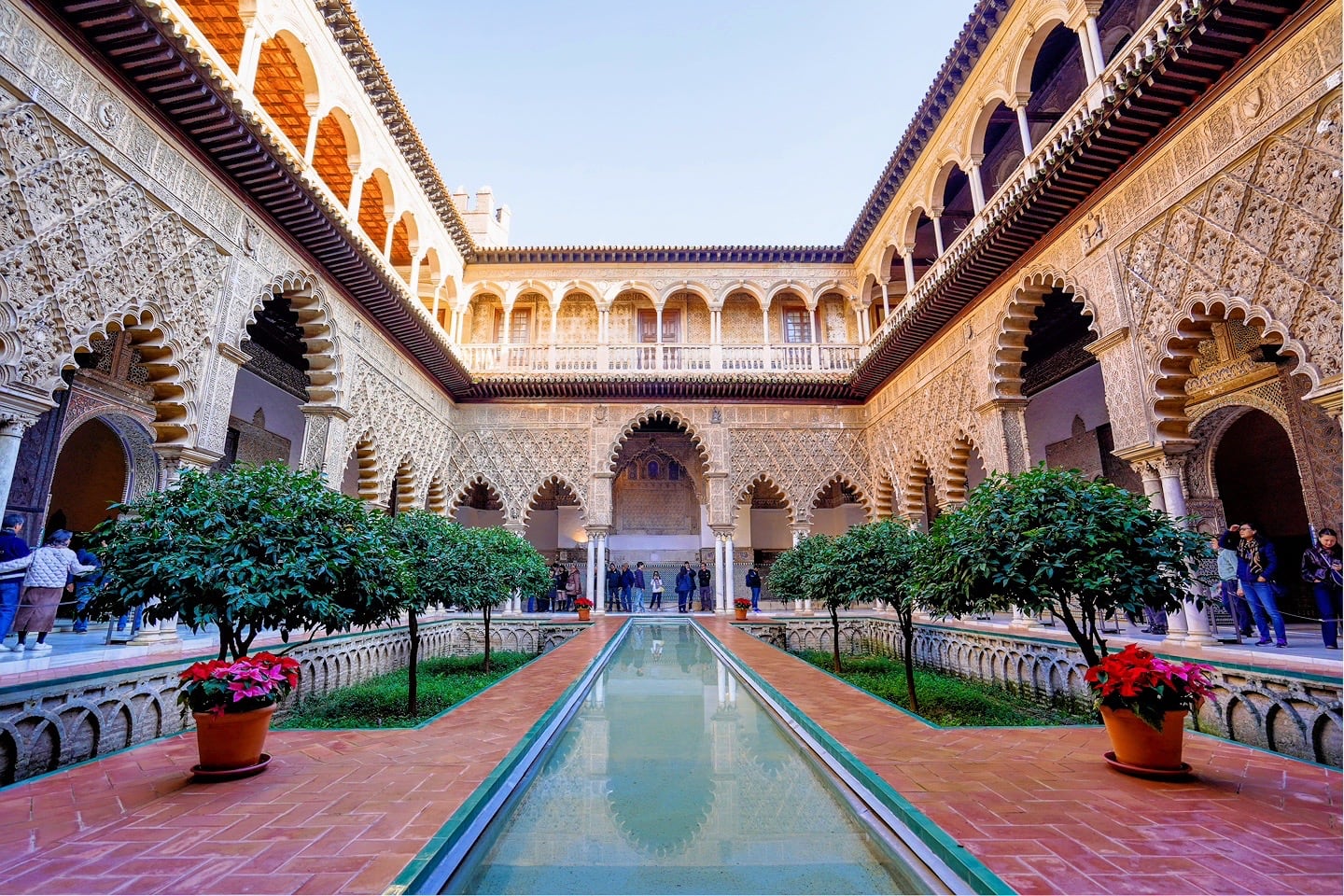
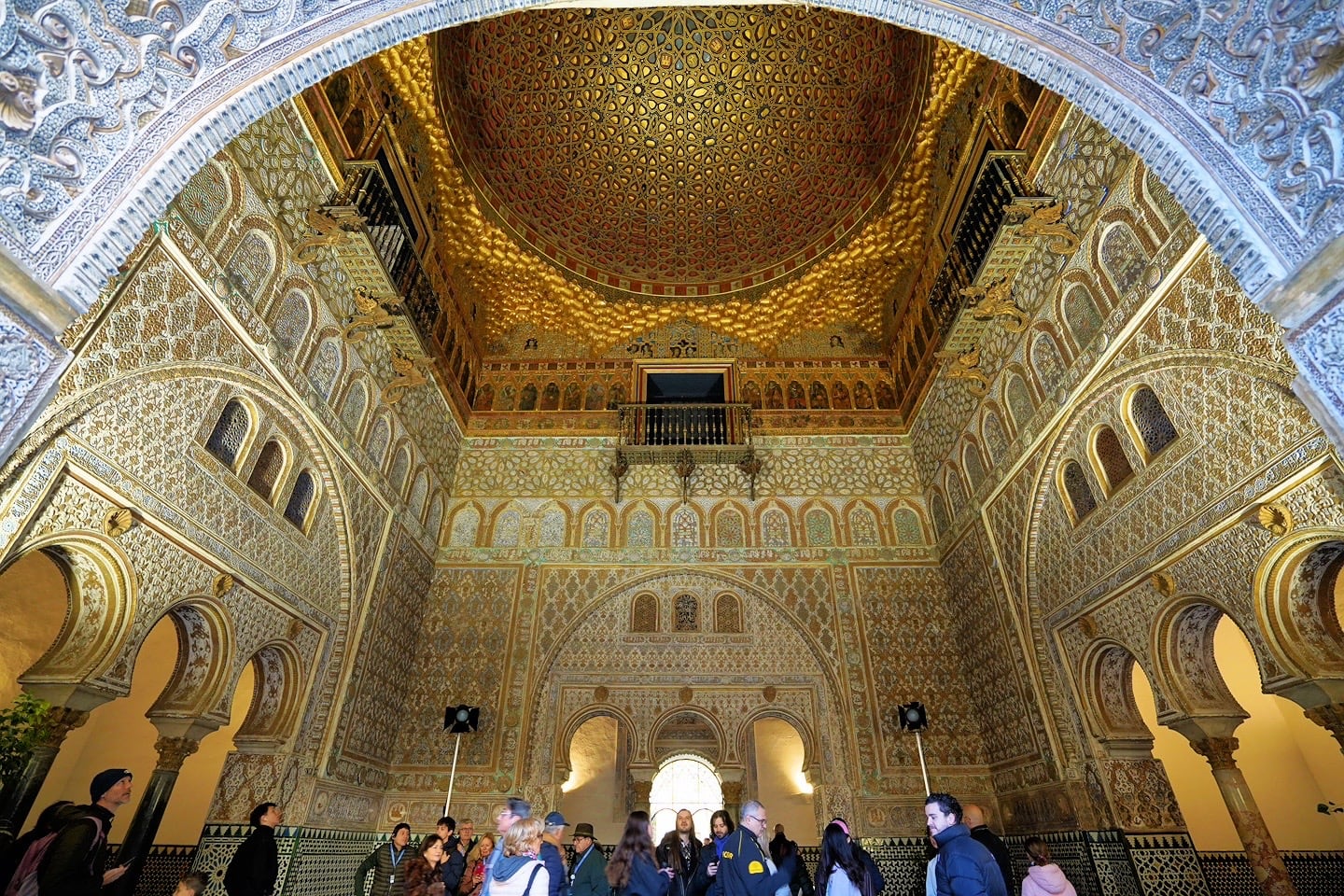
The heart of the complex is the Palace of King Pedro I, also known as the Mudéjar Palace. This is where visitors seem to spend most of their time, and for good reason. The tilework, carved plaster, wooden ceilings, and symmetry were built to impress.
The Courtyard of the Maidens (Patio de las Doncellas) is one of the most recognizable spaces in the Alcázar. It got very crowded during our visit, so we reckon you’ll want to visit this one as early as possible after you arrive.
The Hall of Ambassadors is the centerpiece of the Palace of King Pedro I. It was designed to impress and intimidate and is where you’ll probably want to linger longer than usual.
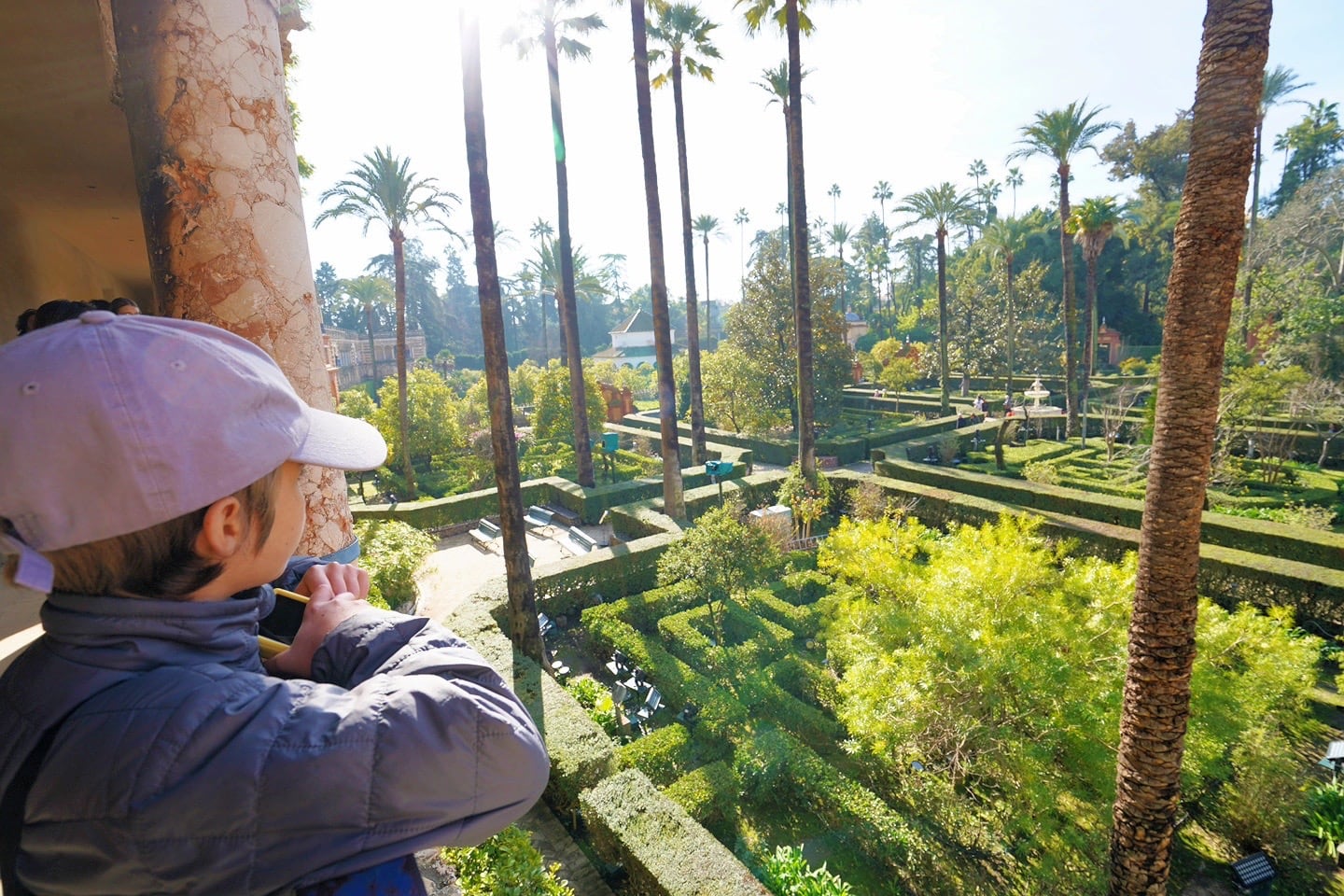
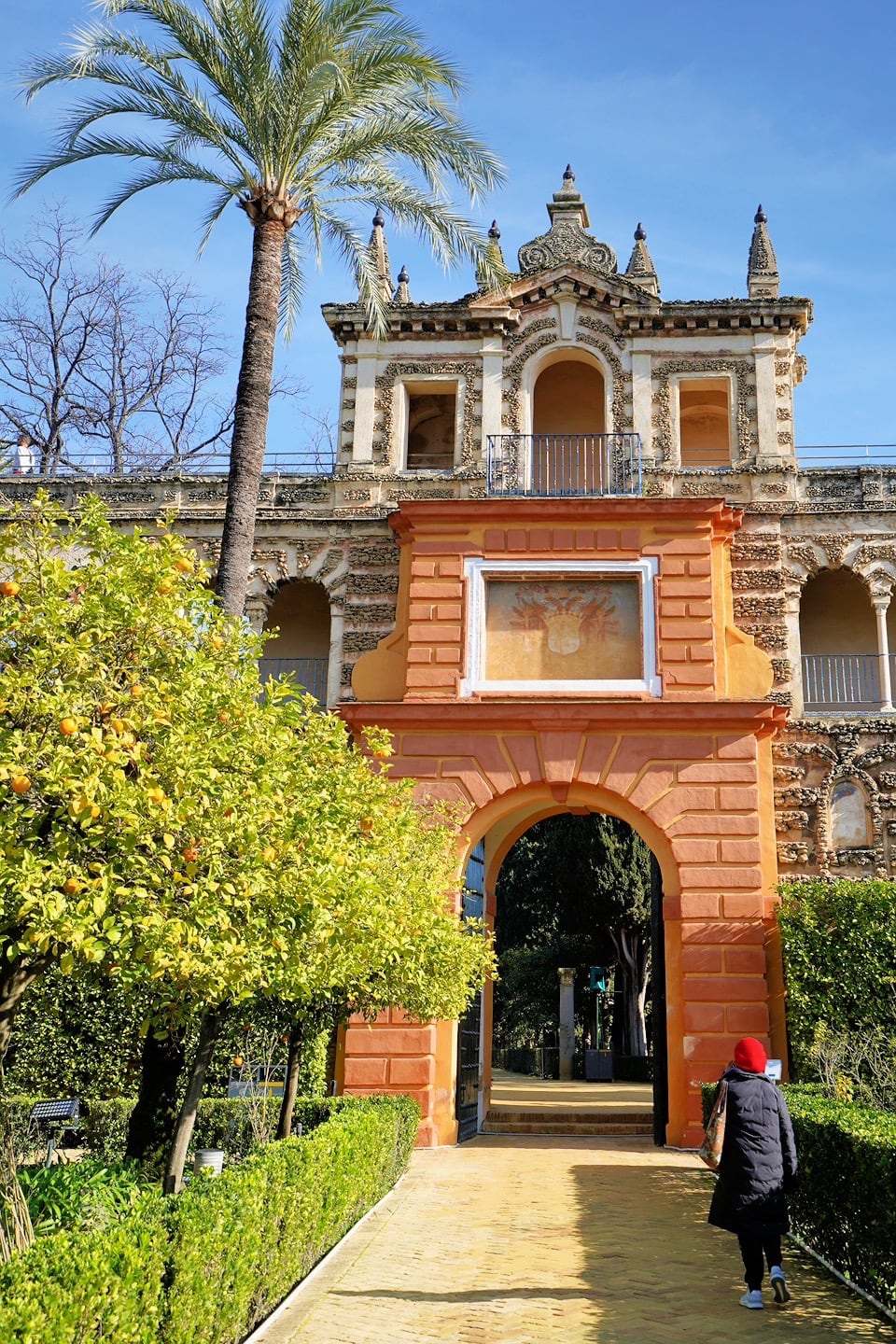
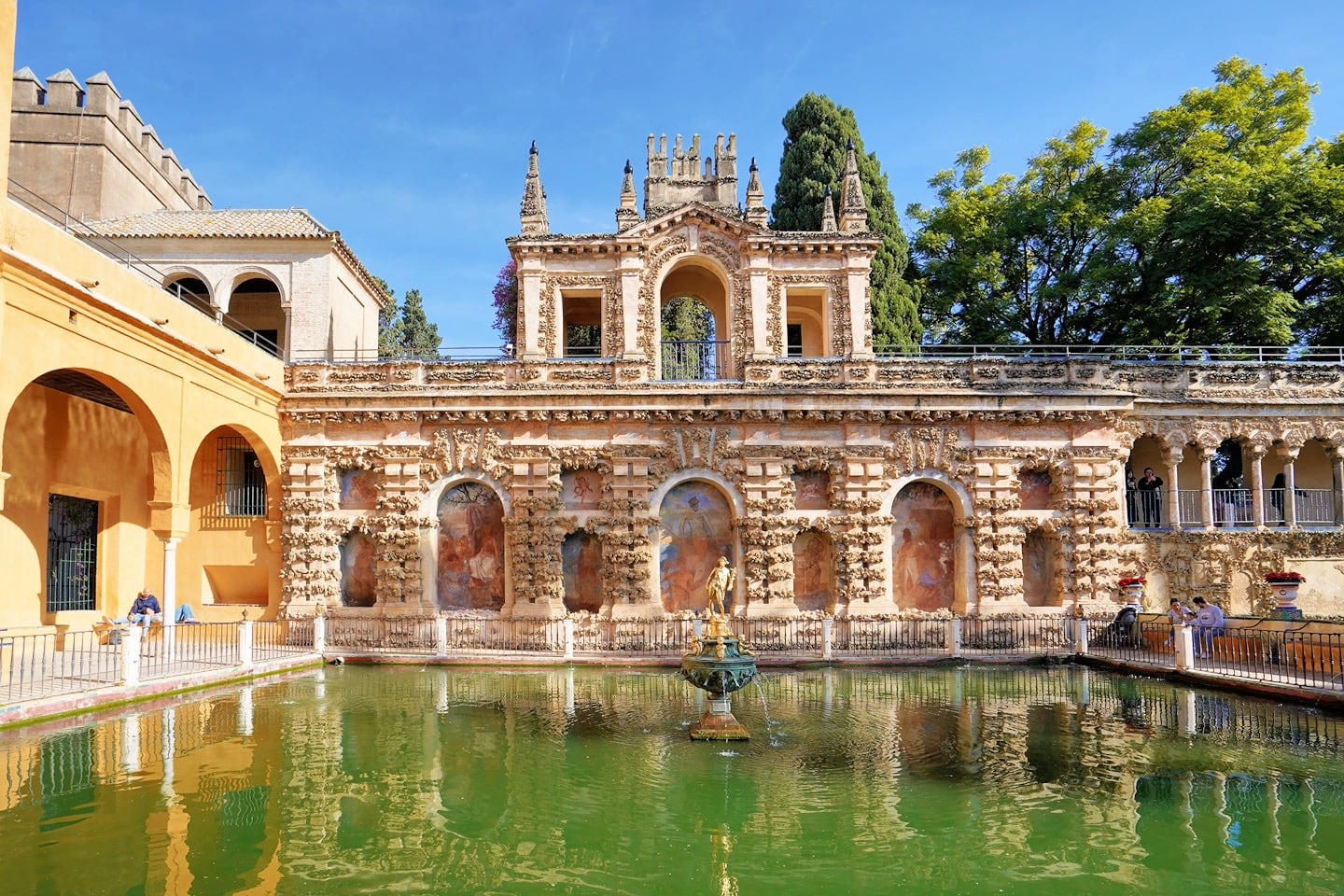
Finally, the Alcázar Gardens probably deserve far more attention than most visitors give them. Spread out over seven hectares, this 1,000-year-old green space is home to labyrinths, peacocks, and a variety of flora. It’s also served as a Game of Thrones filming location.

Our Suggested Route Through the Alcazar
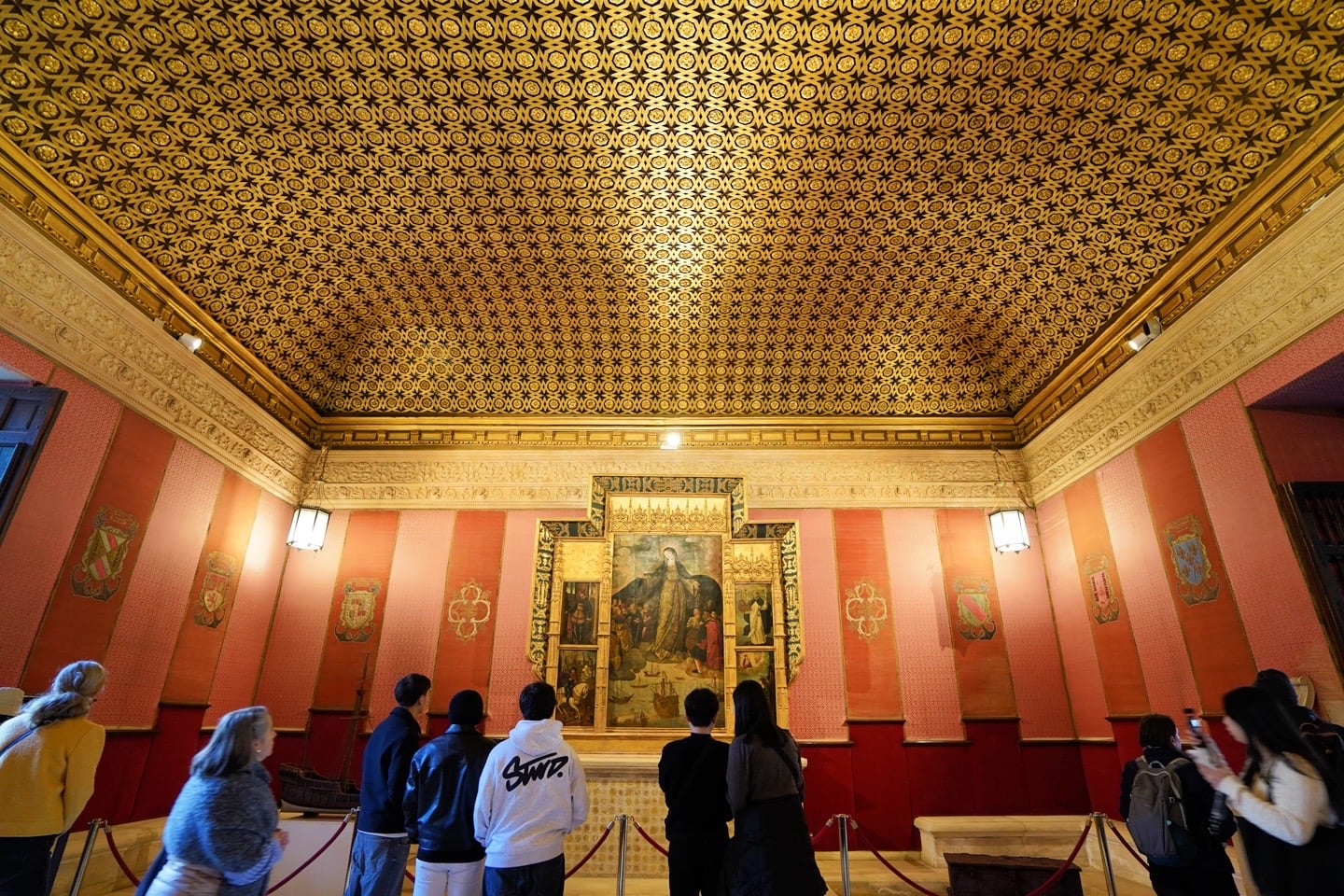
The Alcázar doesn’t really force a route (though it can sometimes feel that way when it’s really busy). But we noticed that some ways around seem to work better than others.
We recommend moving through the entrance and inner courtyards briskly at first. These areas filled up quickly when we visited, and spending too much time here early and unnecessarily would have slowed us down later.
Head straight to the Mudéjar Palace while crowds are at their lightest. This is where we found the most congestion later in our visit.
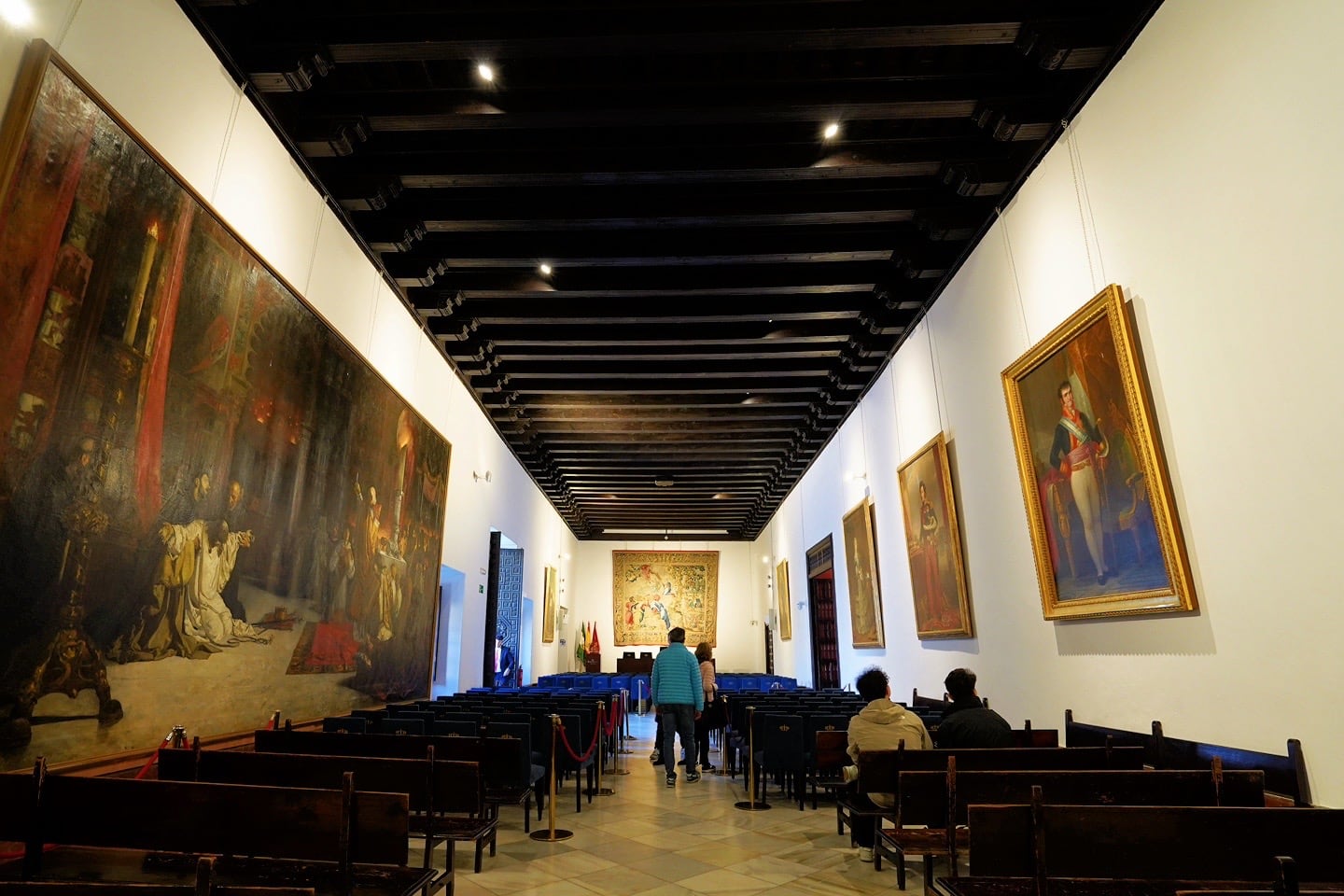
From there, you can move into the Gothic Palace rooms (adjacent to the restrooms). This area wasn’t a highlight of our visit, but we found it very hard to come back to later on after we were already out exploring the gardens.
If your ticket includes access to the Cuarto Real Alto (Upper Royal Rooms), (usually requires a special ticket and separate tour), you may want to make your way here next (if you don’t have a set scheduled time).
Save the Alcázar Gardens for last. Once you’re outside, you can relax, sit, wander, and explore without worrying about missing the best chance to see the most popular areas.
When to Visit the Royal Alcázar of Seville
As with most UNESCO sites, timing your visit correctly can make a noticeable difference.
The best months to visit are generally considered to be March through May and September through October, when temperatures are comfortable and gardens are at their peak.
Summer in Seville is extremely hot, and the Alcázar offers limited shade indoors. If you visit in summer, we recommend going early and leaving before midday.
As for days of the week, midweek tends to be calmer than weekends (no surprise there). The first entry of the day is always the least crowded. Late afternoon can also be quieter, but heat and fatigue can become factors, depending on your itinerary.
Final Thoughts
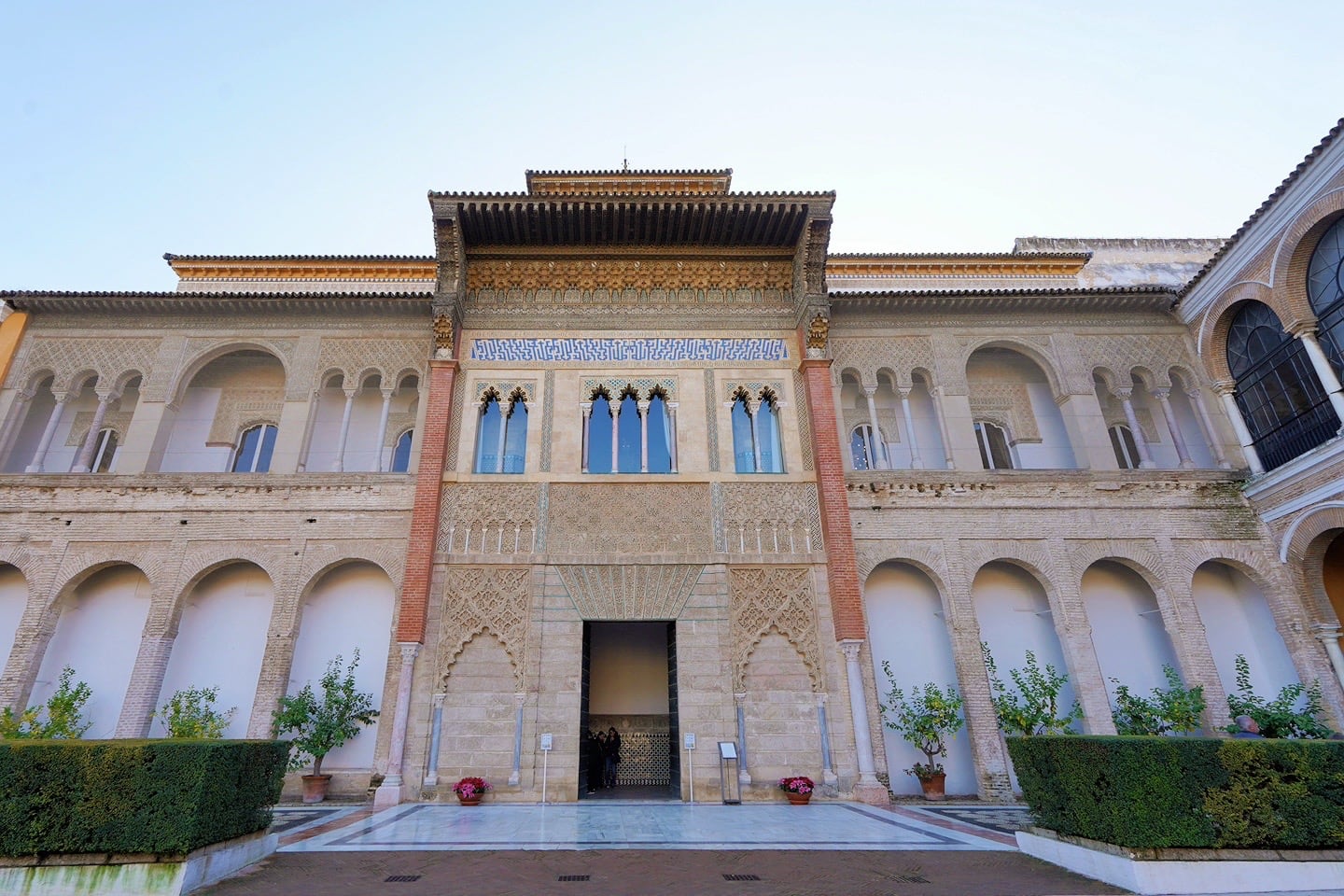
The Royal Alcázar of Seville is a must-see attraction in the center of one of Spain’s most vibrant and historic cities. It was definitely a top highlight of our time in Seville, and we think it will likely be one of yours as well.
The Alcázar is located in the historic heart of Seville known as Barrio Santa Cruz. This neighborhood is also home to Sevilla’s old Jewish Quarter, which is known for its narrow, labyrinthine streets.
If you’re touring the palace on your own, we strongly encourage you to wander around this section of the city before or after your Alcázar visit.
We hope this guide makes planning your own memorable experience in Seville just a bit easier and more fun.