
When Lori and I were planning our Morocco road trip from Marrakesh to the Sahara, two places anchored our itinerary: The red sand dunes of Erg Chebbi and the mud village of Aït Benhaddou.
Instantly recognizable, Aït Benhaddou embodies the romance and mystery of the ancient caravan routes connecting the Atlas Mountains and Timbuktu.
A UNESCO World Heritage Site, Aït Benhaddou remains one of the best preserved and most evocative ksars (fortified earthen villages) in Morocco.
Most travelers see Aït Benhaddou on a day trip from Marrakesh or on a quick stop on their way to the Sahara Desert. We lingered for a couple of nights and were happy we did.
Whether you’ve got one day or three, here are 8 worthwhile things to see and do in Aït Benhaddou, based on our own experience exploring this rewarding and captivating place.
Looking for the easiest way to visit?
These are our picks for top-rated tours from Marrakesh:
✪ Day Trip Aït Benhaddou & Ouarzazate guided day tour
✪ Sahara Tour 3-day desert camping tour with Aït Benhaddou
Both tours are top-rated and offer free cancellation.
This post contains affiliate links. If you click and make a purchase, we might receive a commission (at no added cost to you). Thanks for supporting independent, ad-free blogs!
Why Visit Aït Benhaddou?
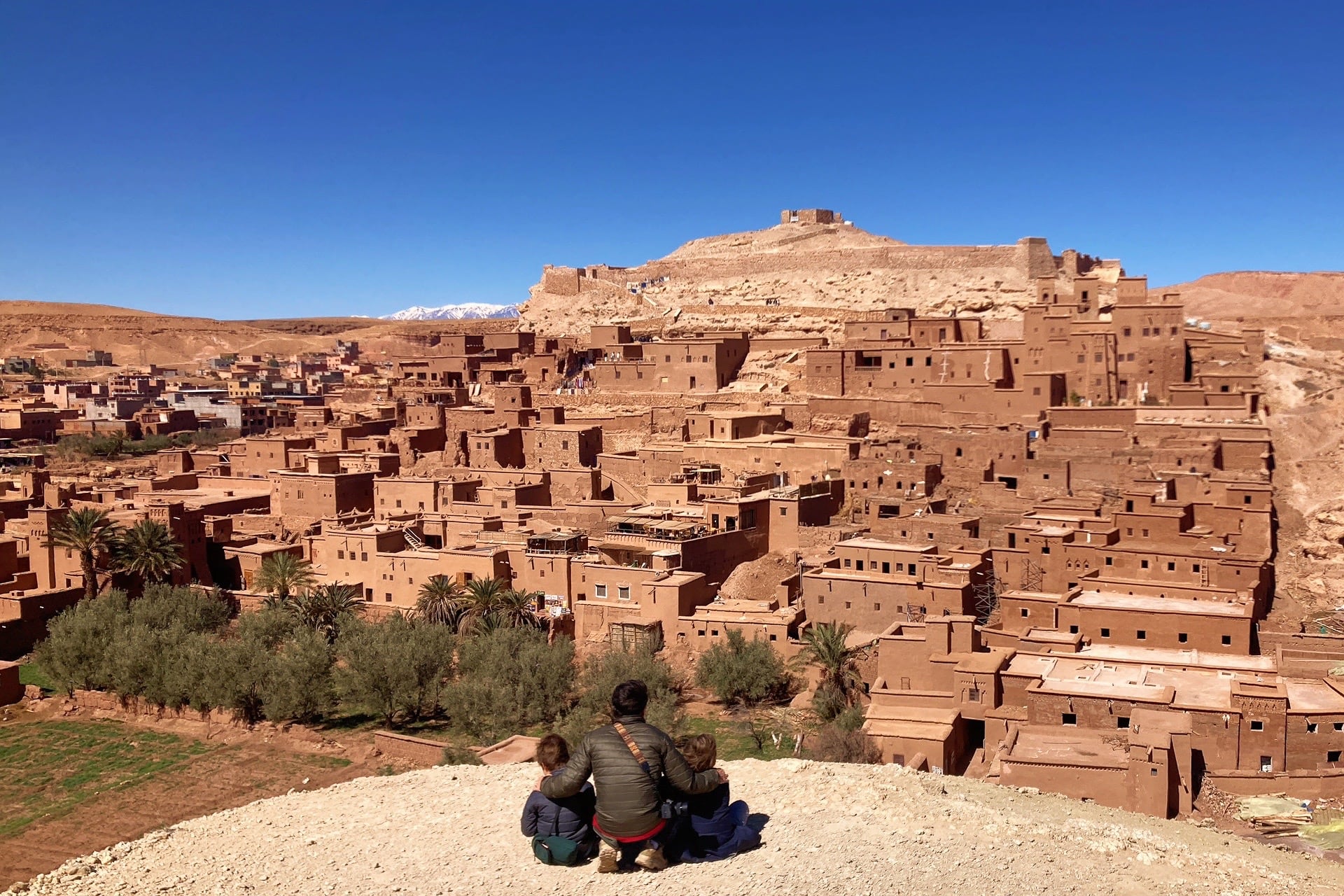
Aït Benhaddou sits along the old caravan route between the Sahara and Marrakesh, and it’s remarkable how removed from the modern world it still feels.
The village is best known for its 17th-century ksar—a fortified settlement built from clay and straw that rises in dramatic fashion above the surrounding landscape.
From a distance, the ksar seems to almost disappear into the surrounding hills. As you get closer, the outlines of individual structures to emerge. Inside the village, however, you get an entirely different perspective on the place.
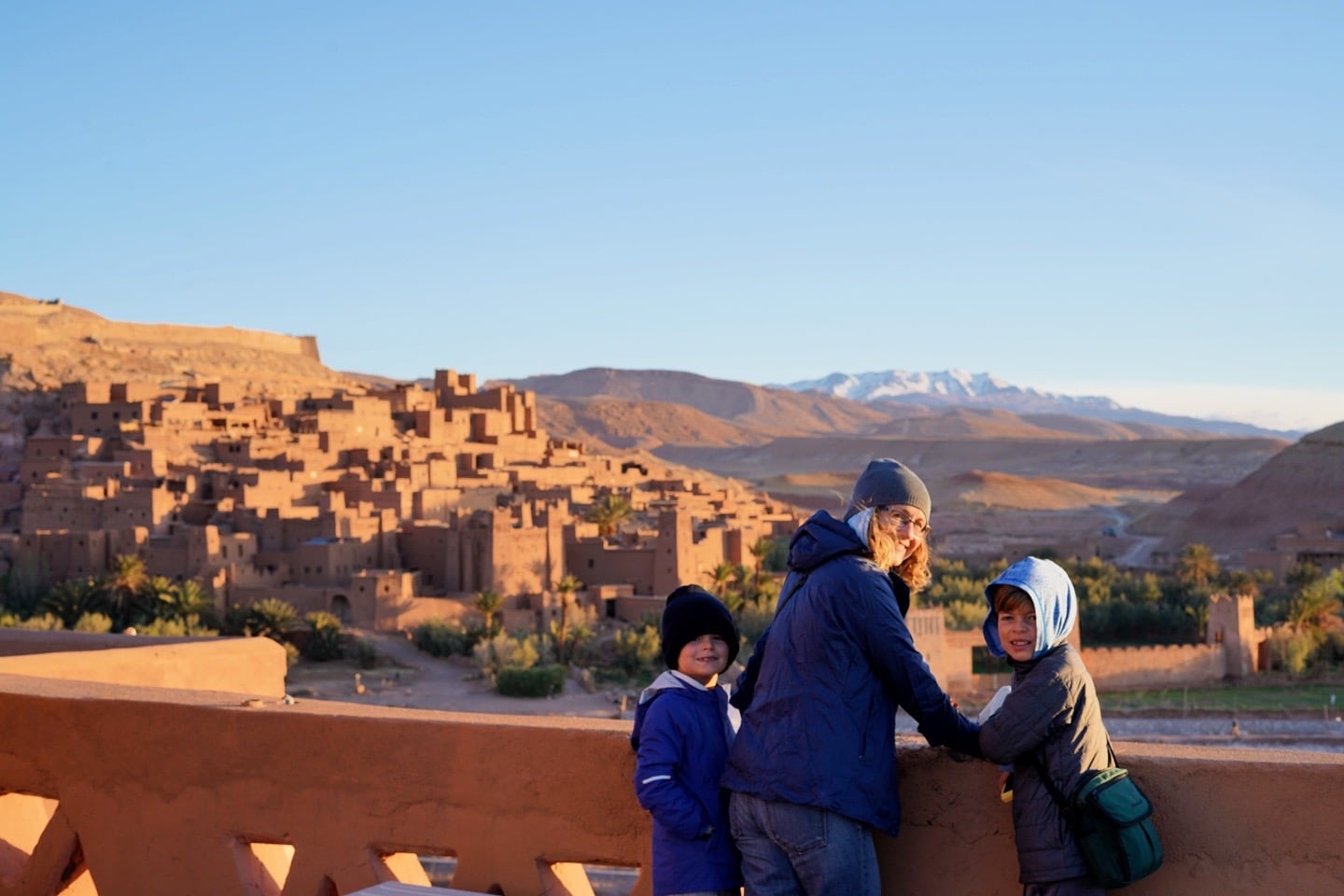
We believe a big part of what makes Aït Benhaddou special is the otherworldly setting—composed of dusty valleys, reddish hills, and palm groves set against a deep blue sky. Our family visited in early spring, so the snow-capped Atlas range gave a little additional pop to the backdrop.
One of the first things we noticed upon arrival is that it’s pretty darn quiet here—especially when compared to big and bustling Marrakesh (where we were coming from).
Even on a day packed with visitors, there aren’t any motorized vehicles or heavy machinery in or around the ksar—just the din of conversation and the sound of the wind whipping through the narrow alleyways.
Unlike Morocco’s larger cities, we don’t think you need an itinerary here. Soaking up the atmosphere in Aït Benhaddou is the attraction, so to speak. With that said, there are some fun and worthwhile things to see and do in and around town that shouldn’t be missed, and that’s what we cover in this post.
8 Worthwhile Things to Do in Aït Benhaddou, Morocco
Explore the Ksar of Aït Benhaddou
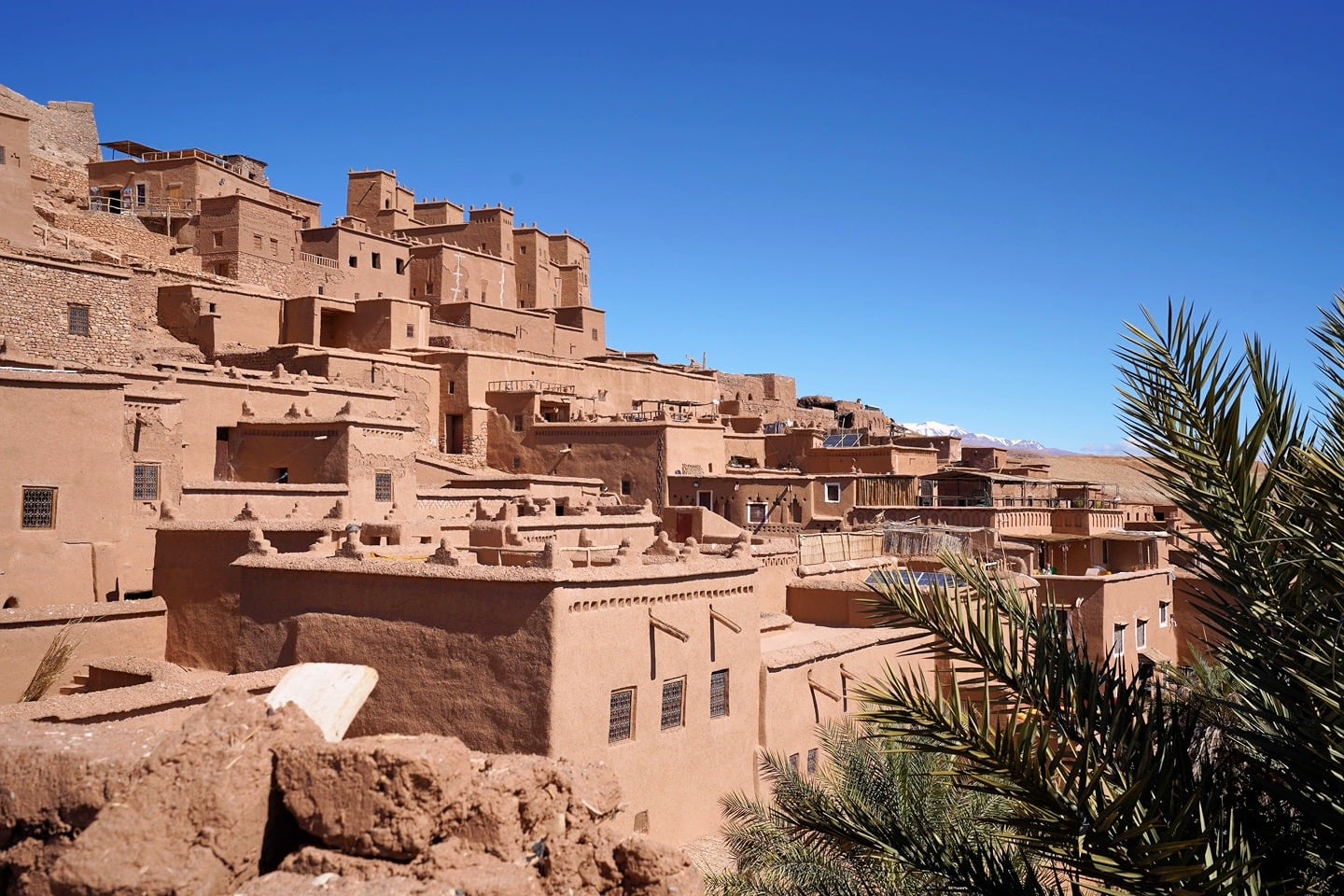
The obvious place to begin is the ksar—because, let’s be honest, that’s why you came here, right?
The town of Aït Benhaddou is split into two parts—the “New Town” or “Tourist Town” on the south/west side of the Asif Ounila river; and the historic ksar or “Old Town” on the north/east side.
Most of the year, it’s easy to get between the two sides from just about any point. In the rainier winter months, however, it’s a little more challenging.
There’s a permanent concrete bridge that leads to the main entrance. For whatever reason, it doesn’t appear on most online maps, but it’s at the foot of Auberge Azaddou Tamlalte. Often, you can also find a temporary wood-plank bridge crossing the river near Da Carmine La Terrazza.
We made sure to arrive at the ksar early before the tour groups arrived. If you get here before 9am, you’ll likely have the village to yourself.
And it is just that—a living, breathing village, still home to five resident families, a handful of guesthouses and cafes, and a smattering of souvenir shops as well.
There is currently no fee to enter the ksar if you enter through one of the main entrances—the west entrance at the end of the permanent bridge; or the east entrance accessed through a gated tunnel.
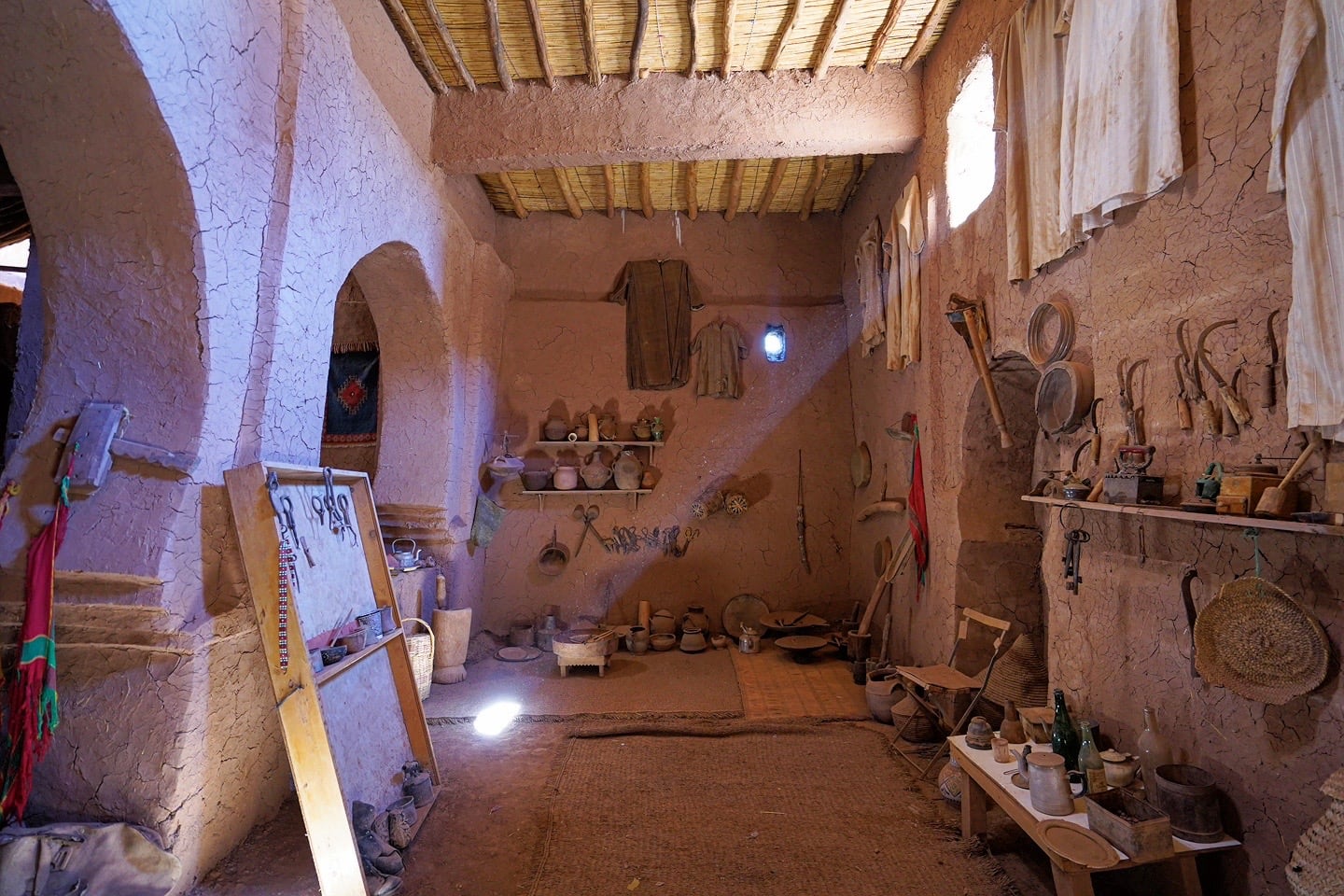
If you enter through one of the southern entrances, a small fee will be requested as these lead into a couple of museums (we think it’s worth visiting one of the museums, plus the very worthwhile Kasbah Museum).
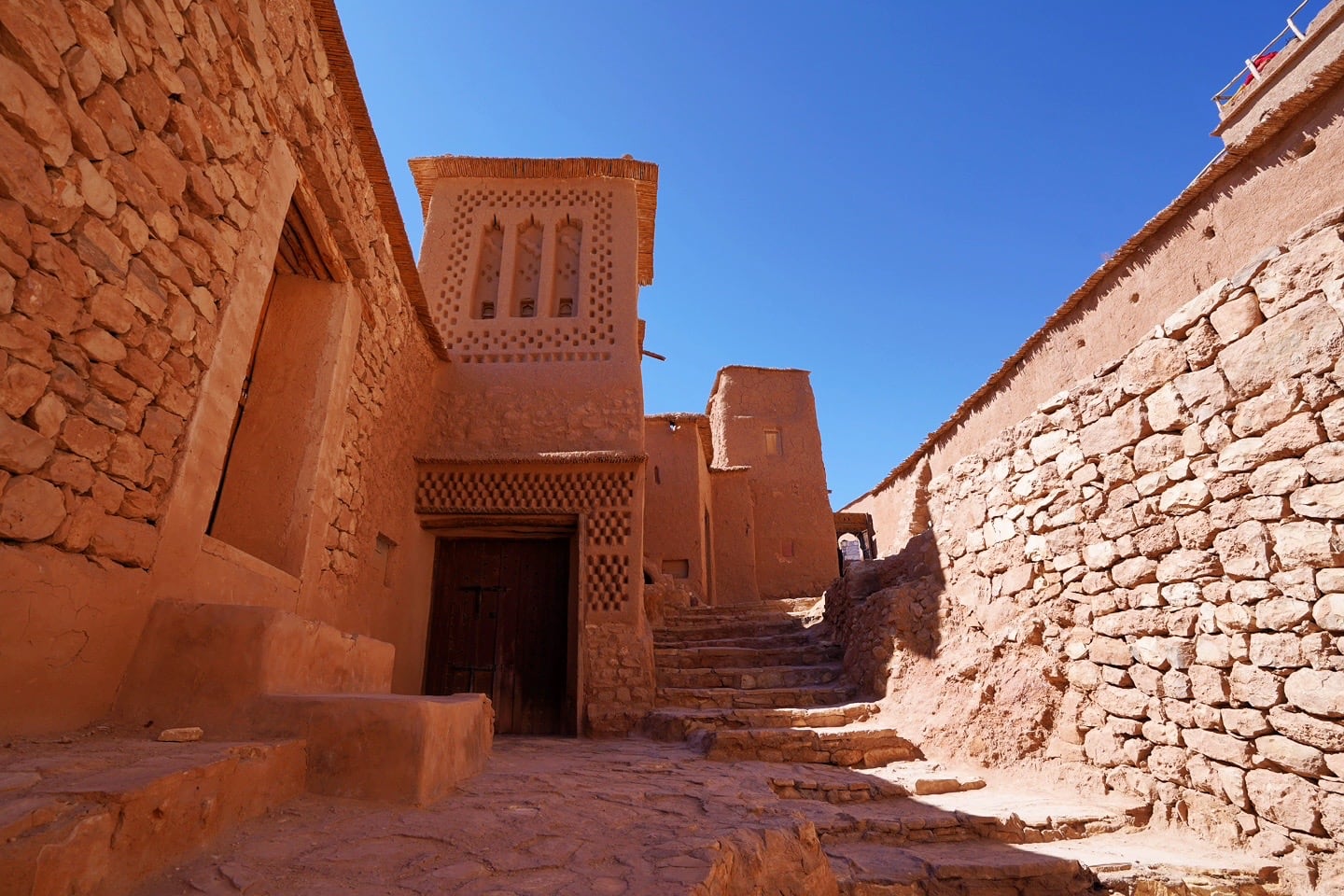
Inside the heart of the ksar, all pathways wind uphill through narrow alleys lined with mudbrick buildings, small shops, and quiet courtyards (expect quite a few steps and a bit of a workout, but nothing too grueling).
We appreciated the fact that the ksar retains a somewhat unpolished feel to it. Sure, there are souvenir stands and guides offering tours, but the village remains rough around the edges, which adds to the time-warp atmosphere.
As we climbed higher, the views got broader with fewer walls to obstruct our view. We think the upper granary area offers the best views, but the tippity-top is currently closed to visitors.
Some tips for visiting the ksar
- Visit early morning or late afternoon for cooler temperatures, softer light, and fewer tour groups.
- Don’t skip the museums. They offer an interesting perspective on daily life in the ksar’s glory days and are one of the few opportunities for visitors to explore inside the structures.
- Wear sturdy and comfortable shoes—the earthen pathways are uneven and dusty.
- Bring cash for small shops and tea stops.
- Take it slow. Our favorite part about visit was just wandering around.
Catch Sunrise or Sunset Over the Ksar
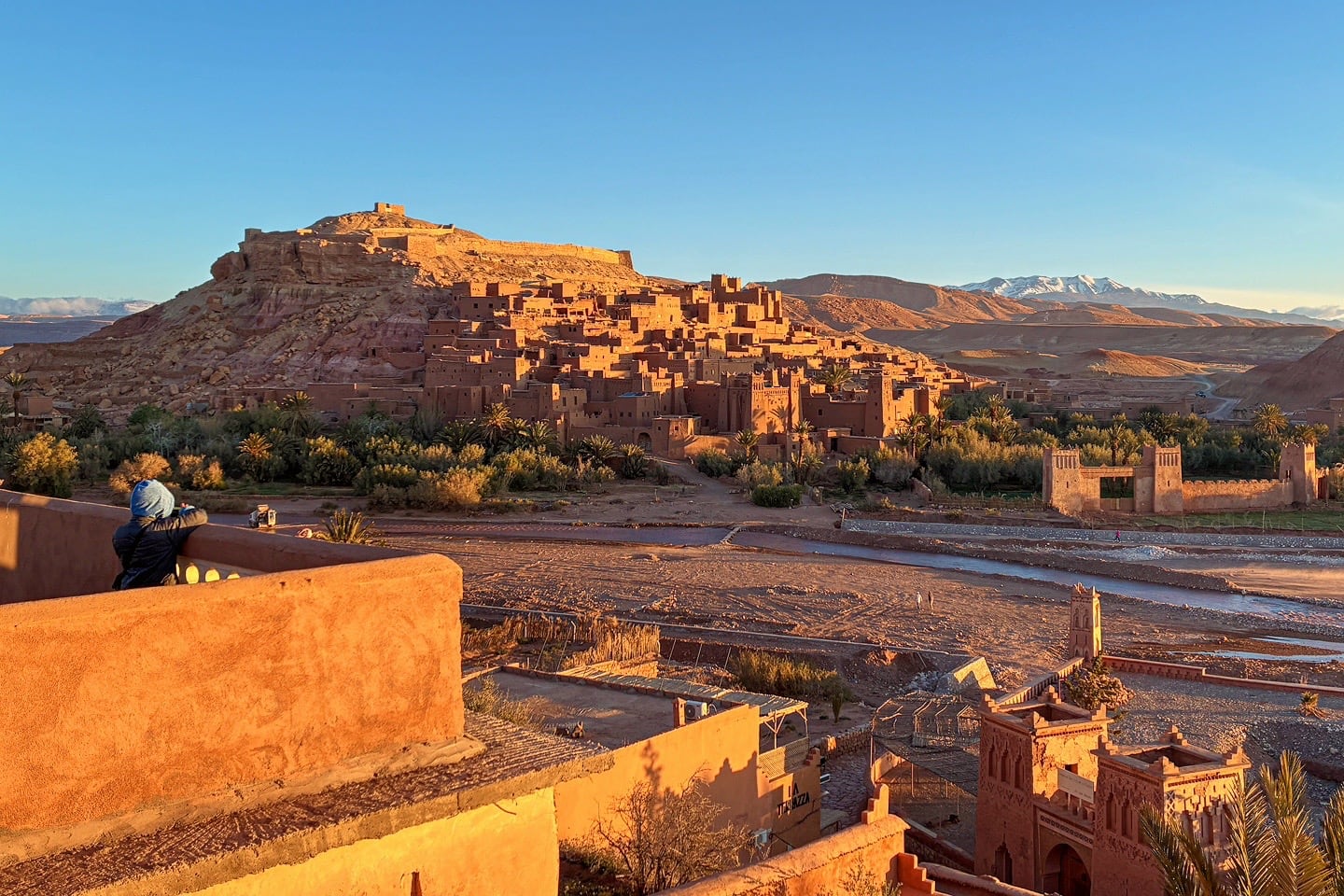
If you want to catch Aït Benhaddou in the best light possible, sunrise and sunset are the times to do that. Head to high ground and be sure to take time to enjoy it.
Over our three days here, we managed both and prefered sunrise. It’s not always easy (it was freezing at that hour in March!), but totally worth it.
Sunrise hits the ksar at just the right angle, bathing everything in an intense golden hue.
We found that 30 minutes after sunrise offered the best lighting conditions, so you don’t have to get up at the crack of dawn, especially if you’re guesthouse has a rooftop with a clear like ours did (more on that later).
Another primo place to catch sunrise and sunset is from the hill directly facing the ksar (you can’t miss it). Access is from the northwest side of the hill nearest the ksar.
Depending on the time of year, you’ll probably find yourself in good company ontop of the hill at sunset. People seem to start making their way 30-45 minutes beforehand, spreading out along the ridge with blankets, cameras, and tea from nearby cafes.
On the other hand, come up here for sunrise and there’s a good chance you’ll have the view all to yourself (plus the better light from the east).
Best sunrise/sunset viewpoints
- The hill opposite the ksar (sunrise or sunset)
- Rooftop terraces at local guesthouses in the “New Town” (sunrise or sunset)
- The upper granary area inside the ksar (for territorial views)
- Riverside cafés near the “New Town” side of the bridge (sunset)
Bottom line—If you stay overnight, make time for at least one sunrise or sunset. You won’t regret it!
Stay in a Traditional Berber Guesthouse
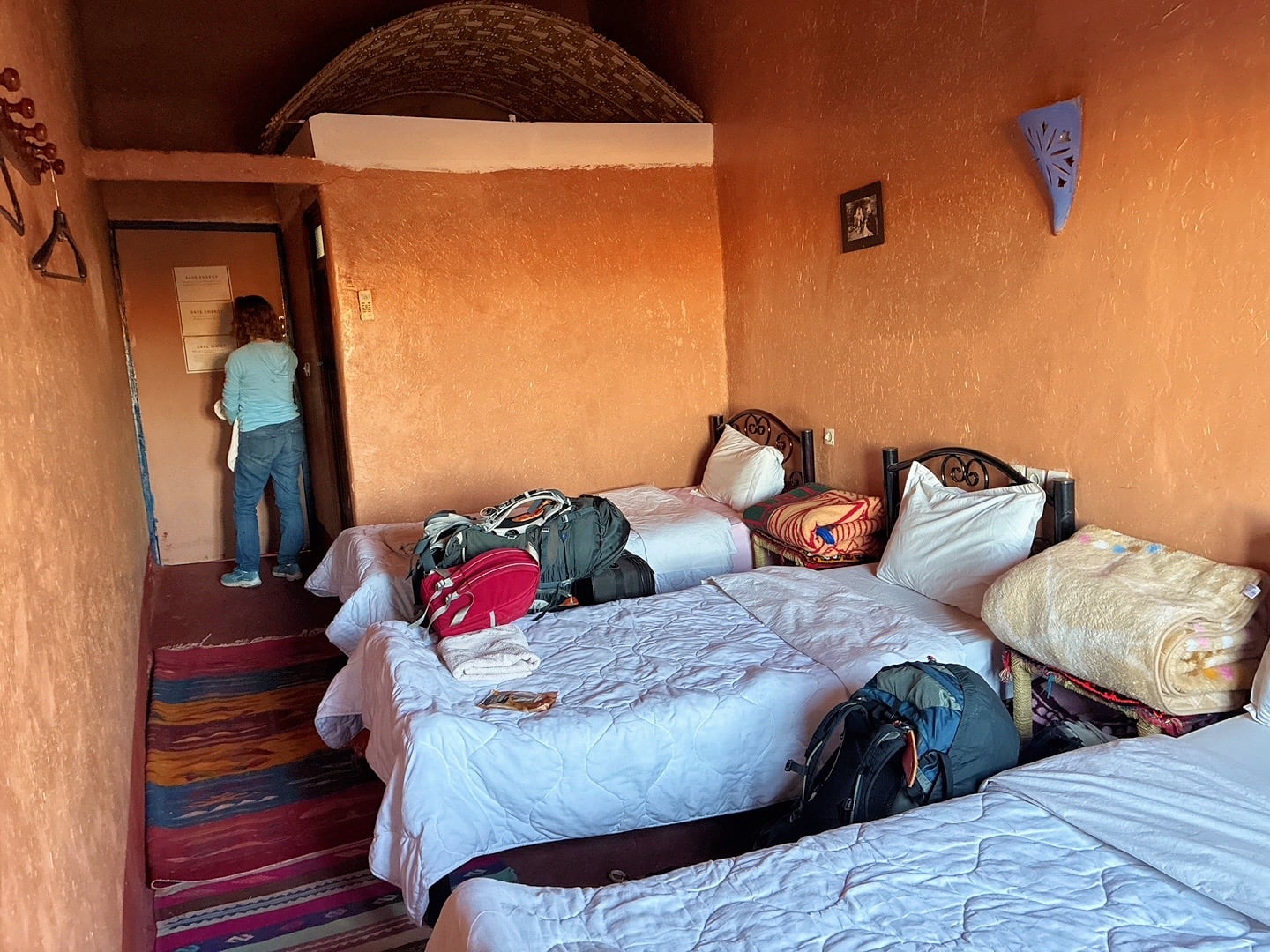
One of the best decisions we made was staying a couple of nights rather than rushing through on a day trip. Both the new and old town of Aït Benhaddou are a lot more enjoyable once the tour buses leave and the village gets more “local”.
There are modern hotels and guesthouses in town, but we wanted something with a bit of history and character (and preferably a rooftop view of the ksar).
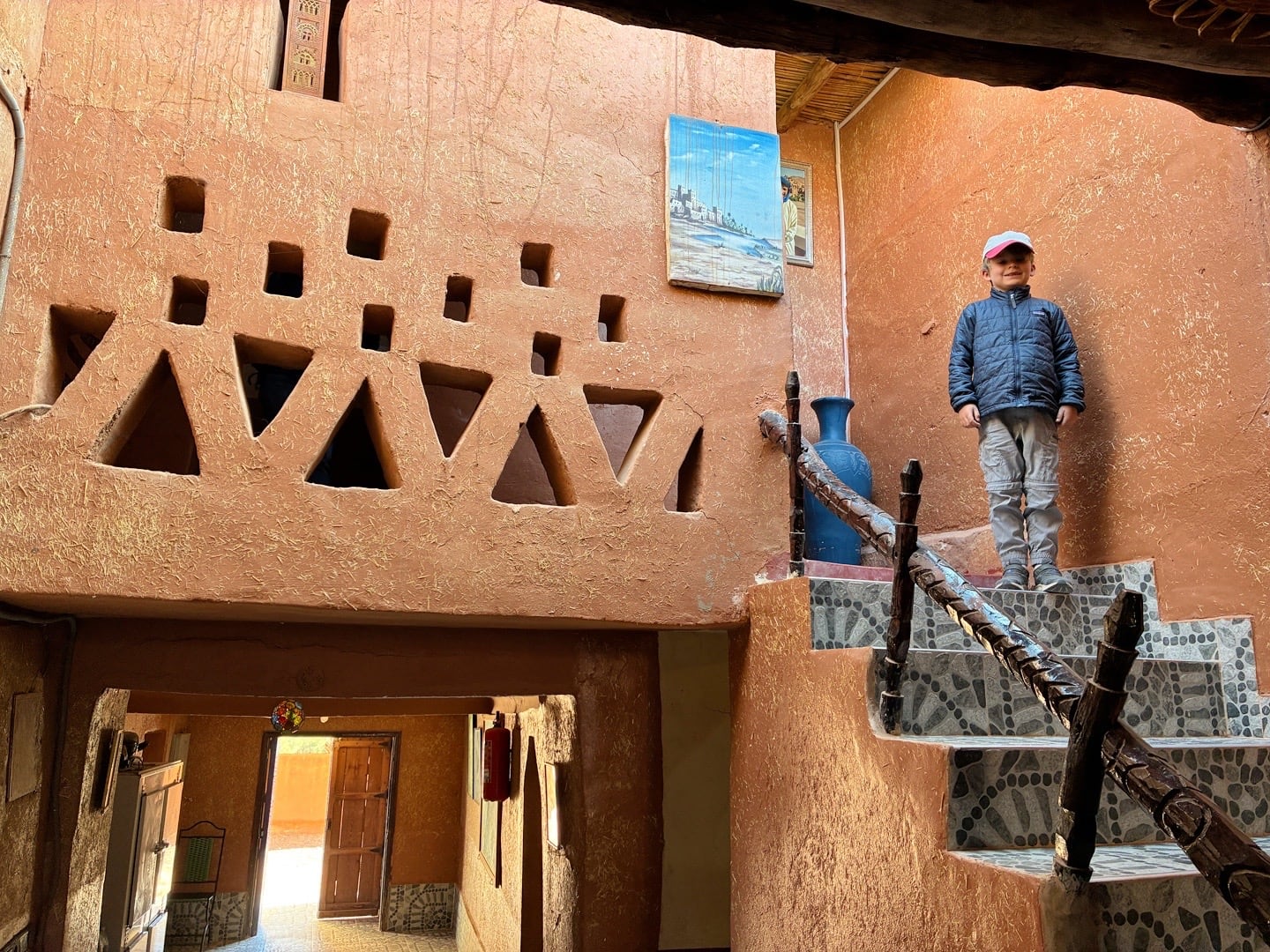
Many guesthouses here are built in the traditional Berber style with interior courtyards, rooftop terraces, colorful tilework, and thick clay walls that keep things naturally cool.
The atmosphere in these places is personal and relaxed, especially around mealtime. Owners will often take the time to sit down with guests over mint tea to recommend routes, explain local traditions, or chat about life in the region.
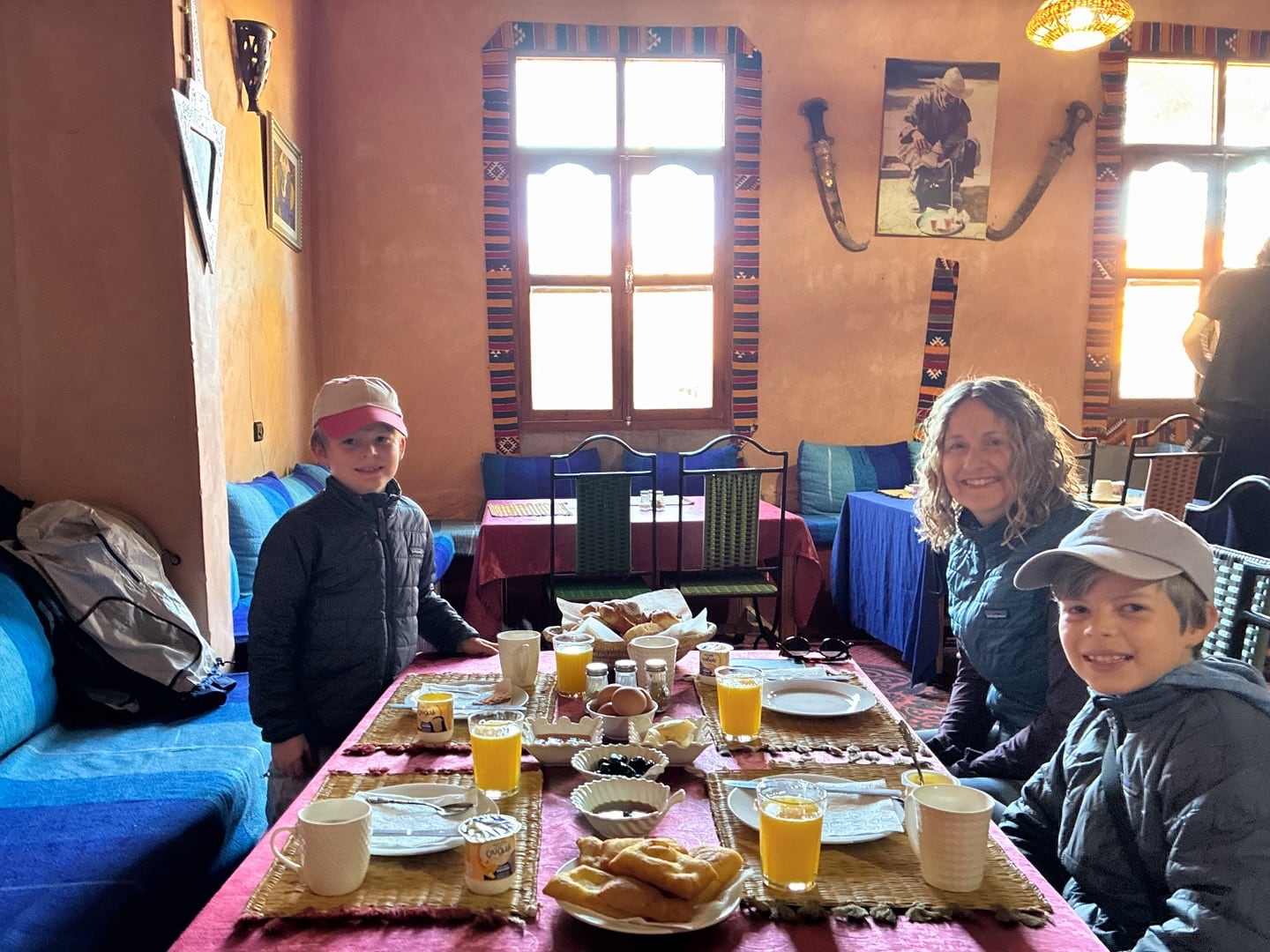
For our budget, we were quite happy with La Fibule d’Or, but there are numerous guesthouses to choose from (scroll down for more recommendations).
La Fibule d’Or is housed in a centuries-old traditional mud-brick kasbah. Rooms are authentic and simple, but have been updated with modern conveniences like air conditioning and hot water.
The best part about the guesthouse might just be the rooftop terrace (a few of the photos in this post were taken from there), offering commanding views of the Aït Benhaddou ksar just across the river.
More lodging recommendations
If you’d like to actually stay inside the UNESCO-designated ksar itself, there are guesthouses for that! Check out Kasbah Tebi for an authentic and highly rated historic stay.
Back across the river in the newer part of town, Hotel Riad Ksar Ighnda offers a more upscale experience (with a pool) while still maintaining strong Moroccan architectural character. If you’re craving comfort in the heart of it all, this might be your best bet!
For something more boutique and stylish, we think Riad Caravane strikes a good balance between traditional design and modern comfort. This one’s a bit out of town (15-minute walk or three minutes by car), but that also gets you away from the tourist hubub if you plan on hunkering down for a few days.
Our advice
- Book a rooftop room if possible—the evening views are worth it.
- Don’t skip dinner at your guesthouse; many serve excellent homemade tajines.
- Stay at least one night if your schedule allows.
Aït Benhaddou felt entirely different to us in the evening, and staying overnight allowed us to experience a quieter and more authentic stay.
Enjoy a Mint Tea with a View
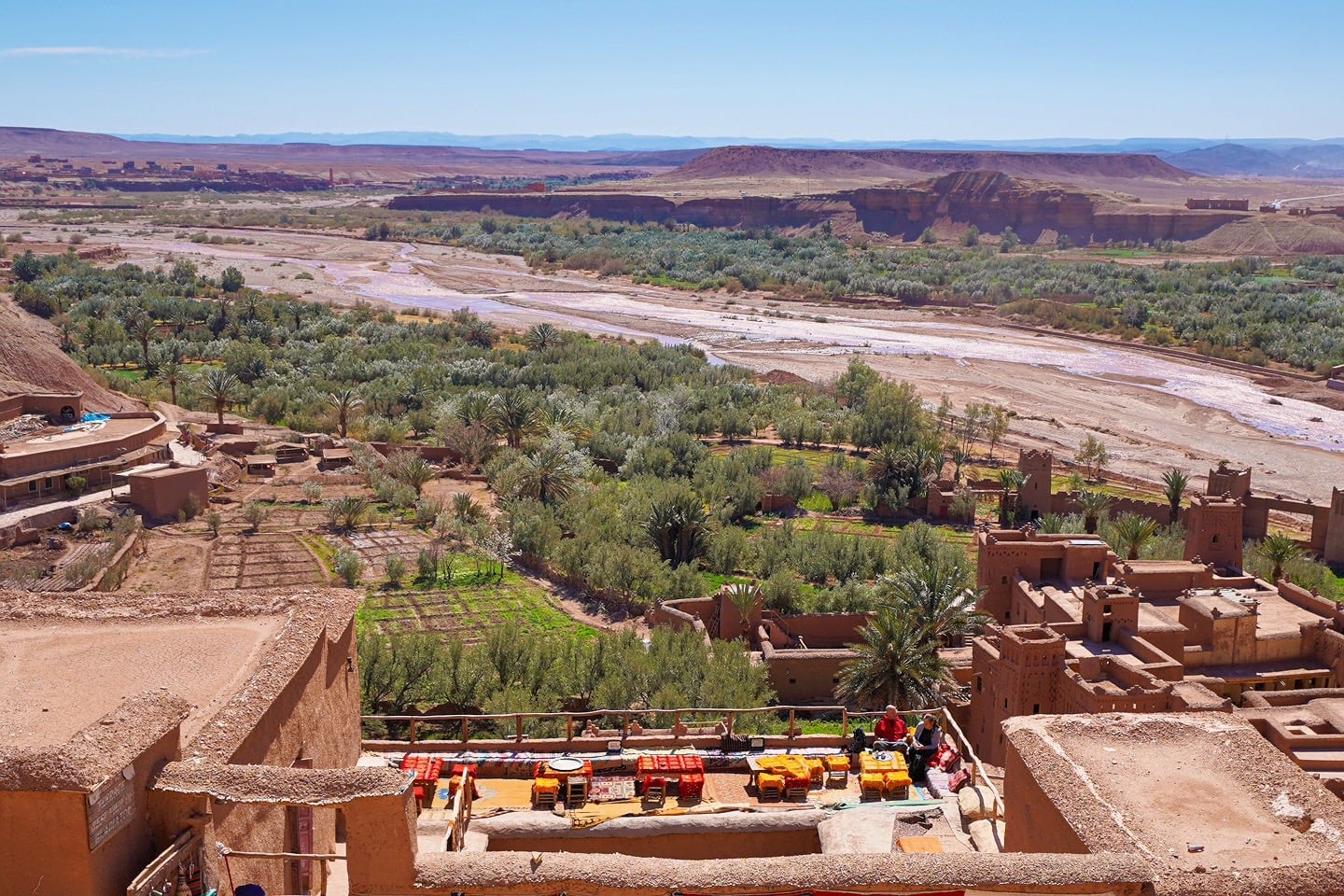
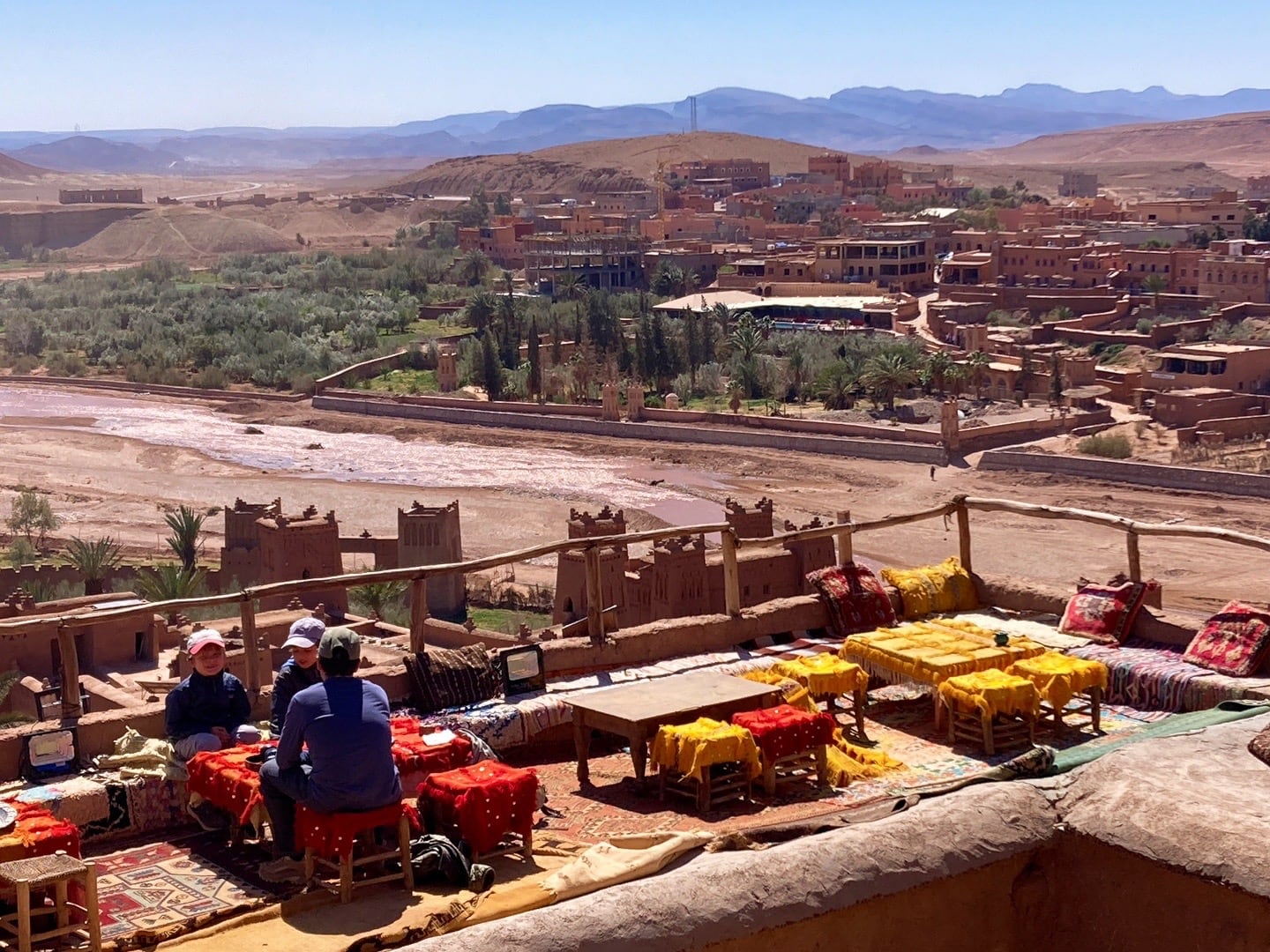
Now, let’s jump back over the river to the ksar and talk tea. We think one of the easiest ways to slow down and actually appreciate Aït Benhaddou is to grab yourself a seat and a mint tea overlooking the village.
Honestly, we wish we’d done this more. In Morocco, there’s nothing quite like sipping a tea with a view, enveloped by a 17th-century earthen village.
The tea itself is traditional Moroccan mint tea—sweet, strong, and poured from high above the glass in the traditional style. Some cafés also serve fresh juices, pastries, and simple lunches if you want to linger a bit longer (keep in mind, you won’t find alcohol in the ksar, or in most traditional Muslim communities in Morocco).
✪ Hot Tip Much of the year, any time of day is good for a sit and a tea, but midday can be brutal in the warmer months, as most of these terraces are uncovered. Sunset is a choice time to visit the terrace cafes, but know that you won’t be the only one with that idea.
Our advice
- Don’t pick the first café you see—walk around and compare views.
- Late afternoon is the best time for light and cooler temperatures (but choice seats fill up).
- Bring cash since many cafés don’t accept cards.
- If a rooftop looks empty, ask anyway—many terraces are upstairs and hidden from street level.
- Some cafes may funnel patrons through alternate exits that double as their souvenir shops. If you’re not interested in buying anything, just politely decline.
Stroll Along the River and Palm Groves
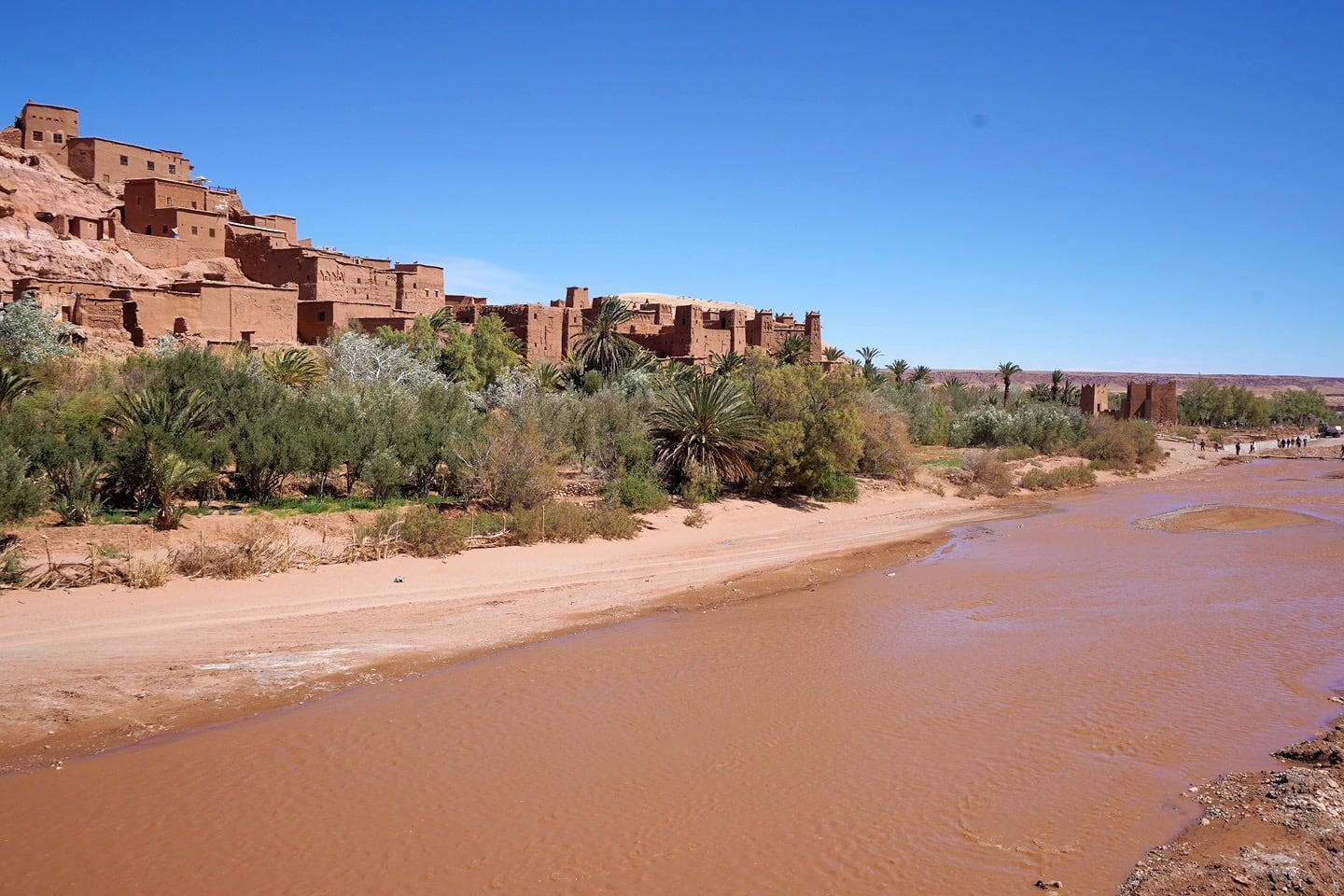
We didn’t see a ton of people walking the river banks or wandering the palm groves, but if you have the time, we definitely recommend doing so!
Depending on the season, the river may be shallow or nearly dry, but the surrounding greenery and palm groves make for a nice contrast to the otherwise dry landscape.
One afternoon, we followed small dirt paths away from the main tourist area and wandered through clusters of palm trees, gardens, and little farms. A few local children rode bicycles past us while local residents worked small plots near the water.
The farther we walked from the ksar entrance, the quieter and more local things became.
Why this walk is worth doing
- You get a different perspective of the ksar from below.
- The vibe feels slower and more local, offering a slice of village life.
- It’s one of the few shaded areas around the ksar (important during the summer).
Try Traditional Moroccan Food
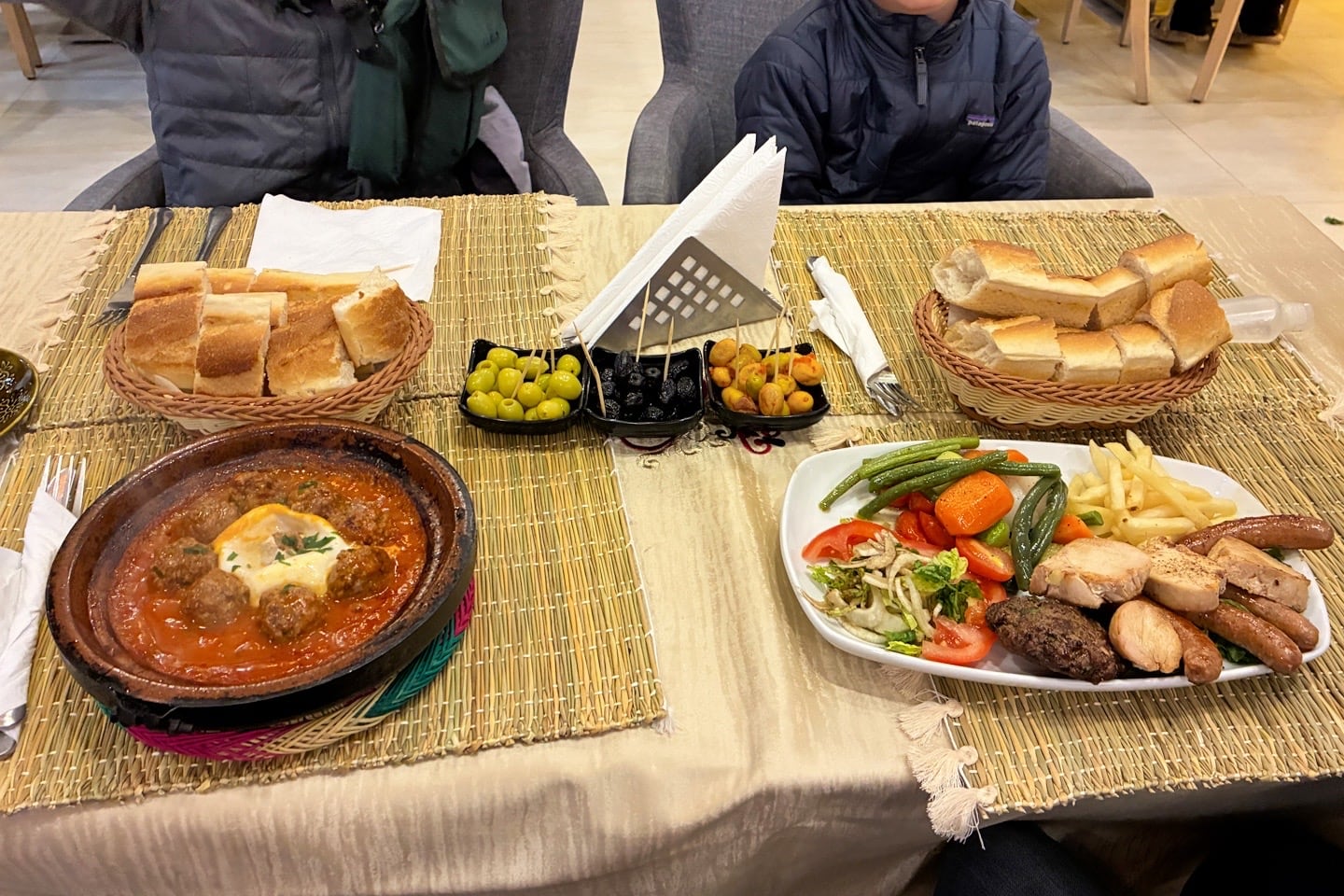
There are a variety of cafes and restaurants in town catering to visitors from across the globe. But if this is one of the few smaller communities you plan to visit in Morocco, we strongly recommend sampling the local fare.
Traditional Moroccan dishes in Aït Benhaddou tend to be simple, filling, and cooked slowly. During our stay, we ate chicken tagine with preserved lemon, meatball tagine and grilled meats (pictured above), olives, fresh bread, and lots of mint tea.
✪ Hot Tip If you opt for Moroccan, make sure you’re not in a rush! Dishes can take 30-45 minutes to prepare and you’ll want to leave time to enjoy it.
More foods worth trying
- Berber omelet – cooked in a clay tagine dish
- Harira soup – especially good in cooler months
- Makouda – fried potato cakes
- Fresh dates and almonds from nearby regions
The rooftop restaurants overlooking the ksar are especially enjoyable around sunset.
Take a Day Trip to Ouarzazate
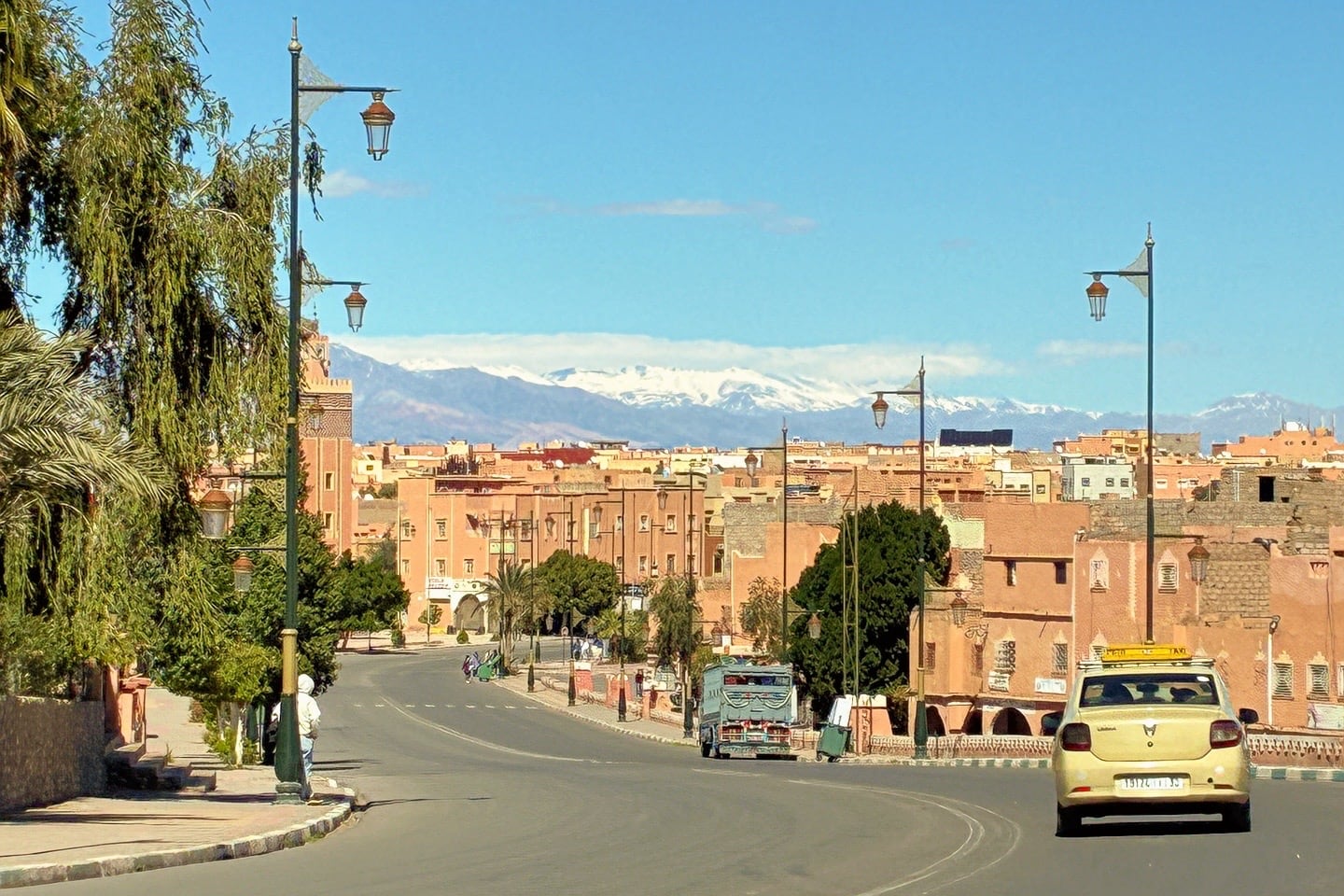
Just twenty miles down the road is the larger provincial capital of Ouarzazate, which might as well be on another continent. The city is modern and bustling, offering supermarkets, large hotels, countless restaurants, and a handful of key attractions.
The conventional wisdom is for travelers to base themselves out of Ouarzazate and do a day trip to Aït Benhaddou.
✪ Hot Tip After having spent time in both places, Lori and I recommend doing the opposite—making your base in Aït Benhaddou for a few nights and doing a day trip into Ouarzazate for a few hours or a full day (but only if you’ve got extra time).
Of the two, we think Aït Benhaddou is the more worthwhile destination offering far more unique and memorable lodging options that are centrally located to sights and eating (especially important if you don’t have your own car and are reliant on public transport).
If you have some time to devote to Ourzazate, there are two main sights that we think are worth a look.
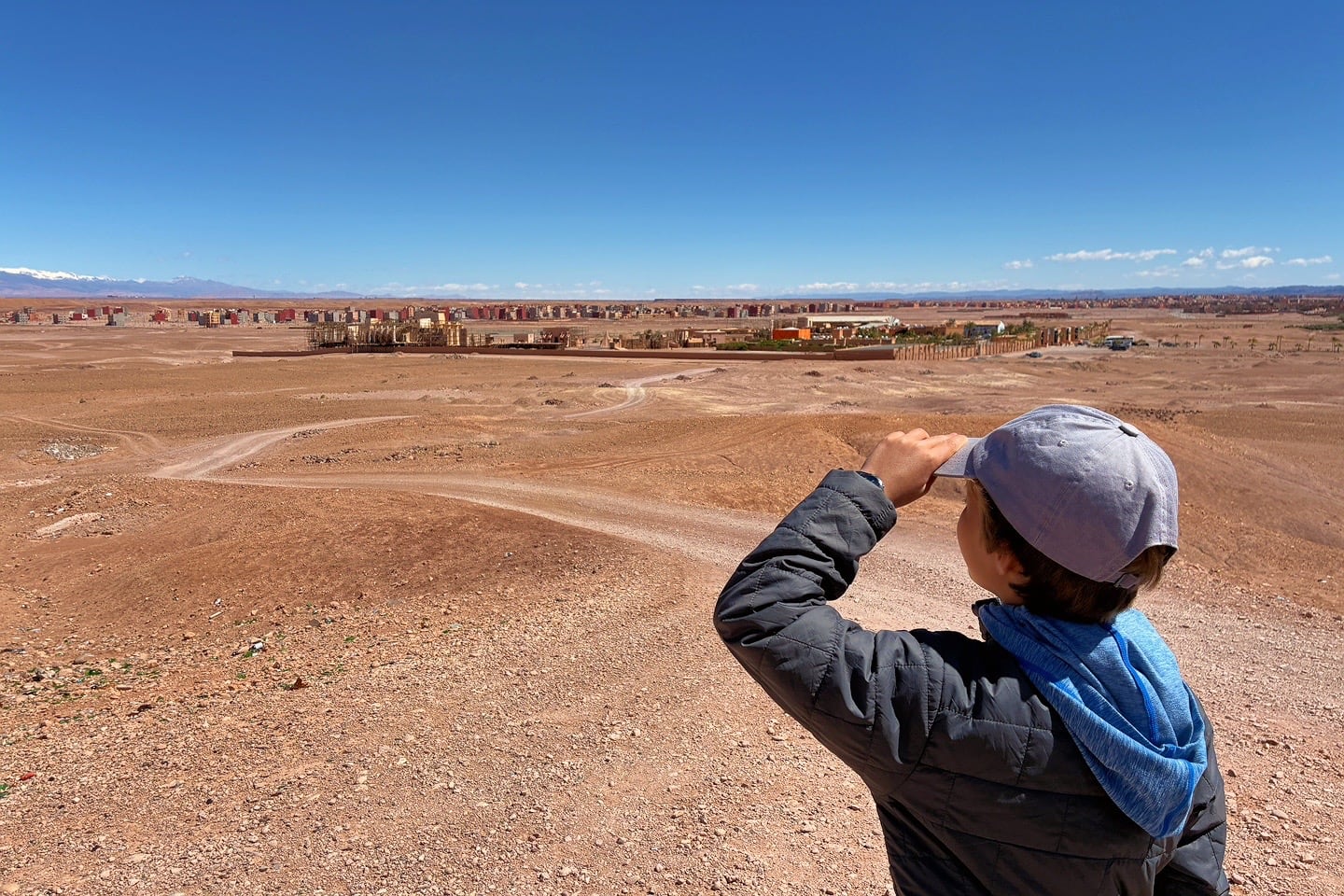
One of the main draws is the city’s long connection to the film industry. Ouarzazate is often called the “Hollywood of Morocco” for its motion picture studios and iconic filming locations that have provided the backdrop for big-name movies for decades.
The most popular is Atlas Studios, where you can walk through giant movie sets used in productions like Gladiator, Kingdom of Heaven, and The Mummy.
Some visitors (particularly film buffs) seem to swear by the studio tours, while others (like us) are just as happy to admire the sprawling property from afar—there’s a good viewing area open to the public on a small rise just to the west of the studio (pictured above).
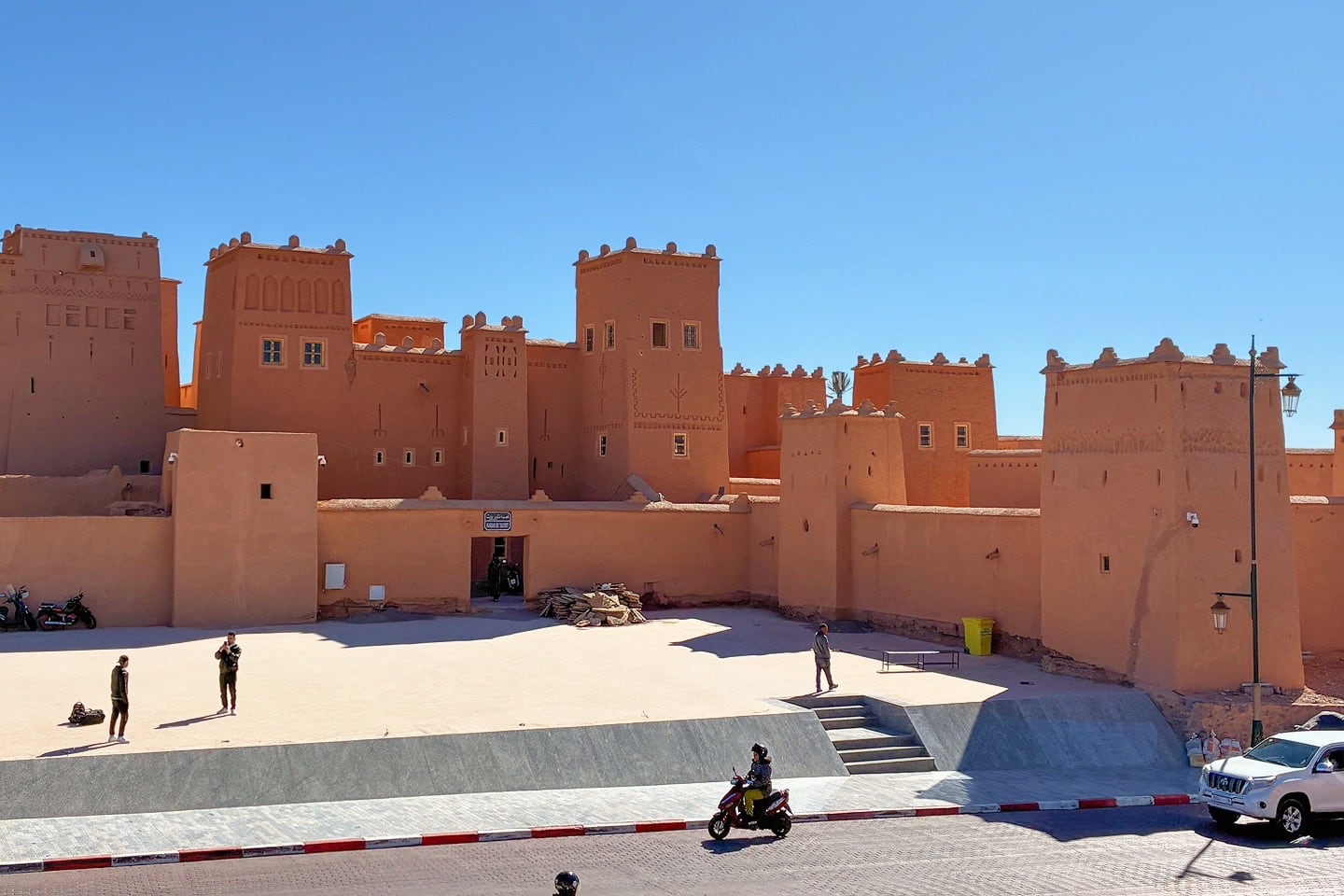
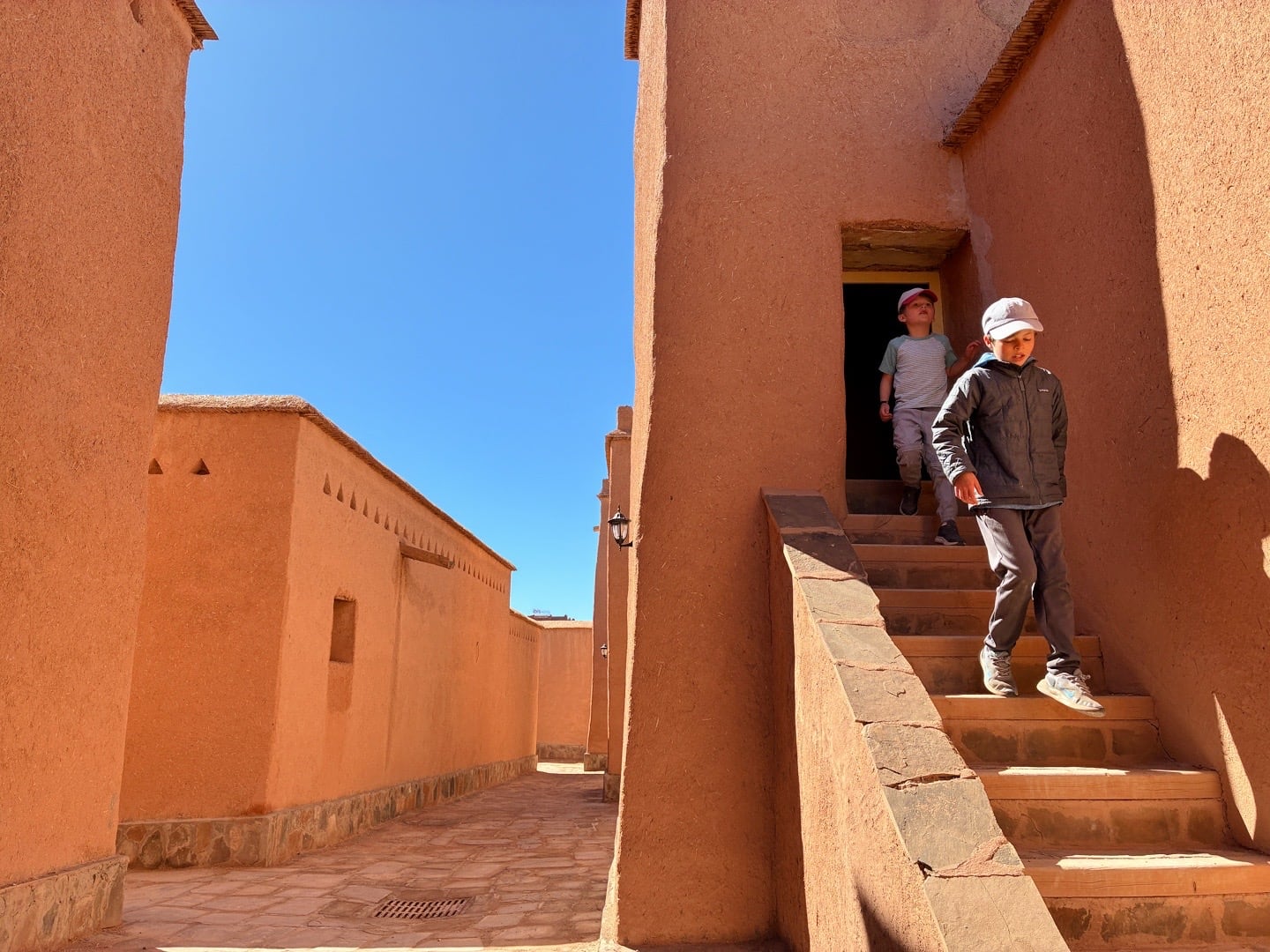
Another worthwhile stop is the Taourirt Kasbah, located in the center of town. With roots tracing to the 12th century, this mostly 19th century fortified complex was once home to a powerful family in the region.
It doesn’t really compare to Aït Benhaddou in scale and atmosphere (it’s more of a restored museum), but don’t let that scare you off! It’s a sprawling, maze-like complex offering endless nooks and crannies to discover on your own or with the help of a guide.
Tips for visiting Ouarzazate
- Start early if you want to combine the studios and Taourirt Kasbah in one trip.
- Bring water and sun protection—most of the film sets at the studio are exposed.
- If you’re driving, parking is pretty straightforward around the main attractions.
- If you do a studio tour, a guide is recommended as many of the sets don’t have much of their own signage.
Slow Down and Enjoy the Atmosphere
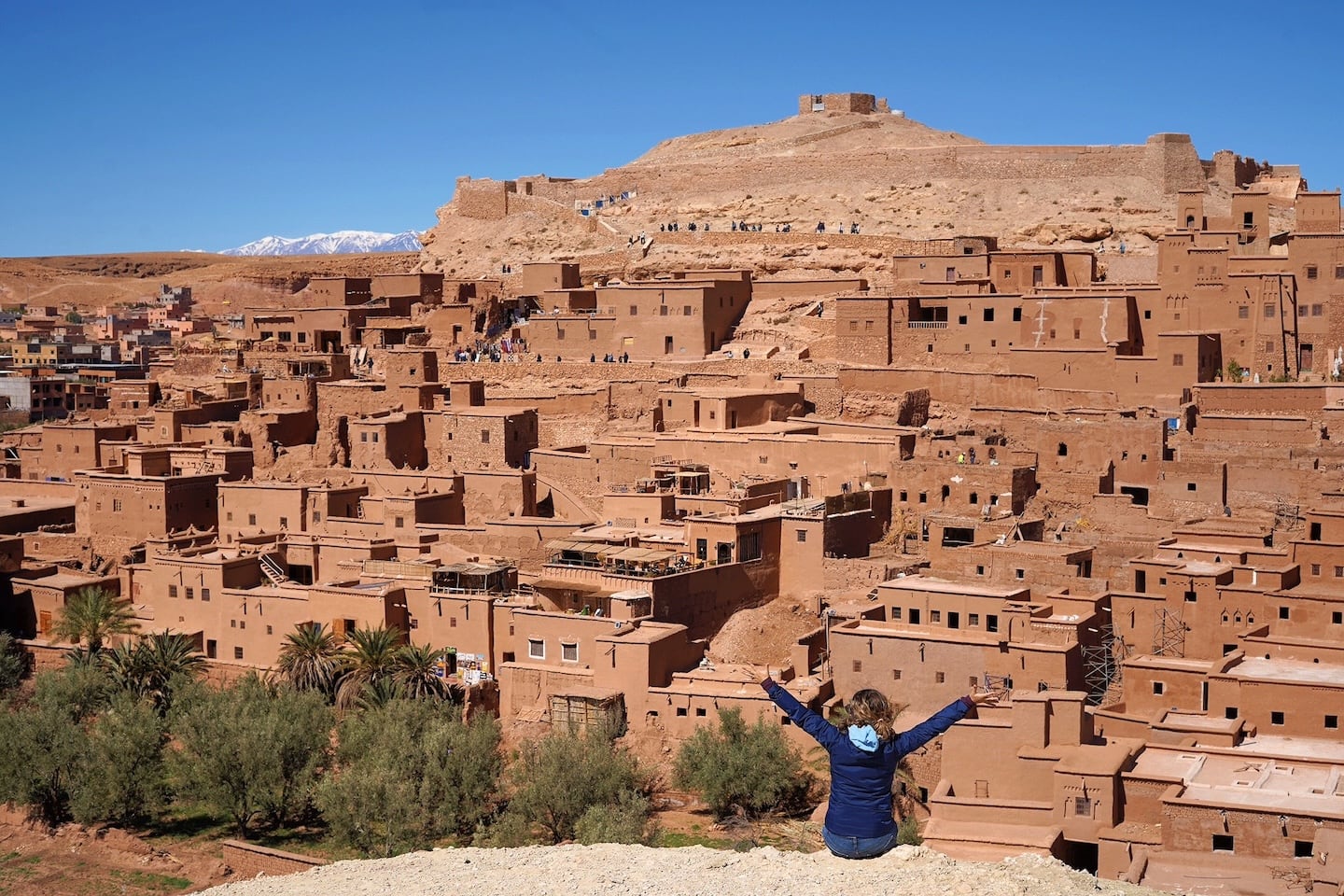
When it all comes down to it, this is a place where the place is the main attraction. As you might expect then, one of the best things to do in Aït Benhaddou is slow down and take it all in.
Wander the narrow corridors, peek into shops, stop for a tea and a view, or climb to a good vantage and take time catching your breath.
The shops inside the ksar are worth exploring one-by-one. Yep, you’ll find the usual tourist trinkets—scarves, ceramics, paintings, jewelry, spices—but you can still find more personal, handmade items as well.
If things are slow, shop owners may even invite you in simply to chat or show you how certain items are made.
And the best part is, you don’t ever have to worry about being run over by a motorbike or donkey cart like you often do in the Marrakesh Medina. You can just wander at your own pace.
As evening approaches, the vibe of Aït Benhaddou changes fairly dramatically. The tour buses leave, the alleyways quiet down, and the rooftop cafés start to fill up with travelers watching the sunset.
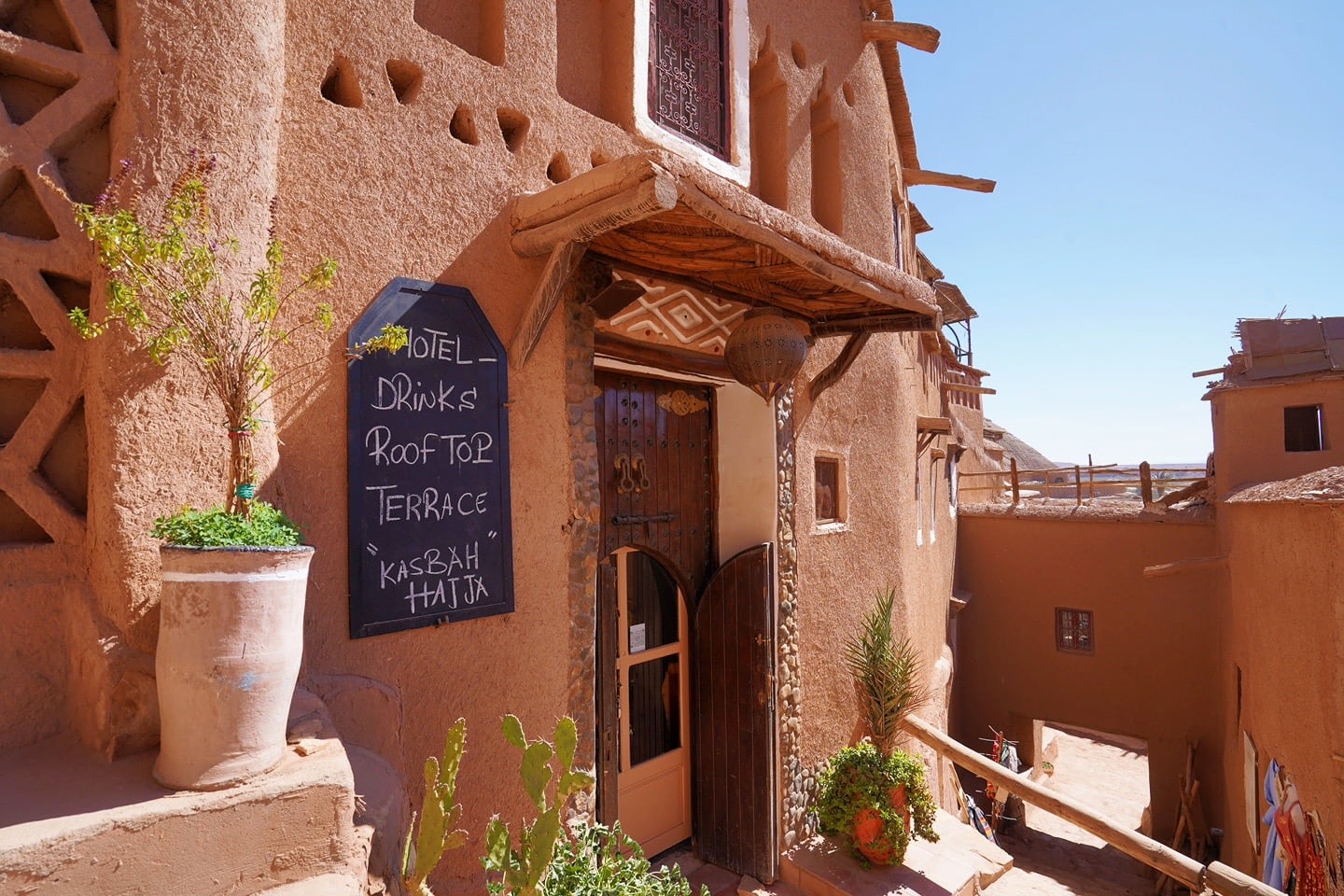
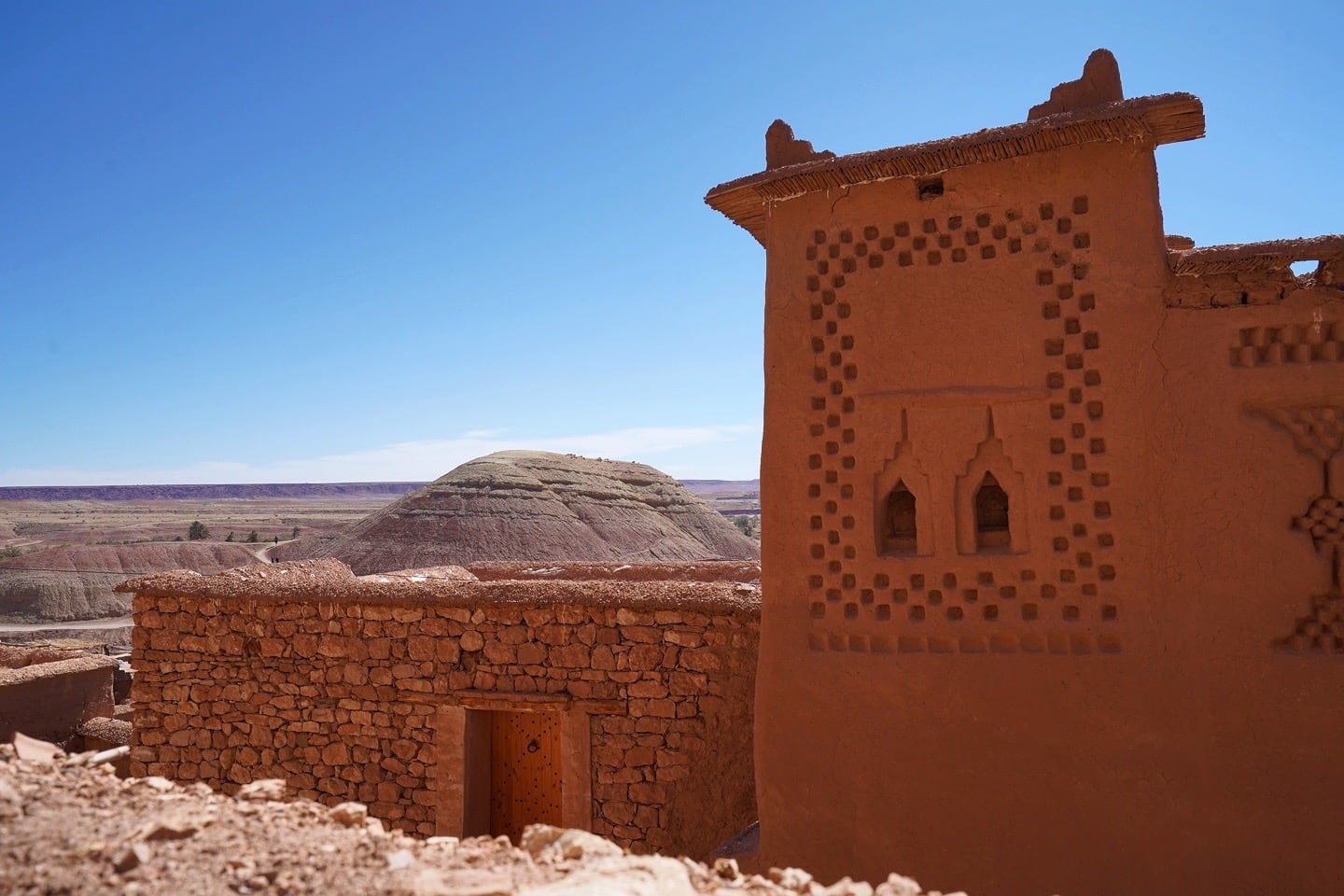
Simple ways to enjoy the atmosphere here
- Sit high up in the ksar and watch the valley below
- Browse small artisan shops at a leisurely pace
- Stop for mint tea at rooftop cafés
- Wander side alleys away from the main entrance
- Stay overnight so you can experience the ksar in the evening
- Spend time observing local life around the river and pathways
How to Get to Aït Benhaddou
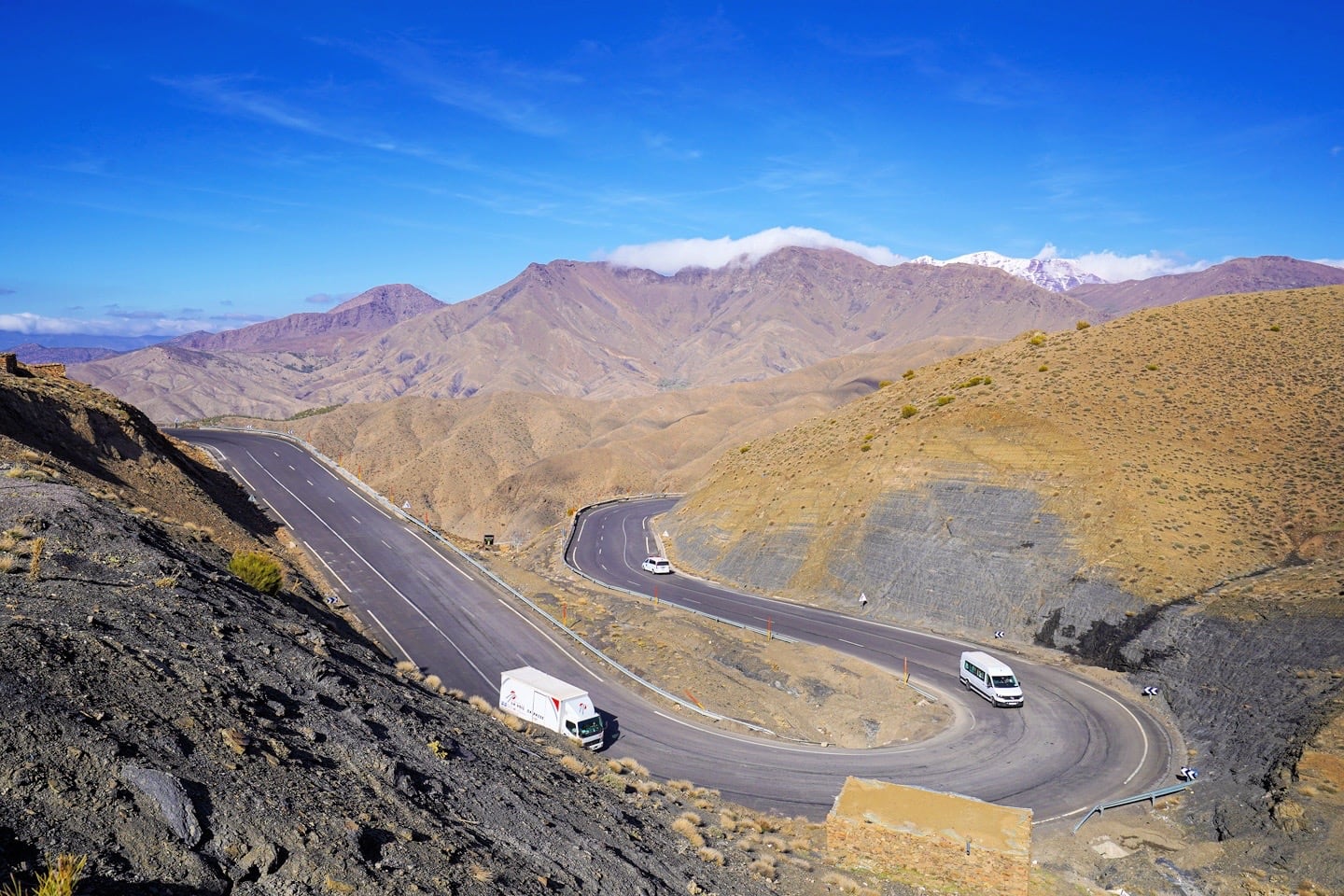
Getting to Aït Benhaddou was a big part of the overall experience for us, and we think that’s probably true for a lot of travelers.
No matter which route you take, the journey usually involves traveling on dramatic mountain roads, winding through small villages from another time, and watching the landscape change from cityscape, to mountainscape, and finally, to desertscape.
Here are the best ways to make the journey.
Organized Tours from Marrakesh
For many travelers, especially those short on time, organized tours are the easiest and most efficient way to visit Aït Benhaddou.
Most tours depart from Marrakesh and may even combine the UNESCO-designated ksar with stops in the Atlas Mountains, Ouarzazate, or even the Sahara Desert.
We think doing a tour is by far the most convenient and least stressful way to see Aït Benhaddou. No need to worry about navigating mountain roads, arranging transport, putting together an itinerary, or driving in a foreign country.
The top-rated tours below include free cancellation, hotel pick-up and roundtrip transportation.
Best day tour from Marrakech
One of the most popular options is this Ait Benhaddou & Ouarzazate guided day trip from Marrakesh. It crosses the High Atlas Mountains via the scenic Tizi n’Tichka Pass and includes stops at both Aït Benhaddou and Ouarzazate. This is the tour to pick if you only have one free day in Marrakesh to do a day trip and still want to experience southern Morocco.
Best multi-day desert experience
If you want a more immersive trip, we strongly recommend checking out this top-rated 3-day Sahara Desert Tour from Marrakesh. This is one of the most popular multi-day tours of its kind and includes Aït Benhaddou as part of a longer route through Ouarzazate, desert oases, camel trekking areas, and an overnight stay in a Merzouga Sahara camp.
This is the tour Lori and I likely would have chosen if we hadn’t decided to do a road trip.
Our thoughts on organized tours
We think organized tours are the way to go if:
- You’re short on time
- You don’t want to drive mountain roads yourself
- You prefer having logistics handled for you
- You want to combine multiple destinations in one trip
Often the biggest downside is that day trips or even multi-day tours skim the surface and can feel rushed. Most only give you a couple of hours in Aït Benhaddou itself, which is enough to check-off the highlights but not enough to really get a sense of the place.
Self-Driving
We love road trips! Driving yourself is easily the most flexible and rewarding way to reach Aït Benhaddou, especially if you enjoy the adventure of hitting the open road in a new country.
This part of Morocco, in particular, is incredibly scenic, and having your own vehicle lets you stop at viewpoints, roadside cafés, small Berber villages, and random photo spots whenever you want.
We visited Aït Benhaddou as part of a wider road trip to the Sahara from Marrakesh and highly recommend this route if this sort of travel speaks to you.
The downsides, of course, are that road trips require more time and a lot more planning to pull off (plus, they can be costlier when factoring in gas, rental car, and food and lodging for the additional days).
From Marrakesh
The drive took us a leisurely four to five hours from Marrakesh to Aït Benhaddou, including stops for gas, tea, and pictures along the way.
You can probably make the trip in under 3.5 hours, but that’s heavily dependent on traffic getting out of Marrakesh. And honestly, it’s rushing things a bit too much, in our opinion.
The highlight of the journey for us was crossing the High Atlas Mountains at famous Tizi n’Tichka Pass, which climbs above 2,200 meters (7,400 feet) and is the highest pass in Morocco.
✪ Hot Tip If you travel in the wintertime, monitor Marrakesh-area Facebook pages for news on current road conditions, or inquire with your guesthouse or rental car agent.
You’ll also want to make sure your rental car is up to the task. Anything mid-size and late model should do just fine.
And be sure to gas up before leaving the Marrakesh city limits, as gas stations get fewer and farther between heading over the mountains.
Things to remember before hitting the road
- Moroccan mountain roads can be narrow and winding.
- Avoid driving after dark if possible.
- Fuel stations become less frequent outside major towns.
- Parking near the ksar is straightforward and inexpensive.
Public Transport
Public transportation to Aït Benhaddou is certainly possible, but it takes a lot more effort and patience compared with tours or even self-driving. From our research and conversations with people, there are two main ways of doing this:
Via Ouarzazate
Most travelers using public transport first head to Ouarzazate, then continue onward to Aït Benhaddou via taxi or local minibus.
Long-distance buses run regularly from Marrakech to Ouarzazate. The trip usually takes between 4–5 hours depending on traffic and road conditions.
The upside of going via Ouarzazate is that it’s potentially less stressful and means you’re more likely to make your connection in a timely manner. The downside is it will take longer than the next option.
Via Tabourahte
We’ve heard the better way to get to Aït Benhaddou by bus is to ask your bus driver when you get on to let you off at the Tabourahte Junction (about 20 minutes before reaching Ouarzazate).
This is a popular junction for taxis to sit and wait for passengers. From here, it’s a 15-minute taxi drive to Aït Benhaddou.
This is the quicker and slicker way of the two, but there is an ever-so-slight chance that you may have to wait for a taxi for a while.
Our Honest Take
Public transport is absolutely doable, but compared with driving or joining a tour, it’s the least efficient option. The connections aren’t always smooth, and reaching the village itself can require a few extra steps.
Still, if you enjoy independent travel and don’t mind some unpredictability, the journey can feel like part of the adventure.
Final Thoughts
If you’re on the fence with regards to visiting Aït Benhaddou, we’re here to say, just do it! It’s a unique and worthwhile experience you really can’t have anywhere else. It’s also one of the easier day trips you can do from a major city in Morocco.
If you’ve only got a little time to tour the ksar, there are a good selection of highly-rated tours from Marrakesh. But if you’ve got a bit more time and flexibility in your travels, we recommend doing a road trip (or at the very least, staying the night in town).
Go Next
- 8 Worthwhile Things to Do in Tangier in One Day
- Todra Gorge (Morocco): How to Visit & What to See
- The Royal Alcázar of Seville (Spain): How to Plan Your Visit
- Cordoba from Seville (Spain): Planning the Perfect Day Trip
- Ponta da Piedade in Lagos (Portugal): Our 4 Favorite Ways to Visit
- Sagres (Portugal): 8 Worthwhile Things to See & Do in One Day